

October 29, 2026 – The Federal Reserve kept its benchmark range at 3.75%-4% on Oct. 28. Two policymakers wanted another quarter-point increase, a sign the tightening debate is far from over.

In Summary
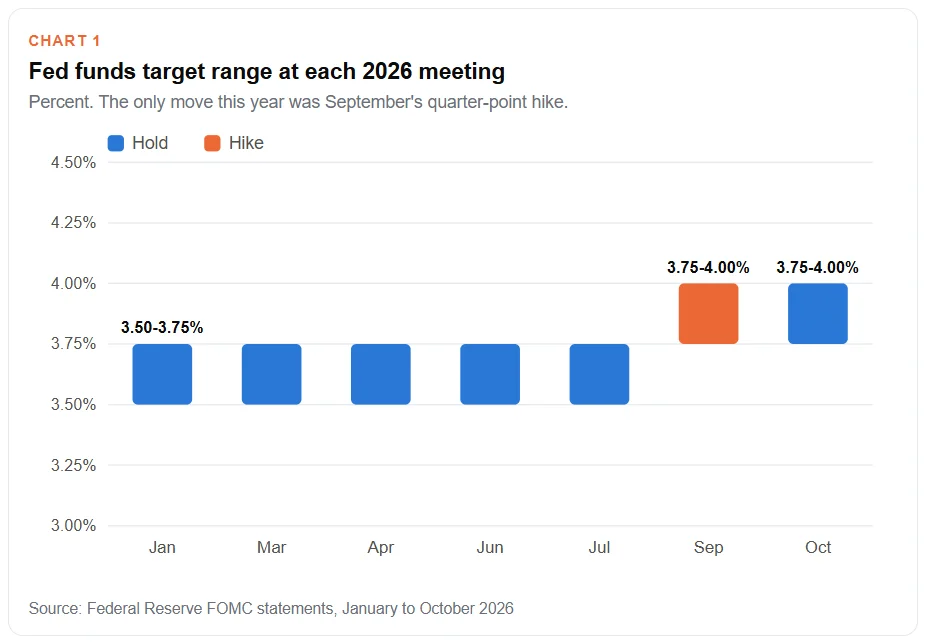
The FOMC voted 10-2 to keep the federal funds target at 3.75%-4% after September’s quarter-point hike.
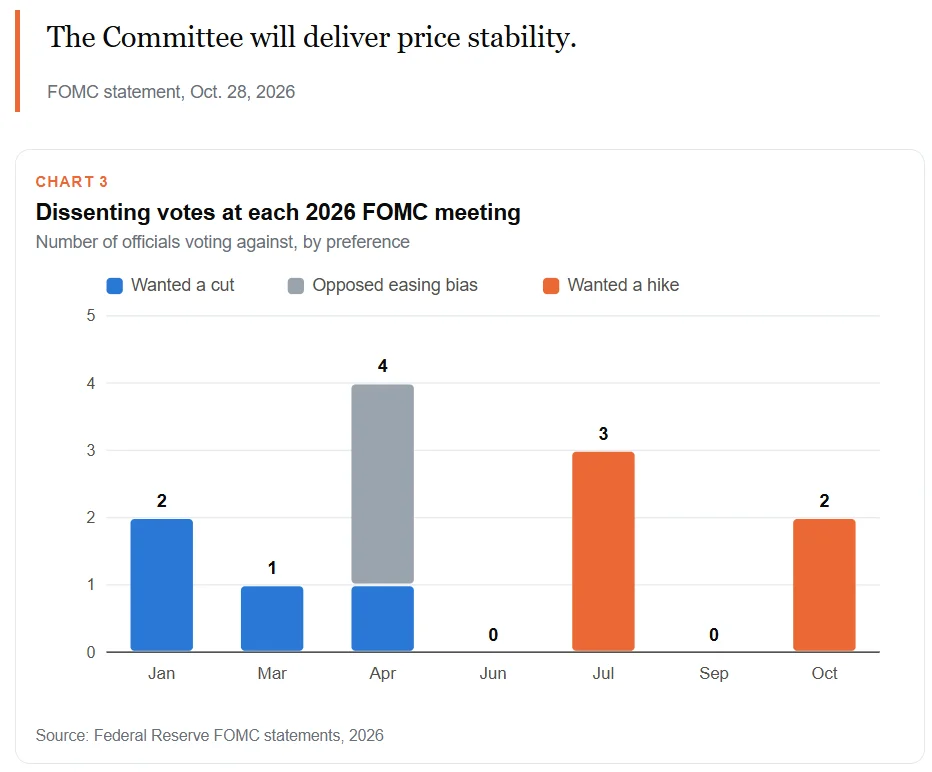
Governor Lisa Cook and Cleveland Fed President Beth Hammack dissented in favor of a 25 basis point increase.
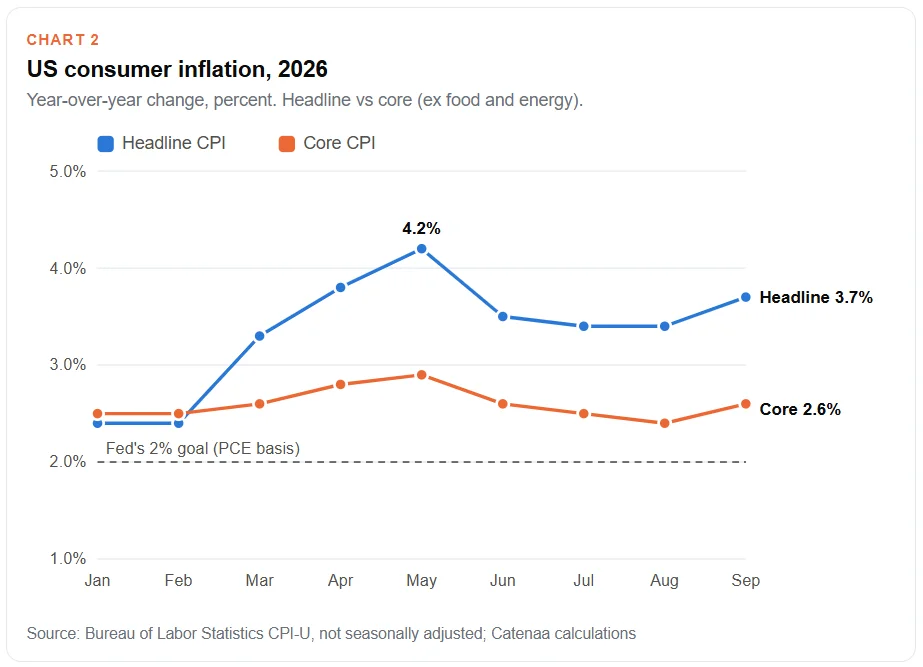
Headline inflation reached 3.7% in September, while core inflation held at 2.6%.
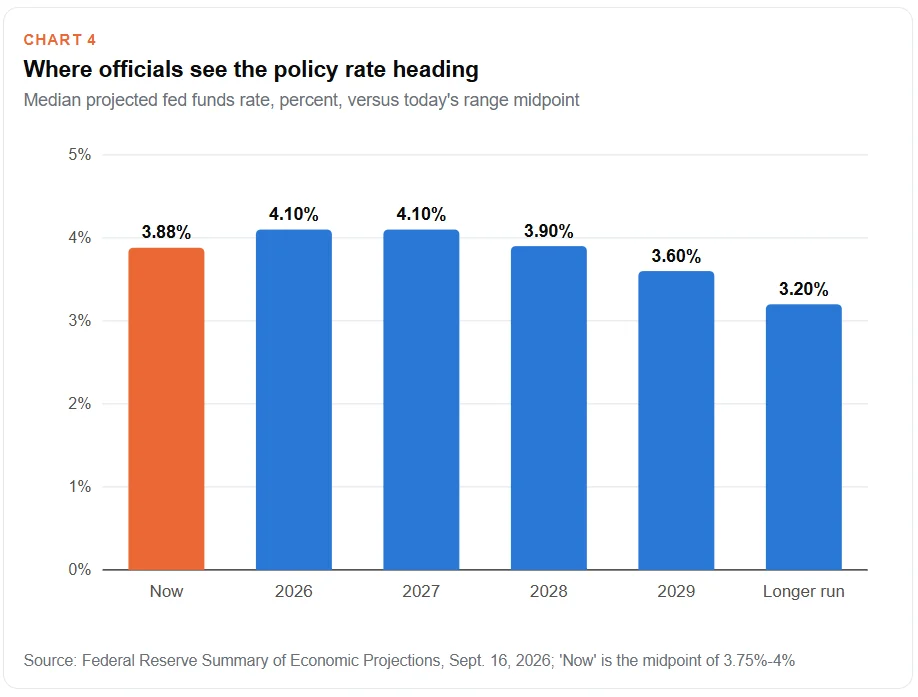
September projections put the median year-end rate at 4.1%, which implies one more hike in 2026.
The Fed holds rates steady for now, yet the split vote shows a committee still leaning toward tighter policy. On Oct. 28, the Federal Open Market Committee voted 10-2 to keep its target range at 3.75%-4%. Governor Lisa Cook and Cleveland Fed President Beth Hammack dissented. Both preferred a quarter-point increase at this meeting.
The pause follows the Sept. 16 hike, the Fed’s only rate move so far this year. That decision passed 12-0. As a result, policy now sits a quarter point above the range that held from January through July.
Why the Fed holds rates despite hot prices
The statement upgraded the economy’s pace from “solid” to “strong.” It also said productivity growth is strong and capital spending is robust. However, it repeated a blunt warning: “Inflation remains elevated.”
Recent data supports that view. Consumer prices rose 3.7% in the year to September, according to the Bureau of Labor Statistics. Core prices, which exclude food and energy, rose 2.6%. Energy drove much of the gap, with energy prices up 20.4% from a year earlier. By contrast, headline inflation ran at just 2.4% in January.
Meanwhile, the job market looks steady rather than tight. Unemployment stood at 4.2% in September. That mix gives the committee room to wait, but little reason to relax.
A committee split in two directions
Dissent has become routine in 2026. Five of this year’s seven meetings drew at least one objection. Back in January, Stephen Miran and Christopher Waller wanted a cut. In April, Hammack, Neel Kashkari and Lorie Logan objected to an easing bias in the statement. By July, those three regional presidents favored a hike instead.
Cook’s vote stands out. As a governor, she sits on the Board in Washington rather than at a regional bank. Her dissent therefore shows that hawkish views now reach the Board itself.
The Fed also kept its technical rates in line with the range. Interest on reserve balances stays at 3.90%, effective Oct. 29. Similarly, the standing repo rate remains at 4%, while the overnight reverse repo rate sits at 3.75%.
What comes next for borrowers
Chairman Kevin Warsh and his colleagues meet again on Dec. 8-9. That meeting will bring fresh forecasts. Officials’ last projections already point higher. In the September projections, the median year-end rate stood at 4.1%.
That figure implies one more quarter-point hike before January. In other words, the Fed holds rates below the level most officials expect by year-end. Moreover, the median saw rates holding at 4.1% through 2027. Cuts appear only in 2028 and beyond. The same projections see PCE inflation ending 2026 at 3.7%, with core PCE at 3.4%. Both readings sit far above the Fed’s 2% goal.
For households, the takeaway is clear. Loan and card rates are unlikely to fall soon. Banks, in turn, face a longer stretch of higher funding costs, a theme Catenaa explored in its U.S. banking outlook.
The next test arrives with October inflation data. If prices keep running near 3.7%, the case for a December hike will grow stronger. On the other hand, a cooler print would give Warsh more room to keep waiting.