


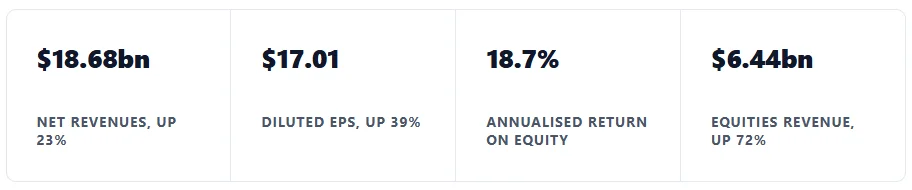
October 15, 2026 – Equities financing nearly doubled and banking fees rose 21%, lifting net revenues to $18.68bn and diluted earnings per share to $17.01.
In Summary
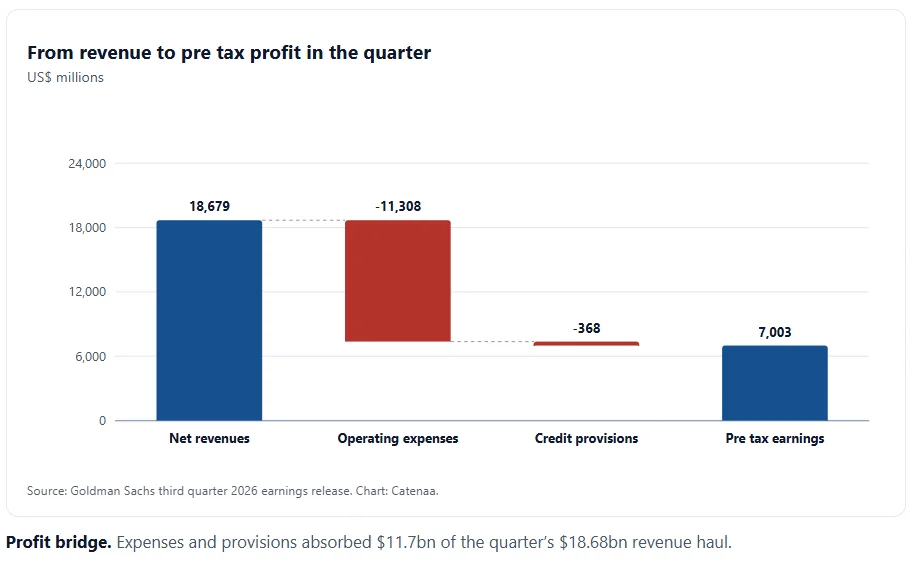
Net revenues of $18.68bn rose 23% on the year, the firm’s second highest quarterly total.
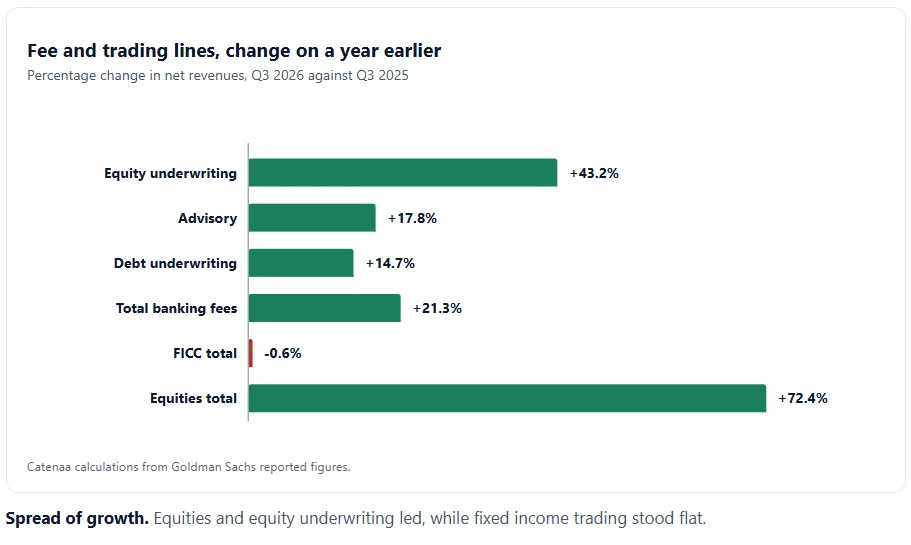
Equities revenue jumped 72% to $6.44bn, with financing revenue alone up 96%.
Investment banking fees rose 21% to $3.22bn, led by a 43% gain in equity underwriting.
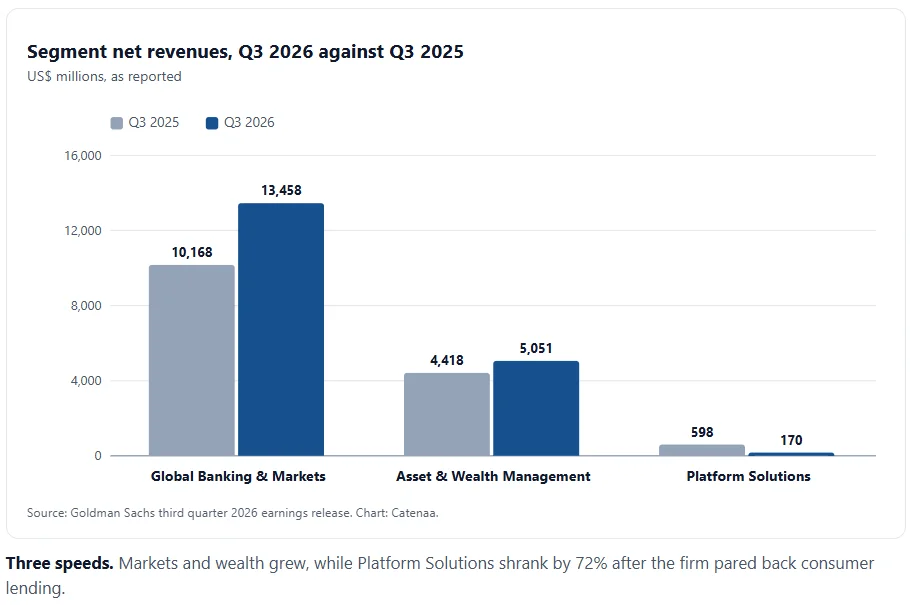
Platform Solutions revenue fell 72% to $170m as consumer lending kept shrinking.
The standardised CET1 ratio eased to 12.4% from 12.9% as financing assets grew.
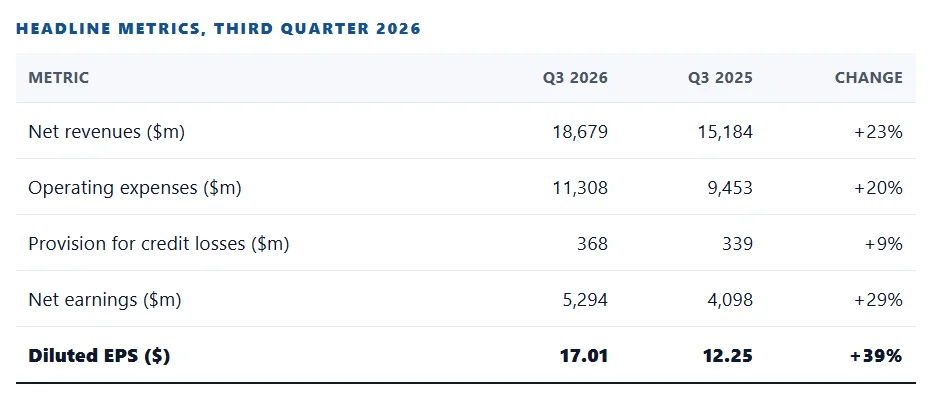
Goldman Sachs third quarter results landed far above last year. The bank reported net revenues of $18.68 billion for the three months to 30 September. That figure sits 23% above the same quarter of 2025. Moreover, net earnings climbed 29% to $5.29 billion. Diluted earnings per share reached $17.01, a jump of 39%. Annualised return on equity came in at 18.7%. Chief executive David Solomon called it the second highest revenue quarter on record for the firm.
Equities financing does the heavy lifting
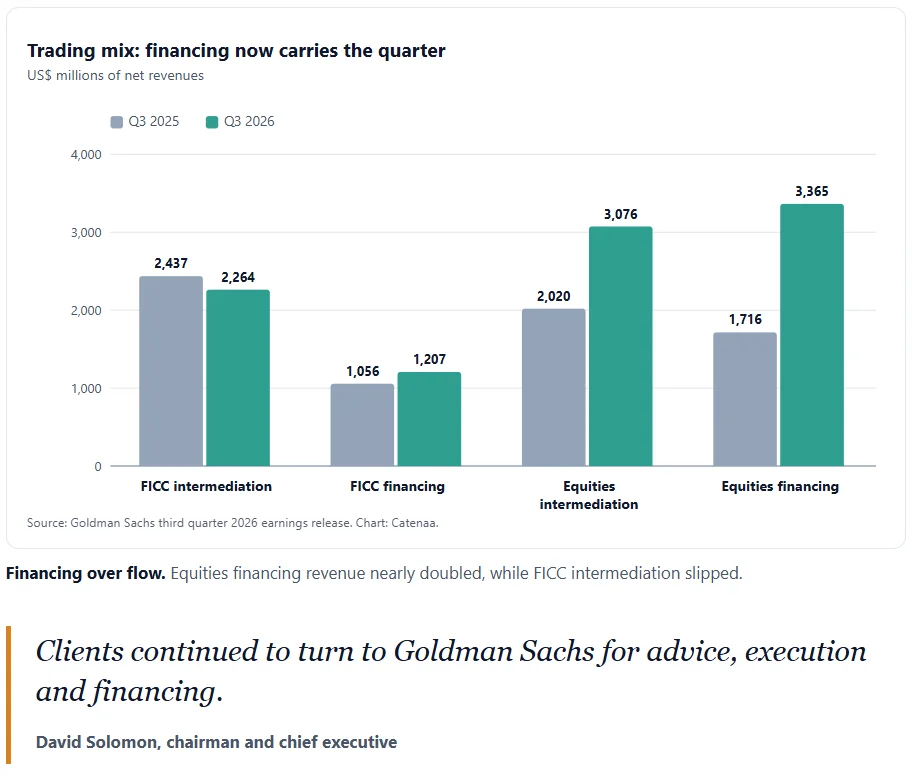
Global Banking and Markets drove the quarter. Revenues there rose 32% to $13.46 billion. Within that unit, equities revenues surged 72% to $6.44 billion. Notably, financing balances explain most of the gain. Equities financing almost doubled, rising 96% to $3.37 billion. Prime brokerage lending and structured financing sit behind that line. In short, the balance sheet did the work.
Fixed income told a different story. FICC revenues slipped 1% to $3.47 billion. Intermediation fell 7%, while FICC financing rose 14%. Therefore the pattern holds across both desks. Balance sheet lending now carries more weight than trading flow.
Dealmaking fees build a second engine
Investment banking fees rose 21% to $3.22 billion. Equity underwriting led the way with a 43% gain. Advisory fees added 18%, and debt underwriting rose 15%. Across the first nine months, banking fees reached $9.46 billion. That total runs 40% above the comparable 2025 period.
Asset and Wealth Management also helped. Segment revenues grew 14% to $5.05 billion. Management and other fees rose 22% to $3.59 billion. Meanwhile, incentive fees jumped to $587 million from just $76 million. Assets under supervision closed the quarter at $4.1 trillion, after $83 billion of net inflows.
Where Goldman Sachs third quarter results look softer
Not every line improved. Platform Solutions revenues fell 72% to $170 million. Private banking and lending slipped 22% to $827 million. Investment income dropped to $50 million from $342 million, because the firm took markdowns on debt holdings. Revenues also fell 8% against the record second quarter.
Costs rose too. Operating expenses grew 20% to $11.31 billion. Transaction based expenses alone climbed 54% to $3.02 billion. Credit provisions edged up to $368 million. Still, the nine month efficiency ratio improved to 59.4% from 62.1%.
Capital, payouts and the wider read
Capital tightened a little. However, the standardised common equity tier 1 ratio fell to 12.4% from 12.9% in June. Risk weighted assets grew to $817 billion from $791 billion in June. Book value per share rose 5% to $372.64. Goldman declared a $5.00 quarterly dividend and bought back $3.00 billion of stock.
Peers point the same way. JPMorganChase reported third quarter net income of $15.3 billion on the same day. Its equity markets revenue rose 49%, although fixed income markets fell 4%. Therefore the read across is clear. Equity volumes and financing demand, rather than rate trading, powered the quarter for large dealers.
Headcount tells its own story. The firm employed 47,500 people at quarter end, down 2% on the year. Yet revenue per head rose sharply over the same span. For now, the mix favours capital heavy financing and advisory work. Investors can check the detail in the earnings presentation and the archive of quarterly releases.




