


October 25, 2026 – Senator Richard Blumenthal seeks records on over $6 million that Tether reportedly paid a firm linked to Bo Hines.

In Summary
Senator Richard Blumenthal asked Tether for records on its payments to consulting firm Nxum.
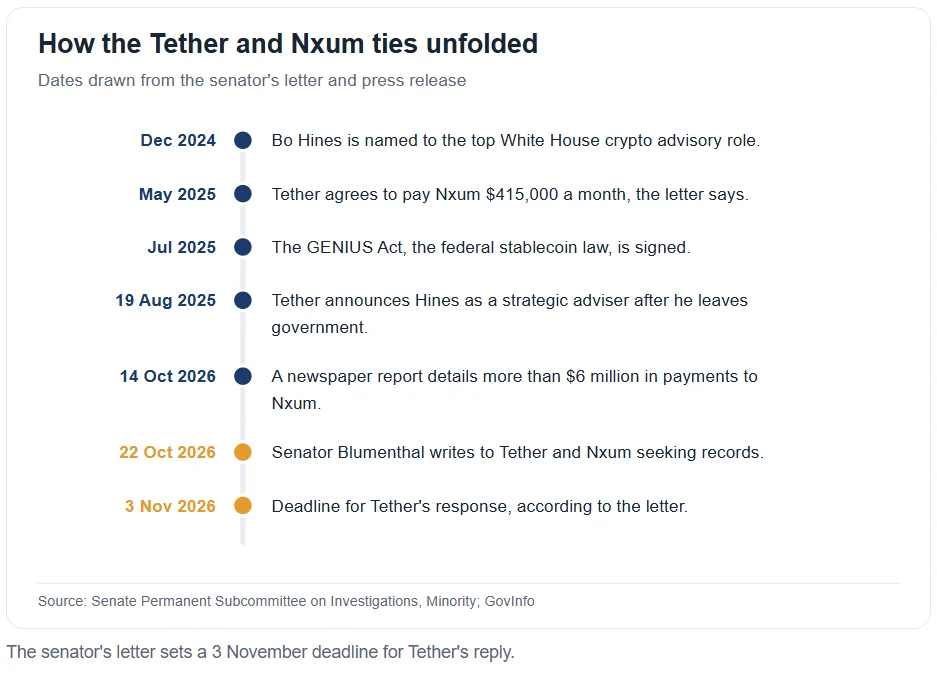
His letter cites reports that Tether agreed to pay Nxum $415,000 a month from May 2025.
Nxum was co-founded by Bo Hines, a former top White House crypto adviser.
Tether must respond by 3 November, and it says a past review found no wrongdoing.
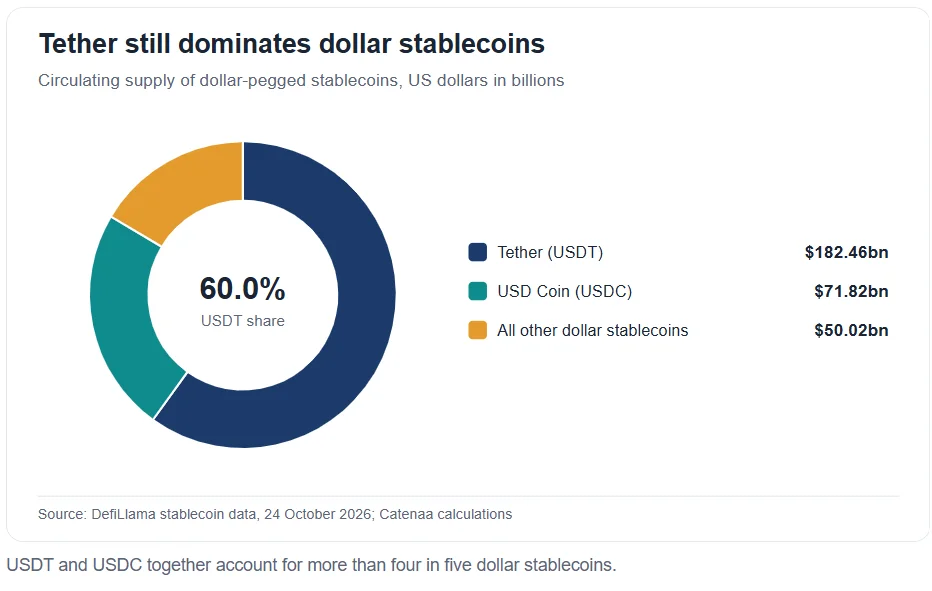
USDT holds 60.0% of the $304 billion dollar stablecoin market.
Tether faces new scrutiny in Washington. Senator Richard Blumenthal sent letters on 22 October to Tether and to the consulting firm Nxum, his office said. He leads the Democrats on the Senate Permanent Subcommittee on Investigations. Nxum was co-founded by Bo Hines, who previously led the White House council on digital assets.
What the senator wants from Tether
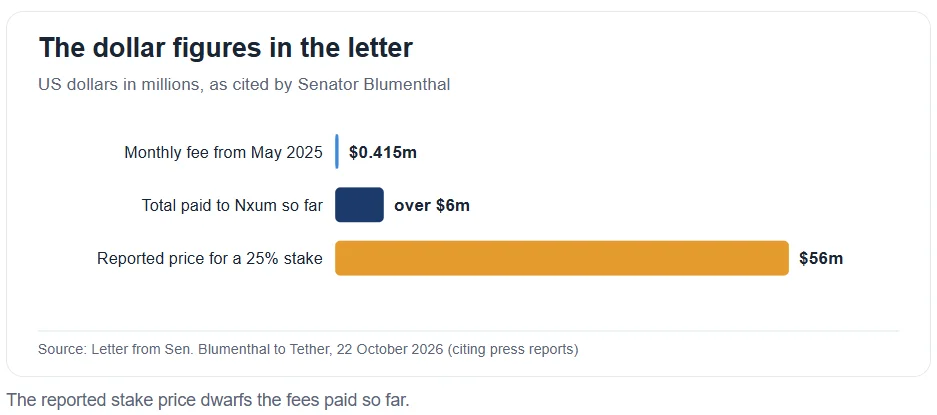
The questions focus on money. In May 2025, Tether agreed to pay Nxum $415,000 a month, the letter states, citing press reports. It adds that over $6 million then flowed into Nxum from Tether. The deal covered a “strategic brand and public affairs plan,” according to the senator’s office.
The letter also points to a reported plan for Tether to buy 25% of Nxum for $56 million. That price would value the whole firm at about $224 million. Furthermore, Hines reportedly kept a one-third stake in Nxum while in government.
Blumenthal asks for seven categories of records. They include a breakdown of all payments, with wallet addresses. He also wants Tether’s messages with Hines from 20 January to 9 August 2025. Other requests cover an intermediary called Notorious and its chief, Peter Vincer. In addition, the senator asks about a reported nondisclosure deal and any current ties between the two firms. The deadline is 3 November.
Why the timing matters
The payments overlapped with talks on federal stablecoin rules. Those talks produced the GENIUS Act, signed in July 2025. The letter alleges that Tether coordinated lobbying by Nxum on the bill. It labels some of the provisions at issue the “Tether loophole.” It says the payments may raise issues under ethics, anti-corruption, and lobbying laws. None of these claims have been proven.
For its part, Tether told reporters it is reviewing the letter. A spokesperson added that outside counsel had earlier run an internal probe and found no evidence of wrongdoing.
A second inquiry into Tether this autumn
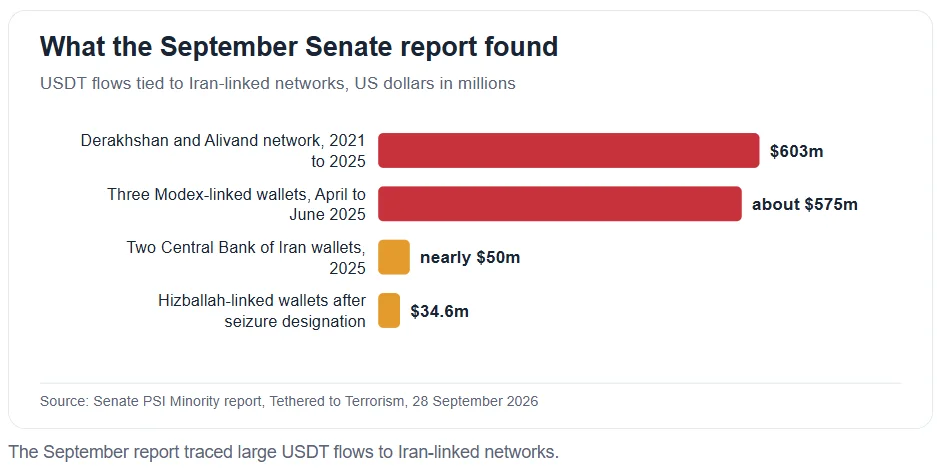
This is not the senator’s first look at Tether. In September, his staff published a report on crypto and Iran. It found that 84% of 846 sanctioned or targeted wallets dealt only or mostly in USDT. One network alone moved $603 million in the token over about four years. The report also traced nearly $50 million to two Central Bank of Iran wallets in 2025. Moreover, $34.6 million kept moving through Hizballah-linked wallets after their designation for seizure.
Why Tether’s size raises the stakes
Tether runs the largest stablecoin by far. USDT has a supply of about $182.46 billion, DefiLlama data show. That equals 60.0% of all dollar stablecoins. Its closest rival, USDC, holds about $71.82 billion. Meanwhile, the newer US token, USAT, is far smaller at roughly $183 million. As a result, any finding against Tether could ripple across crypto markets.
For now, the letters are requests, not subpoenas. Meanwhile, regulators are still writing the rules that put the GENIUS Act into effect. The OCC, for instance, issued its final rule on 21 October. Even so, the answers, or the lack of them, could shape the next round of stablecoin oversight.