


October 01, 2026 – The regulator also proposed letting regulated funds pay performance fees and easing interval fund rules. The aim is wider retail access to private markets.
In Summary
The SEC is seeking comment on a FINRA exam, valid for ten years, as a new route to accredited investor status.
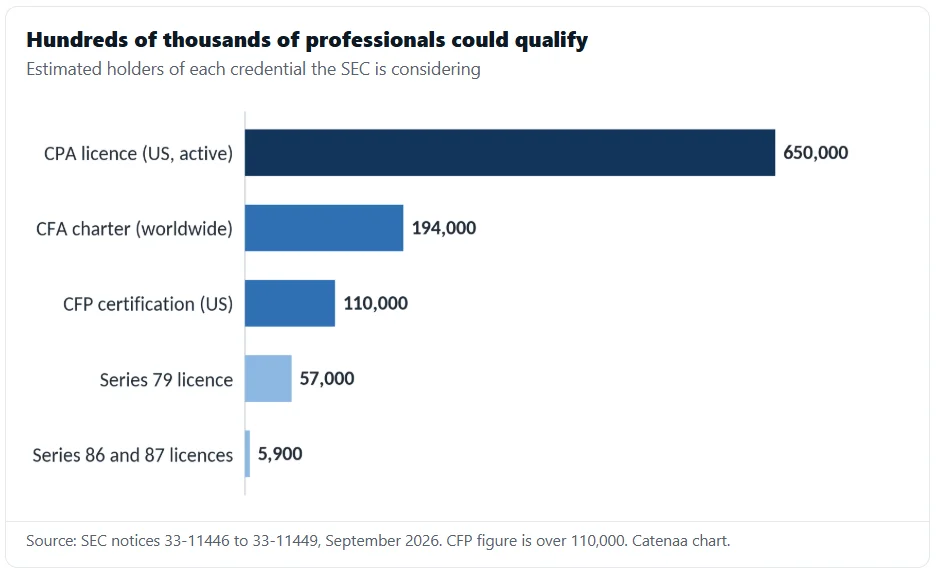
It is also considering CPA, CFA, CFP, Series 79 and Series 86 and 87 holders; about 650,000 CPAs alone hold active licences.
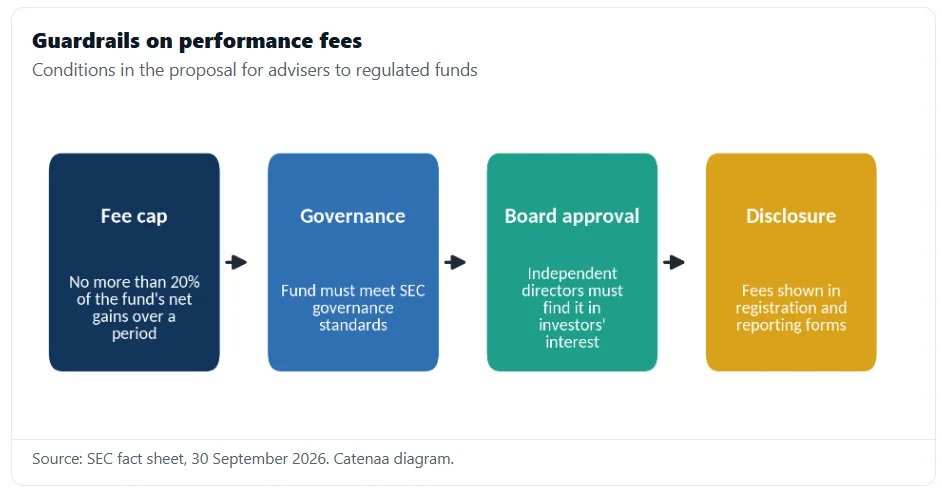
Proposed rules would let regulated funds pay performance fees of up to 20% of net gains, with board approval.
Interval and closed-end fund rules would be eased; comments run for 60 days after Federal Register publication.

The US Securities and Exchange Commission is weighing new ways to become an accredited investor. One idea is a new exam. The move could open private markets to far more retail savers.
Regulators voted on 30 September to propose rule changes that widen retail access to private market strategies. Separately, it asked for comment on new routes to accredited investor status.
Accredited investors can buy many private deals that ordinary investors cannot. These include stakes in private companies, hedge funds and venture capital funds.
Chairman Paul Atkins said investor demand for private market opportunities is growing. He also said the agency must protect those investors from bad actors and fraud.
How someone qualifies today
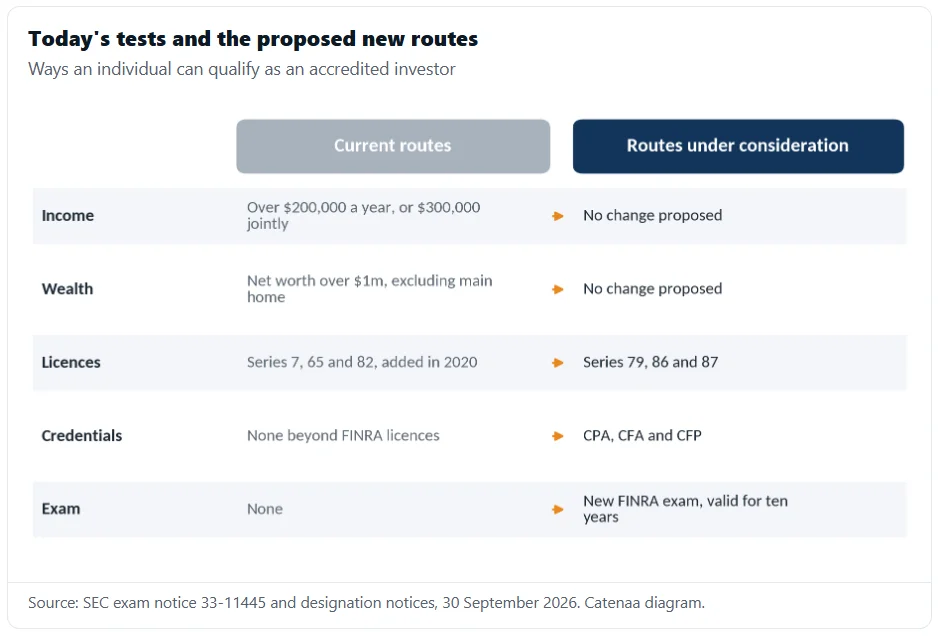
Currently, the main tests are financial. An individual needs income above $200,000 in each of the past two years, or $300,000 with a spouse or partner.
Alternatively, a person can qualify with net worth above $1 million, excluding their main home. Since 2020, holders of the Series 7, 65 and 82 licences also qualify.
The stakes are large. Companies raised about $400 billion in Regulation D deals in the year to June 2025, says the SEC’s exam notice. That excludes pooled funds.
The proposed accredited investor exam
The SEC is considering an exam developed by the Financial Industry Regulatory Authority. Passing it would show knowledge of securities and investing, rather than wealth.
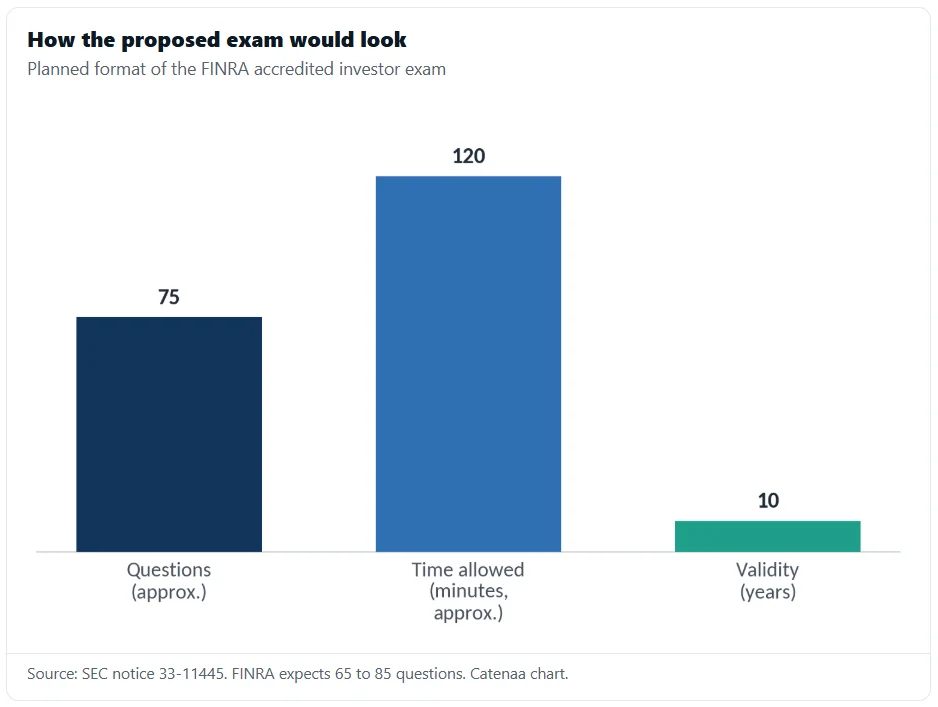
The test would follow the format of FINRA’s Securities Industry Essentials exam. It would have about 75 multiple-choice questions and last about two hours.
A pass would count for ten years. After that, a person would need to qualify again through another route.
The idea is simple. Instead of proving wealth, people could prove what they know.
This would give people without high incomes a path in. However, some commenters on past proposals have warned that a knowledge test alone may not protect investors from losses.
New credentials under review
The SEC also wants views on five more credentials. Three are well known: the CPA licence, the CFA charter and the CFP mark. The others are the Series 79 licence and the Series 86 and 87 licences.
The numbers are significant. For instance, the SEC’s CPA notice counts about 650,000 active CPA licence holders. However, it does not know how many already qualify through wealth.
There are also about 194,000 CFA charterholders worldwide and more than 110,000 CFP professionals in the US. The Series 79 notice estimates about 57,000 Series 79 holders.
Performance fees and interval funds
The rule proposals focus on regulated funds that ordinary investors can buy. First, advisers could earn performance fees from more clients, including regulated funds.
Under the SEC fact sheet, those fees could not exceed 20% of a fund’s net gains. In addition, the fund’s board, including a majority of its independent directors, must find the deal in investors’ interest.
Performance fees are standard in private equity and hedge funds. By allowing them in regulated funds, the SEC hopes more managers will offer private strategies to the public.
Second, the SEC wants to modernise interval funds. These funds buy back shares at set intervals instead of daily, which suits less liquid assets.
The changes would allow monthly repurchase intervals and more frequent discretionary repurchases. They would also replace fixed liquidity rules with a principles-based approach.
Interval funds would also be able to delay their first repurchase offer for longer. In addition, they could deduct certain deferred sales charges from repurchase proceeds.
Third, closed-end funds could issue several share classes under a common rule. Today, each fund needs an individual exemptive order.
What happens next
The public can comment for 60 days after the proposals appear in the Federal Register. Then the SEC will decide whether to adopt final rules.
The plans fit a wider push in Washington. Atkins linked them to President Trump’s executive order on access to alternative assets for 401(k) savers.
For savers, the trade-off is clear. Private deals can offer higher returns, but they also carry more risk. Many lock up money for years.
For fintech platforms that sell private deals, the stakes are high. A broader accredited investor pool could bring many new customers.
Critics, however, will focus on risk. Private assets are harder to value and to sell. For more on financial regulation and fintech, follow our coverage. The accredited investor debate now enters its comment phase.