


October 02, 2026 – The EU watchdog wants a narrow DeFi exemption, binding token rulings, and new duties for staking, lending, and crypto influencers.
In Summary
ESMA published its response to the Commission’s MiCA review on 30 September, the day the consultation closed.
It proposes a narrow legal definition of DeFi and a new regulated service for firms offering DeFi access.
Staking, lending and borrowing services would face targeted disclosure and conduct rules.
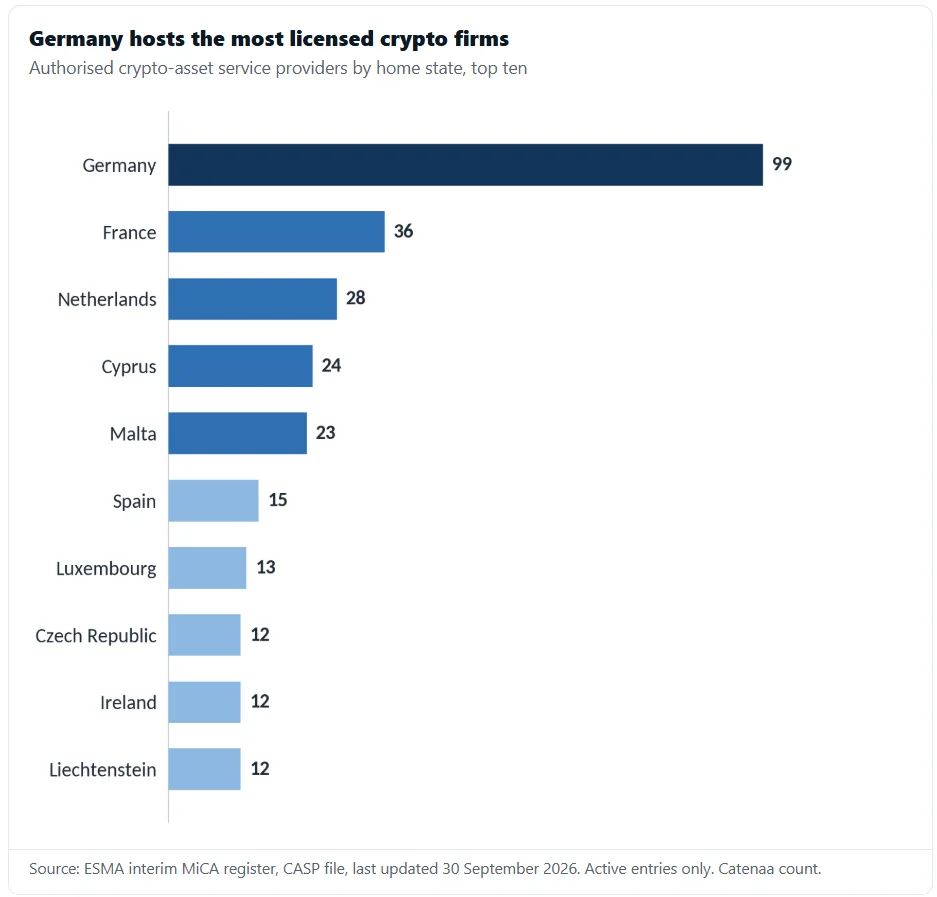
ESMA’s register lists 364 licensed crypto firms, with Germany home to 99 active providers.

Europe’s markets watchdog wants MiCA to reach further into DeFi, staking and crypto lending. It also wants tougher rules on ads and unlicensed stablecoins.
The European Securities and Markets Authority set out its ideas on 30 September. They form its reply to the European Commission’s review of the EU crypto rulebook.
The Commission opened that consultation on 20 May. After an extension, it closed at midnight on 30 September, the day ESMA published its paper.
The timing matters. MiCA’s transition period ended on 1 July. Since then, firms can no longer rely on old national permits to serve clients.
Why ESMA wants MiCA changed
In its 16-page response, ESMA says MiCA gives investors a solid base. However, it warns that gaps in the law invite firms to shop for the softest rules.
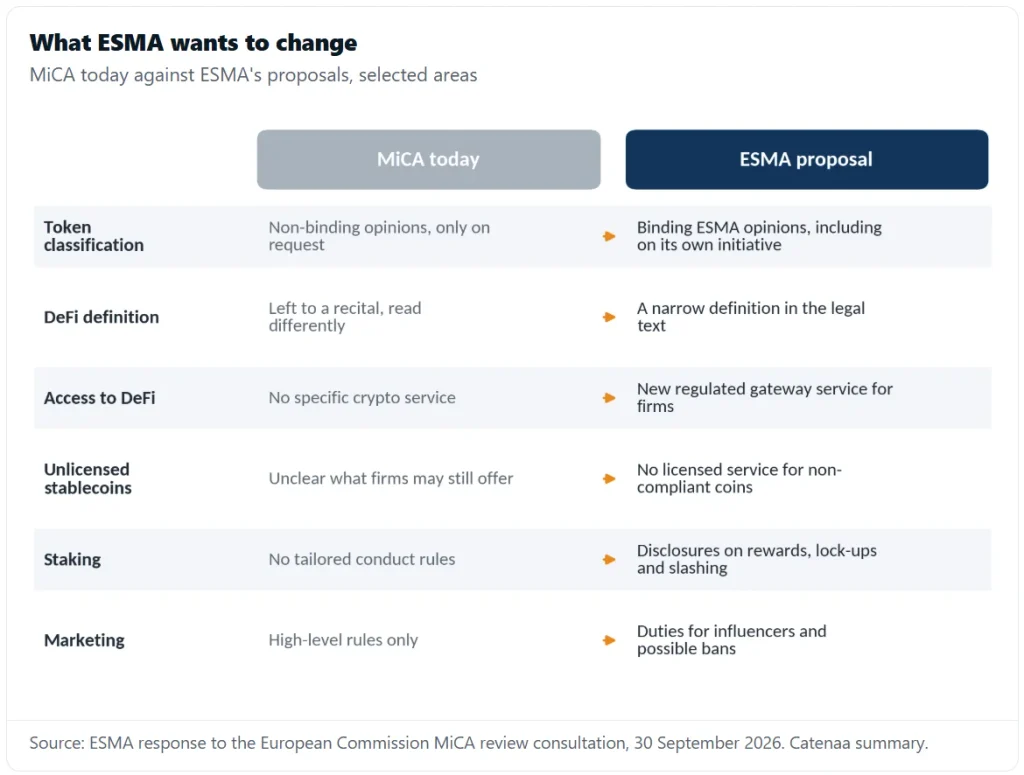
Token labels are one of the biggest problems. Supervisors often disagree on whether a token falls under MiCA, under securities law or outside both.
So far, ESMA has issued just one opinion on how to label a token. Moreover, such opinions are not binding and require a national request.
ESMA therefore wants power to issue binding rulings, even on its own initiative. Hybrid tokens and split NFTs are among the cases it has in mind.
A tighter line on DeFi
DeFi sits at the heart of the paper. MiCA exempts services run in a fully decentralised way, yet the law only mentions this in a recital.
As a result, ESMA warns of decentralisation washing. In other words, a known operator may use DeFi language to dodge MiCA duties.
The watchdog wants a clear definition in the law itself. In its view, the exemption should be as narrow as possible.
It also proposes a new regulated service. This would cover licensed firms that give clients access to DeFi apps through their own platforms.
Such gateway firms would have to explain protocol risks and how they pick and route trades. They would also need to manage conflicts of interest.
Still, ESMA says open-source code, self-custody and open networks should not count as regulated activity by default.
Staking and lending in focus
Staking gets its own section. ESMA accepts that staking is a core part of proof-of-stake networks, not lending in disguise.
Even so, it worries that ads stress rewards and play down risks. Those risks include slashing, lock-up periods, and what happens if a provider fails.
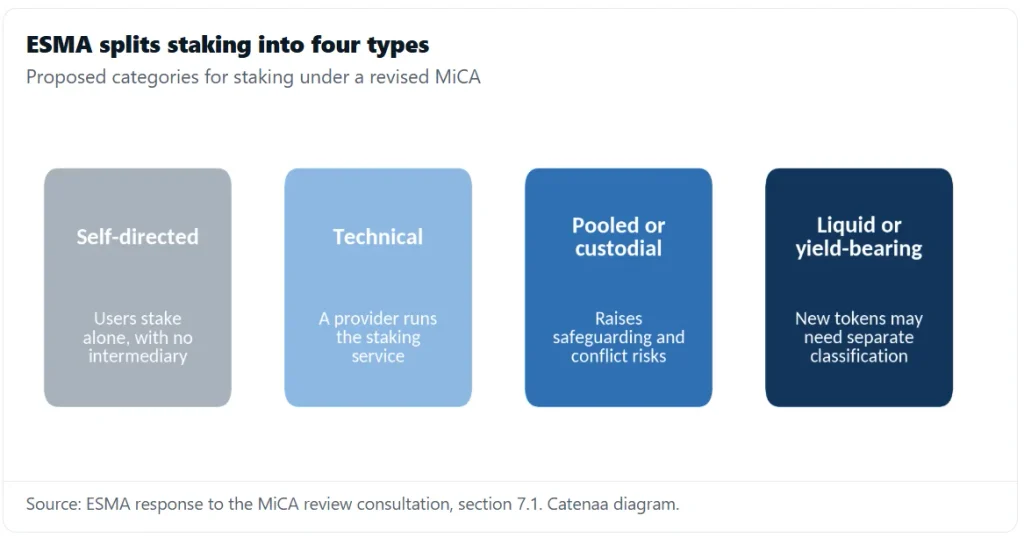
The paper sorts staking into four types, from staking alone to liquid staking tokens. Rules would scale with how much control a provider has.
Crypto lending draws sharper words. ESMA says such programmes are in effect black boxes, since clients often do not know who borrows their assets.
It wants firms to seek clients’ consent in writing and to disclose borrowers, collateral and loan terms. For borrowing, it wants clear warnings about forced sales and losses beyond collateral.
Stablecoins, influencers and scams
On stablecoins, ESMA wants a simple rule. Licensed firms should not offer any MiCA service tied to stablecoins that lack MiCA approval.
Meanwhile, ads are another target. ESMA proposes duties for influencers who promote crypto on behalf of issuers and crypto service providers.
It also flags misleading cost claims. Some platforms boast of zero commission, it says, while high spreads recoup or even exceed the lost fee.
To fight fraud, national regulators would gain clear powers to remove scam websites. In addition, ESMA wants power to make firms freeze suspect crypto quickly.
Lighter rules where they overlap
Not every idea adds burden. ESMA suggests that crypto projects file white papers with ESMA directly, cutting out a national step.
Investment firms already licensed under MiFID II would not need a second licence for crypto transfers. Capital rules would also move closer to those for investment firms.
What the MiCA register shows
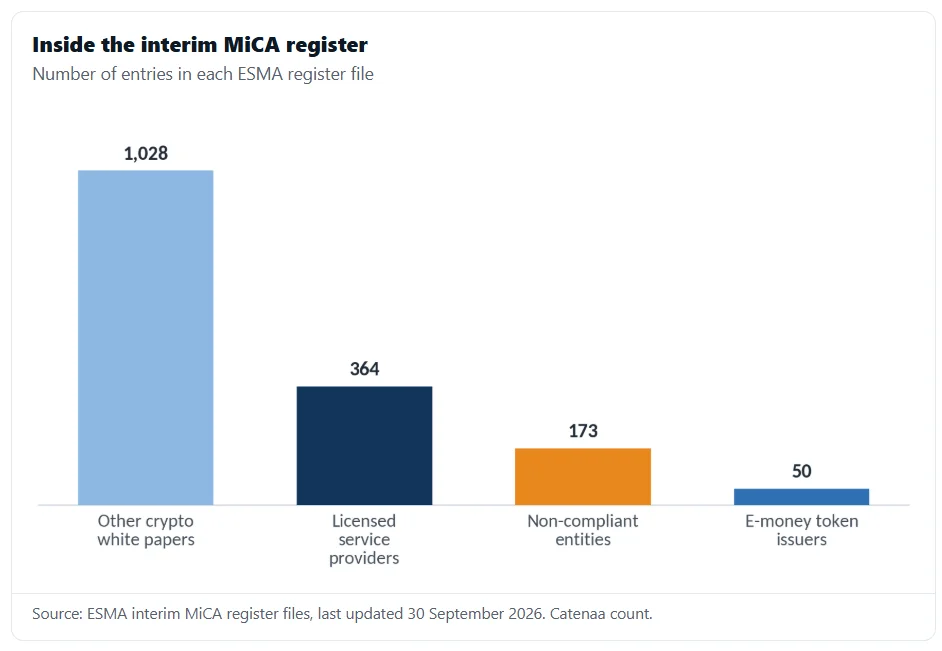
ESMA’s interim MiCA register, last updated on 30 September, lists 364 licensed crypto service providers. Two of those entries carry an end date.
Germany leads with 99 active firms, well ahead of France on 36. The Netherlands, Cyprus and Malta follow.
ESMA’s files also name 173 firms working without a licence, most of them flagged by Italy. In addition, they list 50 e-money token issuers and 1,028 other crypto white papers.
What happens next
The Commission must now weigh the replies before it reports on MiCA. Any changes to the law would then need approval from EU lawmakers.
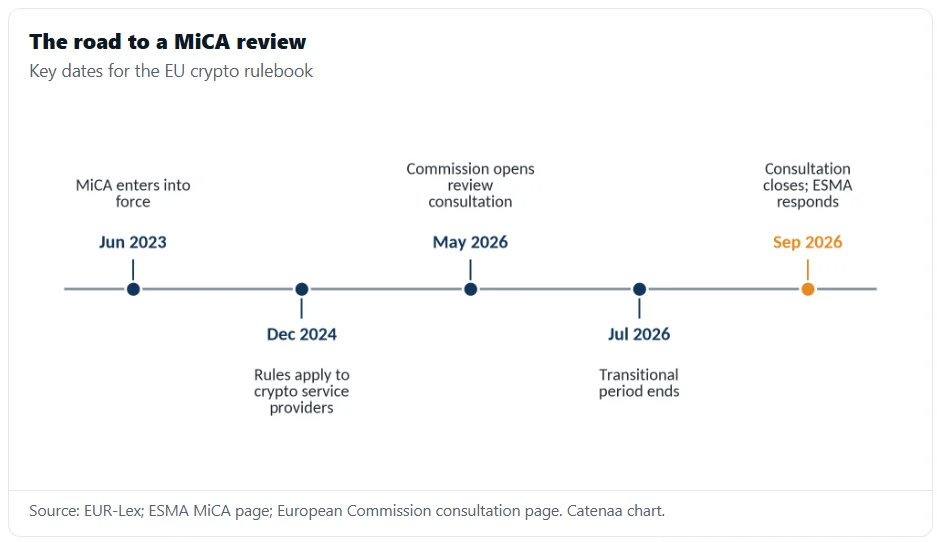
The original MiCA regulation entered into force in 2023. Now, DeFi gateways and staking desks look set for closer scrutiny.
For more on crypto regulation and stablecoins, follow our coverage. Europe’s MiCA rulebook now faces its first full review.