

October 01, 2026 – The prediction market told the CFTC its volume incentive scheme will close from 13 October. Regulators have been scrutinising such programmes.
In Summary
KalshiEX filed with the CFTC on 28 September to end its Volume Incentive Program no earlier than 13 October.
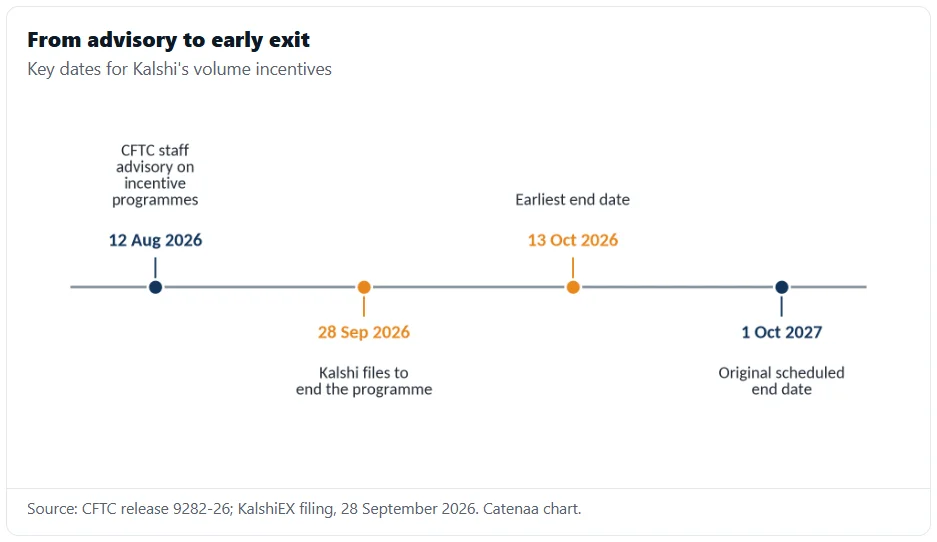
The programme had been scheduled to run until 1 October 2027; the filing gives no reason for ending it.
CFTC staff warned in August that some incentive programme filings were deficient.
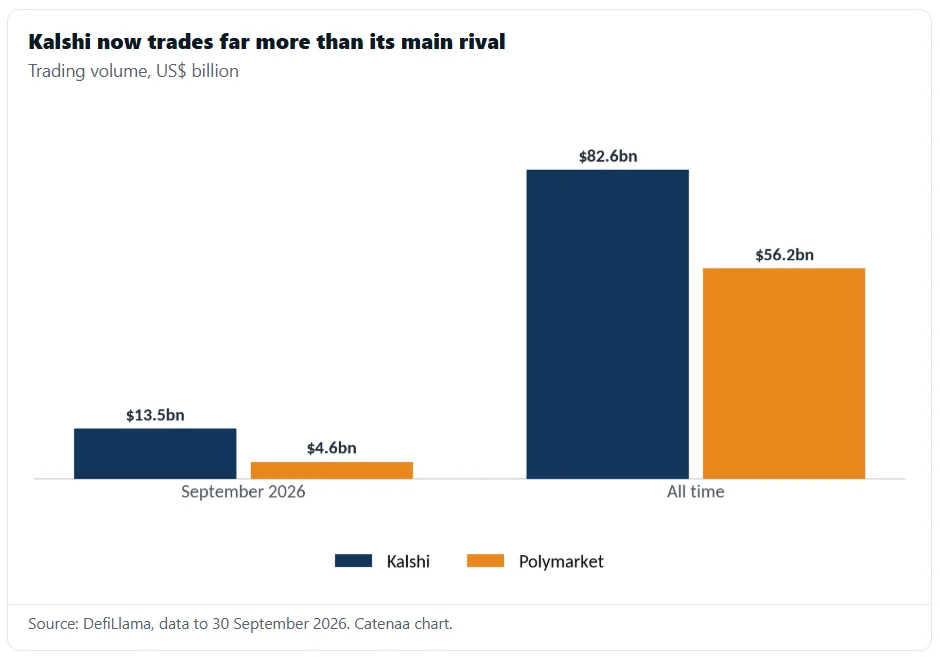
Kalshi traded a record of about $13.5 billion in September, nearly three times Polymarket’s volume.

Kalshi is ending its Volume Incentive Program almost a year ahead of schedule. The prediction market told regulators the scheme will close no earlier than 13 October.
KalshiEX filed the change with the Commodity Futures Trading Commission on 28 September. The CFTC posted the notice on its website. The programme had been due to run until 1 October 2027.
Notably, the filing gives no reason for the decision. It relies on a Kalshi rule that lets the exchange change or end incentive programmes at its sole discretion.
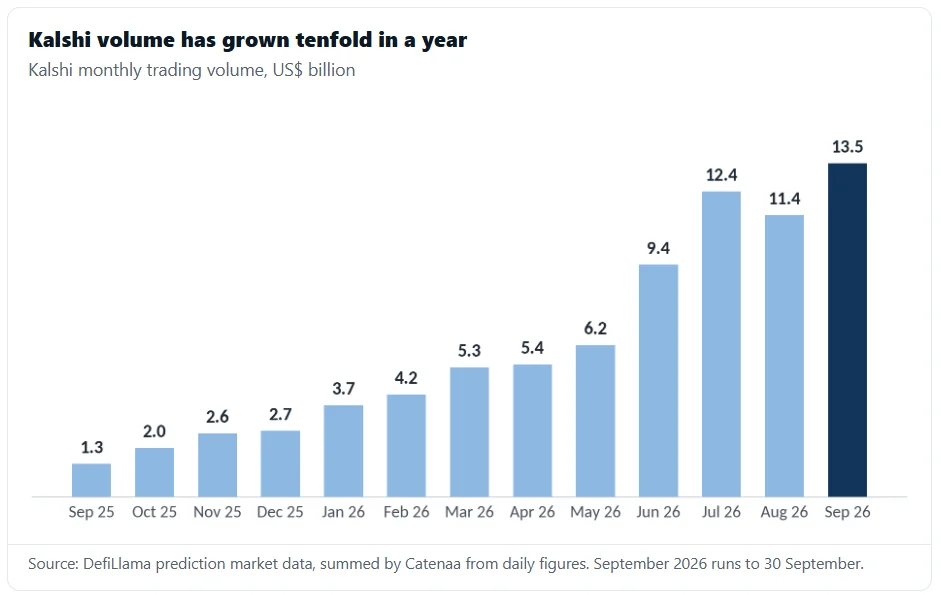
The move matters because Kalshi has become one of the busiest event trading venues in the world. Its monthly volume hit a record of about $13.5 billion in September, based on DefiLlama data.
How the Kalshi volume programme worked
The filing states the scheme’s purpose plainly. It aimed to increase volume and liquidity on the order book and, in turn, improve pricing efficiency.
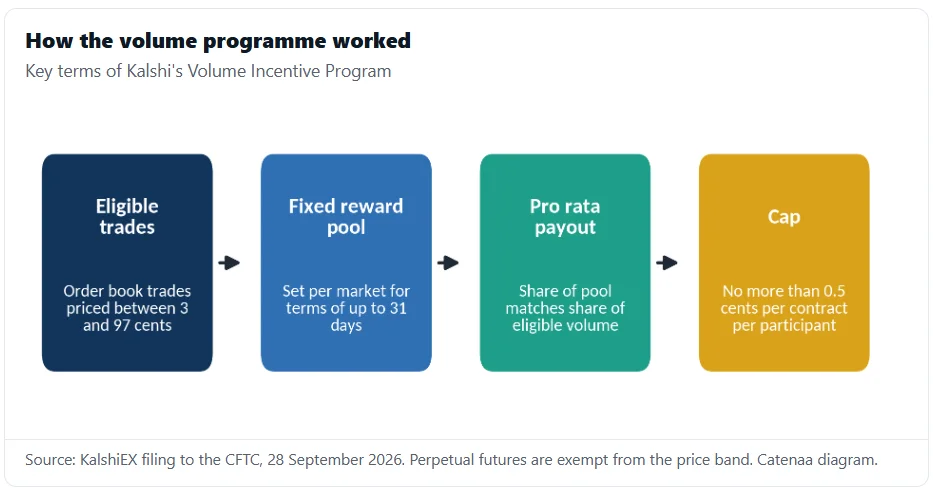
The scheme paid traders for activity on Kalshi’s central order book. Each eligible market carried a fixed reward pool for a term of up to 31 days.
At the end of each term, traders shared the pool in proportion to their eligible volume. In other words, a trader with 10% of the volume earned 10% of the reward.
Only trades priced between 3 cents and 97 cents counted for event contracts. That band excluded near-certain outcomes, where trading adds little to price discovery. Perpetual futures were exempt from the band.
The exchange also capped rewards. For event contracts, payouts could never exceed 0.5 cents per contract for each participant. The limit aimed to avoid price distortion.
Not everyone could join. The rules shut out Kalshi affiliates, official market makers and customers trading through brokers. Kalshi’s chief regulatory officer could also revoke status for abusive trading.
The regulatory backdrop
Regulators have been watching these schemes closely. On 12 August, CFTC staff issued an advisory on incentive programmes for prediction markets.
The staff letter said filings for such programmes had increased, and some were procedurally or substantively deficient. It reminded exchanges to check that incentives do not encourage manipulation or abusive trading.
In its own filing, the exchange certified that ending the scheme complies with the Commodity Exchange Act. It also pledged to keep records of all trades and payments until the programme closes.
Exchanges can self-certify incentive programmes under a streamlined review of 10 business days. However, they must still show that each programme complies with the CFTC’s core principles.
Reports this week suggested that regulators are examining incentive schemes across prediction markets. The CFTC has not announced any action, and Catenaa could not confirm those reports.
Some traders also raised questions on social media this month about repetitive trades in Kalshi’s crypto perpetual markets. Kalshi’s filing does not mention them, and Catenaa has not verified the claims.
What the volume data show
Kalshi’s growth has been rapid. According to DefiLlama data, monthly volume rose from about $1.3 billion in September 2025 to $13.5 billion in September 2026.
The steepest jump came in mid-year. Volume climbed from $6.2 billion in May to $9.4 billion in June, then to $12.4 billion in July.
Kalshi now trades far more than its main rival. Polymarket handled about $4.6 billion in September, roughly a third of Kalshi’s total.
Over their lifetimes, Kalshi has processed about $82.6 billion of volume, against about $56.2 billion for Polymarket.
Activity stayed high at the end of the month. The exchange handled about $460 million on 30 September and about $3.4 billion over the previous seven days.
Volume figures, however, do not show how much activity came from incentives. That makes the next few weeks an important test.
What to watch next
Once the rewards stop, traders will see how much organic demand remains. A sharp drop in volume would suggest the scheme had been inflating activity.
By contrast, steady volume would support Kalshi’s case that real demand drives its growth. Either way, October’s data will matter for a company that has drawn rich valuations.
Traders who relied on the rewards may also change their habits. Some could move to other venues that still pay incentives.
Meanwhile, other exchanges may review their own programmes. The CFTC’s advisory applies to every designated contract market that lists event contracts.
For more on prediction markets and regulation, follow our coverage. Kalshi’s early exit from volume rewards marks a new phase for the sector.