

October 11, 2026 – Kalshi’s public trade log shows cheap bets on Katie Zacharia landed hours before news of her appointment. The exchange has opened a review.

In Summary
Kalshi is reviewing trades that backed Katie Zacharia as press secretary before the news broke.
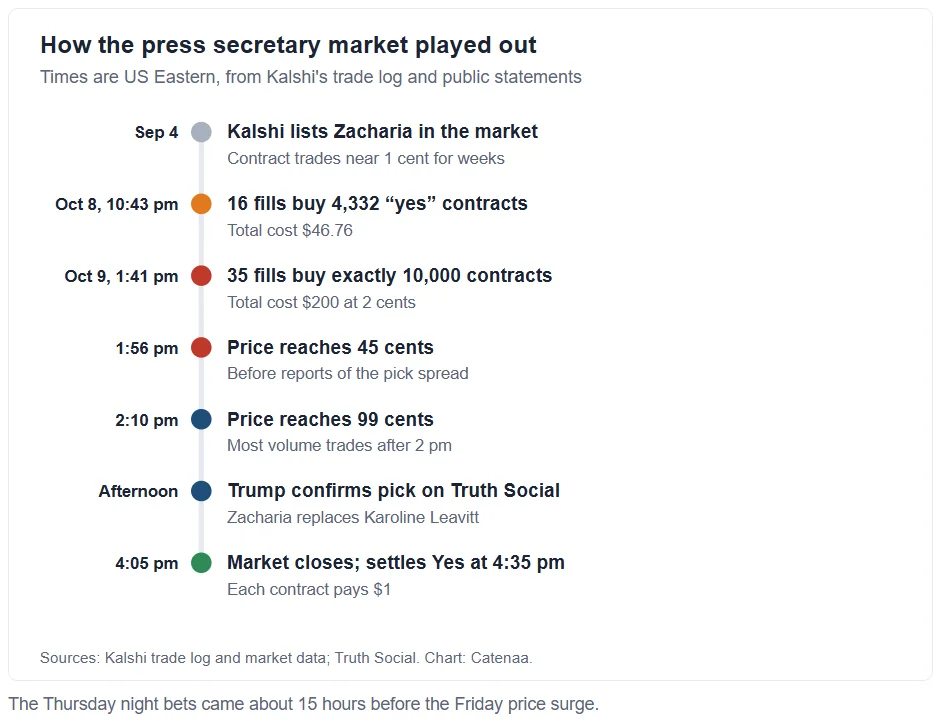
Its public log shows 4,332 “yes” contracts bought for $46.76 at 10:43 p.m. ET on Oct. 8.
At 1:41 p.m. on Oct. 9, fills totaling exactly 10,000 contracts cost $200 at 2 cents each.
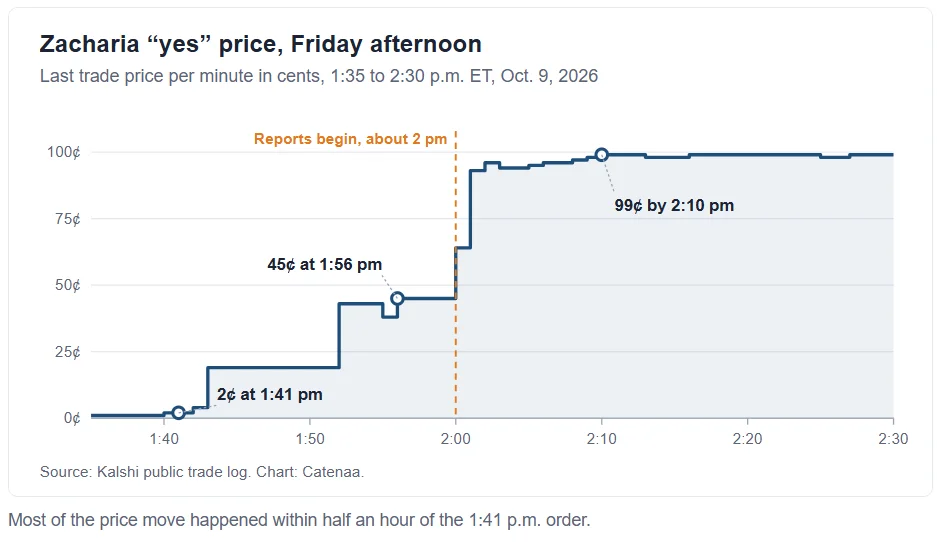
The price reached 45 cents by 1:56 p.m. and 99 cents by 2:10 p.m.
In August, the CFTC ordered a former White House teleprompter operator to pay $172,539 over Kalshi trades.
Kalshi insider trading concerns have returned after a set of well-timed bets on the next White House press secretary. The exchange is reviewing trades that backed Katie Zacharia before her appointment became public. A Kalshi spokesperson confirmed the review to reporters, and Kalshi’s public trade log shows when the bets landed.
President Donald Trump confirmed the pick in a Truth Social post on Friday, Oct. 9. “I am confident that Katie will deliver strong results for our Country,” he wrote. Zacharia, a senior communications adviser at Truth Social, replaces Karoline Leavitt. She previously served as a spokesperson and deputy assistant secretary for public affairs at Homeland Security.
What the Kalshi trade log shows
Kalshi added a Zacharia contract to its next-press-secretary market on Sept. 4. For weeks, Zacharia contracts barely traded. From Sept. 5 to Oct. 7, the log records 31 trades, mostly at 1 cent. That price implied roughly a 1% chance. Put simply, a buyer paid 1 cent for a contract worth $1 if correct. Kalshi listed 56 possible picks in the event, and every other name settled No.
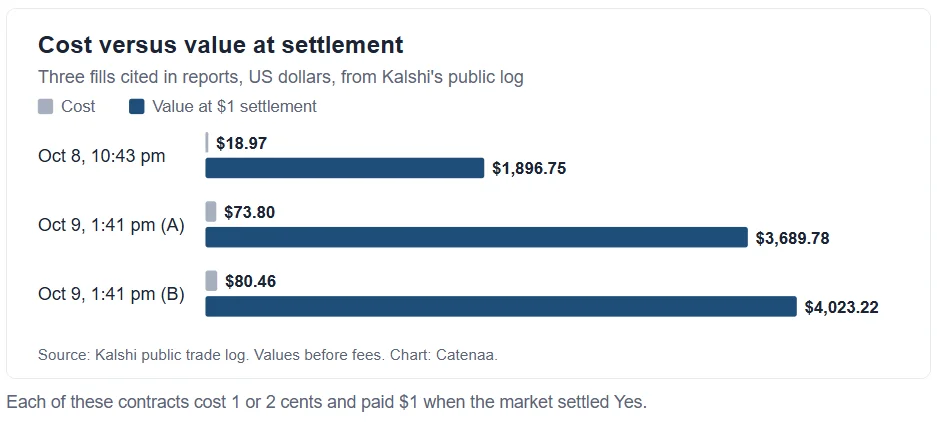
Then activity picked up. At 10:43 p.m. ET on Thursday, Oct. 8, the log shows 16 fills for 4,332 “yes” contracts. Together, they cost $46.76. The largest fill, 1,896.75 contracts at 1 cent, cost $18.97 and paid $1,896.75 at settlement.
A second burst came at 1:41 p.m. ET on Friday. The log shows 35 fills that add up to exactly 10,000 contracts at 2 cents, or $200. That round total suggests one large order, although the public data do not identify traders. Two of those fills cost $73.80 and $80.46, and they settled for $3,689.78 and $4,023.22.
Prices jumped before the news spread
Prices moved fast after that order. The contract traded at 19 cents by 1:43 p.m. and 45 cents by 1:56 p.m., the log shows. Trades during the 2:00 p.m. minute ranged from 43 cents to 85 cents. By 2:10 p.m. ET, the contract changed hands at 99 cents. Published reports of the pick began around 2 p.m. ET.
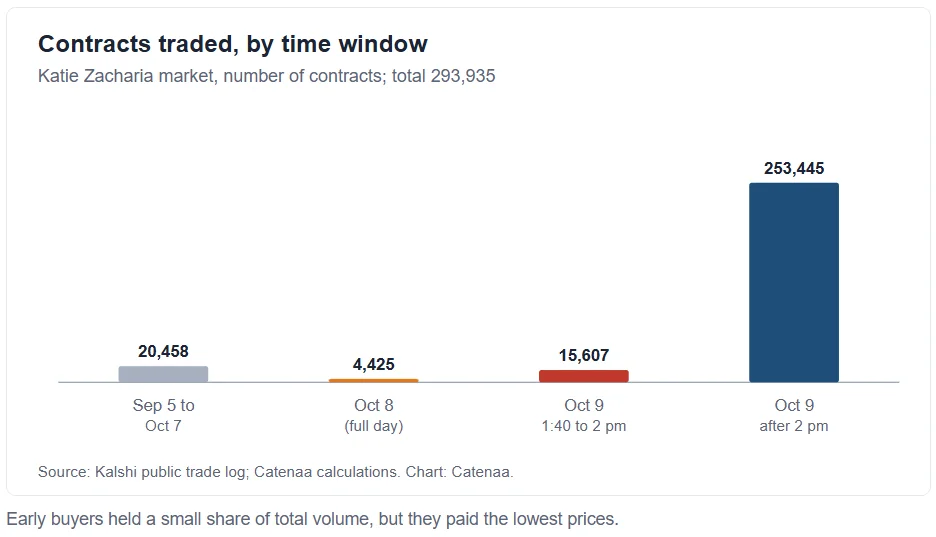
In total, traders bought 20,033 “yes” contracts from Thursday through 2 p.m. Friday, for about $1,388. At settlement, those contracts were worth roughly $20,000 before fees. By contrast, about 86% of the market’s 293,935 contracts changed hands after 2 p.m. ET. The market closed at 4:05 p.m. ET and settled Yes at 4:35 p.m., Kalshi data show.
Kalshi insider trading rules and past cases
Kalshi’s rules for this market bar anyone holding material, nonpublic information about the outcome. They also bar employees of the market’s source agencies. Confirmed violations can lead to fines, bans and reports to the CFTC.
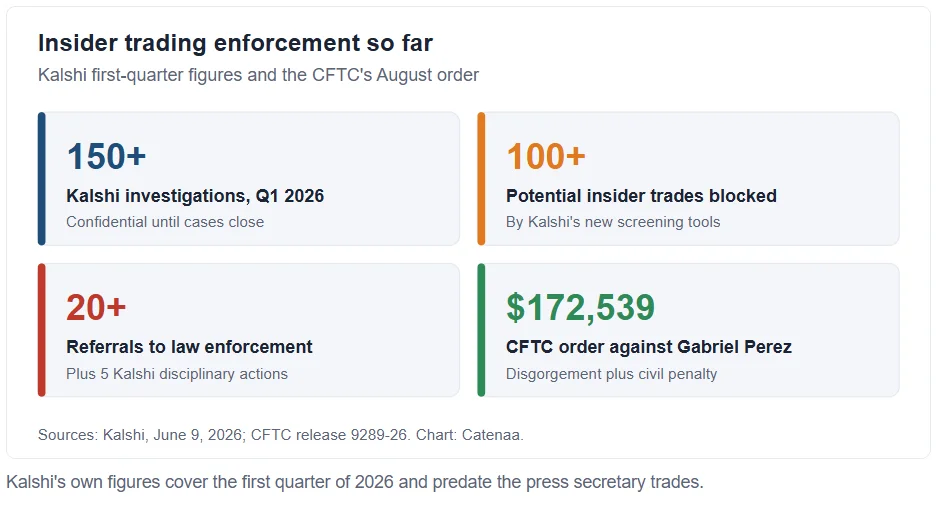
Regulators have acted before. In August, the CFTC ordered former White House teleprompter operator Gabriel Perez to pay $172,539. He had traded presidential mention markets using nonpublic information from his federal job. The order also imposed a three-year trading ban and thanked Kalshi for its help. In July, the agency also ordered former Rep. George Santos to pay $35,069.98 over a State of the Union contract.
Kalshi has tightened its own checks as well. In June, it began collecting employment details before traders enter high-risk markets. It also reported more than 150 investigations in the first quarter. Over the same period, it blocked more than 100 potential insider trades and made over 20 referrals to law enforcement.
Political pressure keeps building
Congress is watching too. House Oversight Chairman James Comer opened a probe into insider trading on Kalshi and Polymarket in May. His letters asked both platforms how they verify identities, enforce geographic limits, and detect unusual trading. He wrote that a “growing pattern of insider trading activity” on such platforms “indicates that Congressional action may be necessary.”
The press secretary case adds a political twist, since the outcome depended on one decision inside the White House. As of Sunday, neither Kalshi nor the White House had publicly named any trader.
What to watch next
Three questions now matter. First, can Kalshi tie the bets to anyone with advance knowledge? Second, will the CFTC open its own case, as it did with Perez? Finally, the episode lands as the CFTC moves to define event contracts as swaps under an Oct. 9 proposal. Each answer will shape how far Kalshi insider trading controls must go. Even a firm Kalshi finding would not settle the matter, since only regulators and prosecutors can bring charges.