


October 25, 2026 – JPMorgan analysts say SEC, OCC and accounting steps soften the blow from the stalled bill. Yet they cannot make US crypto rules durable.

In Summary
JPMorgan says agency actions partly offset the CLARITY Act’s failure in the Senate.
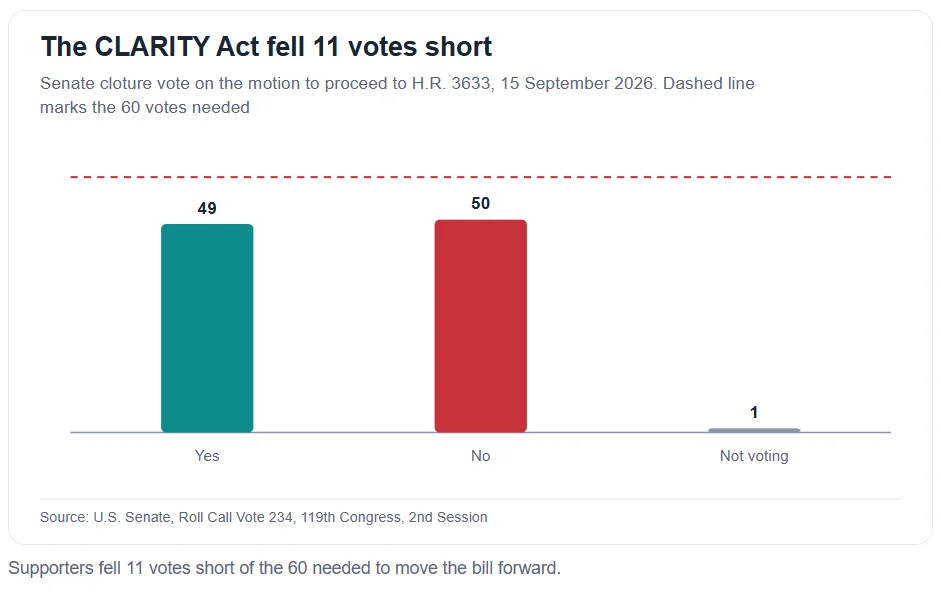
The bill fell 49 to 50 on a cloture vote that needed 60 votes.
The SEC, OCC and FASB have all moved on crypto rules since mid-September.
Analysts warn that a change of administration could reverse agency rules.
They see the CLARITY Act as unlikely to pass in 2026, with a possible return in 2027.
US regulators have softened the blow from the stalled CLARITY Act, JPMorgan says. However, the bank’s analysts warn that only a law can make crypto rules last. A team led by Nikolaos Panigirtzoglou made the case in a client note this week. “Only legislation would make the framework more durable over the longer term,” they wrote.
How the CLARITY Act stalled
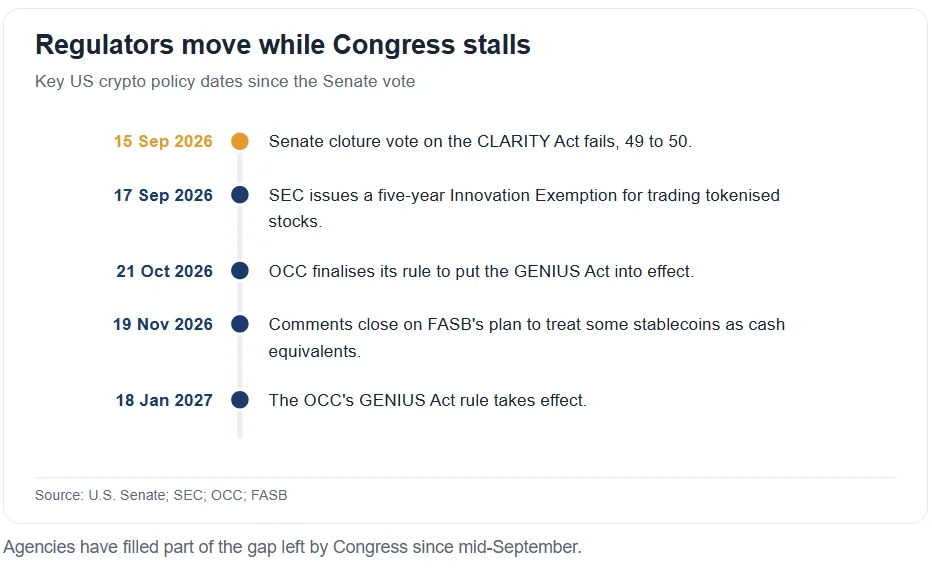
The market structure bill hit a wall in September. On 15 September, a Senate cloture vote on taking up H.R. 3633 failed by 49 to 50, the Senate record shows. Under Senate rules, the motion needed 60 votes. One senator did not vote.
JPMorgan now sees the bill as unlikely to pass in 2026. Instead, it expects a possible return in 2027. Meanwhile, the analysts describe today’s rules as a patchwork. In their view, a new Democratic administration could unwind parts of it within about two years.
What regulators did instead
Agencies kept moving. On 17 September, the SEC issued an Innovation Exemption for trading tokenised stocks. It runs for five years after publication. Tokenised shares must carry the same rights as the original stock, and trading venues face limits on symbols and volume.
Next, the OCC finalised its GENIUS Act rule on 21 October. The rule sets standards for stablecoin issuers under its watch and takes effect on 18 January 2027. Rules on money laundering and sanctions will follow in a separate rulemaking with the Treasury. In addition, the OCC has granted national trust charters to a growing number of crypto firms, JPMorgan notes. Such charters, the analysts write, “tend to be difficult to unwind in practice.” Even so, the Independent Community Bankers of America has sued the OCC over parts of those approvals, the note adds.
Accounting could widen stablecoin use
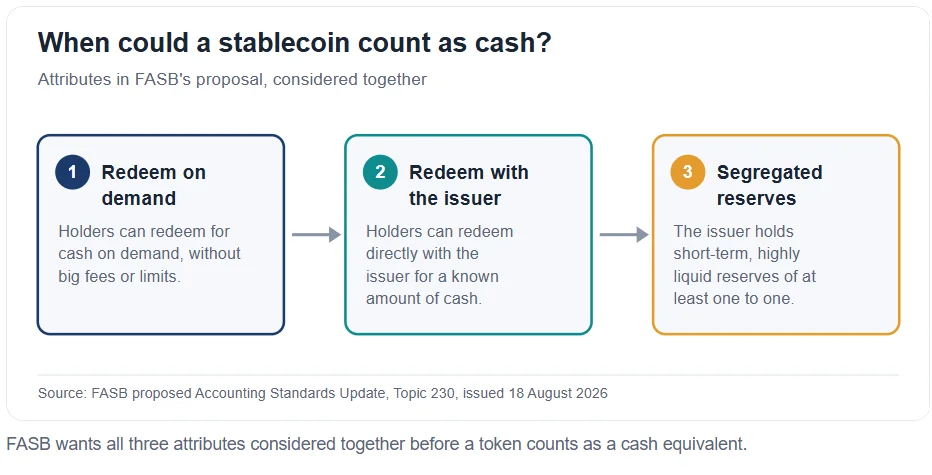
Accounting may matter most for everyday use. The FASB has proposed a standard that would let firms treat some stablecoins as cash equivalents. Comments close on 19 November. A token would need on-demand redemption, a direct claim on the issuer and fully backed reserves. JPMorgan says adoption “would support broader use beyond crypto trading.”
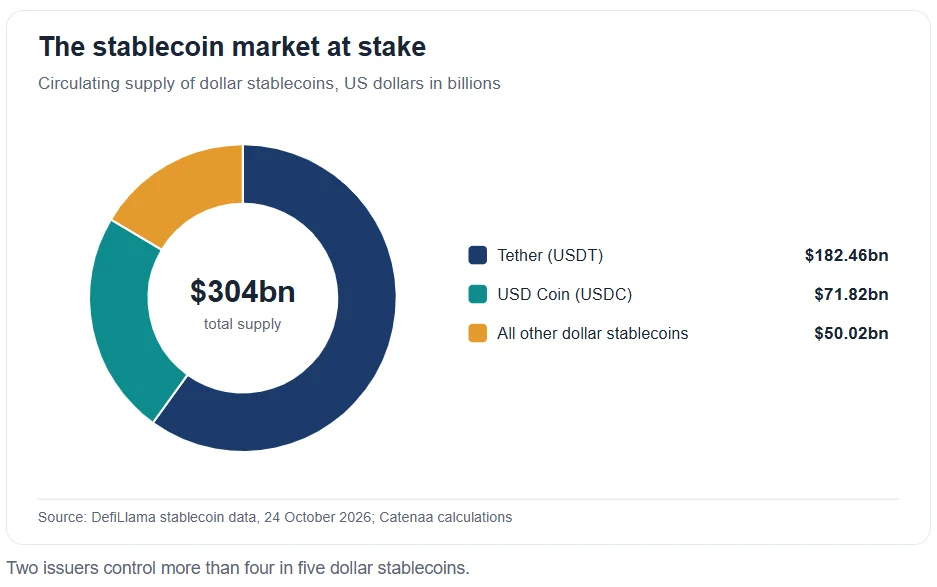
The stakes are large. Dollar stablecoins now total about $304 billion, DefiLlama data show. Tether’s USDT holds 60% of that supply.
Why the CLARITY Act still matters
Not all signals are positive. Some companies have chosen not to tokenise their shares, the analysts note. In their view, that has weighed on tokens such as ether, along with weaker ETF flows. The CFTC is also exploring leveraged crypto trading on US platforms. The analysts argue that bringing such trading onshore could deepen liquidity and improve price discovery. Yet JPMorgan sees little progress there before 2027.
Overall, the bank calls market sentiment “relatively constructive.” Still, it expects “elevated political and legal risk premia” to persist without the CLARITY Act. For investors, that means policy risk will stay part of the crypto price. Until Congress acts, each new agency step will carry less weight than a statute would. That is why the fate of the CLARITY Act still matters to markets.