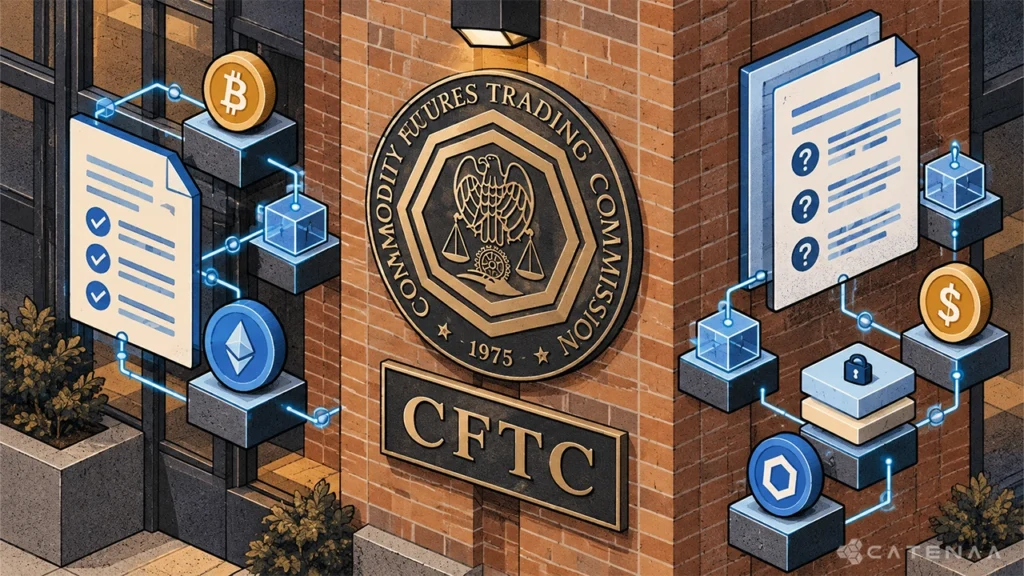


September 26, 2026 – Three CFTC divisions refreshed guidance on tokenised investments and ledger record keeping, days after the SEC opened a path for tokenised share trading.

In Summary
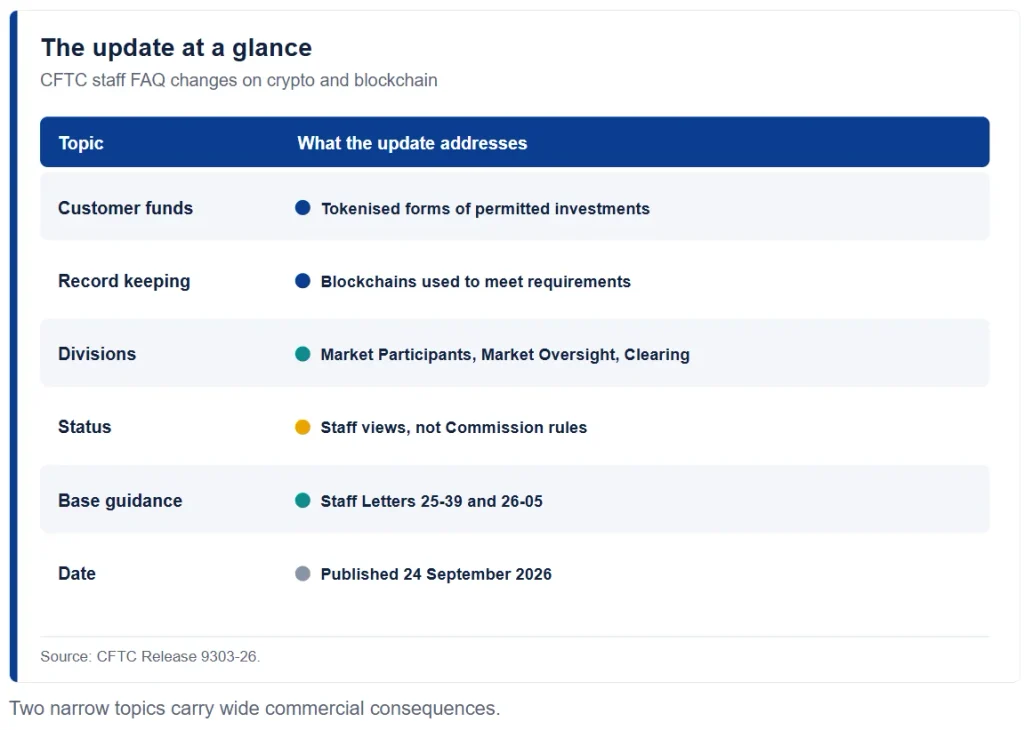
CFTC staff updated their crypto asset FAQs on 24 September 2026.
The changes address investments of customer funds in tokenised forms of permitted investments.
They also cover the use of blockchain technologies to satisfy record keeping requirements.
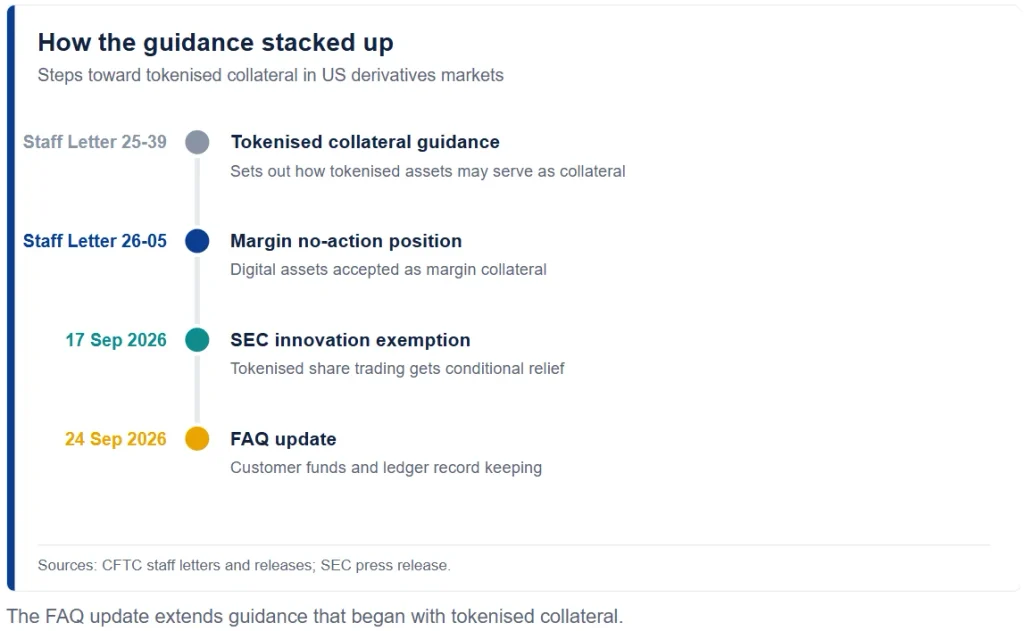
The guidance builds on Staff Letter 25-39 on tokenised collateral and Staff Letter 26-05 on digital assets as margin.
Chairman Michael Selig said the update supports regulatory clarity for the crypto industry.
Derivatives firms now have clearer answers on digital assets. CFTC staff updated their crypto FAQs on 24 September. The changes cover tokenised collateral and blockchain record keeping.
Three divisions signed off on the update. They are the Market Participants Division, the Division of Market Oversight and the Division of Clearing and Risk. Each supervises a different part of the market.
Michael Selig, the agency’s chairman, welcomed the work. He said the update fits “the agency’s ongoing efforts to provide regulatory clarity for the crypto industry.”
What the Tokenised Collateral FAQs Say
Two subjects sit at the centre. The first covers investments of customer funds in tokenised forms of permitted investments. The second covers using blockchains to meet record keeping duties.
Both points sound technical, yet they matter commercially. Brokers must hold client money in a narrow list of safe assets. Allowing tokenised versions widens that choice without changing the underlying risk. The asset stays the same, only its wrapper changes.
Record keeping is the second lever. Firms must store trade and position data in a durable, checkable form. A ledger can meet that test when controls satisfy the rules.
That point removes a quiet obstacle. Compliance teams often kept paper-style systems beside any blockchain trial. Running two records doubles cost and invites errors.
Building on Earlier Guidance
This update does not start from scratch. It follows Staff Letter 25-39, which set out guidance on tokenised collateral. It also builds on Staff Letter 26-05, a no-action position for digital assets used as margin.
Margin is where the money sits. Clearing houses and brokers hold large pools of collateral against open positions. Moving that collateral faster reduces funding costs across the system.
Tokenisation promises exactly that speed. Transfers can settle in minutes rather than hours, at any time of day. Consequently, firms can move collateral to the right place with smaller buffers.
Why the FAQ Format Matters
Staff FAQs are not rules. They explain how divisions read existing requirements, so they can change without a rulemaking. That flexibility cuts both ways.
Firms get speed. A compliance team can act on published guidance within weeks. Waiting for a full rulemaking usually takes years.
Regulators gain flexibility as well. They can adjust an answer when technology shifts. Markets, however, prefer rules they can cite in a dispute.
Yet certainty stays limited. Guidance binds neither the Commission nor a future court. Legal teams therefore treat FAQs as a floor, not a shield.
Two Agencies, One Direction
The securities regulator moved days earlier. The SEC granted five-year relief for venues trading tokenised shares. That order lets qualifying venues use automated market makers.
Together, the two actions cover a wide surface. Tokenised shares now have a trading path, while tokenised collateral has a margin path. Custody, clearing and record keeping all get attention.
Market structure follows such plumbing decisions. Collateral moves before products do, because treasurers control the purse strings. So margin rules often decide which technology wins.
Banks have already signalled interest. Several run tokenised deposit and repo pilots with clearing houses. Clear guidance gives those projects a business case.
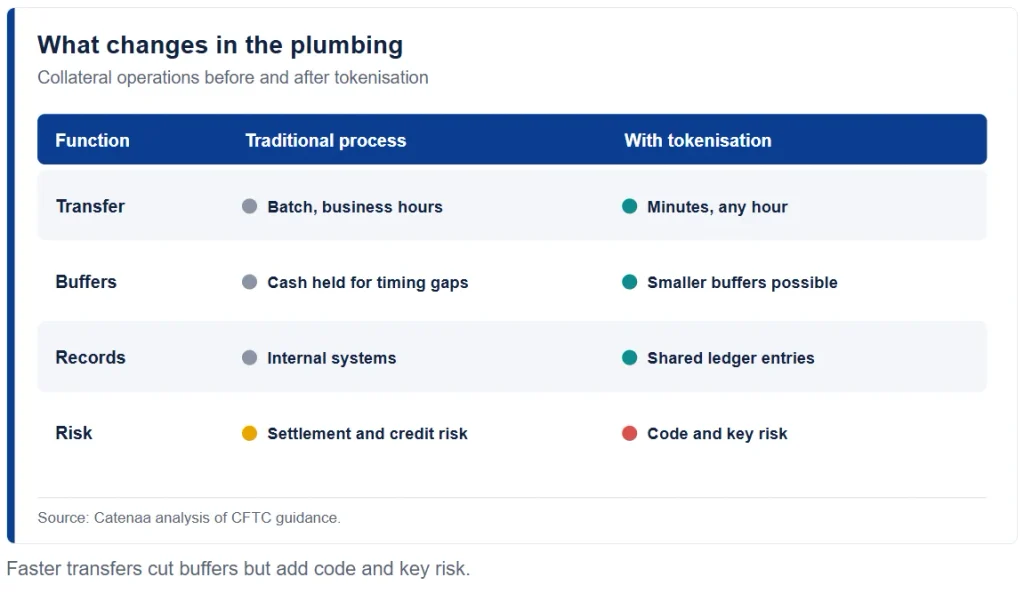
What Firms Should Do Now
Three steps make sense for registrants. First, map which permitted investments have credible tokenised versions. Liquidity and redemption terms deserve close study.
Second, test the operational chain end to end. That means custody, valuation, transfer and reporting under stress. Auditors will ask for evidence, not slides. A failed test in practice beats a surprise in a crisis.
Third, document controls over keys and smart contracts. Supervisors in several countries now ask the same questions. Good records shorten every examination, and weak ones invite follow-up visits.
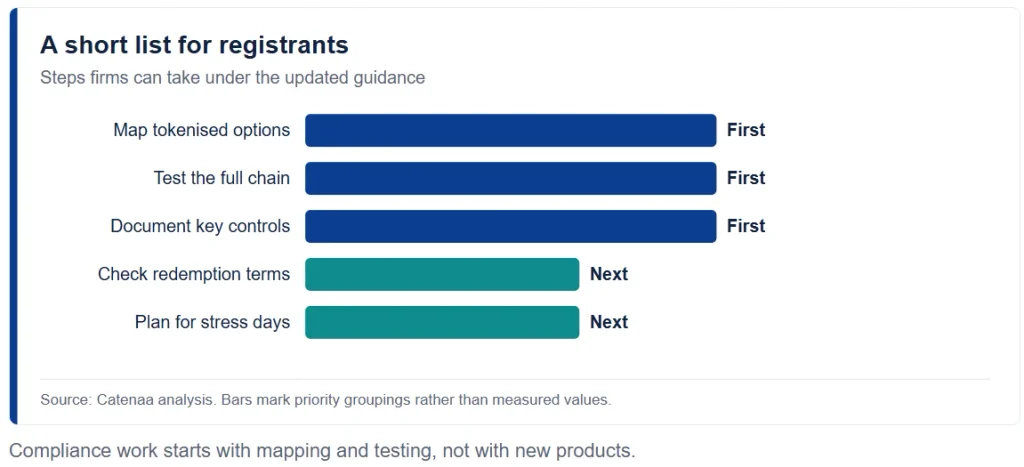
The Open Questions
Several issues remain unsettled. Valuation during market stress is one. A tokenised money fund must still redeem at par when everyone asks at once. Otherwise the collateral fails exactly when firms need it.
Interconnection is another. If collateral sits on one chain and margin calls arrive on another, timing risk appears. Bridges add both convenience and fragility, as several past failures showed.
Finally, scale remains small. Tokenised collateral programmes run in the low billions of dollars worldwide. The guidance removes friction, yet adoption decides whether the savings arrive.
Watch three markers from here. First, whether a clearing house accepts a tokenised fund as margin. Second, whether auditors accept ledger records without a parallel system. Third, whether volumes move beyond pilots.