

September 18, 2026 – A committee vote pushed the US bitcoin reserve toward statute. Traders responded with the sharpest daily gain of the month.

In Summary
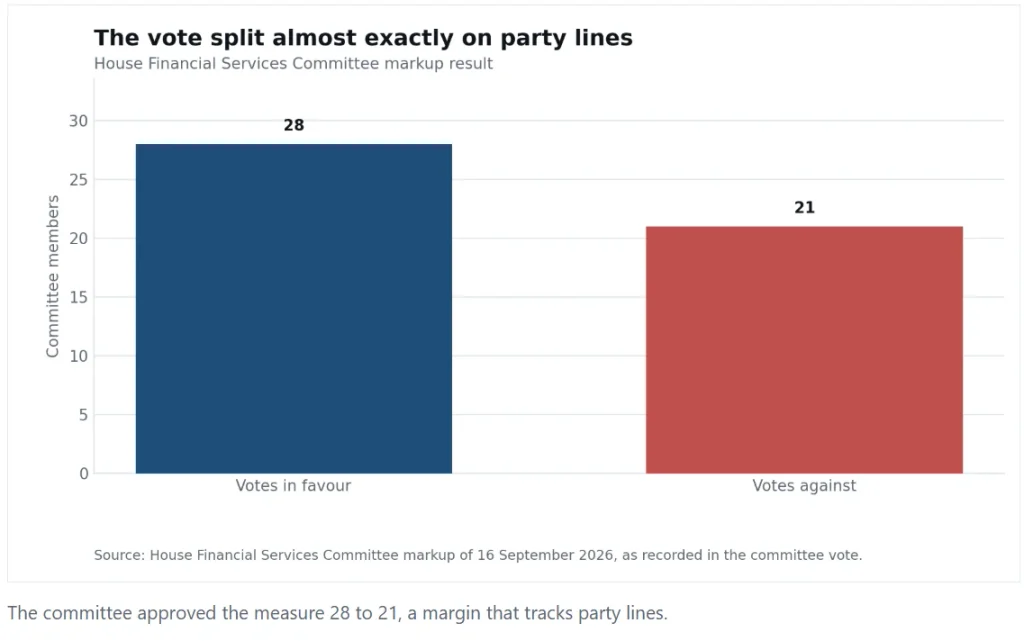
The House Financial Services Committee approved a strategic bitcoin reserve bill by 28 votes to 21.
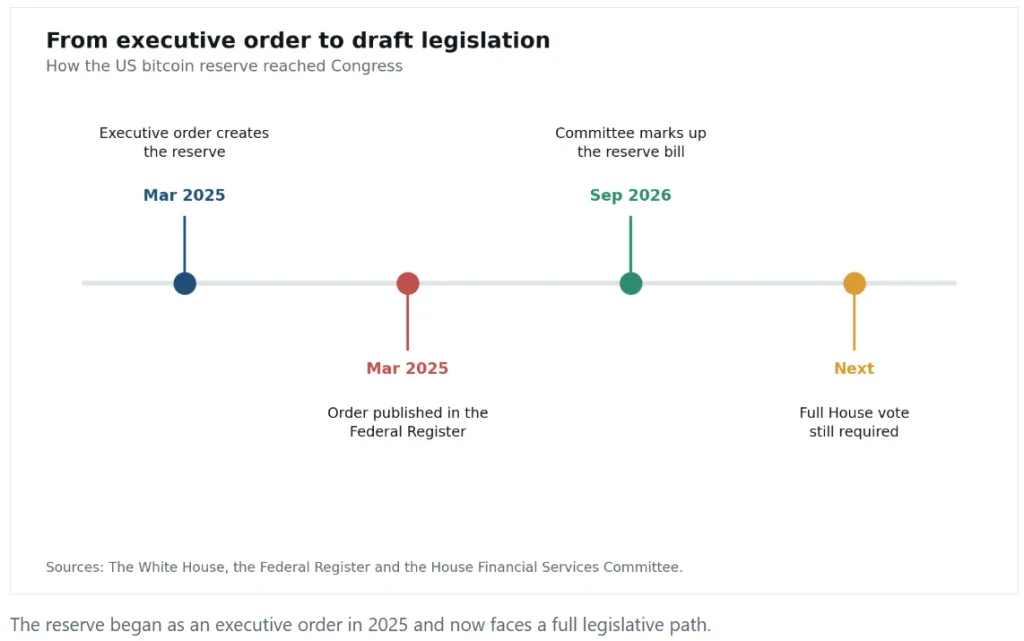
A reserve already exists under a March 2025 executive order.
Legislation would put the reserve on a statutory footing that survives a change of administration.
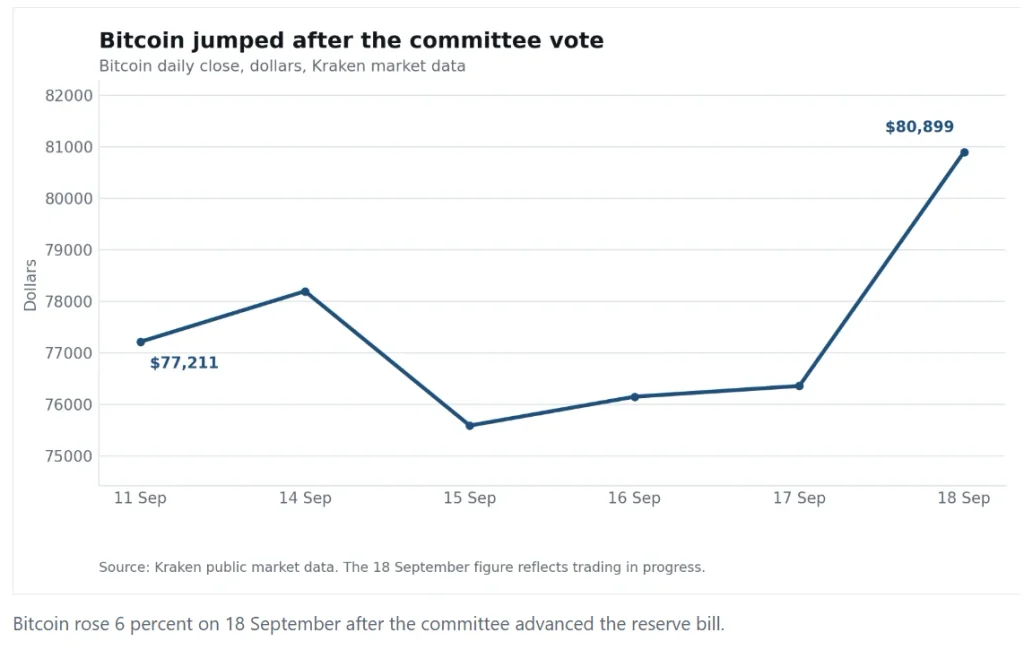
Bitcoin rose 6.0 percent to 80,898 dollars on 18 September.
The bill still needs a full House vote and sixty Senate votes.
Congress moved a step closer to writing bitcoin into federal law. The House Financial Services Committee approved a strategic bitcoin reserve bill by 28 votes to 21. Traders reacted within hours.
Bitcoin climbed to 80,898 dollars on 18 September. It had closed at 76,354 dollars the day before, so the gain reached 6.0 percent.
The bill still faces a long road ahead of it. A full House vote comes next, and a far harder Senate test follows that.
What the bill would actually do
A reserve already exists. President Trump created it by executive order in March 2025, alongside a separate digital asset stockpile.
That order told the Treasury to hold bitcoin forfeited to the government. It also stopped officials selling those coins, and treated them as a reserve asset.
The stockpile works differently. It holds other tokens seized in cases, and allows sales.
Legislation would change the legal footing. The next president can simply cancel an executive order. A statute takes far more work to undo.
Permanence is the whole point. Backers want the reserve to outlast any one president.
Critics see the same fact as the danger. They argue a statute locks in a risky asset for decades, whatever the price does next.
A narrow and partisan margin
The committee vote reveals how contested this remains. Twenty eight members backed the measure and twenty one opposed it.
That margin tracks party lines closely. Democrats have raised repeated concerns about conflicts of interest and taxpayer exposure.
Volatility drives much of the worry. A reserve asset that can halve in six months sits oddly beside gold and foreign currency.
Senate arithmetic looks harder still. A crypto market structure bill failed a cloture vote there just days earlier, falling well short of 60. Sixty votes is the same bar this bill must clear.
Committee passage is therefore a milestone, not a finish line. Plenty of bills die between markup and the floor.
Why the bitcoin reserve vote moved prices
Government demand changes the supply story. A statutory reserve implies a buyer who never sells, which removes coins from circulation.
Traders also read it as political cover. Washington rarely legislates for an asset it plans to restrict.
Scale is modest so far, though. Forfeited holdings run to tens of thousands of coins, not millions. So the signal matters more than the size.
Timing amplified the move. Bitcoin had just endured a weak stretch, closing at 75,585 dollars on 15 September. Positioning was light, so buyers met thin resistance.
The Federal Reserve added to the mix. It raised rates two days earlier, which usually weighs on risk assets. Bitcoin rallied through that headwind instead.
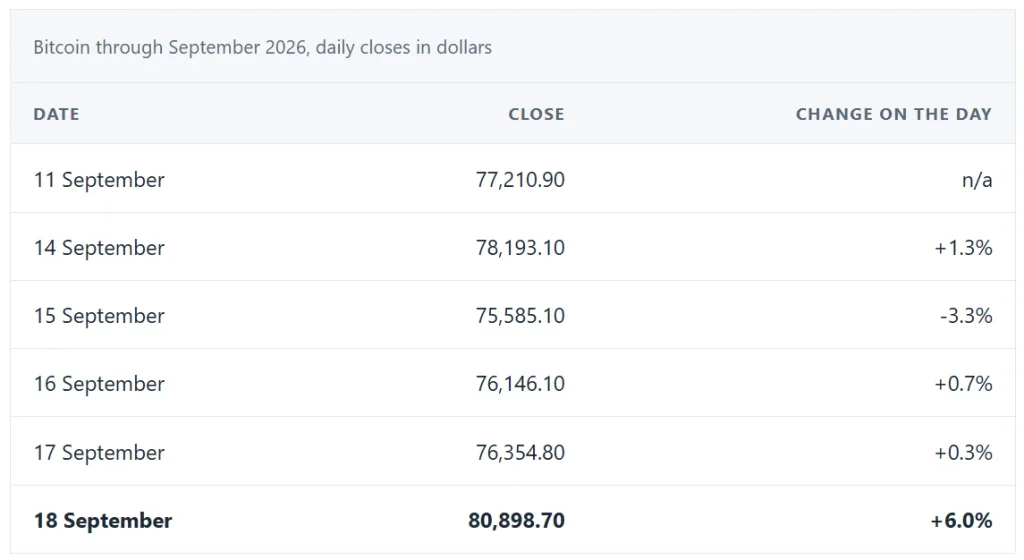
Volumes tell the same story. Kraken market data shows the sharpest daily gain of the month on 18 September. Turnover rose alongside the price.
The year has been brutal until now
Context matters here. Bitcoin opened 2026 at 88,731 dollars and peaked at 96,933 dollars on 14 January.
It then fell hard. The low of 58,531 dollars arrived on 30 June, a drop of 39.6 percent from the January high.
Recovery has been uneven since. Even after this week’s jump, bitcoin sits 16.5 percent below where it started the year.
The June low deserves a second look. At 58,531 dollars, bitcoin traded below levels many treasury holders had paid. Several listed holders wrote down positions as a result.
September has been choppy rather than directional. Prices swung between 75,585 and 80,898 dollars inside a single week.
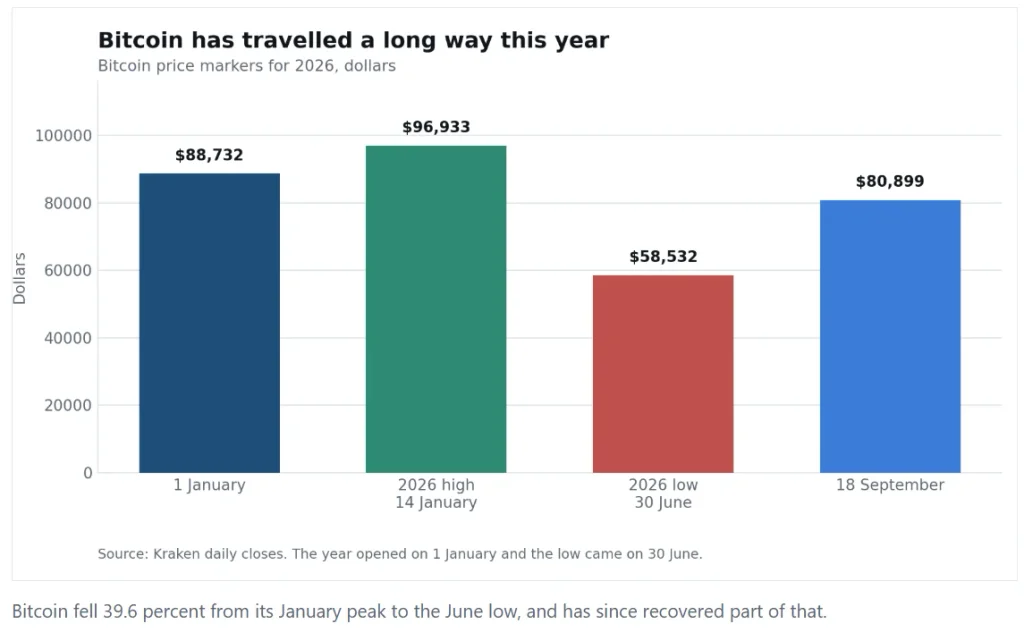
So one committee vote does not reverse a difficult year. It does, however, change the policy backdrop in a way traders can price.
Rules are still being drafted elsewhere
A second process runs in parallel. The Securities and Exchange Commission proposed Regulation Crypto Assets in August, and its comment period closes on 20 October.
That proposal covers how tokens are offered and sold. It says nothing about government holdings.
Both threads point the same way though. American policy has shifted from enforcement toward rulemaking. That change alone has reset how firms plan.
Market structure remains the gap. The Senate blocked a bill on that subject this month, so exchanges still lack a clear federal regime.
What to watch next
Three markers matter from here. Watch whether House leadership schedules floor time, since committee passage guarantees nothing.
Track the Senate mood after that. The same chamber blocked market structure legislation this month, and a reserve bill needs sixty votes too.
Finally, follow the Treasury’s own disclosures. The published order requires accounting of federal digital asset holdings, and those numbers will test the rhetoric.
For investors, the practical read is narrow. A reserve changes sentiment and supply at the margin. It does not change the volatility that defines this asset.