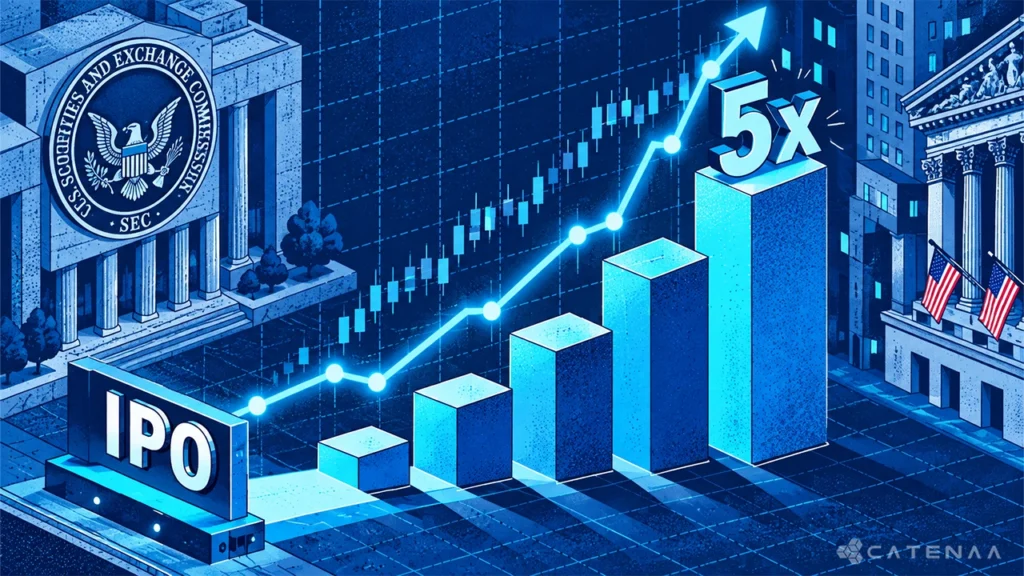


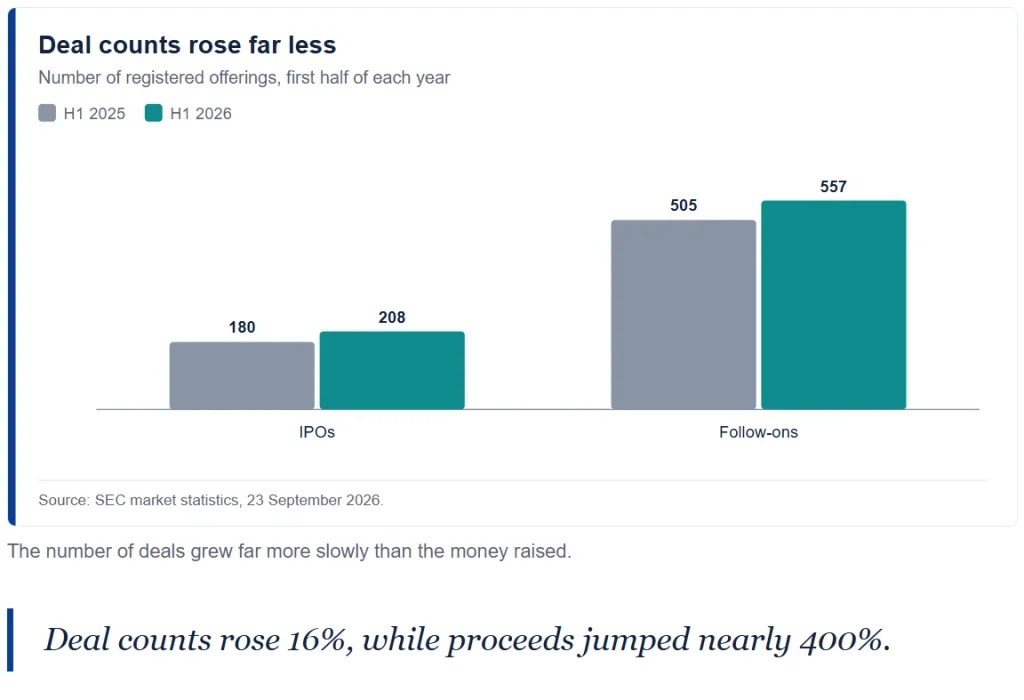
September 25, 2026 – New SEC statistics show 208 listings raising more than $137 billion in the first half of 2026. Follow-on offerings grew too, though far more modestly.

In Summary
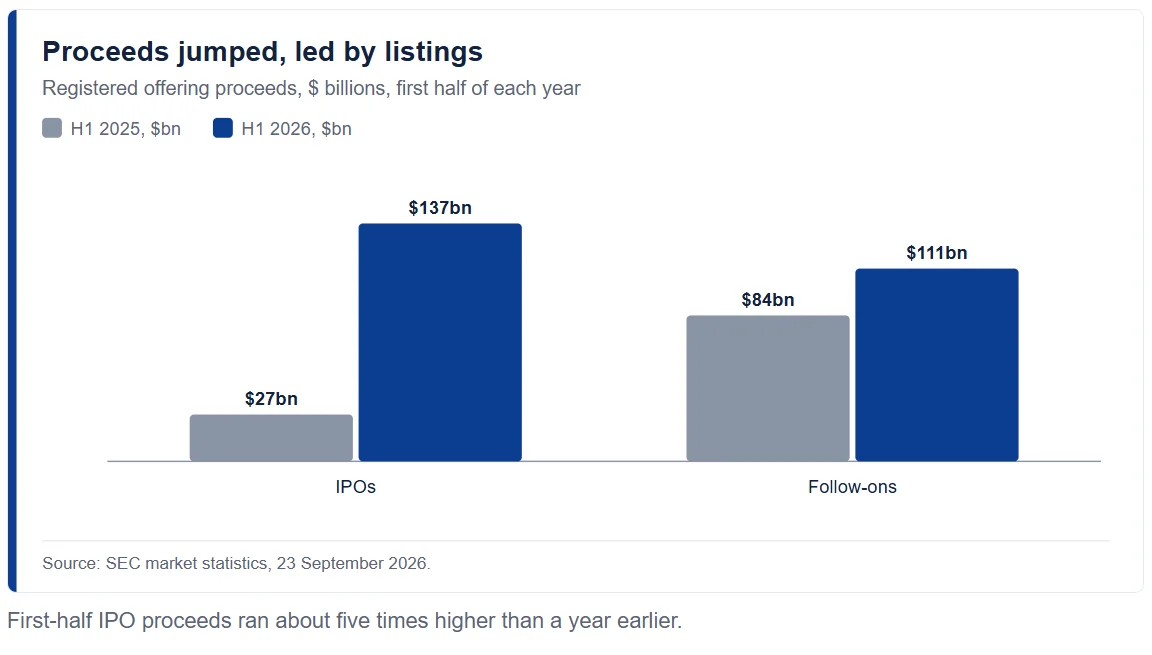
SEC data show 208 IPOs raising more than $137 billion in the first half of 2026.
The comparable period of 2025 saw 180 IPOs raising just over $27 billion.
Follow-on offerings rose to 557 deals raising more than $111 billion, from 505 deals and nearly $84 billion.
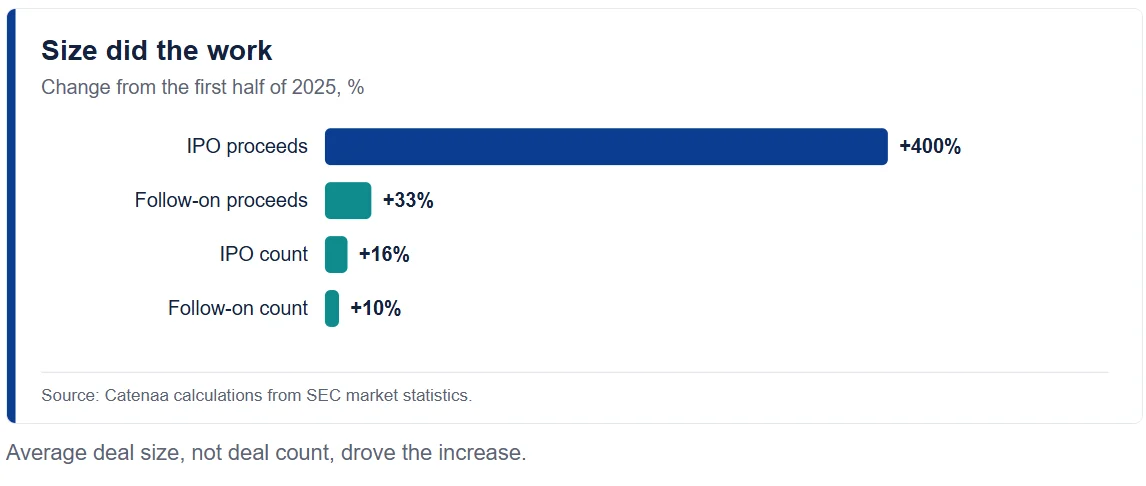
Deal counts rose about 16%, while proceeds climbed close to 400%, pointing to larger transactions.
The agency has also proposed rescinding the shareholder proposal rule and allowed tokenised share trading under conditions.
America’s listing market has roared back to life. IPO proceeds reached more than $137 billion in the first half of 2026, the SEC reported on 23 September. That compares with just over $27 billion a year earlier.
The number of deals rose too, though far less dramatically. Companies completed 208 initial public offerings, against 180 in the first half of 2025. So the average deal got much bigger.
Follow-on sales added to the haul. Listed companies raised more than $111 billion through 557 follow-on offerings. A year earlier, 505 deals raised nearly $84 billion. Together, the two channels supplied close to $250 billion of fresh equity.
What the IPO Proceeds Data Show
Size, not count, drove the surge. Deal numbers rose about 16%, while proceeds climbed close to 400%. That gap points to a handful of very large listings. In other words, a few giants reopened the window for everyone.
Follow-on activity tells a similar story. Offering counts rose roughly 10%, and proceeds gained 33%. Bigger companies clearly found willing buyers.
Joshua White, the SEC’s chief economist, framed the numbers as a policy win. The data highlight “the continued strengthening of U.S. capital formation,” he said. His division publishes the underlying statistics and visualisations.
Why Companies Came Back
Three conditions aligned this year. Equity indices sat near records for much of the period. Volatility stayed contained outside short bursts. Investor appetite for artificial intelligence exposure also stayed strong.
Pricing power followed. Issuers could raise more at better valuations, so larger private companies stopped waiting. Several had delayed listings since 2022.
Backlogs also matter. Venture and buyout funds hold portfolios they bought years ago. Those owners need exits, and a strong tape gives them one.
Market levels support that reading. The S&P 500 closed at 7,704.13 on 24 September, index data show. That is up about 12.5% since the end of 2025, a solid backdrop for new issues.
Policy Is Pushing the Same Way
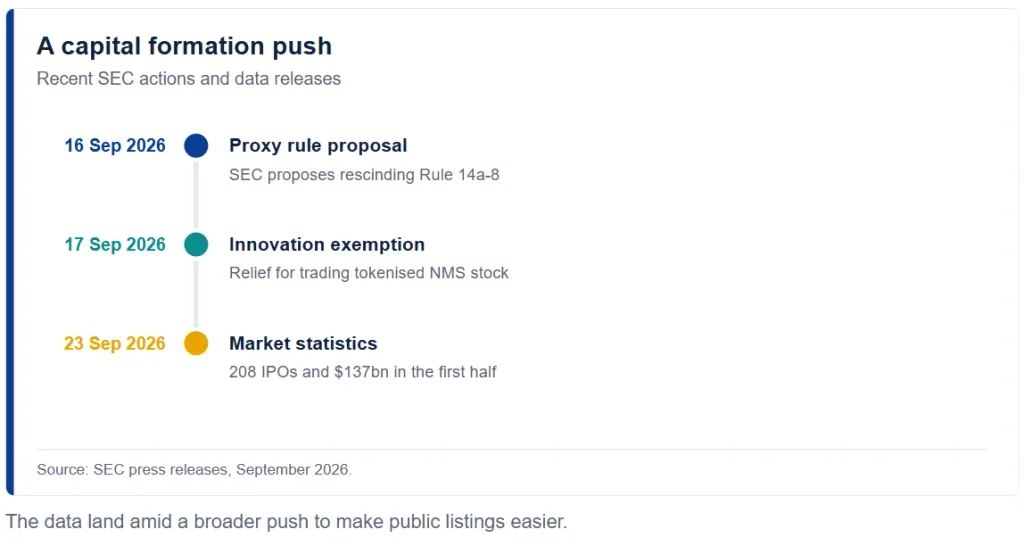
Regulators have been busy. On 16 September, the agency proposed rescinding the shareholder proposal rule. It argued that Rule 14a-8 exceeds its statutory authority and intrudes on state law.
A day later came a different move. The Commission granted temporary relief for trading tokenised shares on permissioned venues. That order aims to bring listed equities onchain under conditions.
Both steps share a theme. The agency wants public markets to look less burdensome relative to private capital. Issuers have complained for years about disclosure costs and activist campaigns.
Critics see the trade-off differently. Shareholder proposals give investors a voice on pay, climate and governance. Removing that channel, they argue, weakens accountability at listed companies.
What Bankers and Investors Should Watch
The headline number deserves caution. Half-year comparisons swing on a few mega deals. A single large listing can reshape the total. Comparisons with 2025 also start from a weak base.
Depth matters more than size. If only the largest private companies can list, mid-cap issuers stay private for longer. That leaves public investors with fewer growth opportunities. Retail savers feel that gap most, since private funds rarely accept them.
Aftermarket performance is the other test. Strong debuts pull more issuers forward, while broken deals close the window fast. Therefore, the fourth quarter pipeline will reveal whether this run continues.
Rates add a further complication. The 10-year Treasury yield has climbed above 5% again this month. Higher discount rates usually trim the valuations that issuers can achieve.
The Private Market Still Looms
Public listings compete with a vast private pool. Large funds can now finance companies for a decade without a listing. Many founders prefer that route.
The costs differ sharply. A listing brings quarterly reporting, proxy season and constant scrutiny. Private capital avoids most of that, though it usually costs more.
The SEC’s agenda addresses that gap directly. Cheaper compliance, fewer proxy fights and new trading technology all aim to tempt issuers back. Whether those changes work will take years to judge.
For now, the numbers speak clearly. IPO proceeds in the first half ran five times higher than a year earlier. Follow-on issuance grew as well, and both trends point to healthier primary markets.
Investors should still read the detail. Concentration in a few deals, sector clustering and valuation discipline all matter. The next release of these statistics will show whether the second half kept pace. Our coverage of the record Nasdaq close sets out the market backdrop.