

November 02, 2026 – New Federal Reserve data put a number on bank exposure to private credit, just as more of the funds’ borrowers stop paying interest in cash.

In Summary
US banks had $349 billion in loans to US private credit vehicles at the end of 2025, Fed data show.
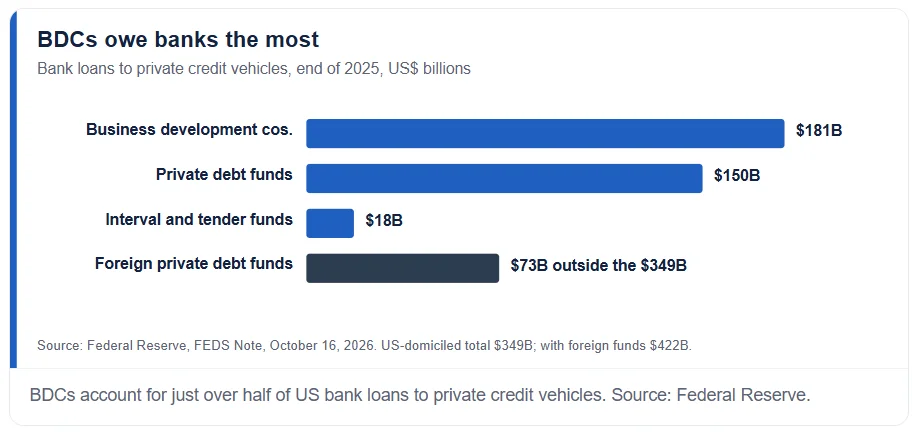
BDCs owed $181 billion of that, and private debt funds owed $150 billion.
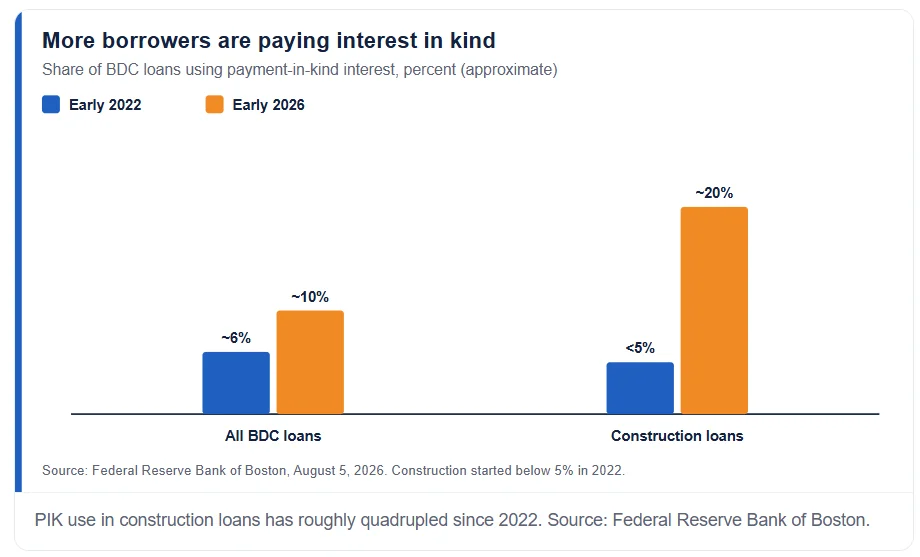
About 10% of BDC loans used payment-in-kind interest by early 2026, up from about 6% in 2022.
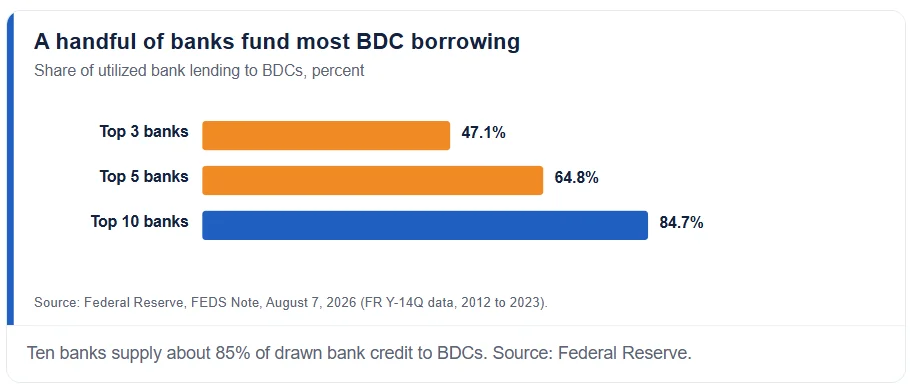
The top five banks supply about two thirds of drawn bank lending to BDCs.
US banks had $349 billion in loans to private credit funds at the end of 2025, Federal Reserve data show. At the same time, more borrowers behind those funds are paying interest with extra debt rather than cash. That mix ties banks closely to a market built to sit outside the banking system.
Where the Private Credit Bank Loans Sit
The figure comes from a new Fed staff note that adds private credit to the US Financial Accounts. Business development companies, or BDCs, owed banks $181 billion. These funds lend mainly to midsize US firms. Private debt funds owed $150 billion, while interval and tender offer funds owed $18 billion. Foreign private debt funds add another $73 billion, which lifts the total to $422 billion.
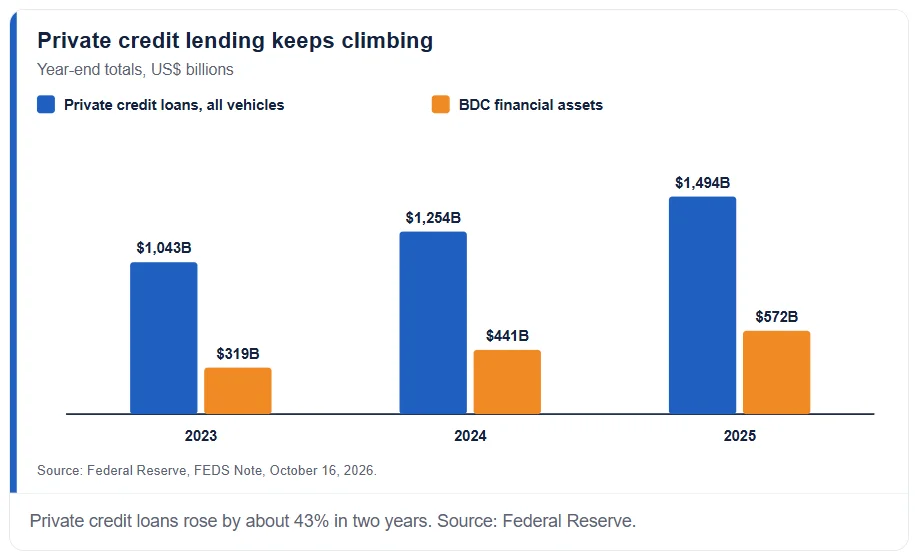
The market itself has grown fast. Vehicles with a US footprint held about $2.66 trillion in assets at the end of 2025. That is up from roughly $350 billion in 2012. Their private loans to businesses reached about $1.5 trillion. Private credit now makes up about 6% of all US business debt, against roughly 1% in 2012. Besides bank loans, US vehicles relied on about $1.1 trillion in equity and $135 billion in debt securities.
Borrowers Are Paying in Kind
Payment in kind, or PIK, lets a borrower add interest to the loan balance instead of paying cash. The lender still books that interest as income. However, no money changes hands until the loan is repaid or refinanced. Rising PIK use can therefore make income look stronger than the cash a fund collects.
Boston Fed researchers studied the filings of 168 BDCs, covering nearly 890,000 loan records. They found PIK use rose from about 6% of BDC loans in early 2022 to roughly 10% by early 2026. In construction, it jumped from under 5% to nearly 20%. The authors say this points to growing pressure on borrower cash flows.
A Few Banks Carry Most of the Risk
Bank funding is also concentrated. A separate Fed note found the top five banks supply about two thirds of drawn BDC lending. The top ten provide nearly 85%. Moreover, banks charged BDCs about 1.1 percentage points more than similar borrowers during the 2022 tightening cycle. That happened even though BDC loans are usually senior and secured. BDCs also rarely switch banks, the note found.
Bank debt has also grown as a source of BDC funding. It averaged about 40% of BDC debt in the Fed sample, up from about 20% a decade earlier.
Why Regulators Are Watching Private Credit
Not everyone sees a crisis. The Boston Fed estimates large banks have committed over $50 billion to BDCs, with about $35 billion drawn. That narrower measure is under 2% of their Tier 1 capital. Even in a severe stress case, the authors say losses would not threaten bank solvency.
Still, broader bank lending to nonbanks keeps rising. Weekly Fed H.8 data show commercial bank loans to nondepository financial firms hit $2.12 trillion on October 21. That is up about 15% since the end of 2025. Across the Atlantic, UK regulators have raised a related concern. In April 2025, the Prudential Regulation Authority warned bank finance chiefs about capital rules for financing backed by illiquid assets.
For now, PIK income keeps fund returns looking healthy on paper. Yet if more borrowers cannot pay cash, private credit funds may need to sell assets to repay bank lines. That link is the one to watch.