

September 30, 2026 – The media group is raising first- and second-lien notes to buy Warner Bros. Discovery. A ticking fee starts if the deal is not done by 30 September.
In Summary
Paramount Skydance launched about $44.4 billion of first- and second-lien secured notes on 28 September.
The notes form part of up to $51.9 billion of new acquisition debt, alongside up to $46.7 billion of committed equity.
Warner Bros. Discovery holders get $31.00 a share in cash plus a ticking fee of about 25 cents a quarter from 1 October.
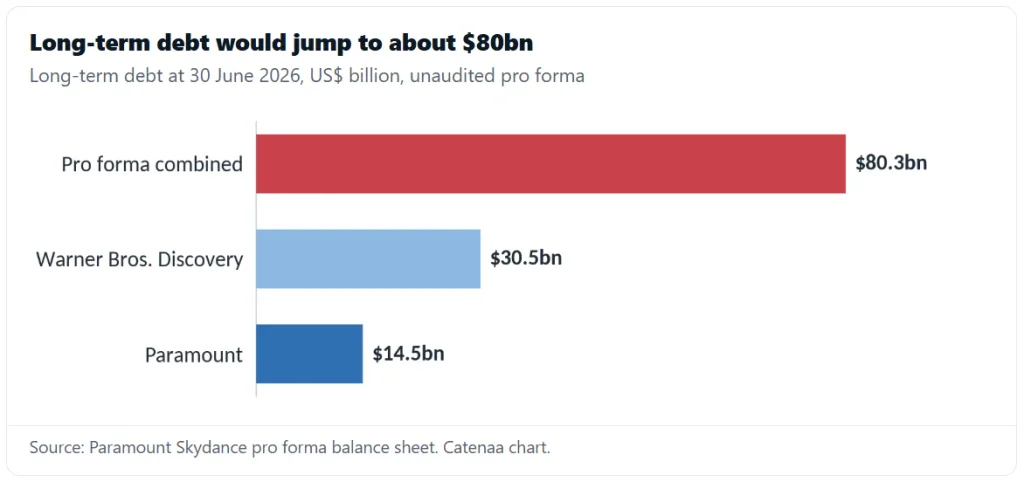
Pro forma long-term debt for the combined group would reach about $80.3 billion.

Paramount Skydance has launched a Paramount bond sale of about $44.4 billion to fund its takeover of Warner Bros. Discovery. It is one of the final steps before the $110 billion deal can close.
The company announced the notes offering on 28 September. It covers dollar-denominated first-lien secured notes plus dollar and euro second-lien secured notes. The notes go only to qualified institutional buyers and investors outside the US.
Paramount will combine the proceeds with cash, term loans, and previously agreed equity. Together, they will pay for the Warner Bros. Discovery deal and repay some existing debt.
Notably, the first lien notes will carry registration rights, while the second lien notes will not. That means only the senior notes are expected to become registered securities later.
Inside the Paramount bond sale
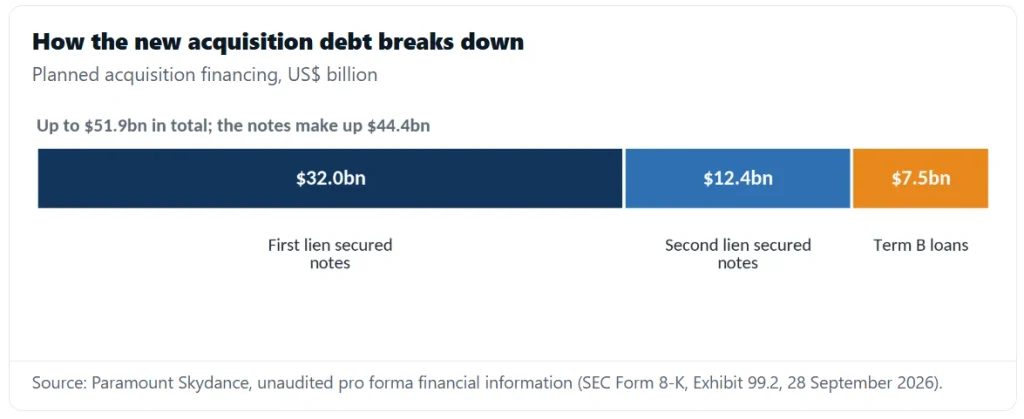
A pro forma filing released alongside the offering shows the full debt package. It plans $32.0 billion of first lien notes and $12.4 billion of second lien notes. It also includes $7.5 billion of seven-year Term B loans.
That adds up to as much as $51.9 billion of new acquisition debt. Separately, lenders have committed two term loans of $2.5 billion each and a $5.0 billion revolving credit line.
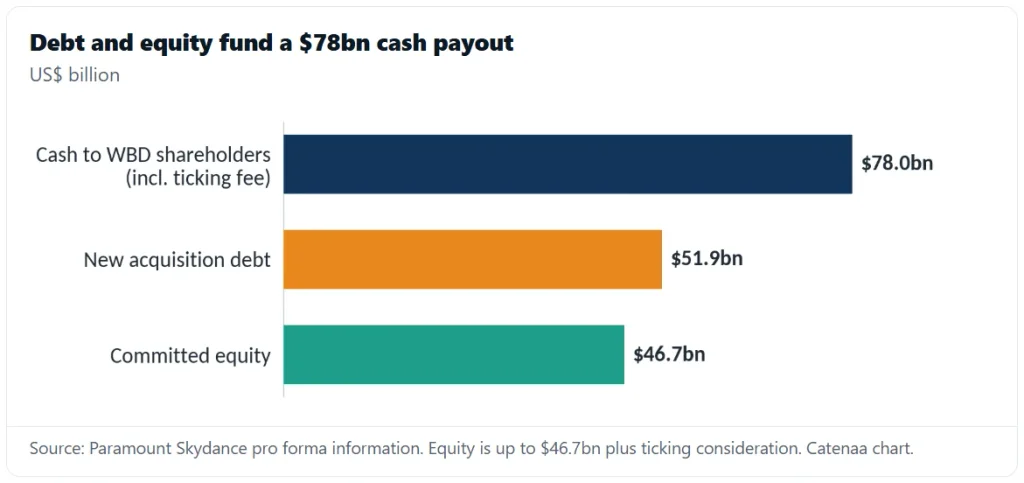
Meanwhile, the equity side is almost as large. Paramount has signed subscription agreements for up to $46.7 billion of new equity, plus extra sums tied to any delay. The Ellison family and RedBird Capital Partners committed that money when the two sides signed the merger agreement.
Paramount will issue the new equity as Class B shares at $16.02 each. Existing holders may also join a rights offering of up to $3.25 billion at that price, the February release said.
The deal terms and the ticking fee
Paramount agreed on 27 February to pay $31.00 a share in cash for Warner Bros. Discovery. At the time, it valued the target at $81 billion in equity and $110 billion including debt.
Paramount priced the deal at about 7.5 times expected 2026 EBITDA, a measure of operating profit. That figure assumes full cost savings. It also targeted investment-grade credit metrics within three years.
The contract also contains a ticking fee. From 1 October, each Warner Bros. Discovery share earns about 0.28 cents a day until closing, or roughly 25 cents a quarter.
The filing assumes a closing date of 6 October. On that basis, holders would receive about $77.99 billion in cash, including $42 million of ticking consideration.
Clearly, the market now expects the deal to close. Warner Bros. Discovery shares ended Monday at $30.90, according to Nasdaq data. That leaves a gap of just 10 cents to the offer price.
The last hurdles have fallen quickly. According to reports, Paramount settled an antitrust suit with state attorneys general on 21 September. Federal and European regulators had cleared the deal earlier in the year.
What the combined company looks like
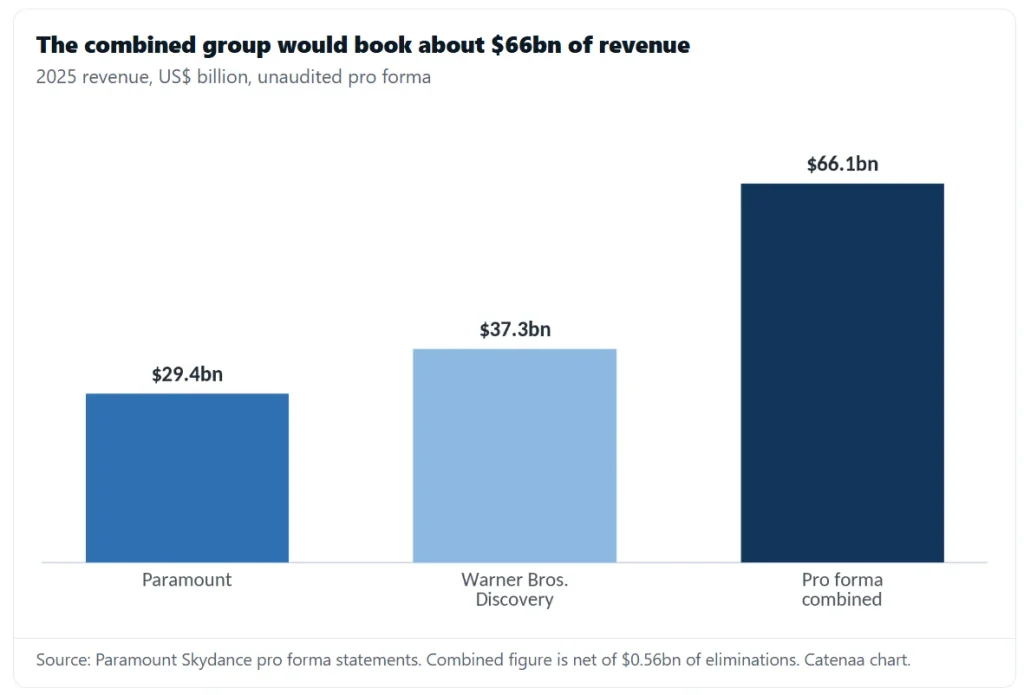
The merged group would be a media giant. On a pro forma basis, the two companies booked $66.1 billion of revenue in 2025. Warner Bros. Discovery contributed $37.3 billion and Paramount $29.4 billion.
However, the debt load would rise sharply. Pro forma long-term debt at the end of June stood at $80.3 billion. By contrast, Paramount alone carried $14.5 billion and Warner Bros. Discovery $30.5 billion.
Profits look thin on paper for now. The combined companies posted a pro forma net loss of $6.1 billion for 2025. However, that figure includes deal costs, and Paramount expects more than $6 billion of annual savings from the merger.
What shareholders should watch
Paramount also plans to move its shares from Nasdaq to the New York Stock Exchange. According to a separate filing, trading should start on the NYSE on or about 6 October.
Existing Class B holders, excluding the Ellisons and RedBird, will receive about 470 million warrants. The record date is 5 October, and the warrants should arrive around 13 October if the deal closes.
Paramount shares rose 3.2% to $10.28 on Monday. Still, the stock remains about 23% below its level at the end of 2025.
Pricing of the notes will reveal how much investors charge for the extra leverage. For credit markets, the Paramount bond sale tests demand for large secured deals as Treasury yields climb. Deal watchers will follow the order book closely.