

November 02, 2026 – The AA- rating holds for now, but S&P sees leverage passing its trigger in 2027 as Meta’s AI build outruns its cash.

In Summary
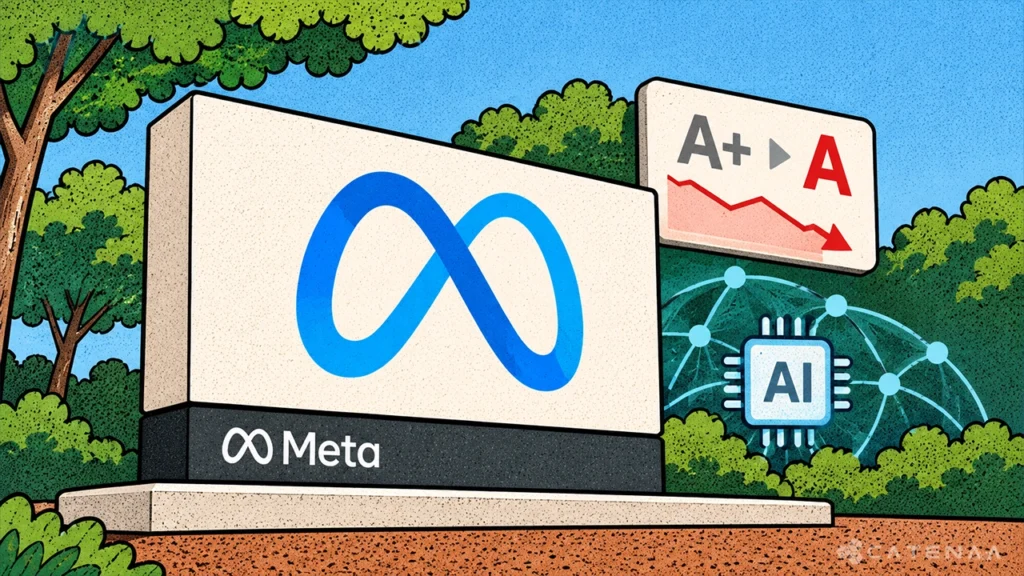
S&P Global Ratings moved Meta’s outlook to negative from stable on October 30 and kept the AA- rating, according to published reports.
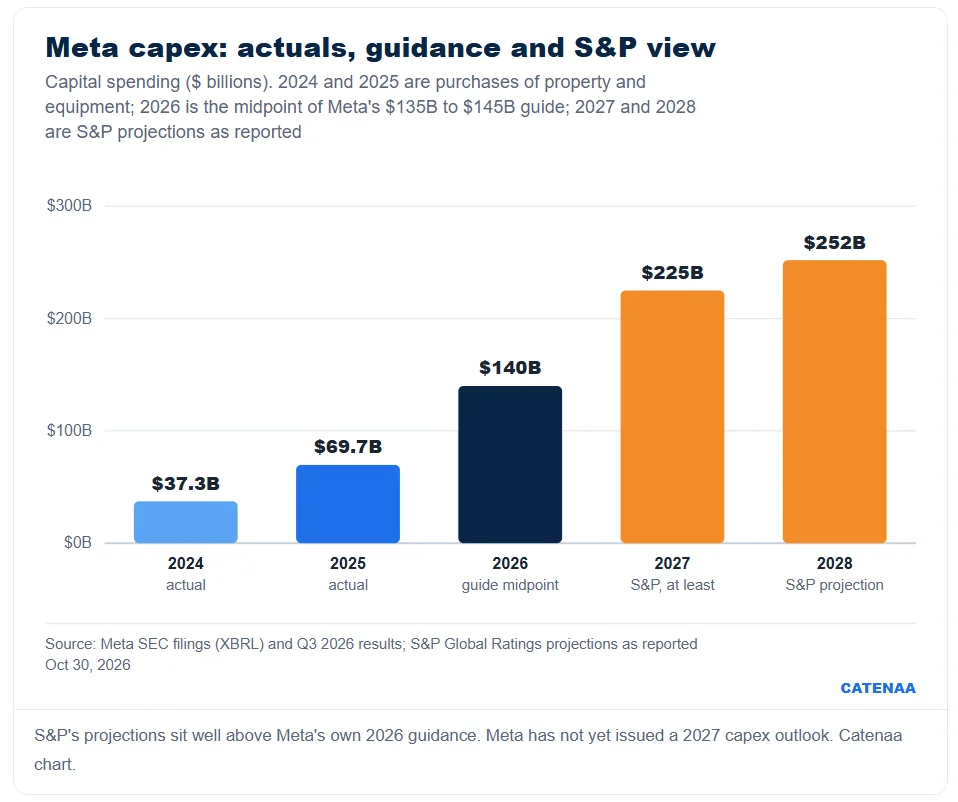
S&P expects leverage to top its 1.0x trigger as soon as 2027, with capex above $225 billion that year.
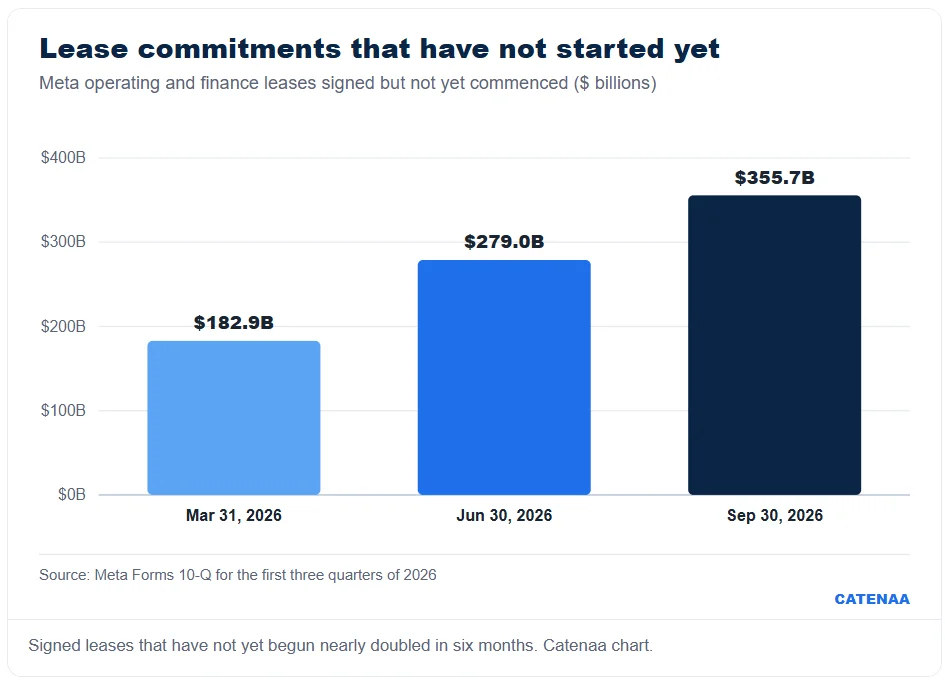
Meta’s own filings show negative free cash flow of $2.12 billion in Q3 and $355.73 billion of leases yet to start.
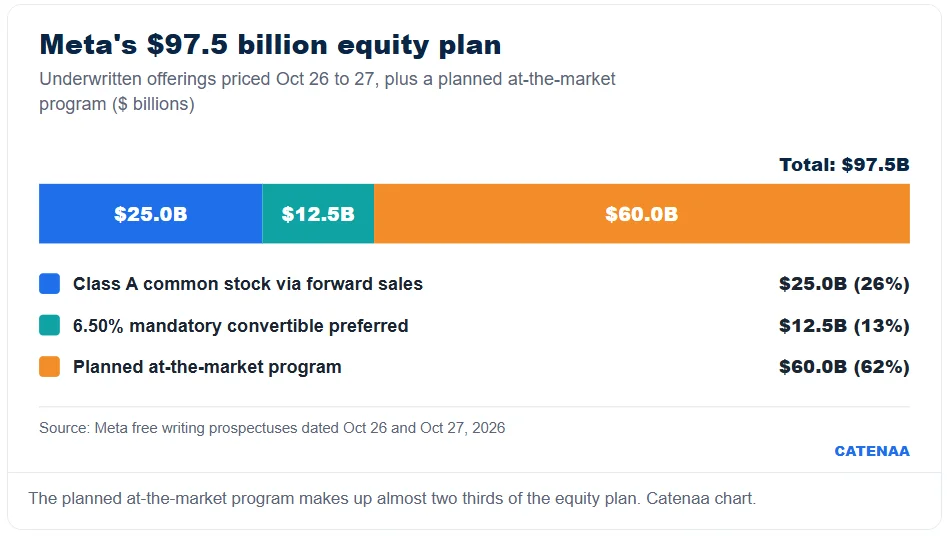
Meta’s equity plan totals about $97.5 billion, including a planned $60 billion at-the-market program.
Why S&P changed the Meta credit outlook
The Meta credit outlook has turned negative. S&P Global Ratings moved it from stable on October 30, according to published reports. The agency kept Meta’s AA- issuer rating, so this is a warning rather than a downgrade. Still, a negative outlook signals that a downgrade is possible.
S&P pointed to rising spending and weaker cash flow. It now expects capex above $225 billion in 2027 and about $252 billion in 2028. “Meta’s ability to monetize its AI investments is more limited than that of its peers,” the agency said. Unlike its rivals, Meta does not rent out cloud space to other firms.
Leverage heads for the trigger
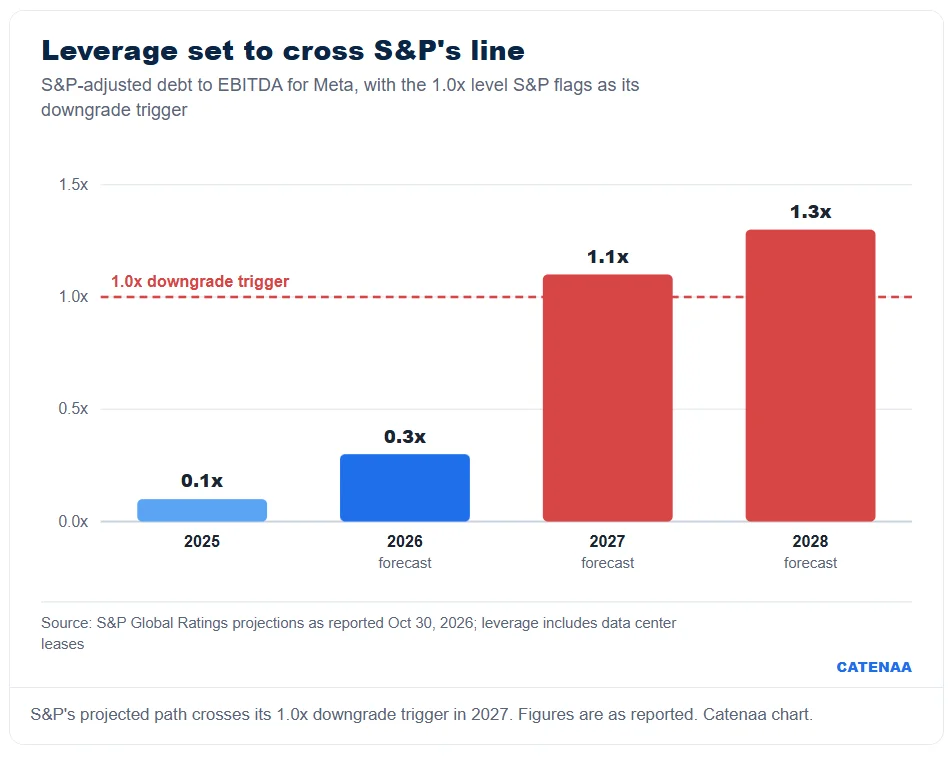
The key number is leverage. S&P counts data center leases as debt. On that basis, it sees leverage rising from about 0.1x in 2025. The agency projects 1.1x in 2027 and 1.3x in 2028. Its downgrade trigger sits at 1.0x.
S&P also sees a free operating cash flow gap of about $71 billion in 2027. Furthermore, it said spending could keep cash flow negative beyond 2028. In response, a Meta spokesperson said the company “respectfully disagree[s] with S&P’s assertion about Meta’s AI monetization capabilities.”
What Meta’s filings show
Meta’s own numbers explain the concern. In the third quarter, revenue rose 26% to $64.60 billion. Operating cash flow reached $32.79 billion. However, capex, including finance lease payments, hit $34.91 billion. As a result, free cash flow came in at negative $2.12 billion.
Meta points to its balance sheet in reply. It generated $97 billion of operating cash flow in the first nine months of 2026. It also held about $82 billion of cash and securities at the end of September. Moreover, the quarter’s profit absorbed a one-off $9.89 billion legal charge tied to a deal with state attorneys general.
Leases add a second layer. Meta’s quarterly report lists about $355.73 billion of leases that have not yet started. That compares with $278.99 billion at the end of June and $182.88 billion at the end of March. They cover data centers, energy assets and network gear, and they start through 2036. Meanwhile, Meta had $84.00 billion of notes outstanding.
A $97.5 billion equity plan
Meta moved to shore up funding a few days before the S&P call. On October 26, it set out a financing plan built on stock, not just debt. It then priced 40 million shares at $625 under forward sale deals, worth $25.0 billion. Meta gets that cash only when the forwards settle. It also sold $12.5 billion of 6.50% mandatory convertible preferred stock.
Next, Meta plans a $60 billion at-the-market program once its new non-voting Class C shares start trading. The charter change that creates them takes effect on January 19, 2027. In total, the plan comes to about $97.5 billion, Catenaa calculates. Notably, S&P said it does not include future equity issues in its forecast.