

November 01, 2026 – The ECB president will step down almost nine months before her term ends. Her exit lands one day after Europe published feedback on how central bank money should work on blockchains.

In Summary
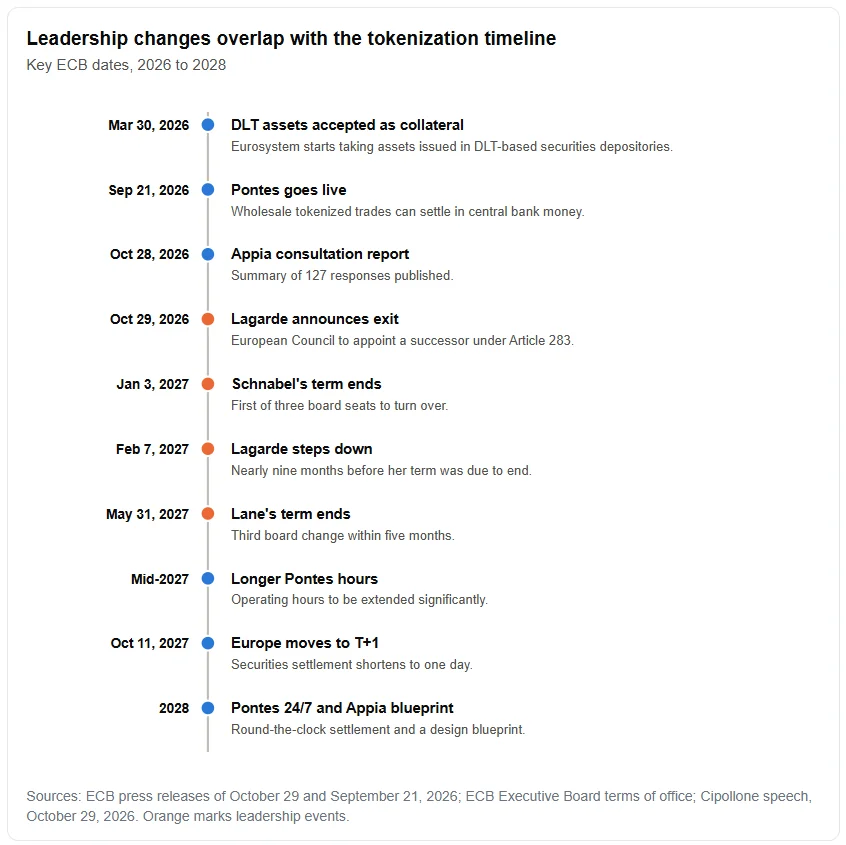
Christine Lagarde will step down as ECB president on February 7, 2027, almost nine months before her term ends.
The European Council will pick her successor under Article 283 of the EU treaty. No name has been put forward yet.
A Eurosystem report on 127 replies found no agreement on how many blockchain networks should use central bank money.
Pontes, live since September 21, should run much longer hours by mid-2027 and around the clock in 2028.
Christine Lagarde will leave the European Central Bank on February 7, 2027, the ECB said on October 29. She told the Governing Council and European Council President António Costa that day. EU leaders will now pick her successor under the treaty’s set process. No name has come forward yet. Under Article 283, EU leaders decide by qualified majority on a Council recommendation. They must first consult the European Parliament and the ECB’s Governing Council.
The timing stands out. Lagarde’s eight-year term began on November 1, 2019. It was due to end on October 31, 2027, ECB records show. So she is leaving 266 days early.
Lagarde exit adds to a year of board changes
Her exit is not the only change ahead. Isabel Schnabel’s term on the board ends on January 3, 2027. Philip Lane’s term then ends on May 31, 2027. As a result, three of the six board seats will turn over within five months.
That churn comes at a key moment. The ECB is rebuilding how money moves when assets live on blockchains. Notably, it released its Appia report one day before Lagarde’s news.
Europe still has to pick a network model
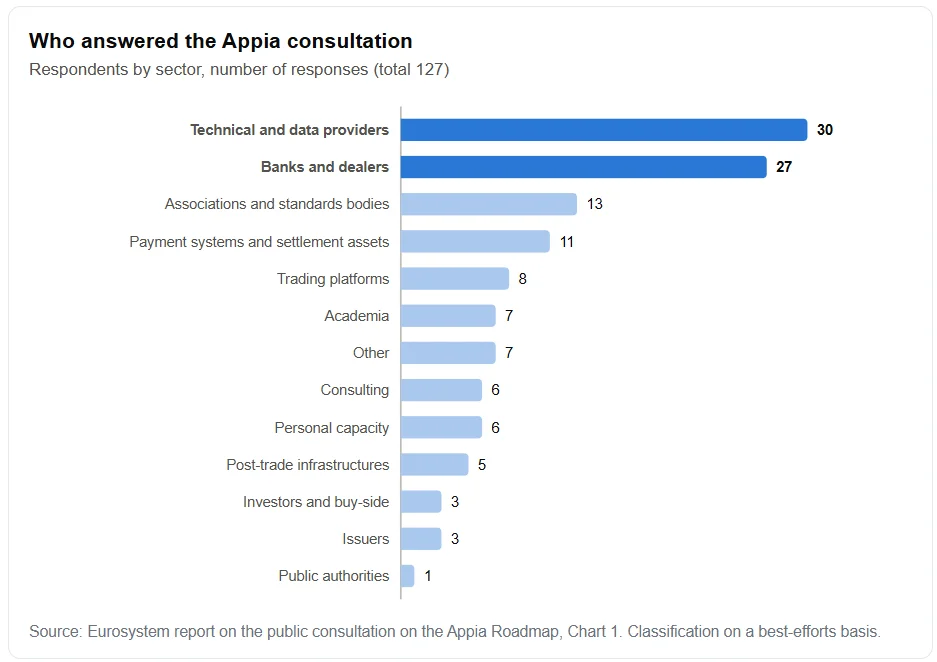
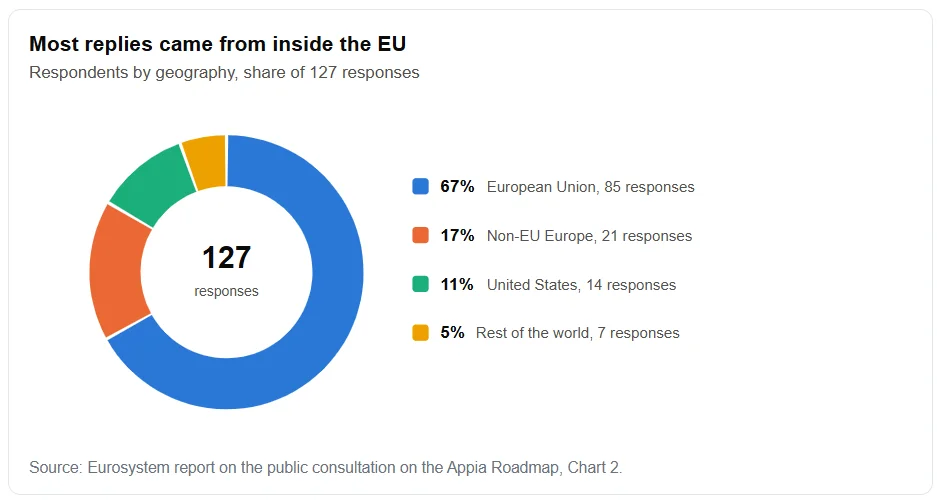
The Appia report sums up 127 replies from banks, tech firms, trading venues and others. Tech and data firms sent 30 replies, while banks and dealers sent 27. Most came from inside the EU. Strikingly, 90% of all respondents offered at least one proposal to help with the work.
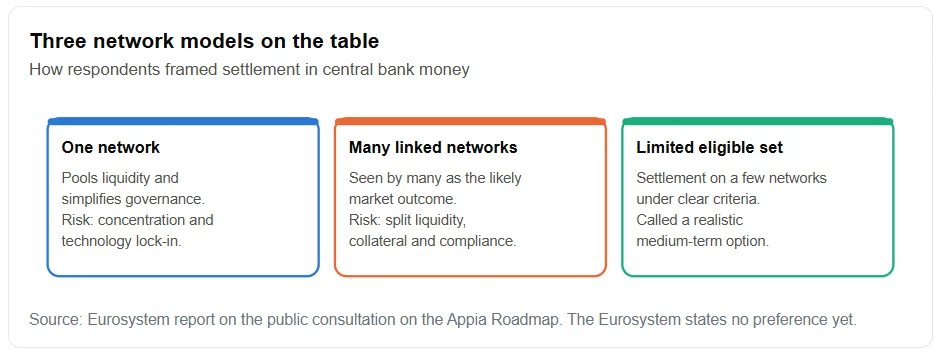
Broadly, firms backed the plan. However, they split on the main design question. Some want central bank money to settle on one shared network. They say it would pool cash and keep rules simple. Others fear one network would let a single system and vendor dominate.
Many expect several linked networks to emerge anyway. Yet that path needs strong links between them, and it could split cash and collateral. Instead, a third group wants settlement on a short list of networks with clear rules for entry.
For now, the Eurosystem has not chosen. In fact, it still has to test whether it can keep control of its money on more than one network.
Pontes and Appia run on a 2027 to 2028 clock
The hands-on work is already moving. Pontes went live on September 21. It lets large trades in tokens settle in central bank money. Pontes also links market blockchains to the ECB’s own payment systems.
Next, Pontes should run much longer hours by mid-2027. The goal for 2028 is nonstop service, board member Piero Cipollone said on October 29. He added that the Eurosystem plans to offer immediate, final settlement on its own ledger as early as next year.
Meanwhile, Appia aims to deliver a blueprint by 2028, after wider tests in 2027. Europe also moves to one-day securities settlement on October 11, 2027.
For markets, the main point is continuity. Lagarde’s successor will take over these deadlines halfway through. Therefore, the final call on the network model may fall to a new president and a new board. The ECB gave no reason for her early exit.