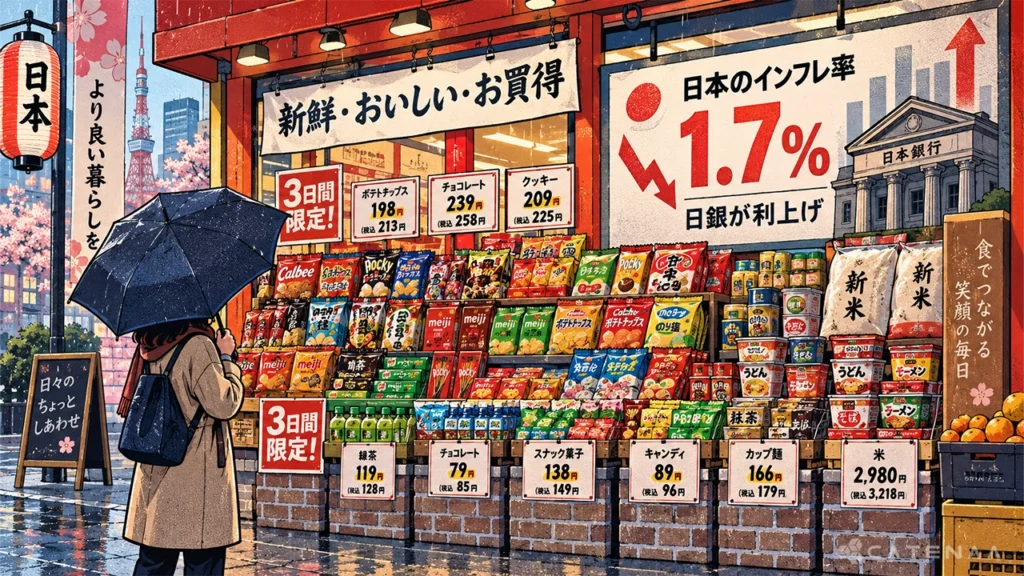


September 21, 2026 – Core prices rose 1.7% in August, below the 2% target, as energy measures cut headline inflation by 0.62 points. The Bank of Japan raised rates anyway.

In Summary
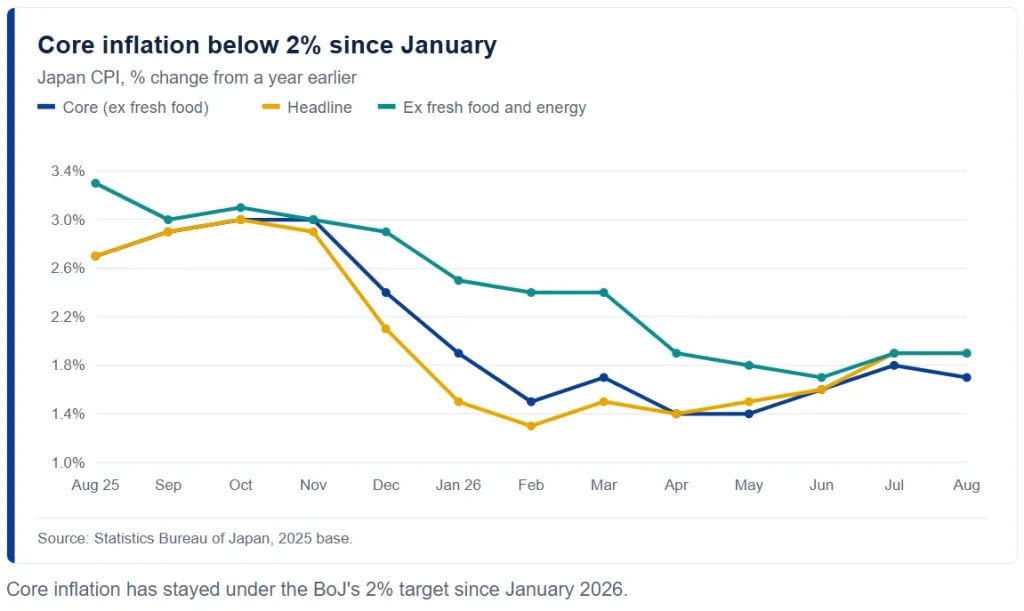
Japan’s core CPI, excluding fresh food, rose 1.7% in August, down from 1.8% and below the 2% target.
Headline inflation held at 1.9%; the measure excluding fresh food and energy also stayed at 1.9%.
Energy measures, including the abolition of the provisional petrol tax rate, cut headline inflation by about 0.62 points.
The BoJ still raised its policy rate to around 1.25% by a 7 to 2 vote; Asada Toichiro cited sub-2% core inflation.
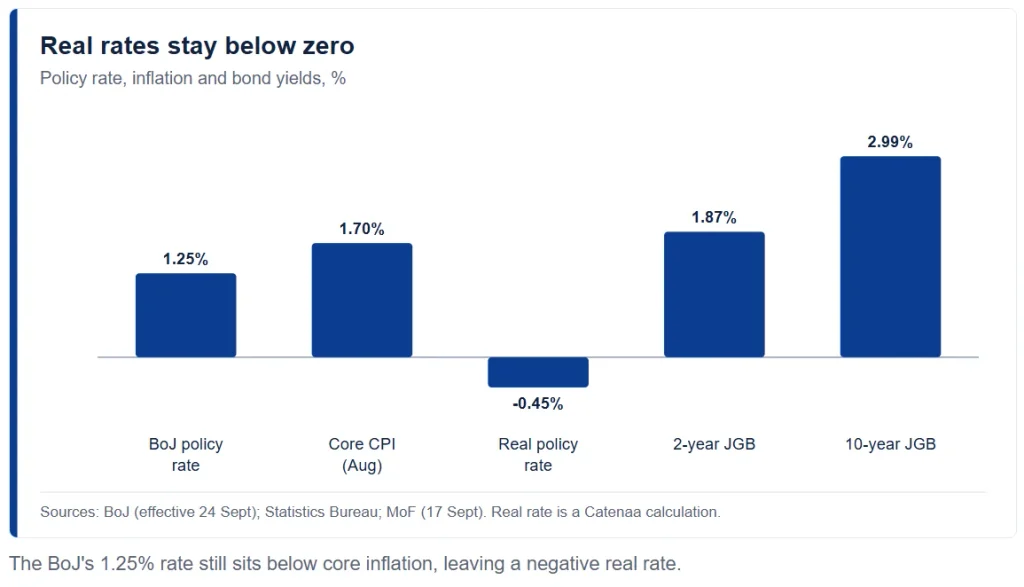
The real policy rate remains about minus 0.45%, a Catenaa calculation.
Japan inflation eased in August, even as the Bank of Japan raised interest rates. Core consumer prices, which exclude fresh food, rose 1.7% from a year earlier, official data show. That was down from 1.8% in July and below the central bank’s 2% target.
The Statistics Bureau published the figures on 18 September, hours before the policy decision. Headline inflation held at 1.9%. A measure that also strips out energy stayed at 1.9%.
Price growth has cooled sharply over the past year. Core inflation stood at 3.0% last October and November. It then fell to 1.4% in April and May before edging back up. On a monthly basis, core prices rose 0.1% after seasonal adjustment. Meanwhile, the measure excluding energy climbed a firmer 0.3%.
Japan Inflation Dips on Energy Support
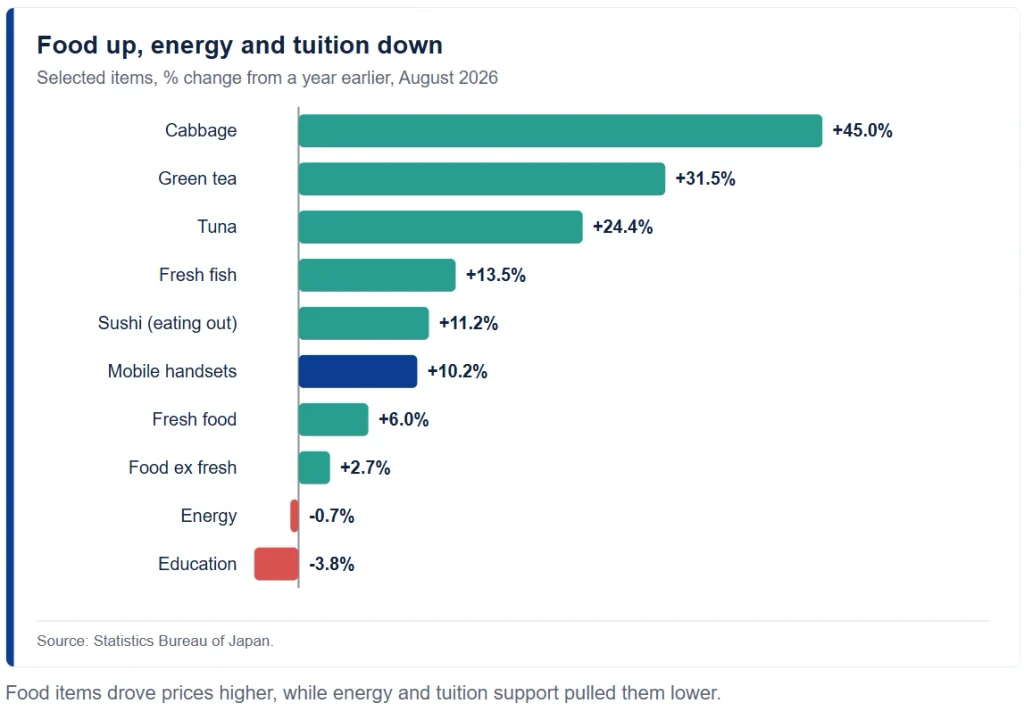
Government measures did most of the work. Energy prices fell 0.7% from a year earlier, after rising 0.6% in July. Electricity bills dropped 2.4%, and petrol prices fell 2.6%.
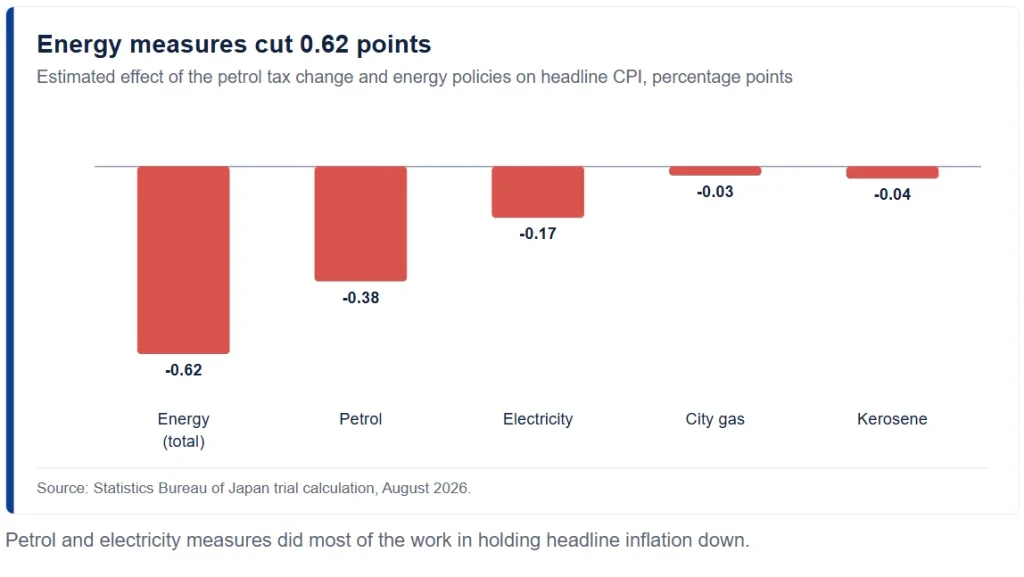
The Statistics Bureau also estimates the policy effect directly. By its count, energy measures cut headline inflation by about 0.62 percentage points. Those measures include the abolition of the provisional petrol tax rate. Petrol alone accounted for 0.38 points, and electricity for 0.17 points. Not every energy item fell, though. Kerosene rose 15.5%, and propane gas climbed 6.9%.
In other words, underlying price pressure is stronger than the headline suggests. By Catenaa’s rough estimate, headline inflation would sit near 2.5% without these measures.
Food Still Pushes Prices Higher
Food remains the main driver. Prices for food excluding fresh items rose 2.7%, down from 3.0% in July. That group alone added 0.64 points to headline inflation.
Fresh food climbed faster, at 6.0%. Fresh fish rose 13.5%, with tuna up 24.4%. Cabbage jumped 45.0%, and green tea rose 31.5%. Meanwhile, sushi at restaurants cost 11.2% more than a year earlier.
Other items pulled the other way. Education costs fell 3.8%, led by a 73.2% drop in private high school tuition. Mobile phone handsets, by contrast, rose 10.2%. Services cooled in places too. Mobile phone charges rose only 1.6%, down from 4.6% in July. Hotel charges fell 1.4% after rising 0.9% a month earlier.
Why the BoJ Hiked Anyway
On 18 September, the Bank of Japan raised its policy rate to around 1.25%. Seven members backed the move and two opposed it. The new rate takes effect on 24 September.
The Board looked past the soft August reading. In its view, underlying inflation “has been approaching 2 percent.” It also flagged a risk that inflation could overshoot the target, as firms raise wages and prices more readily. Furthermore, producer prices remain high, reflecting AI-related demand, costly crude oil and a weaker yen.
Not everyone agreed. Board member Asada Toichiro dissented, citing core inflation below 2% in recent months. Sato Ayano also voted against, arguing that price trends had not clearly accelerated.
Real Rates Remain Negative
Even after the hike, borrowing costs stay low in real terms. A 1.25% policy rate minus 1.7% core inflation leaves a real rate of about minus 0.45%, by Catenaa’s calculation. The BoJ itself describes financial conditions as accommodative.
The gap with the United States also remains wide. After its own hike on 16 September, the Federal Reserve’s target range sits at 3.75% to 4.00%. That difference keeps pressure on the yen, which the BoJ lists as a key risk. For Japanese banks, higher short rates should lift lending margins. Borrowers with floating-rate loans, however, will pay more.
Bond markets expect more tightening. The 10-year Japanese government bond yield stood at 2.993% on 17 September, Finance Ministry data show. Two-year yields reached 1.868%, well above the current policy rate.
What Comes Next for Japan Inflation
A technical point matters for readers comparing data. With the July figures, the Statistics Bureau moved to a 2025 base year. Index levels now use 2025 as 100.
The next signals come soon. Tokyo’s September prices arrive on 2 October, and national September data follow on 23 October, the release calendar shows.
Wages will matter as well. The BoJ says firms continue to pass wage increases on to selling prices. If that persists, services inflation should firm in the months ahead.
Additionally, energy support may fade over time. If it does, headline Japan inflation could rebound above 2%. That would strengthen the case for further hikes, which the BoJ has said it will continue to consider.