

Inside the regulatory shift, the ecosystem build-out, and the 2028 timeline are reshaping Asia’s third-largest economy.
In Summary
Japan’s Financial Services Agency targets 2028 for crypto investment trusts and spot ETFs.
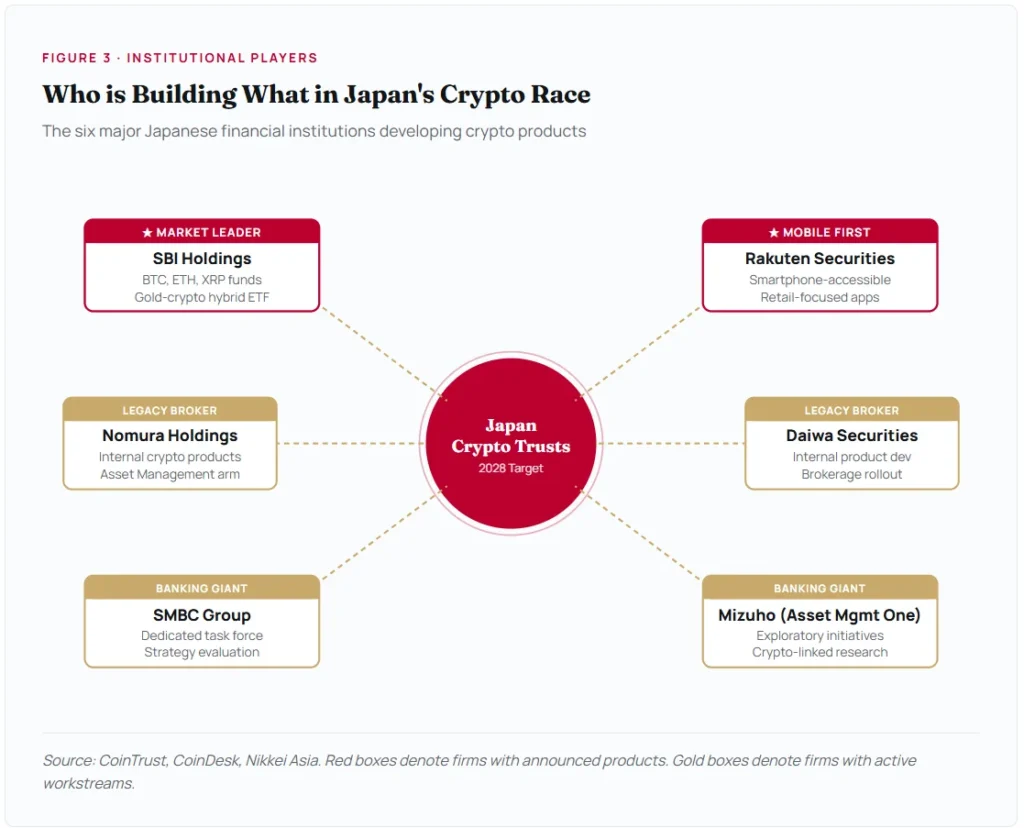
SBI, Rakuten, Nomura, Daiwa, SMBC, and Mizuho are all developing crypto products.
Crypto tax rates could drop from 55% to a flat 20%, matching the rate on equities.
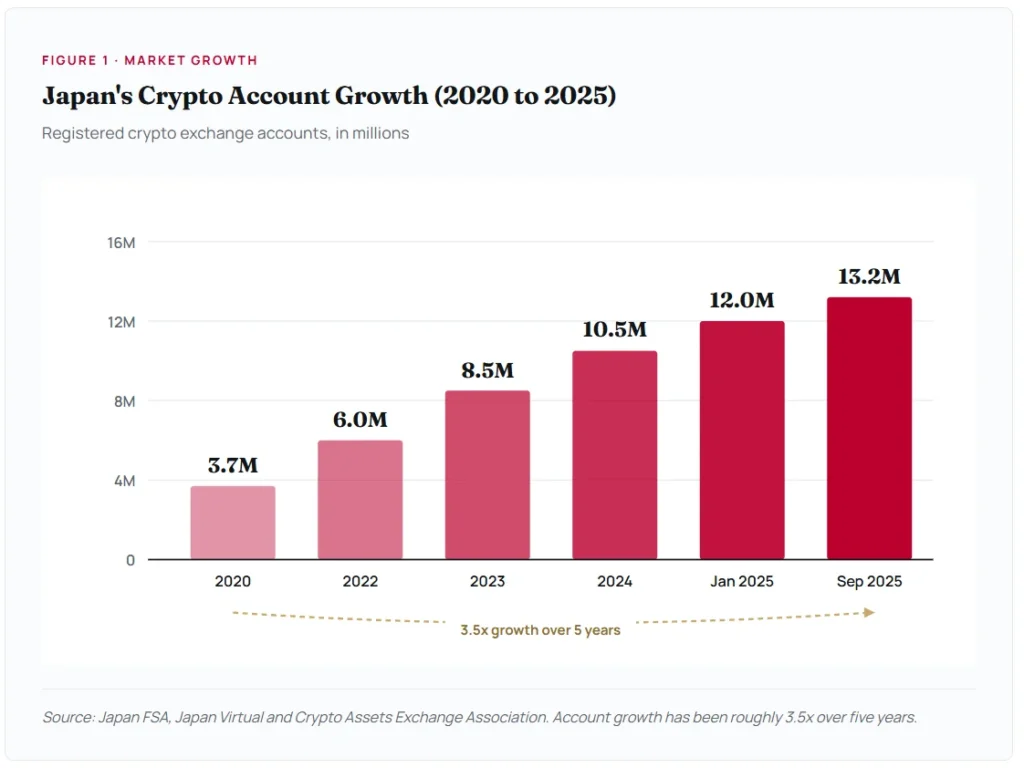
Japan has over 13 million crypto accounts holding roughly $34 billion.
Japanese households hold $14.8 trillion in financial assets, 48.5% in cash.
Analysts project the crypto ETF market could reach $6.4 billion in AUM.
Japan lags the US by 4 years but enters with a more developed retail infrastructure.
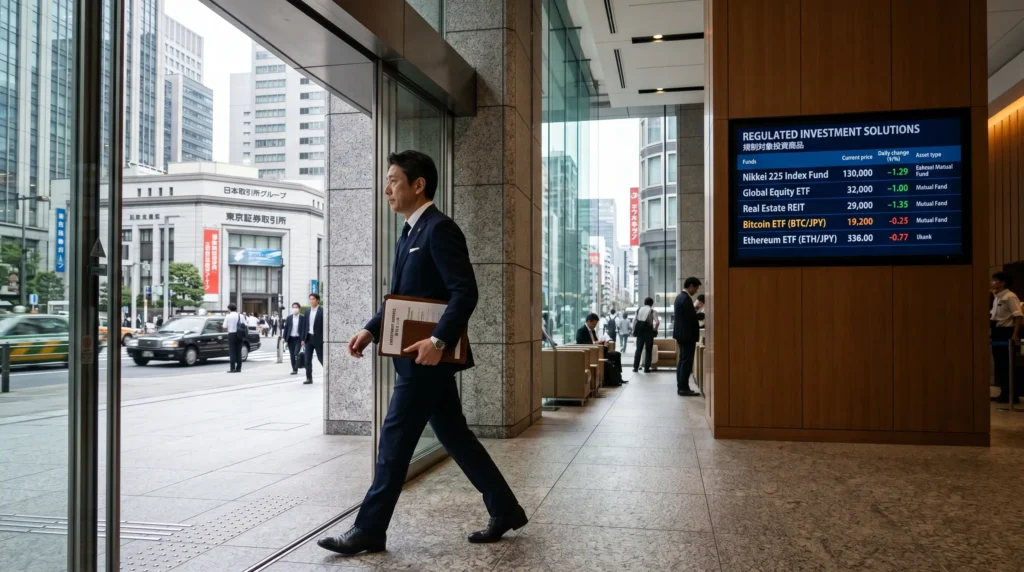
Japan is approaching a pivotal financial transformation. The country’s largest brokerages and asset managers are preparing cryptocurrency investment trusts. As a result, retail investors could soon access Bitcoin and Ethereum through ordinary securities accounts. This shift reflects a broader regulatory pivot. Moreover, it signals Japan’s intent to become Asia’s leading hub for institutional crypto investment, as reported by MEXC News.

Japan’s Crypto Market by the Numbers
Japan’s digital asset market has matured rapidly. According to the FSA’s discussion paper, the country had over 12 million crypto accounts at exchange providers by January 2025. Furthermore, total user deposits exceeded 5 trillion yen. By September 2025, holdings reached roughly $34.3 billion.
These figures carry analytical weight. Notably, roughly one in ten Japanese residents now holds a crypto account. Additionally, 7.3% of investors with prior investment experience own crypto assets. Therefore, crypto ownership already surpasses FX trading and corporate bonds in Japan.
Chainalysis recorded another striking signal. Specifically, Japan’s on-chain value received jumped 120% in the 12 months to June 2025. This made Japan the fastest-growing market among the top APAC economies.
The Hidden Opportunity: Japan’s Household Wealth
The real story lies in Japan’s savings habits. According to Bank of Japan data, Japanese households held $14.8 trillion in financial assets at the end of 2025. Strikingly, 48.5% of this sits in cash and bank deposits. Therefore, Japan’s savings pool is one of the largest pools of idle capital globally.
This matters enormously for crypto product distribution. For perspective, just a 1% reallocation from cash to crypto products could mean roughly $70 billion in inflows. Furthermore, Japan’s existing ETF market reached $648 billion in AUM by mid-2025.
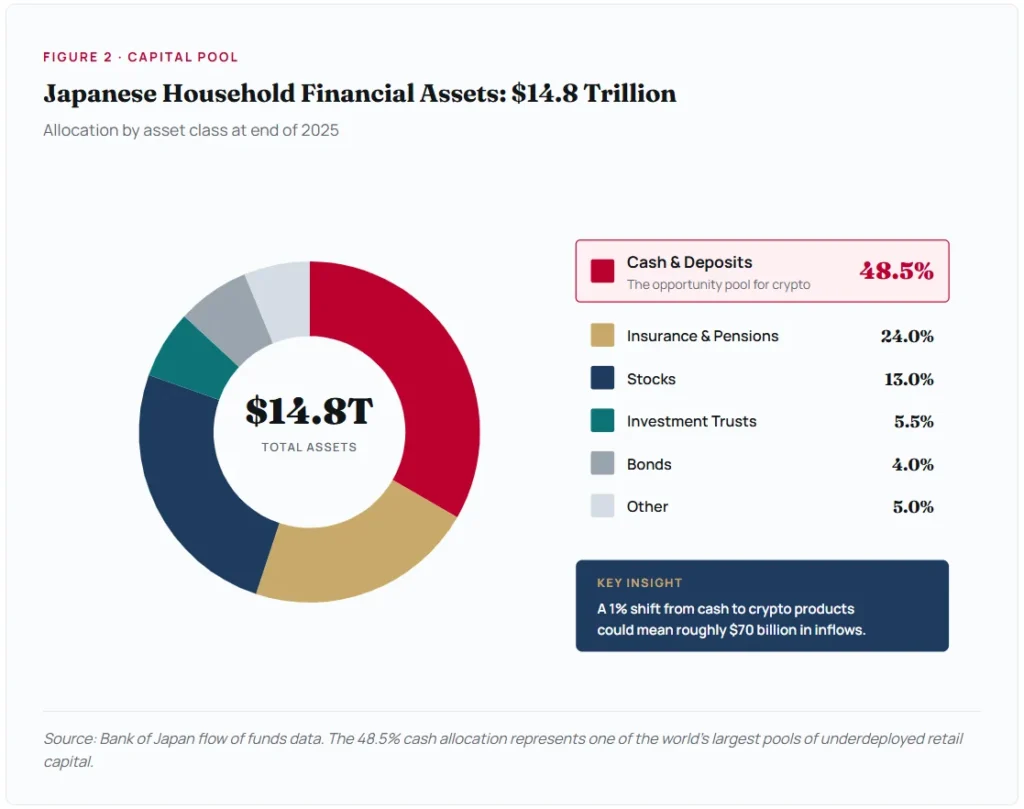
The opportunity is clear. Japanese households have historically avoided risk assets. However, regulated crypto wrappers could attract conservative savers in a way that direct exchanges never could. Moreover, the country’s brokerage culture is already built for this distribution.
The Players Reshaping Japan’s Crypto Landscape
SBI Holdings is leading the charge. Through SBI Global Asset Management, the firm focuses on liquid assets like Bitcoin and Ethereum. Notably, SBI’s group AUM exceeded $75.5 billion by March 2026. Additionally, SBI plans a dual Bitcoin-XRP ETF and a gold-crypto hybrid product.
Rakuten Securities is taking a mobile-first route. Together with Rakuten Investment Management, the firm develops smartphone-accessible crypto products. As a result, retail investors gain frictionless entry through familiar apps.
Meanwhile, traditional giants are not standing still. Nomura Holdings and Daiwa are quietly building internal crypto investment products. Furthermore, SMBC Group launched a dedicated task force. Asset Management One, operating under Mizuho Financial Group, also began exploratory initiatives.
Inside Japan’s New Crypto Ecosystem
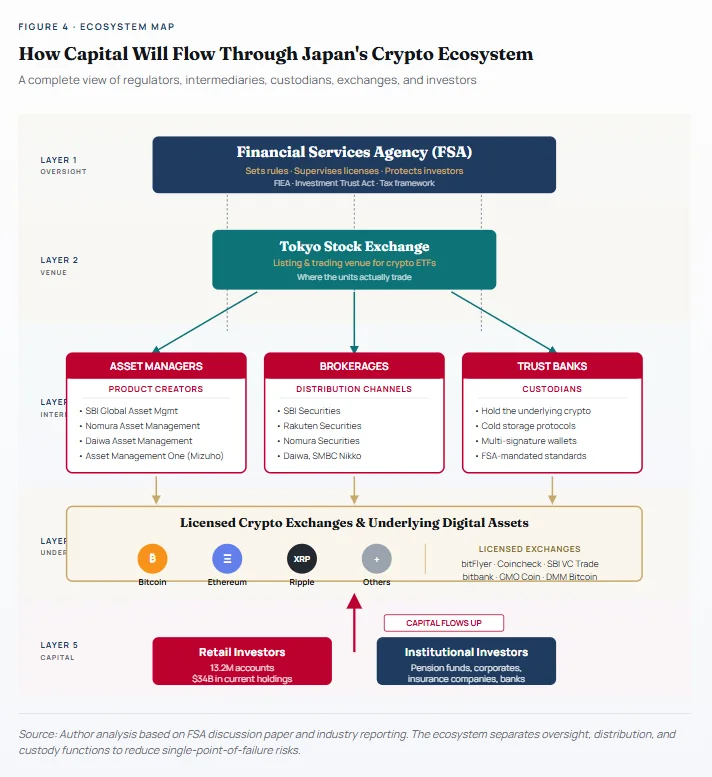
Understanding the new ecosystem matters more than the headlines. The reformed structure creates clearly defined roles for every participant. Furthermore, capital flows through tightly regulated channels instead of fragmented exchanges.
At the top sits the Financial Services Agency. The FSA sets rules, supervises licenses, and protects investors. Below this, asset managers like SBI Global AM and Nomura Asset Management design products. Trust banks then handle custody. Importantly, this separation removes the single point of failure risks seen at exchanges.
Retail and institutional investors enter through familiar brokerage accounts. Consequently, they avoid managing private keys or directly navigating crypto exchanges. Therefore, the ecosystem effectively wraps crypto exposure inside Japan’s traditional financial plumbing.
Analyst View
The ecosystem design borrows heavily from gold and real estate ETF structures. Specifically, trust banks act as custodians, asset managers package the product, and brokerages distribute. This structure makes crypto feel less like Wild West speculation and more like a traditional investment instrument.
The Regulatory Roadmap
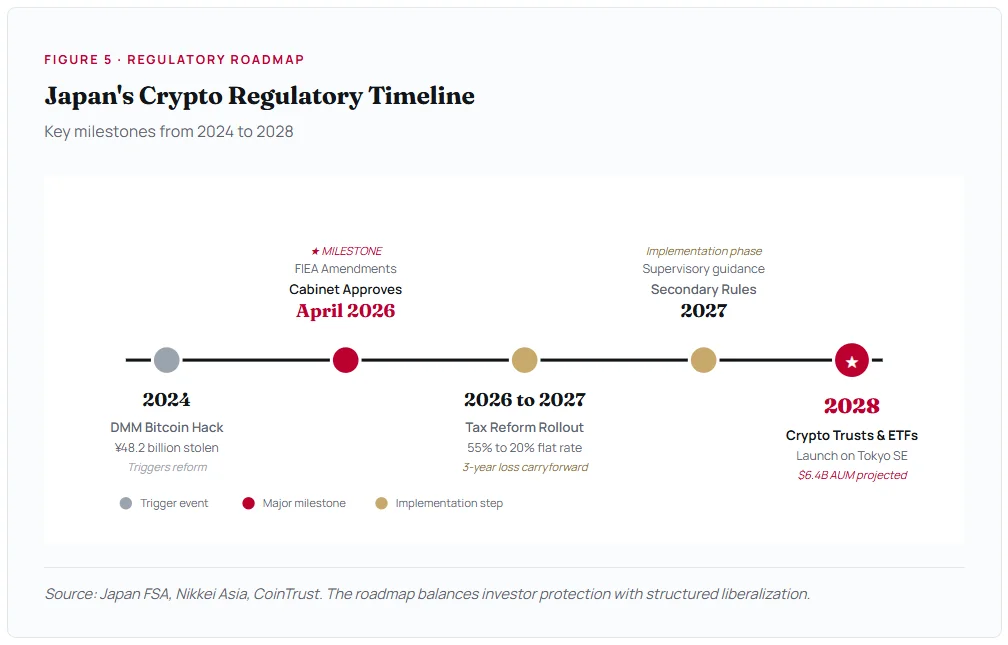
Japan’s regulatory transformation is methodical. On April 10, 2026, the Japanese Cabinet approved amendments to the Financial Instruments and Exchange Act. Consequently, cryptocurrencies are moving closer to a securities-style classification.
The reforms achieve three things. First, they reclassify crypto under securities law. Second, they introduce stricter disclosure requirements and insider trading rules. Third, they pave the way for the inclusion of crypto in investment trusts.
Furthermore, the FSA plans to amend the Investment Trust Act by 2028. This change would formally add crypto to “specified assets” eligible for trust structures. Therefore, the Tokyo Stock Exchange could begin listing crypto ETFs.
Tax Reform: A Real Numbers Example
Japan’s current crypto tax regime is steep. Profits are subject to progressive income tax rates, reaching about 55% in the highest bracket. Therefore, many wealthy investors have avoided declaring crypto positions.
The 2026 reform proposes a dramatic change. Specifically, the FSA plans to apply a flat 20% rate to specified crypto investments. This aligns digital asset taxation with stocks and investment trusts.
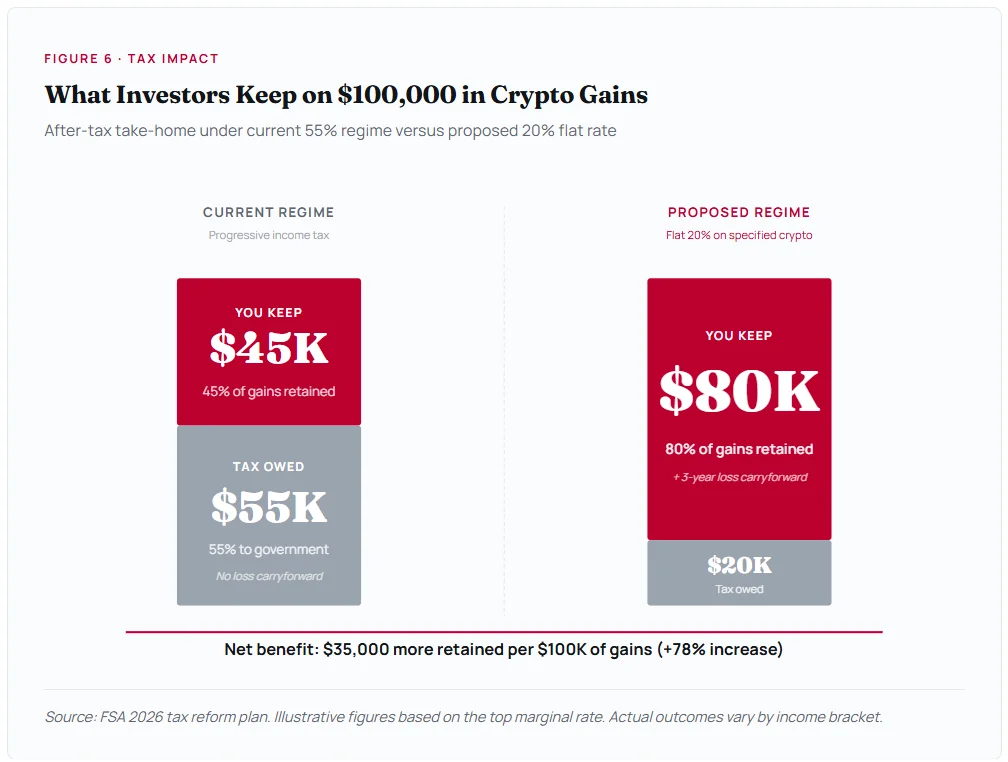
Additionally, a three-year loss carryforward provision is on the table. Consequently, investors could offset future gains with prior losses. The implications are significant. Lower taxes plus regulated wrappers could unlock dramatic retail participation.
Regional Competition: Where Japan Stands
Japan is not alone in this race. Across Asia, regulators are competing for crypto market share. Hong Kong took the early lead. Specifically, the city launched spot Bitcoin and Ethereum ETFs in April 2024, then added Solana ETFs in October 2025.
However, Hong Kong’s ETF market remains modest. Assets under management sit at roughly $500 million. By comparison, US spot Bitcoin ETFs hold around $120 billion. Meanwhile, South Korea is still drafting its Digital Asset Basic Act framework.
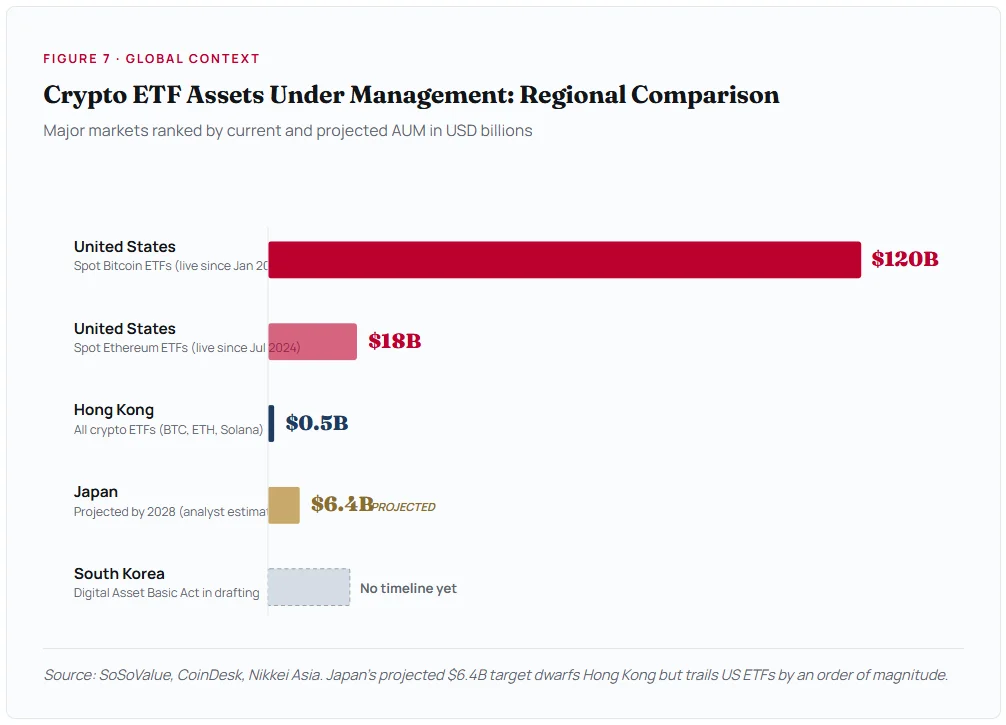
This positioning matters strategically. Japan enters with structural advantages that competitors lack. For instance, Japan has a far larger retail savings pool. Additionally, the country has an entrenched brokerage culture. Moreover, major institutions already manage household investments at scale.
SBI’s Product Strategy Decoded
SBI is taking a notable risk-tiered approach. The firm’s crypto product slate targets different investor profiles. Furthermore, this contrasts with US ETFs that typically offer single-asset exposure.
The flagship product is the dual Bitcoin-XRP ETF. This basket structure offers diversified exposure to crypto. Notably, XRP’s inclusion reflects SBI’s longstanding partnership with Ripple. Additionally, the gold-crypto hybrid ETF allocates roughly 49% to Bitcoin alongside gold holdings.
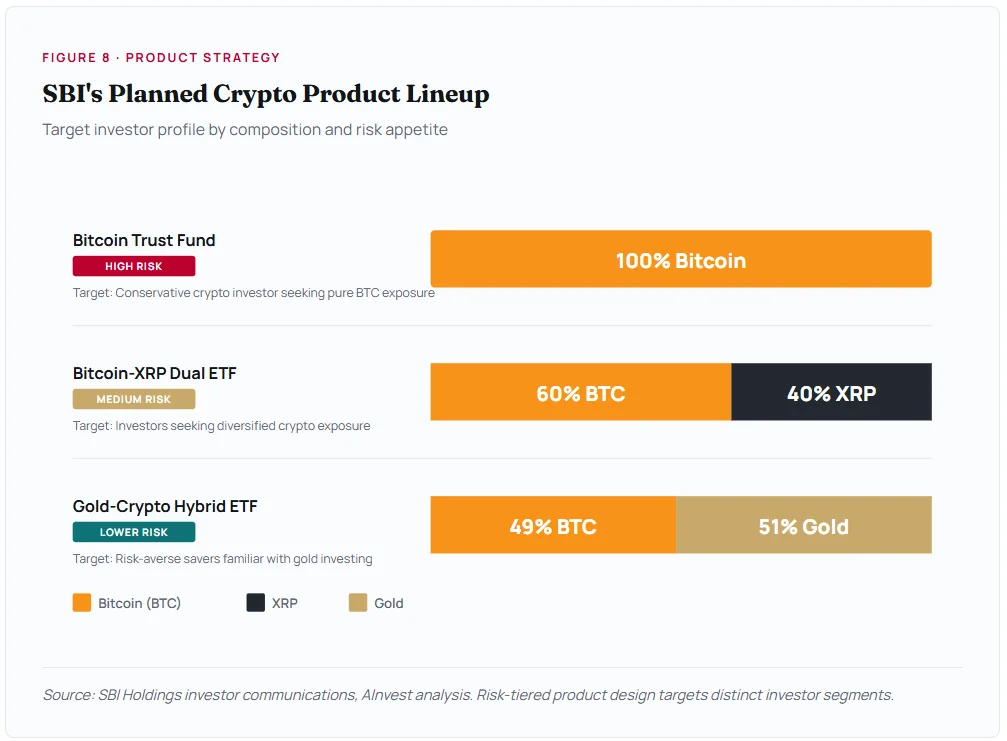
This segmentation strategy is sophisticated. Specifically, it acknowledges that crypto remains intimidating for conservative Japanese savers. Therefore, gold blending offers familiar comfort.
Risks, Critics, and Challenges
Not everyone applauds the 2028 timeline. Critics argue Japan is falling behind regional competitors. Furthermore, Hong Kong has already issued 12 VATP licenses. Therefore, Tokyo risks losing institutional flow to nimbler rivals.
Security concerns also linger. The 2024 DMM Bitcoin hack drained 48.2 billion yen, roughly $306 million. As a result, the FSA demands strict custody protocols from trust banks. Asset managers must enhance risk disclosures and operational safeguards.
Compliance costs raise additional concerns. Industry leaders warn that increased regulatory burdens could threaten smaller players. Therefore, market consolidation may accelerate. Meanwhile, retail investors still face inherent crypto volatility.
“Over 60% of investors in Japan had expressed interest in crypto investments in some form or other.”
-Hajime Ikeda, Executive Officer, Nomura Holdings (August 2025)
Investment Thesis: Who Benefits Most?
Several stakeholder groups stand to gain. First, large brokerages capture distribution fees on new product flows. Second, asset managers earn recurring AUM fees. Third, trust banks generate steady custody revenue.
For retail investors, the benefits are concrete. Specifically, they gain regulated exposure without having to manage private keys. Furthermore, the lower tax burden materially boosts after-tax returns. Additionally, three-year loss carryforwards improve risk management.
For institutional investors, the case is structural. Pension funds and corporates need familiar wrappers for crypto. Moreover, 76% of institutional investors plan to expand digital asset exposure in 2026. Therefore, supply is meeting genuine demand.
Lastly, Bitcoin and Ethereum themselves benefit from sustained demand. As capital from one of the world’s largest savings pools begins flowing into regulated crypto products, structural price support could emerge.
Conclusion: Deliberate but Decisive
Japan’s crypto transformation is methodical but undeniable. The country’s largest financial institutions are aligning behind a clear regulatory roadmap. By 2028, Japanese retail investors could gain regulated access to digital assets through traditional brokerage accounts. Furthermore, the proposed 20% flat tax rate could unlock substantial capital flows.
For investors, students, and market observers, the trajectory is clear. Japan is not chasing crypto hype. Instead, it is methodically building institutional infrastructure atop $14.8 trillion in household assets. The next two years will determine whether this approach establishes Tokyo as Asia’s premier digital asset hub or relegates it to a follower role behind faster-moving competitors.