

October 06, 2026 – Long-dated notes from Oracle, Alphabet, Meta, Amazon, and SpaceX carry coupons above 6%. Filings also show $1.12 trillion of data-center leases waiting to start.

In Summary
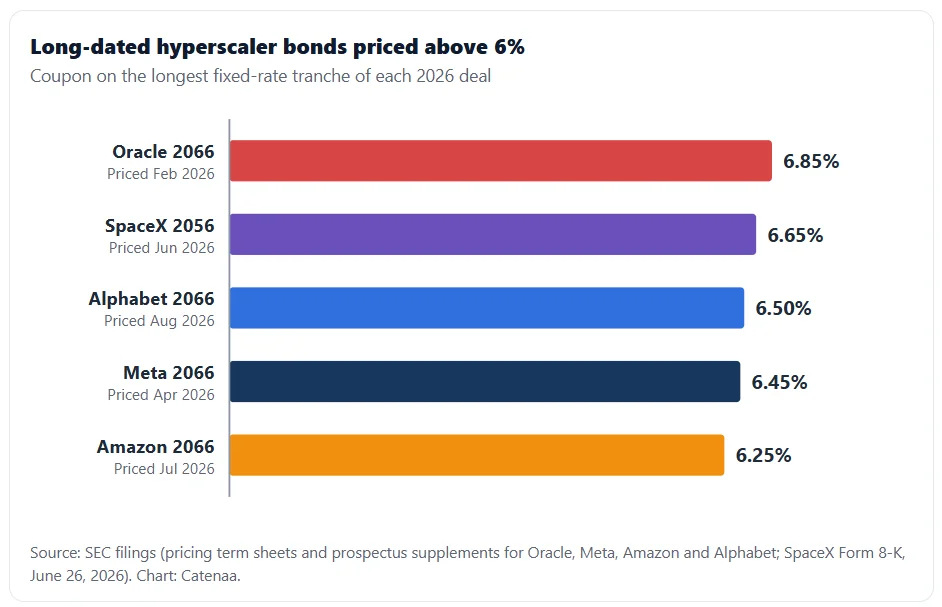
The longest 2026 notes from five AI spenders carry coupons between 6.25% and 6.85%.
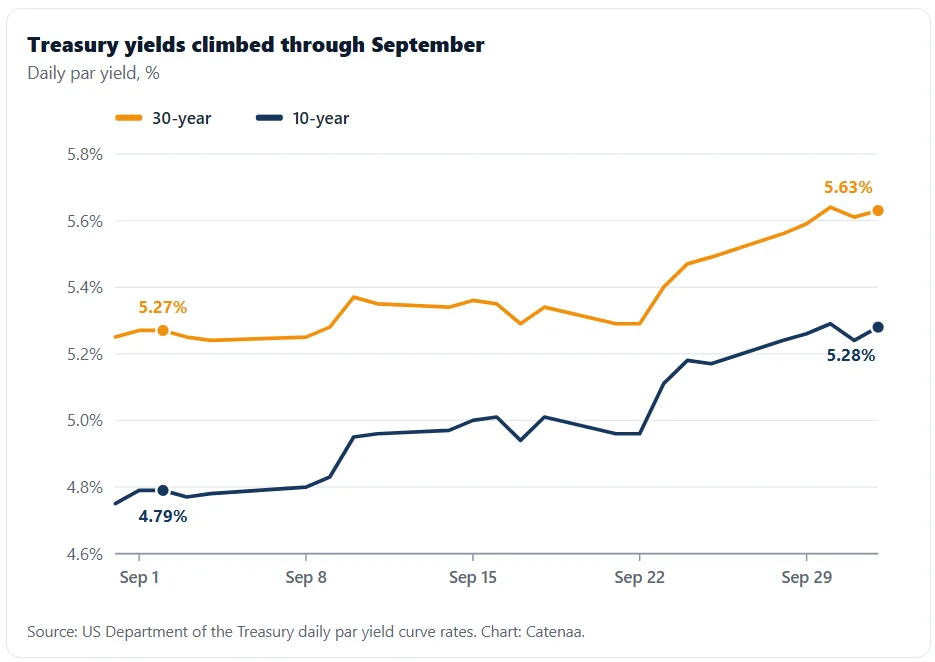
The 10-year Treasury yield rose 49 basis points in a month to 5.28% on Oct. 2.
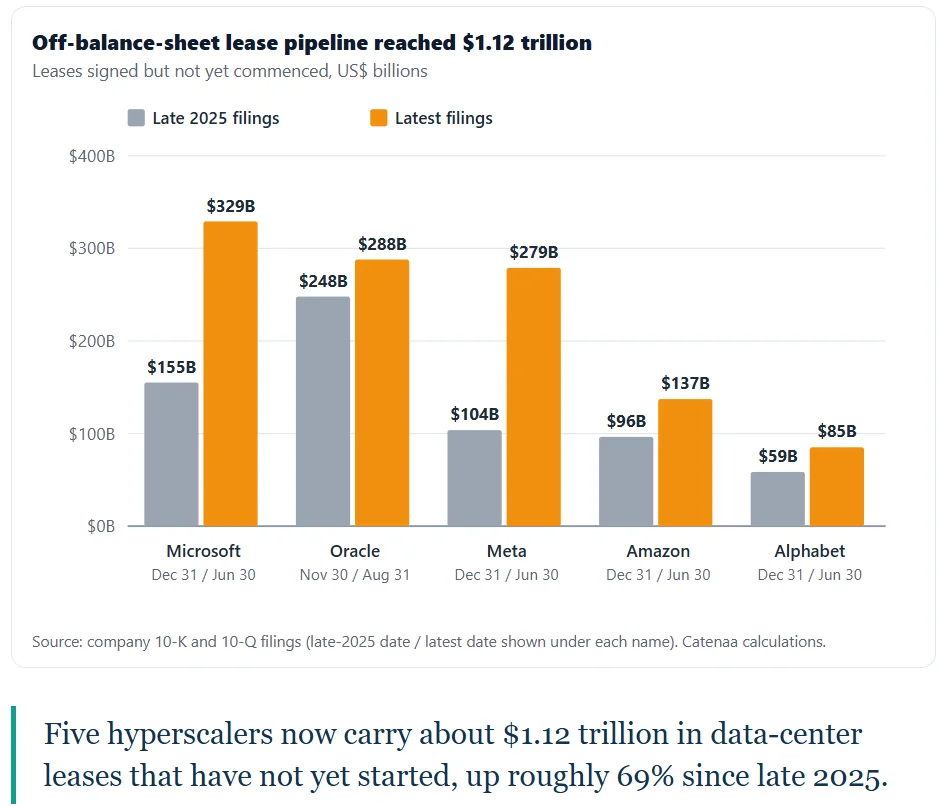
Uncommenced leases at five hyperscalers reached about $1.12 trillion, up from roughly $662 billion in late 2025.
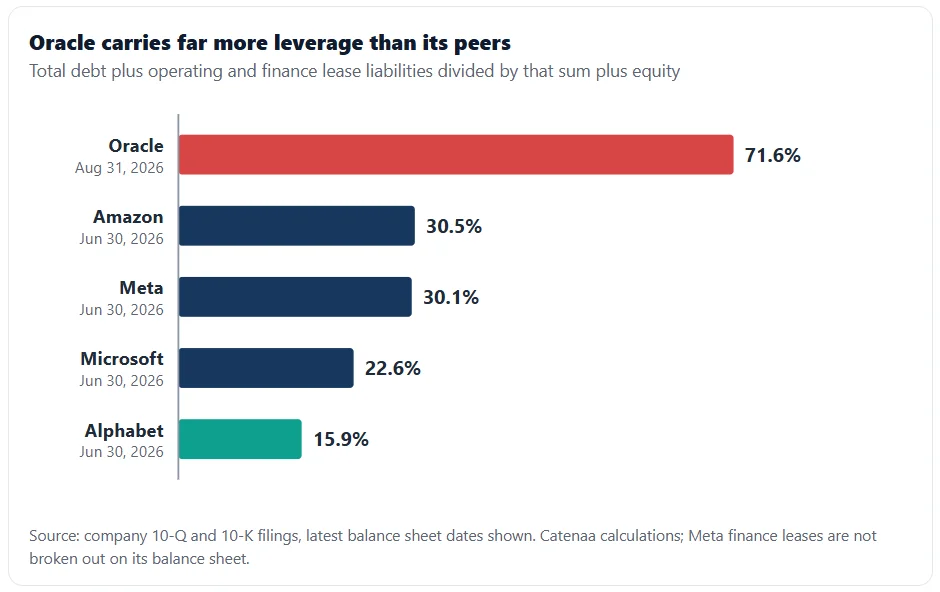
Oracle’s debt and leases equal 71.6% of its capital, versus 15.9% at Alphabet.
Hyperscaler bonds now pay yields that once belonged to riskier borrowers. Two forces drive the shift. Treasury yields have surged, and the largest AI spenders keep stacking up long-term obligations.
For buyers of hyperscaler bonds, that mix raises a simple question. Does the extra yield cover the extra risk?
Hyperscaler bonds price above 6% at the long end
The new-issue market tells the story. In August, Alphabet sold $25 billion of notes, according to its pricing term sheet. The deal spanned eight fixed-rate tranches, from 2028 to 2066. Its 2066 notes carried a 6.50% coupon and priced to yield 6.527%.
That deal came with high ratings of Aa2 from Moody’s and AA+ from S&P. Even so, investors demanded 130 basis points over Treasuries for the longest tranche.
Other hyperscaler bonds followed the same pattern. Meta priced 6.45% notes due 2066 in April, and Amazon sold 6.25% notes due 2066 in July. Meanwhile, SpaceX issued 6.65% notes due 2056 in June.
Oracle paid the most. Its $25 billion February deal included 6.85% notes due 2066, the highest coupon in the group.
Treasury yields did the heavy lifting
Rising government yields explain much of the move. Treasury data show the 10-year yield closed at 5.28% on Oct. 2, up from 4.79% on Sept. 2. Over the same span, the 30-year yield climbed 36 basis points to 5.63%.
In fact, the 10-year yield hit 5.29% on Sept. 30, its highest close since May 2002. Why does that matter for hyperscaler bonds? Most long corporate notes price as a spread over Treasuries, so higher base rates feed straight into coupons.
As a result, notes sold in the summer have likely lost value, because bond prices fall when yields rise. Long maturities magnify that effect.
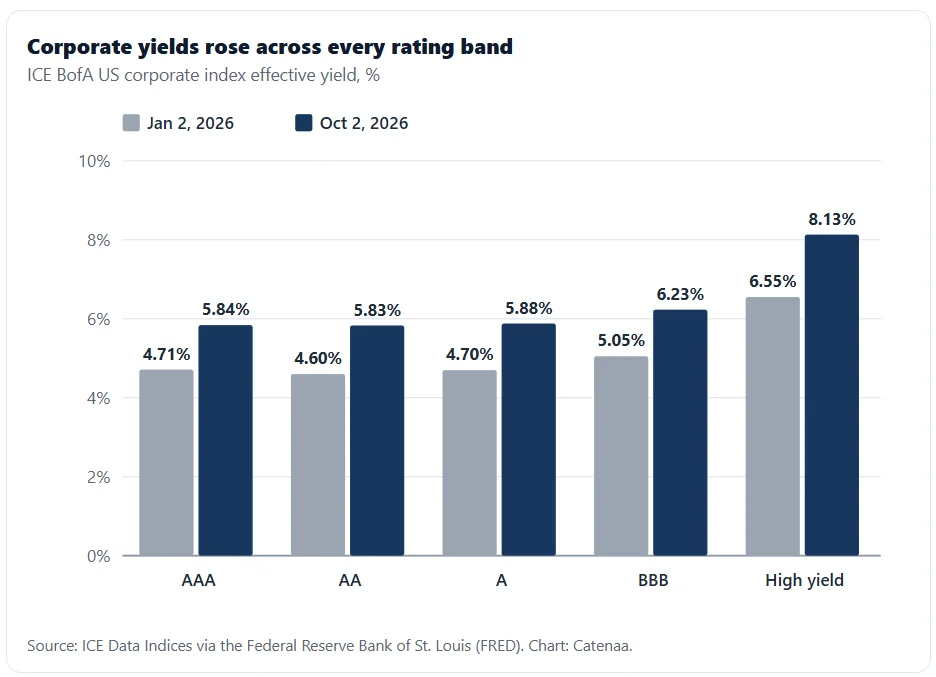
Corporate borrowing costs have tracked the move. The ICE BofA US Corporate Index yielded 6.03% on Oct. 2, compared with 4.85% on Jan. 2. BBB-rated debt now yields 6.23%, while the high-yield index sits at 8.13%.
Leverage splits the group
Balance sheets differ sharply, however. Catenaa measured debt plus lease liabilities as a share of total capital, using each company’s latest filing.
Oracle stands apart. Its quarterly report for the period ended Aug. 31 shows $125.3 billion of notes and $43.8 billion of lease liabilities. Against $67.2 billion of equity, that equals 71.6% of capital.
Heavy spending explains the strain. Oracle’s capital expenditures reached $28.5 billion in the August quarter, up from $8.5 billion a year earlier. Consequently, free cash flow came in at minus $5.4 billion.
To fill the gap, Oracle sold 141 million new shares for $19.9 billion through an at-the-market program. That sale helped lift equity from $43.1 billion at the end of May.
By contrast, Alphabet sits at 15.9% and Microsoft at 22.6%. Meta and Amazon both land near 30%.
A $1.12 trillion lease pipeline
Leases that have not started raise a bigger question. These deals sit off the balance sheet, yet they commit companies to years of payments.
Microsoft reported $329.1 billion of such leases in its fiscal 2026 annual report. Those leases start between fiscal 2027 and fiscal 2033, and some depend on contract conditions.
Oracle disclosed $288 billion, mostly for data centers due to start between late 2026 and mid-2029.
Meta listed $279.0 billion, Amazon $137.2 billion and Alphabet $85.2 billion. Together, the five carry about $1.12 trillion in leases yet to commence. Amazon’s own table shows about 68% of its payments falling after 2030.
That total has jumped. In filings covering late 2025, the same five companies reported roughly $662 billion, by Catenaa’s tally. Microsoft’s figure more than doubled, and Meta’s grew about 2.7-fold.
Oracle’s pipeline equals more than four times its equity. Still, the company reports $664 billion in remaining performance obligations, or contracted future revenue.
What hyperscaler bonds mean for investors
For income investors, the coupons look tempting. Alphabet’s AA-rated 2066 notes pay more than the average BBB bond yielded in January.
Yet long maturities magnify losses if Treasury yields keep rising. Moreover, heavy lease commitments could pressure credit ratings if AI demand cools.
Watch new-issue spreads closely. Meta’s 2066 notes priced 147 basis points over Treasuries in April, wider than Alphabet’s 130 in August. Any further widening would signal fading appetite for AI-linked debt.
In short, hyperscaler bonds offer richer income today. However, buyers also take on rate risk and AI demand risk for decades.