

October 29, 2026 – Hedge funds hold about $2 trillion of US government debt. New Federal Reserve research suggests their next favored trade could rely far less on bonds.

In Summary
Hedge funds held about $2.0 trillion in cash Treasuries at the end of 2025, roughly 7% of marketable debt.
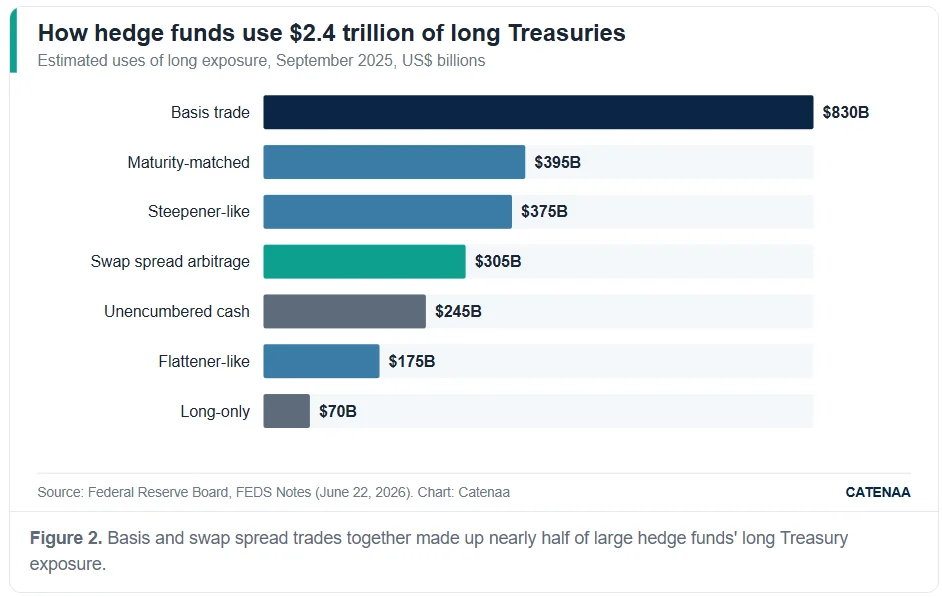
Basis and swap spread trades made up nearly half of large funds’ $2.4 trillion long exposure in September 2025.
Dallas Fed economists say swap spread trades now rival basis trades in risk-adjusted returns.
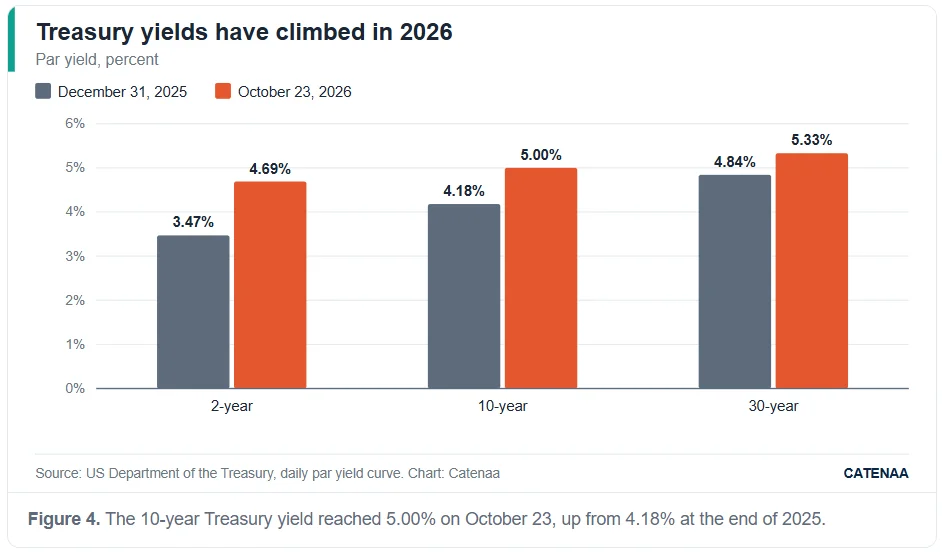
The 10-year Treasury yield closed at 5.00% on October 23, up from 4.18% at the end of 2025.
Hedge fund Treasury holdings hit a record share
Hedge fund Treasury holdings have become a pillar of the US debt market. Funds held about $2.0 trillion in long cash Treasuries at the end of 2025, says the Office of Financial Research. That is nearly three times the level of five years earlier. Over the same span, marketable Treasury debt rose 29% to $28.9 trillion.
As a result, hedge funds owned about 7% of all marketable Treasuries, a series high. They also held about $1.4 trillion in short Treasury futures in the fourth quarter.
However, the reason funds hold these bonds may matter more than the size. Most of the debt sits inside leveraged relative value trades, not long-term portfolios.
Two trades drive most of the demand
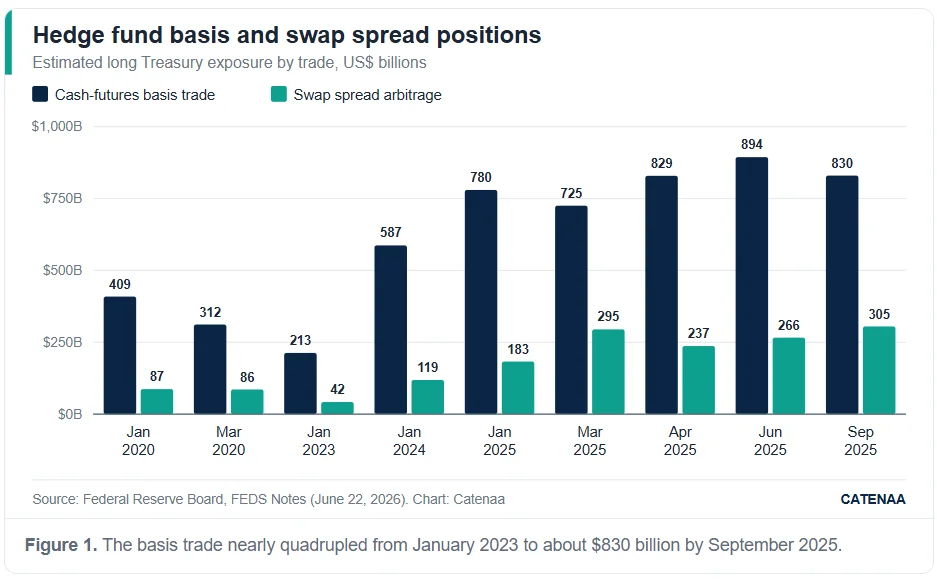
A June Federal Reserve note breaks down how large hedge funds use their Treasuries. In September 2025, their long exposure reached $2.4 trillion. The cash-futures basis trade made up about $830 billion, or 35%. Swap spread trades added another $305 billion, or 13%. Together, the two trades account for nearly half of all hedge fund Treasury exposure.
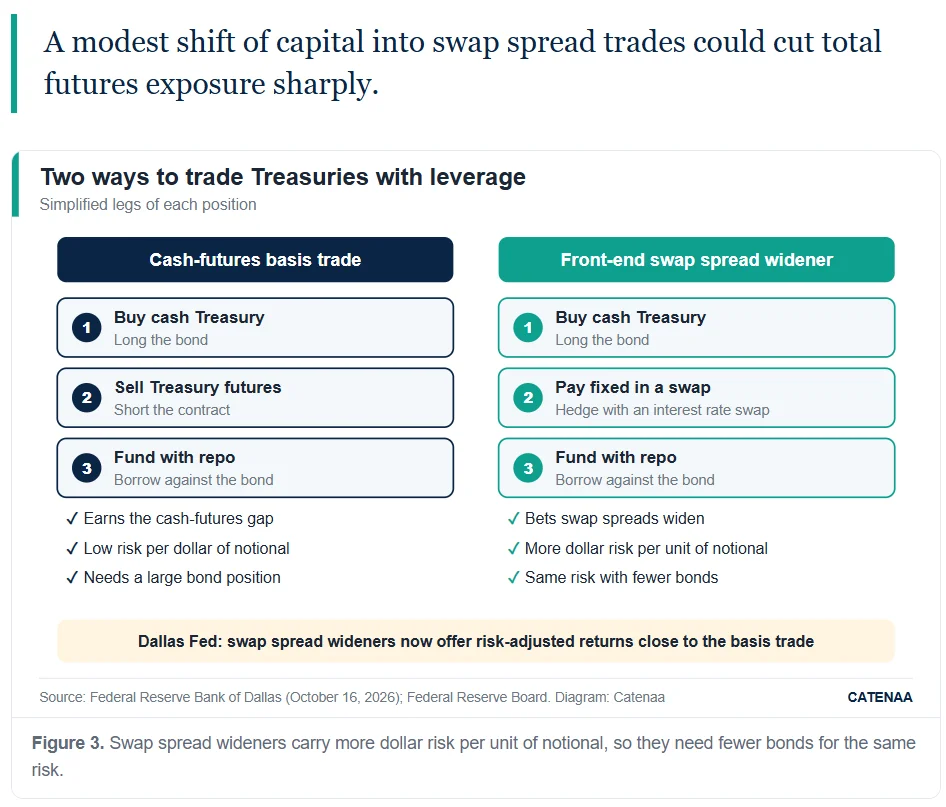
In a basis trade, a fund buys cash bonds and sells matching futures. It then funds the bonds with repo loans. The Fed note puts hedge fund repo borrowing at about $3.0 trillion. Notably, the basis trade has nearly quadrupled since January 2023, when it stood at $213 billion.
Swap spread positions also proved fragile. During the April 2025 tariff shock, funds unwound about $60 billion, or 20%, of those trades. They cut another $40 billion in May. Still, positions recovered to about $305 billion by September.
Why the next trade may use fewer bonds
New research from the Dallas Fed suggests the basis trade is losing its edge. Its economists say leveraged funds’ net short futures positions have plateaued and slightly reversed over the past year. They link the shift to the trade’s economics, not crowding.
The key driver is yield. Futures contracts price delivery using a fixed 6% reference yield. As long-term yields climbed toward that level, the value of the delivery option shrank. Consequently, the classic basis trade now pays less.
Meanwhile, front-end swap spread wideners offer risk-adjusted returns close to the basis trade, the Dallas Fed says. These positions carry more dollar risk per unit of notional. Therefore, a modest shift of capital could cut total futures exposure sharply. In other words, funds could take similar risk with fewer bonds on their books.
Yields test the Treasury’s buyer base
The yield backdrop helps explain the shift. The 10-year Treasury yield closed at 5.00% on October 23, Treasury data show. It stood at 4.18% at the end of 2025. Over the same period, the 30-year yield rose from 4.84% to 5.33%. Shorter yields moved even more, as the 2-year climbed from 3.47% to 4.69%. In short, higher yields have changed the math for bond arbitrage.
A smaller hedge fund Treasury footprint would leave a gap. If funds need fewer bonds, the Treasury must find other buyers for its supply. Those buyers may demand higher yields. For now, monthly position estimates alone cannot show whether shrinking positions reflect forced selling or a planned rotation.
Stress remains the other risk. The International Monetary Fund warns that leverage and crowded bets can turn hedge funds into amplifiers of stress. In calm times, the same funds provide liquidity. The IMF adds that gross hedge fund assets have tripled since 2013 to $13 trillion. It puts their share of US Treasuries at about 9% in 2025. That figure differs from the OFR estimate because the two measures use different bases.
Next, Fed policymakers meet on October 27 and 28. Their signal on rates will shape funding costs for every leveraged bond trade.