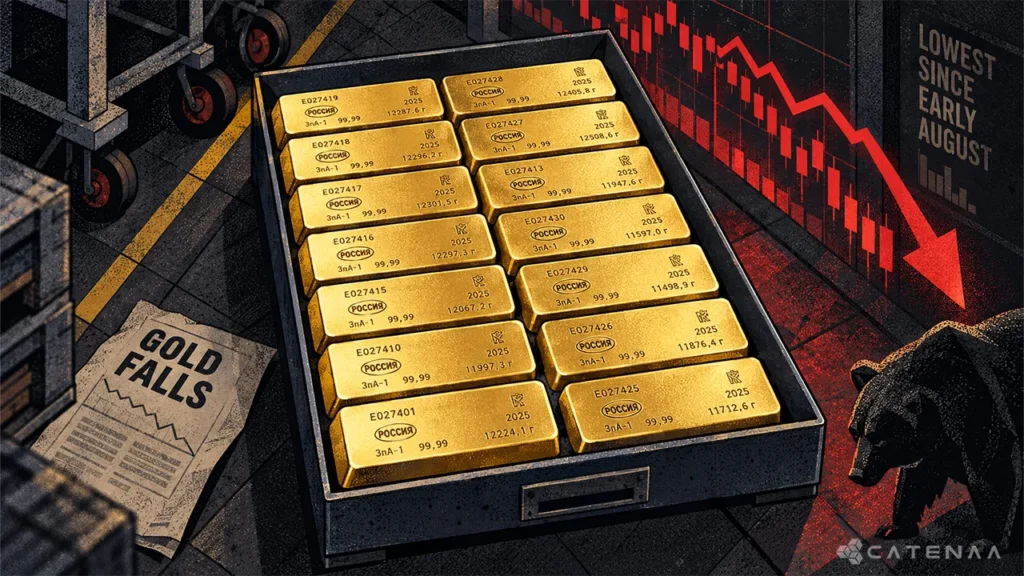


September 30, 2026 – The LBMA benchmark dropped 2.73% to $4,144.55 as Treasury yields hit a 19-year high. Silver fell more than 5%.
In Summary
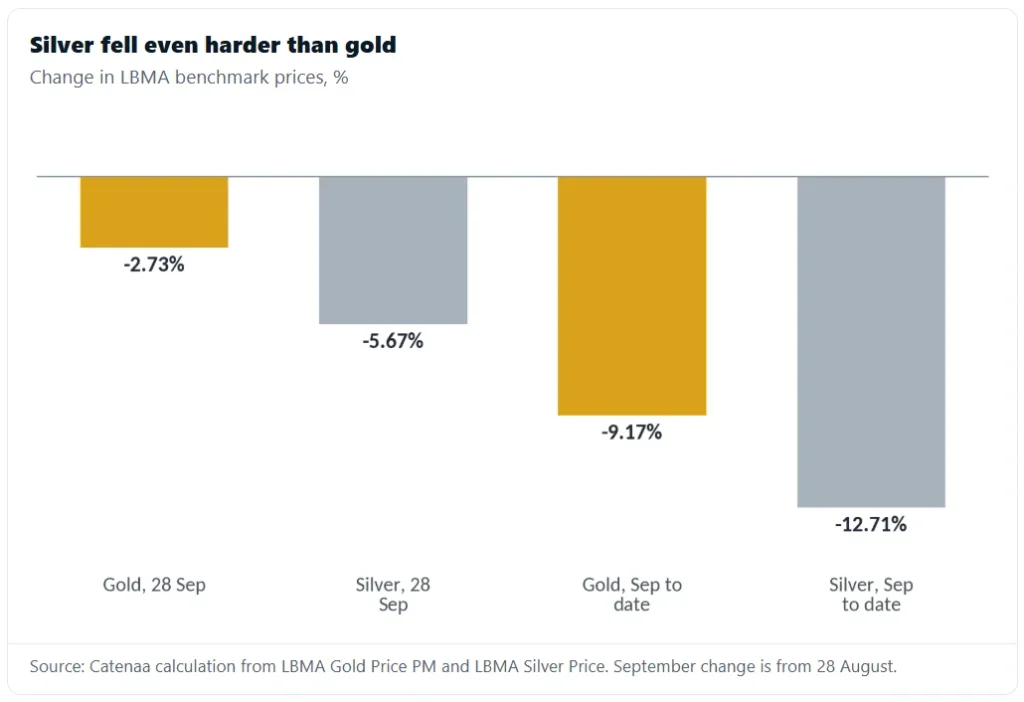
The LBMA Gold Price PM fell 2.73% to $4,144.55 on 28 September, the lowest since 4 August.
The 10-year Treasury yield rose to 5.24%, raising the cost of holding non-yielding gold.
Gold is down 9.17% in September and about 23% below its $5,405 record from 29 January.
Silver fell 5.67% to $61.33 and is down 12.71% since late August.

The gold price fell almost 3% on Monday to its lowest level since early August. Rising bond yields and a hawkish Federal Reserve drew money away from the metal.
The LBMA Gold Price settled at $4,144.55 an ounce in the afternoon auction. That was $116.50 below Friday’s level of $4,261.05, a drop of 2.73%.
The morning benchmark fell even further in percentage terms. It dropped 3.41% to $4,144.40, from $4,290.75 on Friday morning.
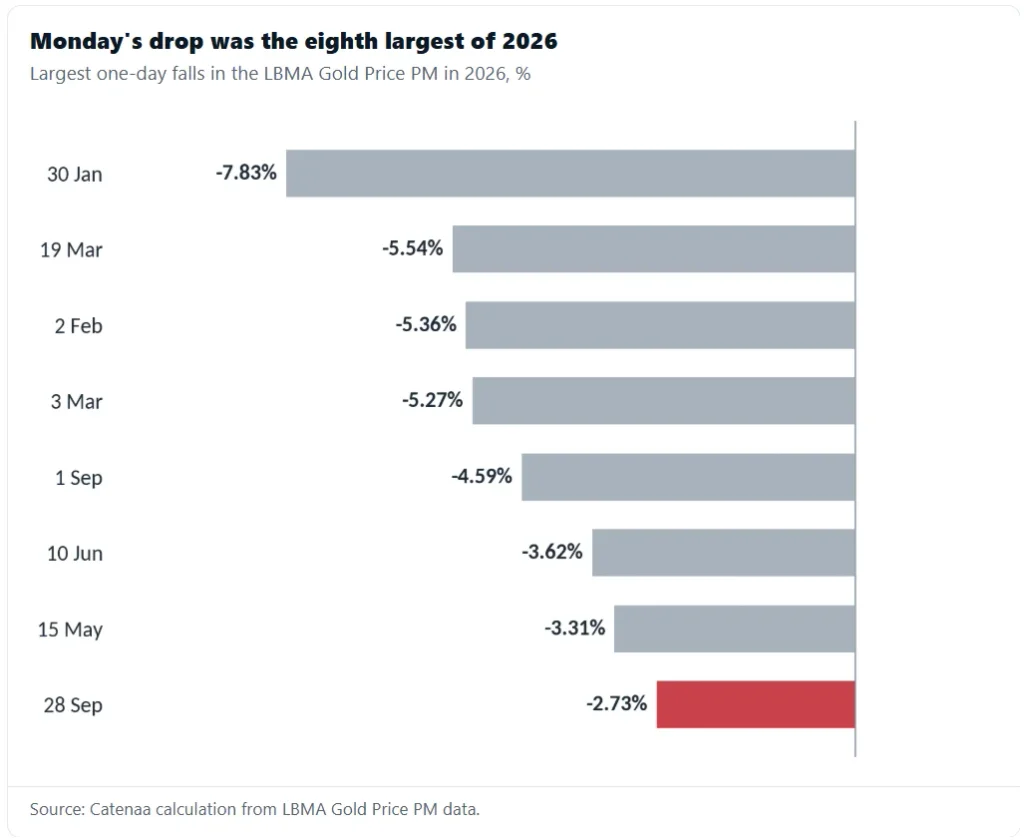
Monday’s afternoon price was the lowest since 4 August, when gold stood at $4,084.20. In addition, the fall was the largest in a single day since 1 September.
It also marked a fourth straight daily decline. The afternoon price had stood at $4,329.55 as recently as 22 September.
The benchmark comes from an electronic auction run twice a day by ICE Benchmark Administration. Banks, refiners and central banks use it to value holdings and settle contracts.
Other currencies told a similar story. In euro terms, the afternoon price was €3,647.62 an ounce. In sterling, it stood at £3,124.16.
Why the gold price is falling
Higher yields are the main culprit. Gold pays no interest, so it becomes less attractive when safe government bonds offer better returns.
Those returns jumped on Monday. The 10-year Treasury yield rose to 5.24%, the highest since 2007, according to US Treasury data. Meanwhile, the two-year yield hit 4.92%.
The Fed has also turned more aggressive. Policymakers raised rates by a quarter point on 16 September, the first increase since July 2023. The target range now stands at 3.75% to 4.00%.
On the day of the slide, Governor Lisa Cook said inflation was running at an estimated 3.8%. In her speech in Oakland, she said she will weigh what policy rate the economy needs.
Consequently, traders are pricing a longer period of tight money. That backdrop has been tough for gold, which tends to shine when rates fall.
A long way from the January record
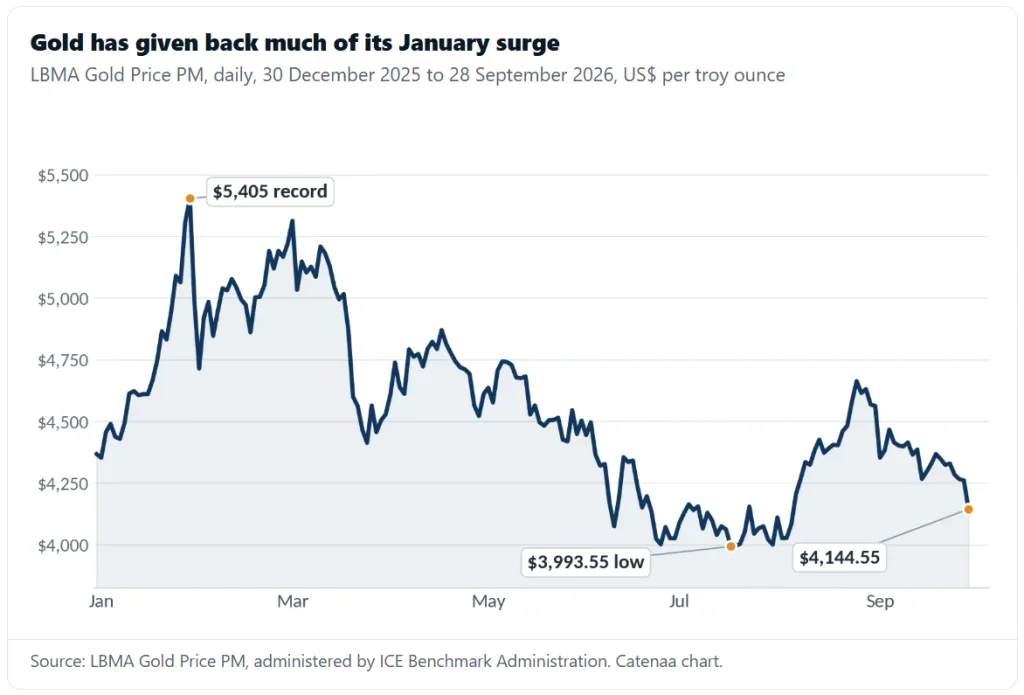
The metal has now lost much of its early-year surge. It set a record afternoon price of $5,405.00 on 29 January. Monday’s price sits about 23% below that peak.
The retreat began almost at once. On 30 January, gold fell 7.83%, its worst session of the year so far.
After that, prices slid through the spring and early summer. The low came on 16 July at $3,993.55. That day and the next were the only afternoons with prices below $4,000 this year.
A rebound followed in August, when the monthly average climbed to $4,409.89. However, September has reversed most of that recovery.
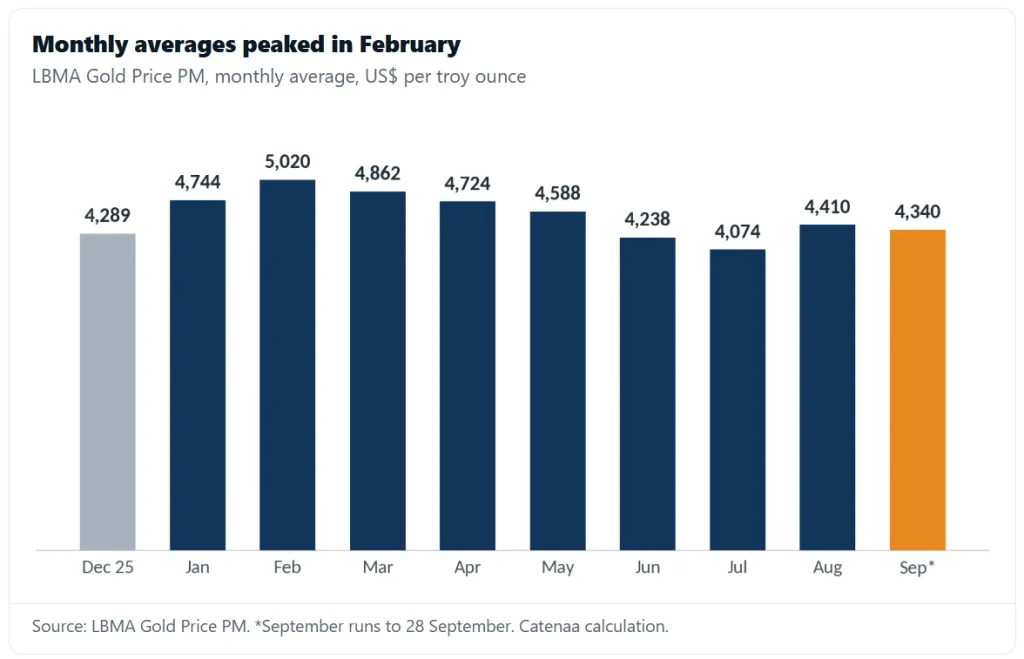
Gold is now down 9.17% in September, based on the 28 August price of $4,562.75. It is also about 5% lower for the year.
Still, the longer view is less bleak. The September 2025 average was $3,665.20, so gold remains about 13% higher than a year ago.
Silver takes a bigger hit
Silver fell harder on Monday. The LBMA Silver Price dropped 5.67% to $61.33 an ounce, down from $65.015 on Friday.
The white metal has now fallen 12.71% since late August. Silver tends to swing more than gold because industry drives a large share of its demand.
As a result, it often falls further when investors worry about slower growth. Higher rates can cool factory activity and reduce demand for industrial metals.
What could turn the gold price around
Several forces could still support the metal. The World Gold Council tracks central bank buying and investment demand. Both have driven prices in recent years.
Geopolitics also matters. The conflict in the Middle East remains unresolved, and any escalation could revive demand for safe assets.
On the other hand, a strong dollar and rising real yields would keep pressure on prices. Real yields measure bond returns after inflation.
Currency moves add another layer. Because gold trades in dollars, a firmer dollar makes the metal dearer for buyers who use other currencies.
Notably, not every alternative asset has struggled. Bitcoin has gained about 6% this month, even as gold slipped.
Oil tells a different story again. Brent crude has climbed about 16% this month on supply fears, a sharp contrast with the slide in precious metals.
For now, rates hold the key. Traders will watch US inflation data and the Fed’s October meeting closely.
For more on the forces behind the move, see our report on Treasury yields and our commodities coverage. Until yields stop rising, the gold price may struggle to regain its footing.