

October 29, 2026 – Chairman Kevin Warsh said one of the Fed’s eight 2027 meetings will focus only on strategy, with no rate vote. Bond yields, meanwhile, remain near their highest levels of the year.

In Summary
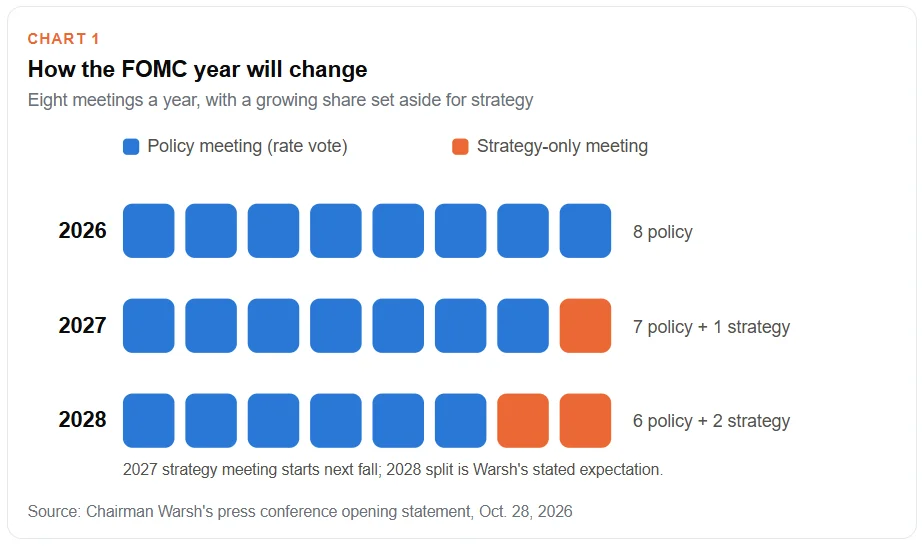
One of eight FOMC meetings in 2027 will cover strategy only, with no rate vote and no statement.
Warsh expects two strategy meetings and six policy meetings in 2028.
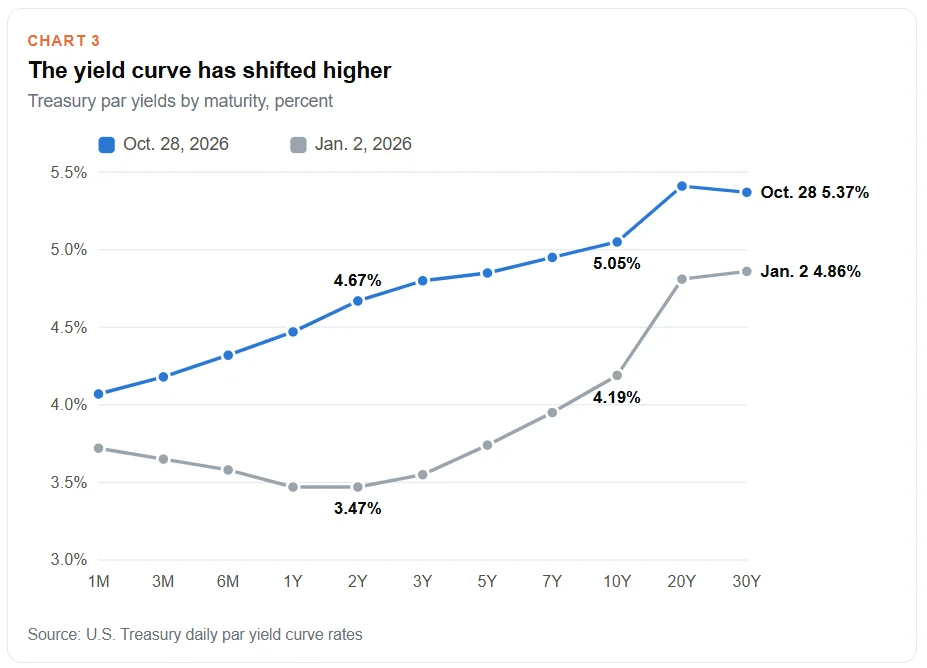
The 10-year Treasury yield closed at 5.05% on Oct. 28, up from 4.19% on Jan. 2.
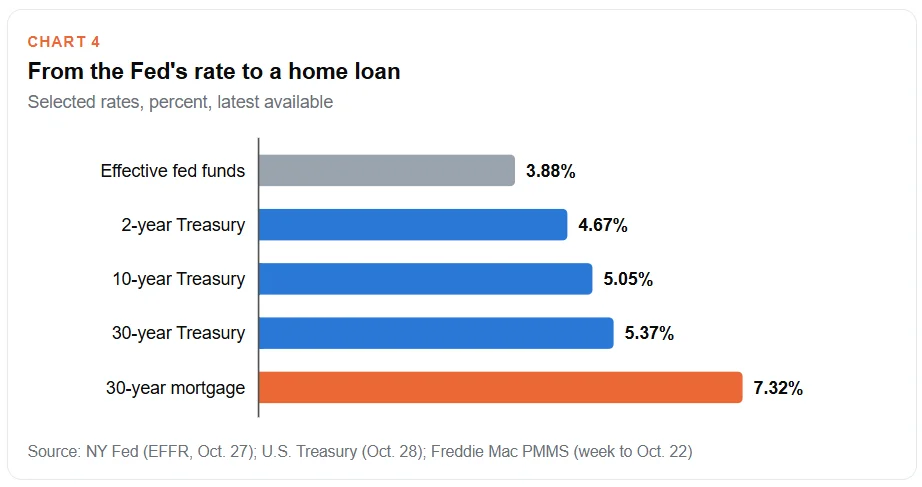
The 2-year yield sits 79 basis points above the effective fed funds rate, a sign markets expect higher rates.
Kevin Warsh used his Wednesday press conference to change the Fed meeting schedule. Starting next fall, one of the committee’s eight meetings will focus only on broad policy strategy. That session will carry “neither a vote on the federal funds rate nor a policy statement,” per his opening remarks.
The shift goes further in 2028. Warsh said he expects two strategy meetings and only six policy meetings that year. As a result, markets will get fewer chances to price a rate decision.
What the new Fed meeting schedule means
The Fed’s published 2027 calendar still lists eight dates, from Jan. 26-27 to Dec. 7-8. Four of them come with fresh economic projections. So far, the Fed has not said which fall date will become the strategy session.
Warsh, who became chairman five months ago, framed the change as an institutional choice. He said the schedule “is more than some administrative detail.” Instead, he described the strategy meeting as time to focus “on the left side of the decimal point.”
For traders, fewer policy meetings could raise the stakes of each one. Each remaining decision would cover a longer stretch of new data. Consequently, surprises could move markets more sharply.
Bond yields stay near the highs
The announcement landed in a tense bond market. Benchmark 10-year Treasury yields closed at 5.05% on Oct. 28, according to Treasury data. That compares with 4.19% on Jan. 2. The 30-year bond ended at 5.37%.
Still, yields have cooled slightly from their peak. The 10-year hit 5.31% on Oct. 5, its highest close of 2026.
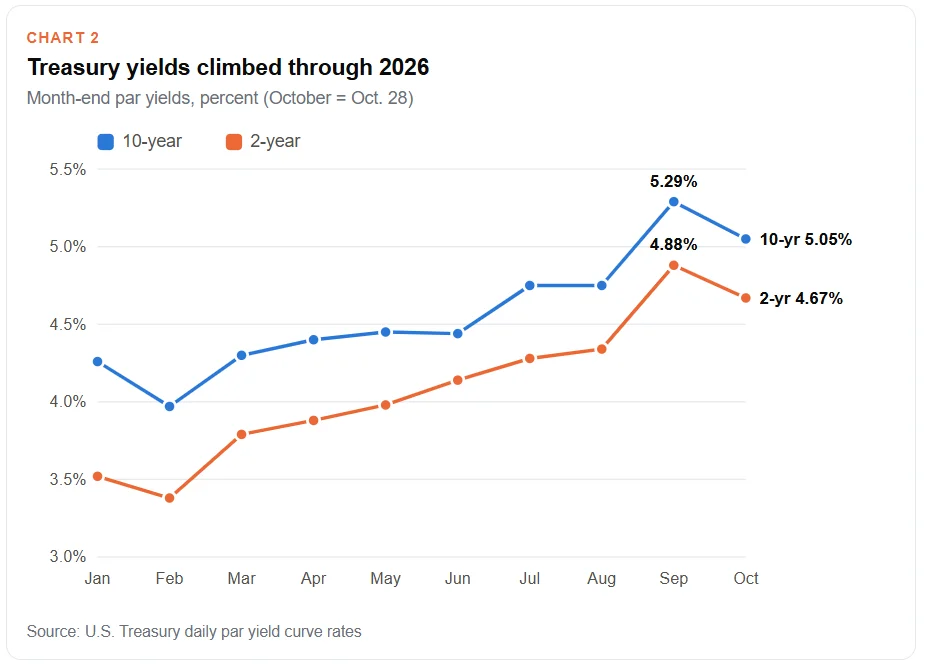
Short-term yields tell a hawkish story too. The 2-year note closed at 4.67%. Meanwhile, the effective federal funds rate stood at 3.88%. That 79 basis point gap suggests investors expect policy rates to keep rising.
Warsh: tighter, but not tight
Warsh said financial conditions have tightened since the September hike. Even so, he added: “I’m unwilling and unable to call them tight.”
He also stressed that inflation has run above the Fed’s goal for close to six years. Moreover, he noted that energy prices “have moved higher again in recent weeks.” On the growth side, he cited revised data showing first-half GDP growth of 2.4%, up from an earlier 1.8% estimate. He added that growth sped up again in the third quarter, led by consumer spending “likely running above 3 percent.”
Households already feel the squeeze. Warsh himself said tighter conditions have reached “some businesses and households,” much as the Fed expected. The average 30-year mortgage rate reached 7.32% in the week to Oct. 22, according to Freddie Mac. That sits more than two points above the 10-year yield.
What to watch next
The Dec. 8-9 meeting will bring new projections and the year’s final rate call. Before then, October jobs and inflation reports will shape the debate. In addition, investors will look for hints about which 2027 date becomes the strategy session. Catenaa covers each step on its economy desk.
For now, the message from Warsh is consistent. Growth looks strong, inflation looks sticky, and the Fed meeting schedule is changing to give policymakers more time to think.