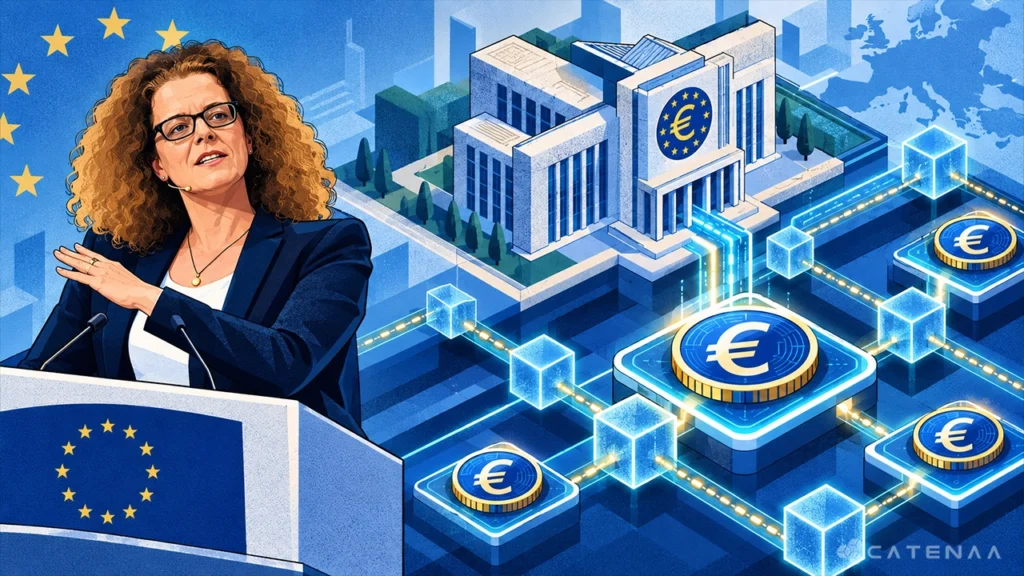


October 03, 2026 – Speaking in London, the departing ECB board member said tokenised finance still needs the safest money there is. The Eurosystem’s Pontes platform is the first step.

In Summary
Schnabel told a Bank of England conference that central bank money must anchor tokenised markets.
She favours issuing reserves natively as tokens over bridges or private wrappers.
Pontes launched on Sept. 21 with 13 market participants and four DLT operators.
Schnabel leaves the ECB on Jan. 3, 2027, to take a senior IMF post.
European Central Bank board member Isabel Schnabel wants central bank money to live on blockchains, not just next to them. In a presentation in London on Thursday, she said tokenised markets still need a public anchor. Central banks, in her view, are best placed to supply it.
Schnabel spoke at the Bank of England’s Future of Money conference, which honoured economist Charles Goodhart. Her slides carried the title “Central banks on-chain.” In them, she said the ECB aims to “preserve the anchor role of central bank money in a digitalised world.”
Why central bank money matters for tokenisation
Her case starts with two promised gains. First, atomicity means both legs of a trade settle together or not at all. Second, programmability lets settlement run automatically once preset conditions apply. Together, they allow for “faster, safer and smarter settlement,” the slides said.
However, those gains need a trusted asset on the ledger. Today’s system rests on two tiers, with reserves at the core and bank deposits on top. Schnabel’s slides showed that a tokenised system can copy that structure. That only works, though, if central bank money also moves on-chain.
She set out the full reasoning at Jackson Hole in August. There, she said stablecoins “are best understood as complements to central bank money, not substitutes for it.” A private issuer, she argued, cannot expand liquidity fast enough during stress. Central banks can.
Her slides used history to make that point. During the Panic of 1907, New York call money rates hit 100% a year as cash ran short. By contrast, ECB total assets rose from about 41% to about 67% of euro area GDP in the pandemic. That kind of elastic response, she argues, is beyond any stablecoin issuer.
Three ways to go on-chain
Schnabel then outlined three models. Under direct issuance, reserves exist natively as tokens on a programmable platform. A bridge model instead links today’s payment system to blockchains while reserves stay off-chain. Finally, a private intermediary could hold reserves and issue tokens that act as private claims.
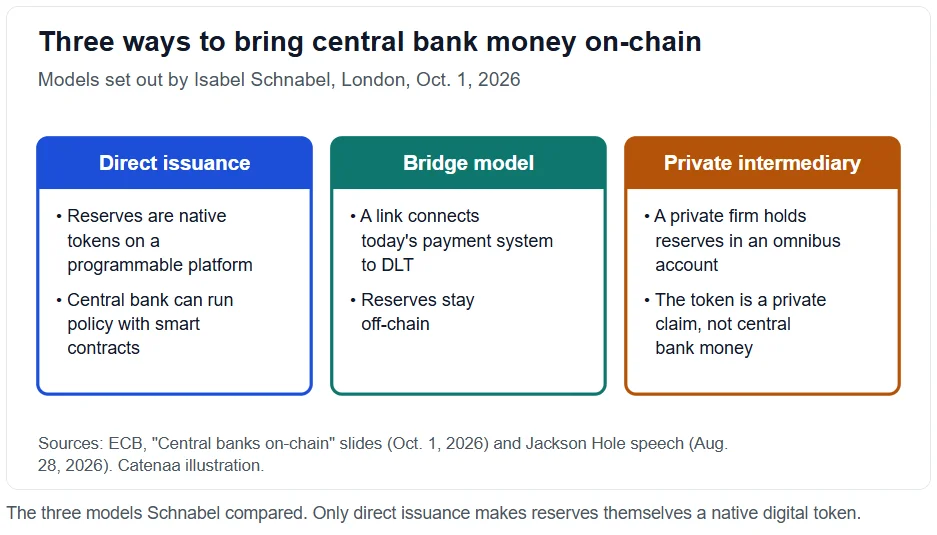
She clearly favours the first route. With tokenised reserves, the central bank could run monetary policy directly on the ledger through smart contracts. That could make repo operations atomic. It could also let smart contracts call for extra collateral or swap securities in real time.
Meanwhile, the other two models leave the central bank on the sidelines. In both cases, it keeps using the same operating tools as today. A private token could also split settlement into several competing claims instead of one common asset, she warned.
Pontes puts the plan into practice
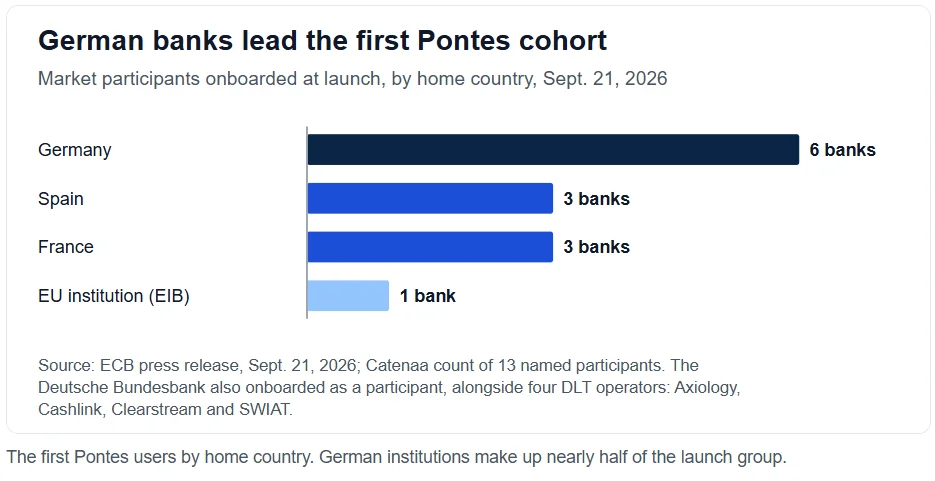
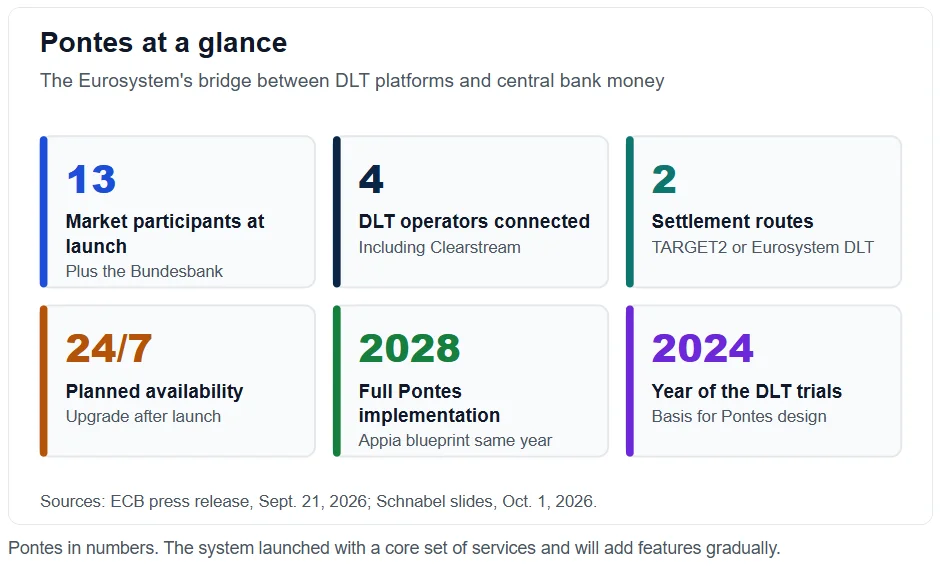
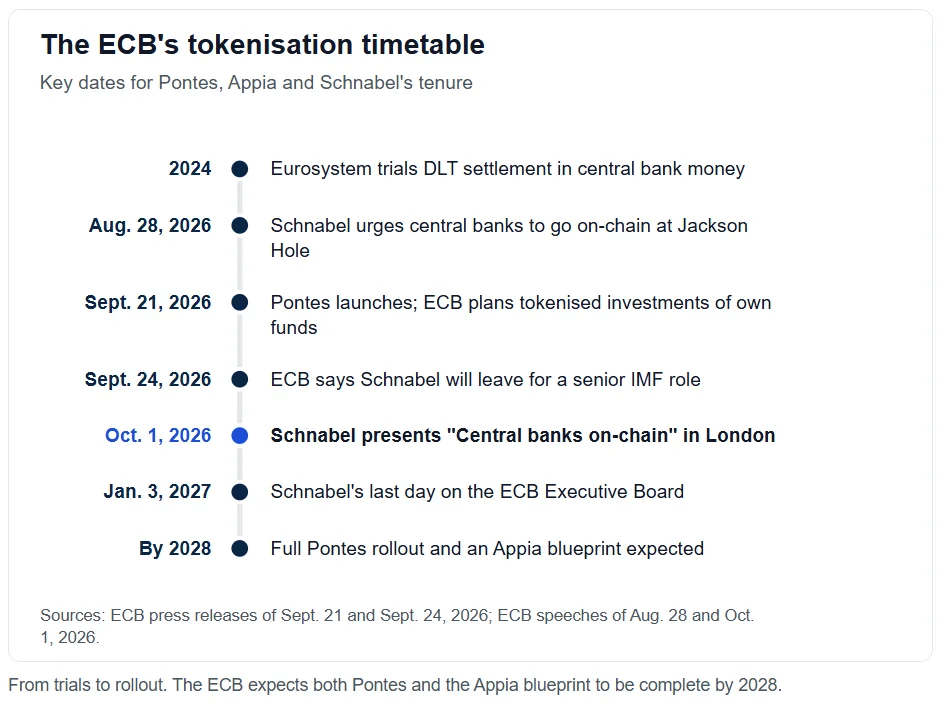
The ECB has already started. On Sept. 21, the Eurosystem launched Pontes, which settles wholesale tokenised trades in central bank money. An initial group of 13 market participants and four DLT operators completed onboarding at launch. Deutsche Bank, Santander and Société Générale are among the banks.
For now, Pontes runs a dual model. Trades can settle through TARGET2 or on the Eurosystem’s own DLT platform. At first, legal finality for the cash leg stays anchored in TARGET2. Schnabel’s slides listed 24/7 availability and decentralised programmability as planned upgrades. The ECB expects full implementation by 2028.
The bank is also putting its own money behind the idea. It plans to invest a small part of its own funds in tokenised securities settled through Pontes. Initial purchases will focus on euro area public sector and supranational bonds. As a result, the ECB will learn the process as an investor, not just as an operator.
Appia and the road to 2028
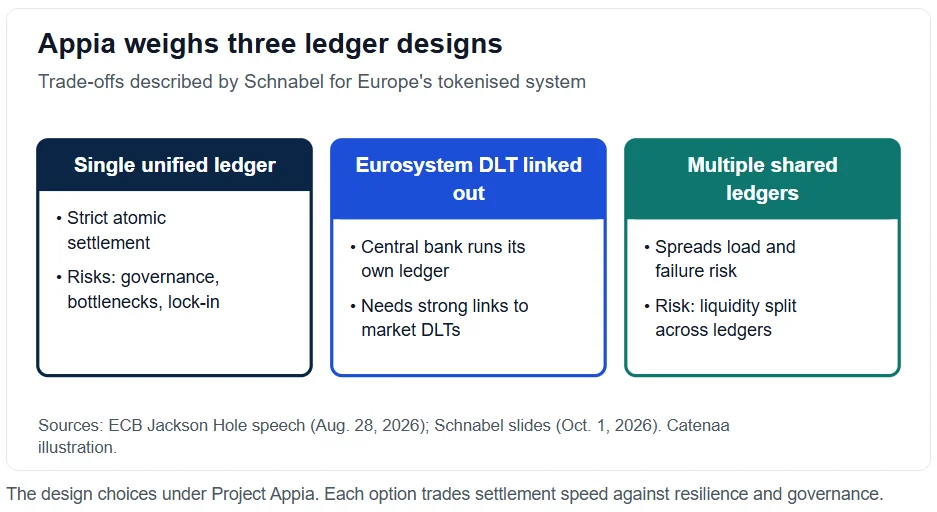
The longer-term work sits under Project Appia. It weighs a single unified ledger against networks of connected ledgers. Each option has trade-offs, Schnabel said in August. A single ledger maximises atomic settlement, yet it concentrates risk and raises hard governance questions.
Notably, Schnabel will not see the project through at the ECB. She leaves the Executive Board on Jan. 3, 2027, to join the IMF. There, she will serve as Financial Counsellor and head of the Monetary and Capital Markets Department. Her London remarks therefore set a clear marker for whoever succeeds her.
For markets, the message is clear. In short, the euro area’s tokenised future will still run on central bank money. Stablecoins may win roles in payments, but Schnabel wants the central bank, not private issuers, to anchor settlement.