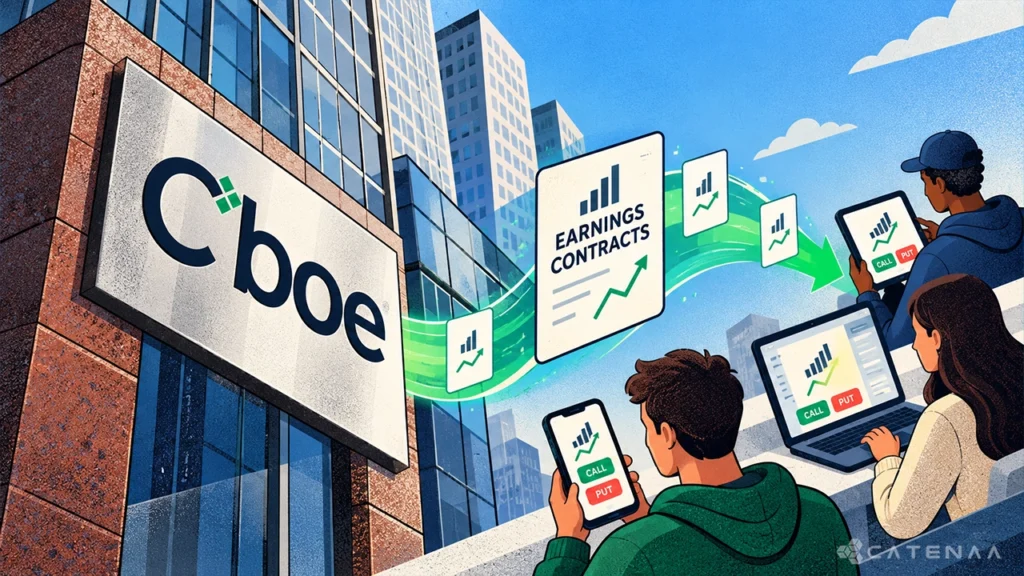


October 05, 2026 – Cboe and Robinhood plan contracts tied to company performance. The products could turn earnings forecasts into a separate trading market.
In Summary
The proposed October rollout covers 23 US-listed companies and requires regulatory approval.
Contracts settle on reported company metrics, with a maximum payout of $1 each.
A correct earnings prediction does not establish how the underlying share price will move.
Cboe earnings contracts enter the spotlight
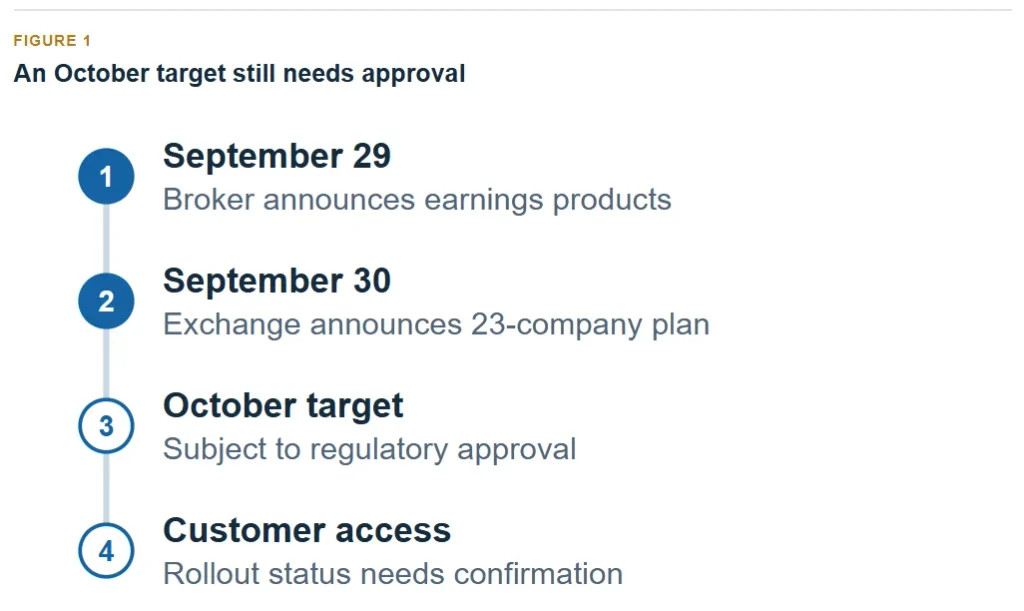
Cboe earnings contracts could let retail users trade company forecasts this month. The exchange’s September 30 announcement targets October and covers 23 US-listed companies. Regulatory approval remains a condition. The rollout is therefore a plan, not confirmed access.
Robinhood would be the first retail broker to offer them at launch. They would track company metrics rather than stock prices. This could isolate an earnings view from a share position. The exposure still carries risk.
The plan comes ahead of third-quarter earnings season. However, the broker’s current support page lists earnings predictions as a later rollout. A target month cannot establish live availability. Users need confirmed access and final terms.
A narrow question creates a different payoff
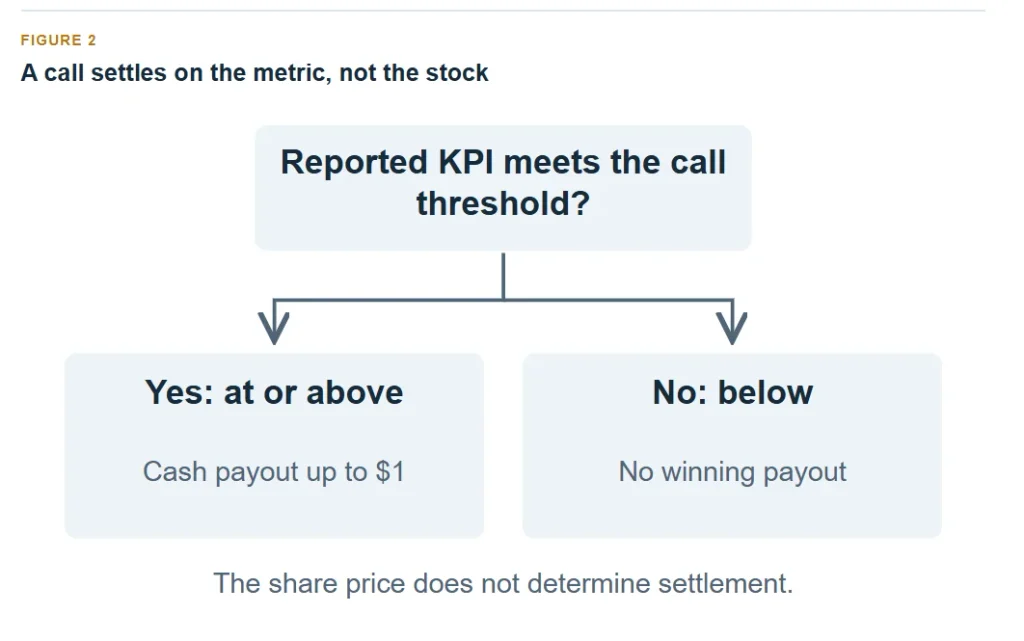
A contract asks whether a company metric meets a threshold. Robinhood’s disclosures set a maximum payout of $1 per contract. A call wins at or above the threshold. A put wins below it.
Settlement uses the metric in an earnings-related filing. Share prices do not decide the result. Eligible customers also need options approval. So a simple question still sits within a trading product.
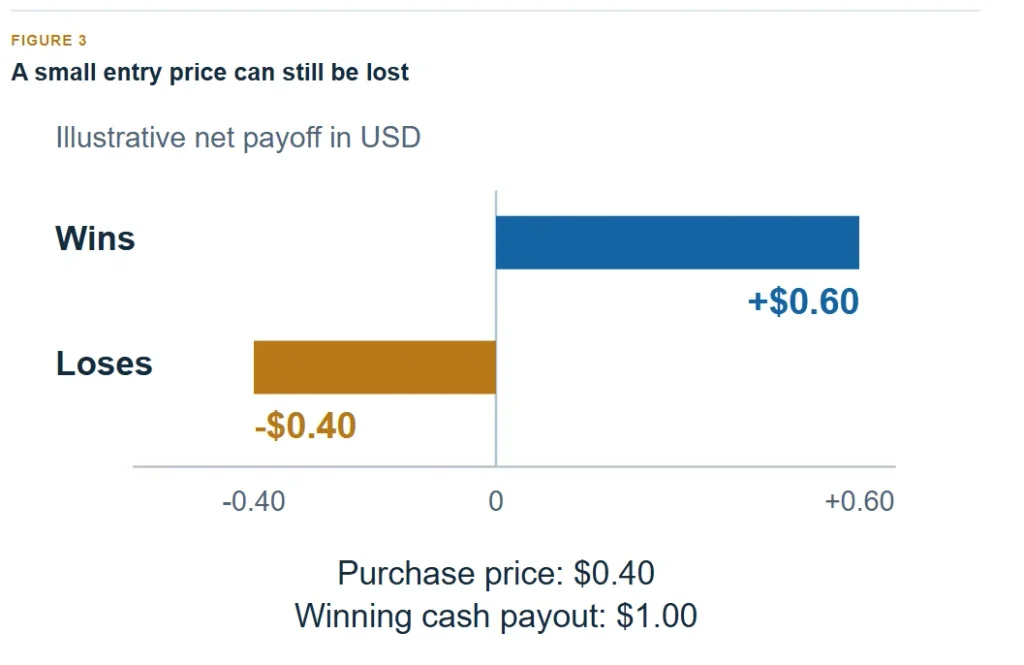
Consider an example priced at $0.40. A win paying $1 gives $0.60 profit before fees and spreads. A loss costs the $0.40 paid. These are sample numbers, not a forecast or a live quote.
Ignoring trading costs, a buyer needs success above 40% for positive expected value. However, a market price is not a guaranteed chance. Thin trading and spreads can affect it. The price alone cannot prove a good bet.
At a hypothetical 50% success chance, expected profit is $0.10 before costs. That is sample arithmetic. Actual results would be uneven across trades. A positive average still allows a full loss on one contract.
The market already has a large audience
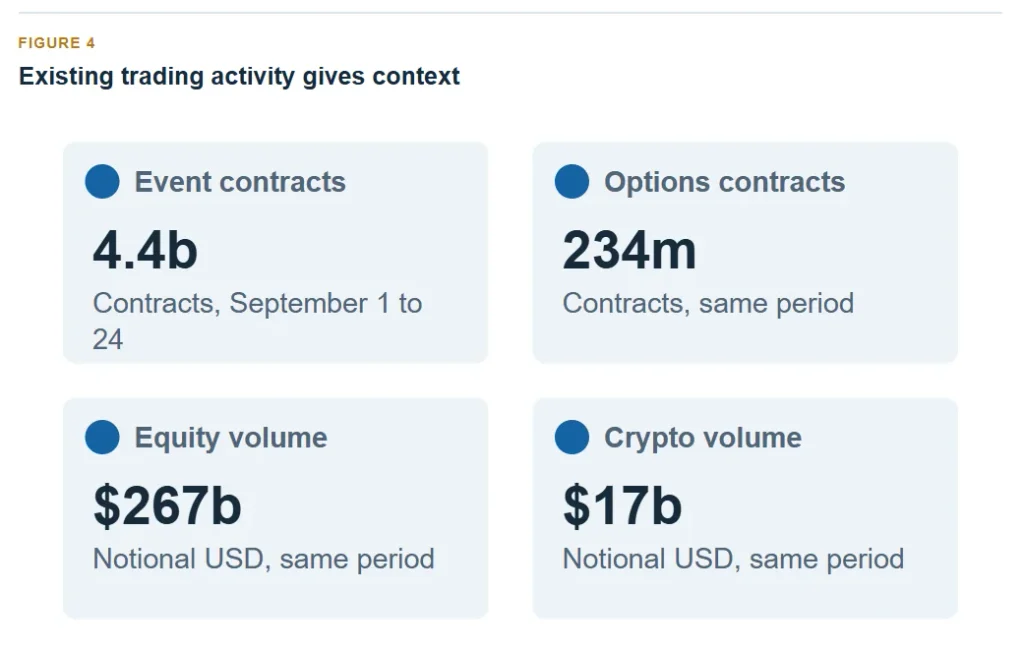
Robinhood reported 4.4 billion event contracts traded from September 1 through September 24. These are early figures. It covers the existing prediction market hub. It does not measure demand for the planned products.
The same period saw about 234 million options contracts. Yet the counts use different sizes and values. More contracts do not always mean more money at risk. A comparison needs exposure measures, not just raw counts.
Our analysis suggests the products may draw users with focused earnings views. A trader could price one outcome without buying shares. That may sharpen the forecast. It could also encourage frequent bets with little wider company research.
The planned fee holiday lasts through 2026, subject to regulatory review where applicable. Still, zero contract fees do not remove spreads. Entering and exiting a thin market can cost money. A promotion does not make every trade cheap.
A useful forecast market needs clear rules
The regulator’s binary option explanation describes fixed cash or no payout at expiry. The product gives no ownership of the company. Rights differ from shares. Buyers need to understand that before judging its value.
Clear settlement terms are crucial. Firms may report both adjusted and standard earnings. They can revise figures or change segment definitions. Traders must know which filing and metric count. The cutoff must be clear too.
Prices may offer a useful view of market expectations before a filing. Yet that signal depends on enough informed users trading. A thin market can reflect just a few views. Researchers would need to compare contract prices with final outcomes over many earnings periods. Only then could they judge forecasts.
Detailed trading data should also show spreads and activity near settlement. High counts alone cannot prove that users can exit at fair market prices. A useful forecast market needs clear rules, credible outcomes, and enough depth for buyers and sellers to meet.
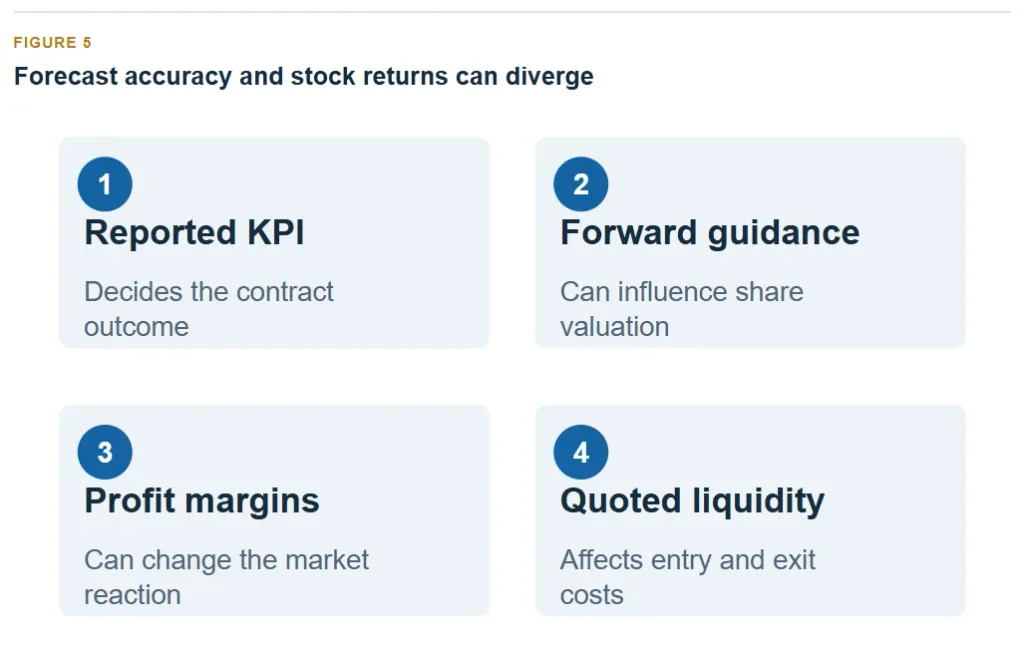
A company can beat a threshold while its shares fall. Weak guidance, margins, or a high valuation can hurt the stock. A winning contract therefore cannot hedge every equity risk. Forecast accuracy and stock returns can diverge.
Timing adds another challenge. A thin order book before earnings may make exits costly. After the filing, users need prompt, consistent settlement. Clear rules and sound systems matter alongside the yes-or-no question. Early data could reveal whether research or short-term bets dominate.
Next, watch approvals, final terms, customer access, and spreads. Those facts will test the market’s value. Cboe earnings contracts offer a fresh format. Deep trading and sound settlement will decide whether it lasts beyond the first earnings season.