

September 30, 2026 – Shipping through the Strait of Hormuz stayed close to a standstill in early September. Futures show traders paying a steep premium for oil delivered now.
In Summary
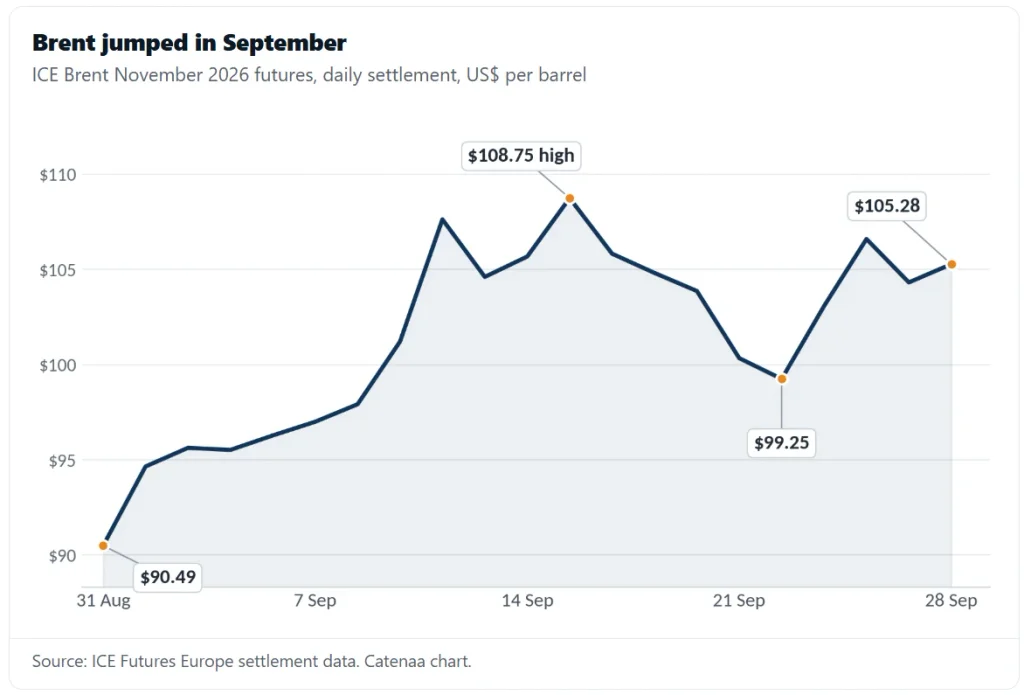
November Brent futures settled at $105.28 on 28 September, up from $90.49 at the end of August.
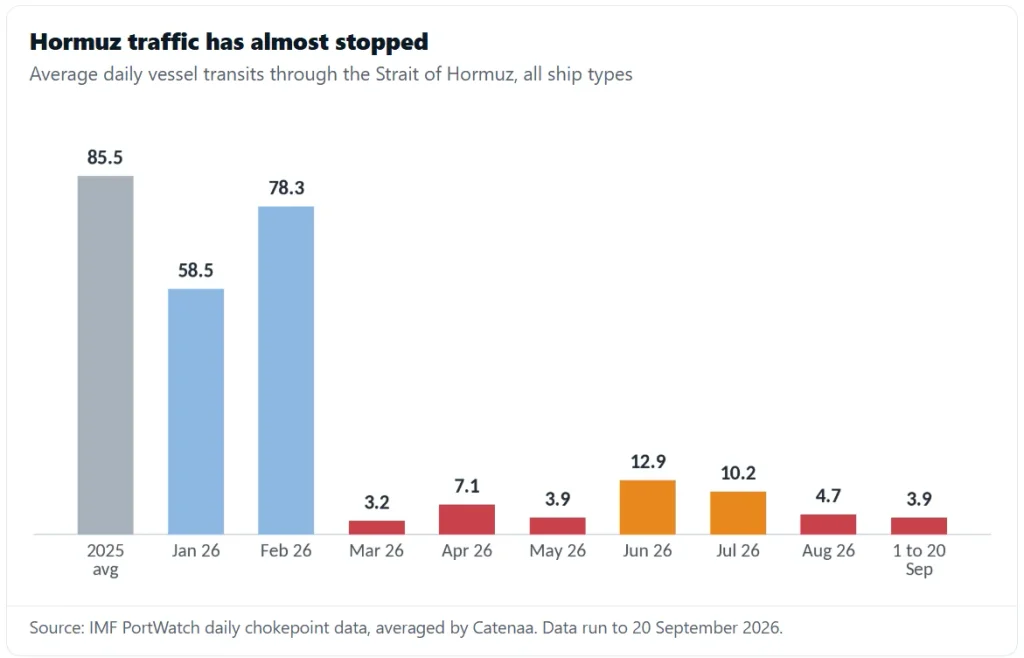
Hormuz transits averaged 3.9 vessels a day in early September, against 85.5 a day in 2025.
The November contract traded $7.45 above December, a sign of tight near-term supply.
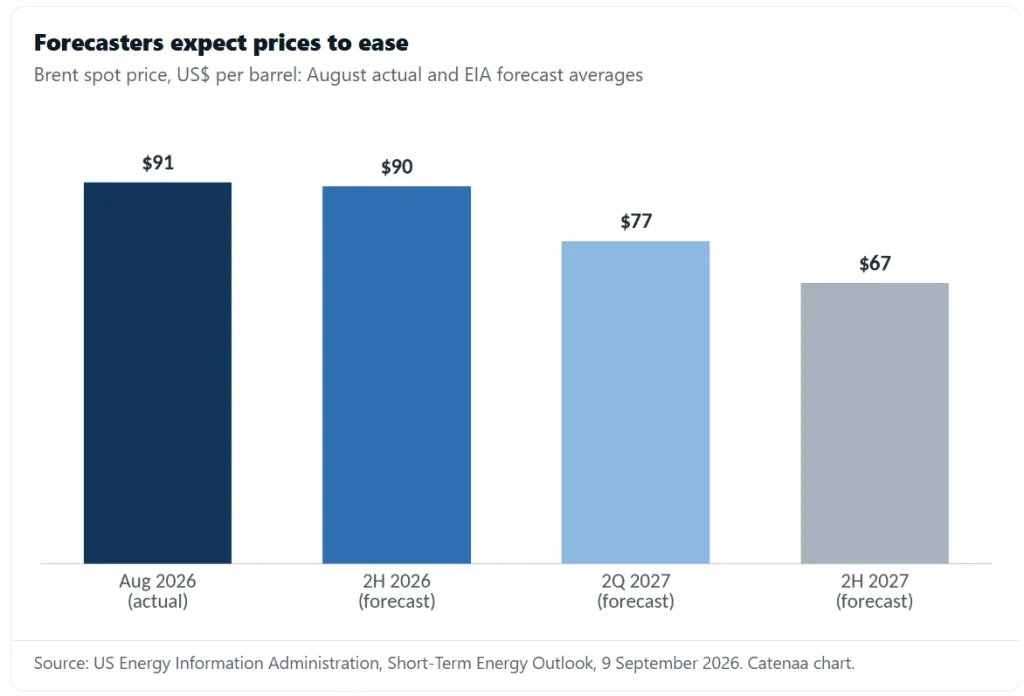
The EIA expects Brent to average about $90 in the second half of 2026 and $67 by late 2027.

Brent crude is on track for a gain of about 16% in September. Shipping through the Strait of Hormuz was close to a standstill for much of the month, IMF data show. As a result, the benchmark is back above $100 a barrel.
The November Brent contract settled at $105.28 on Monday, according to ICE Futures Europe data. That compares with $90.49 at the end of August.
Prices eased on Tuesday, however. By 13:10 GMT, the contract traded at $103.22, down about 2% on the day. Even so, most of the monthly gain remained intact.
The longer view is starker. A year ago, on 30 September 2025, the same November contract settled at $64.82. Prices have risen by about 62% since then.
How Brent crude climbed in September
The climb was steady at first, then sharp. Brent crossed $100 on 9 September and jumped to $107.63 the next day. It then peaked at a $108.75 settlement on 15 September.
After that, prices swung within a band. The contract dipped to $99.25 on 22 September before rebounding above $105 in the final week.
US crude rose too, but by less. The ICE WTI contract for November settled at $92.60 on Monday, up about 10% since the end of August. As a result, Brent now trades almost $13 above the US benchmark.
That wide gap reflects geography. According to the EIA, 84% of the crude that crossed Hormuz in 2024 went to Asian markets. Buyers there now compete hard for the barrels still available.
American drivers still feel the squeeze. US regular petrol averaged about $4.48 a gallon in the week to 21 September, EIA data show. A year earlier, it cost about $3.17.
The Hormuz squeeze
Under normal conditions, the strait is the world’s most important oil route. According to the US Energy Information Administration, flows averaged about 20 million barrels a day in 2024. That equalled roughly 20% of global oil consumption.
Today, very little gets through. Data from IMF PortWatch show an average of 85.5 vessels a day crossed the strait in 2025. In the first 20 days of September, the average was just 3.9.
Tankers show the sharpest drop. Only about one tanker a day made the crossing in early September. Last year, the average was 48 a day.
Pipelines offer only a partial escape route. The EIA estimates about 2.6 million barrels a day of bypass capacity, far below normal flows through the strait.
Physical cargoes are even dearer than futures. For example, the EIA’s Brent spot price stood at $114.89 on 22 September. November futures, by contrast, settled at $99.25 that day.
Supply losses and the forward curve
The International Energy Agency put Gulf exports at about 13 million barrels a day in August. In its September report, it said that was nearly half their pre-war level.
The agency now expects global oil supply to fall by 5.7 million barrels a day this year. Meanwhile, observed inventories have dropped by 507 million barrels since February.
Futures prices reflect that shortage. On Monday, the November contract settled $7.45 above December. Prices for delivery in late 2027 stood near $80.
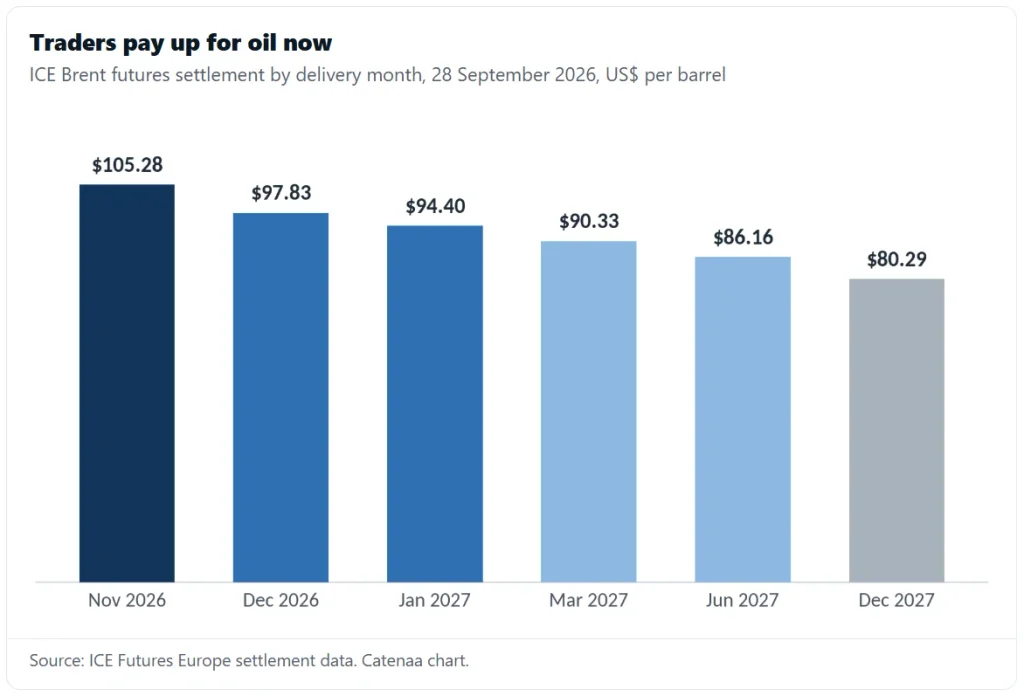
Traders call this pattern backwardation. It means buyers pay a premium for oil they can use now. In practice, it signals tight supply today and hopes of relief later.
What comes next for oil prices
The EIA’s Short-Term Energy Outlook from 9 September expects Brent to average about $90 in the second half of 2026. It then sees prices falling to $67 by late 2027.
That forecast assumes Middle East supply shut-ins ease to 5.7 million barrels a day in the fourth quarter. By comparison, they stood at 6.7 million barrels a day in August.
The swings this year have been extreme. EIA data show spot Brent averaged $62.54 in December 2025. In April, the peak month so far, the average reached $117.29.
Consequently, Brent crude is trading well above the agency’s path for the rest of the year. A new outlook is due on 6 October.
Central banks are watching closely. On Tuesday, the Reserve Bank of Australia raised rates and cited higher energy prices. Fed Governor Lisa Cook also flagged oil as a source of inflation.
Diplomacy remains the wild card. Any deal that reopens the strait could pull prices down quickly. For now, oil keeps pressure on bond yields and on commodity buyers worldwide.