

September 19, 2026 – The Fed hiked and signalled more to come. Bond investors sold the news instead, and London declined to follow at all.

In Summary
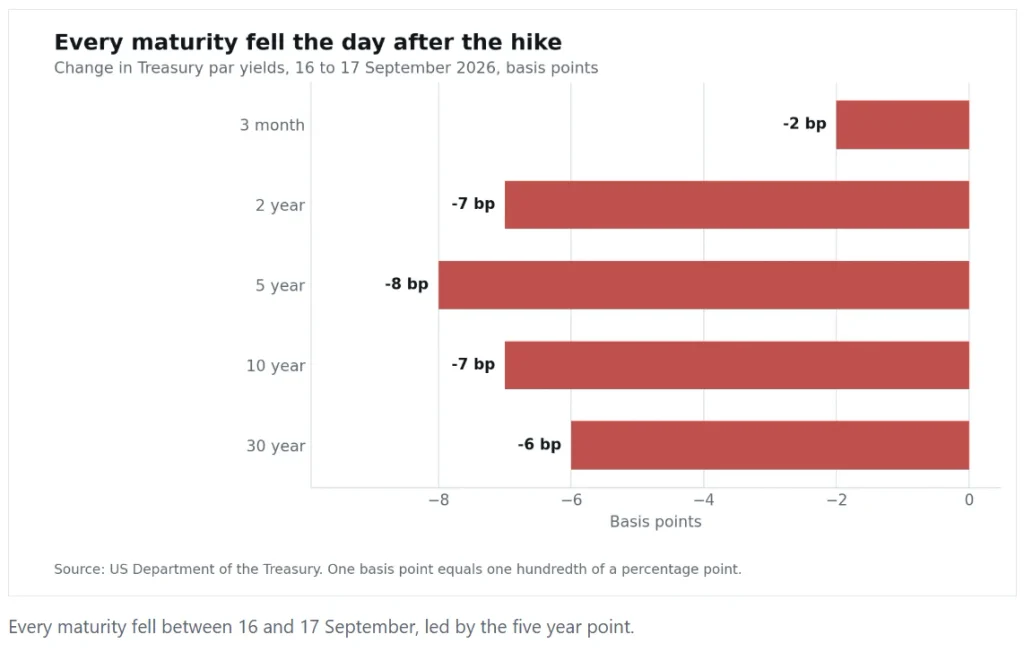
Treasury yields fell at every maturity between 16 and 17 September.
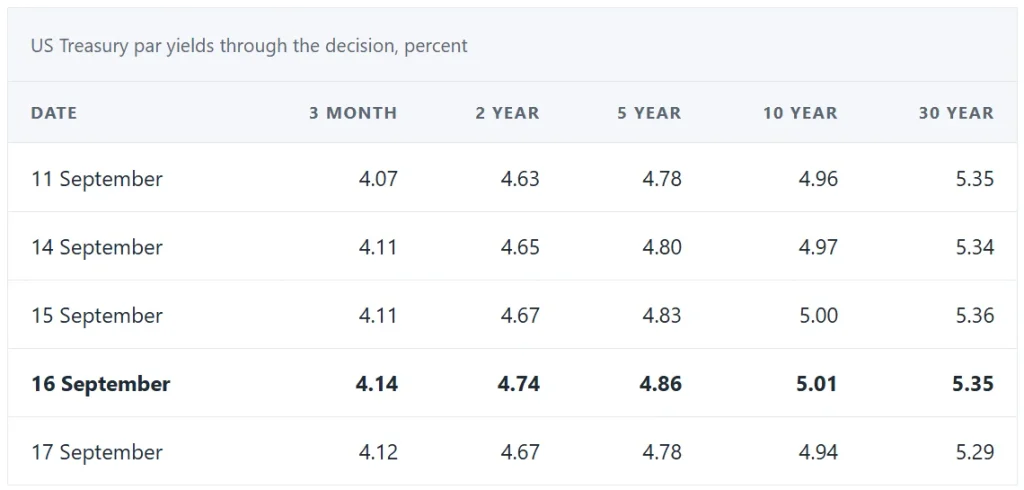
The ten year note dropped from 5.01 percent to 4.94 percent.
The Federal Reserve had raised its target range to 3.75 to 4.00 percent by a 12 to 0 vote.
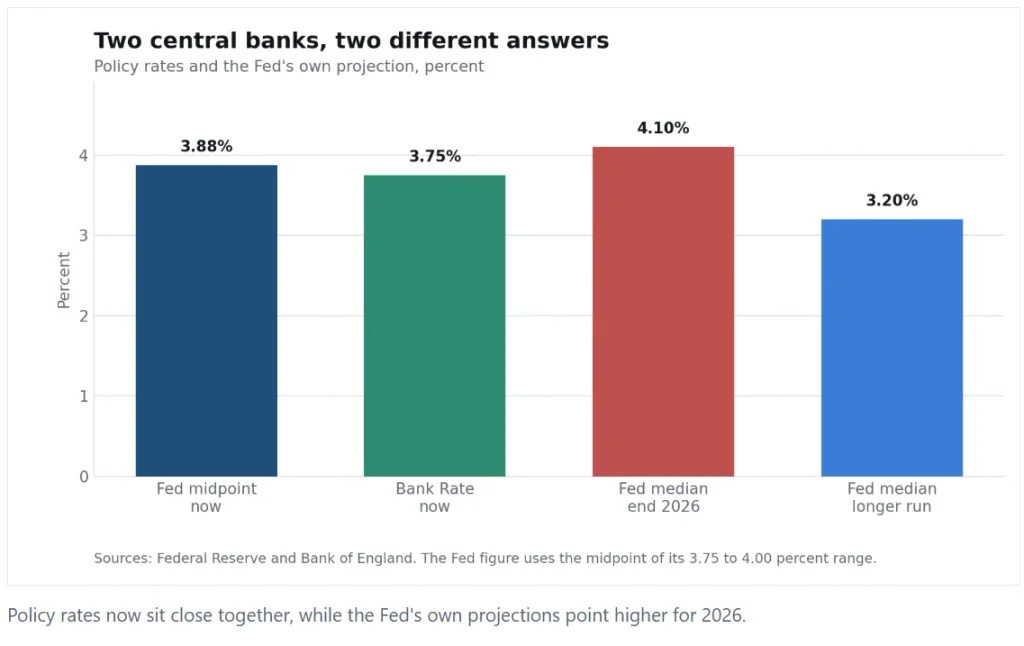
The Bank of England held Bank Rate at 3.75 percent by six votes to three.
Fed projections imply one more increase in 2026, then cuts toward 3.2 percent.
The Federal Reserve raised rates and told investors to expect more. Bond markets then did the opposite of what that implies. Yields fell across every maturity the next day.
The ten-year note ended 17 September at 4.94 percent. It had closed at 5.01 percent the day before.
London sent the same signal a day later. The Bank of England refused to follow the Fed at all.
What actually happened on the day
Policy moved first. The Committee raised its target range to 3.75 to 4.00 percent on 16 September. The vote was unanimous.
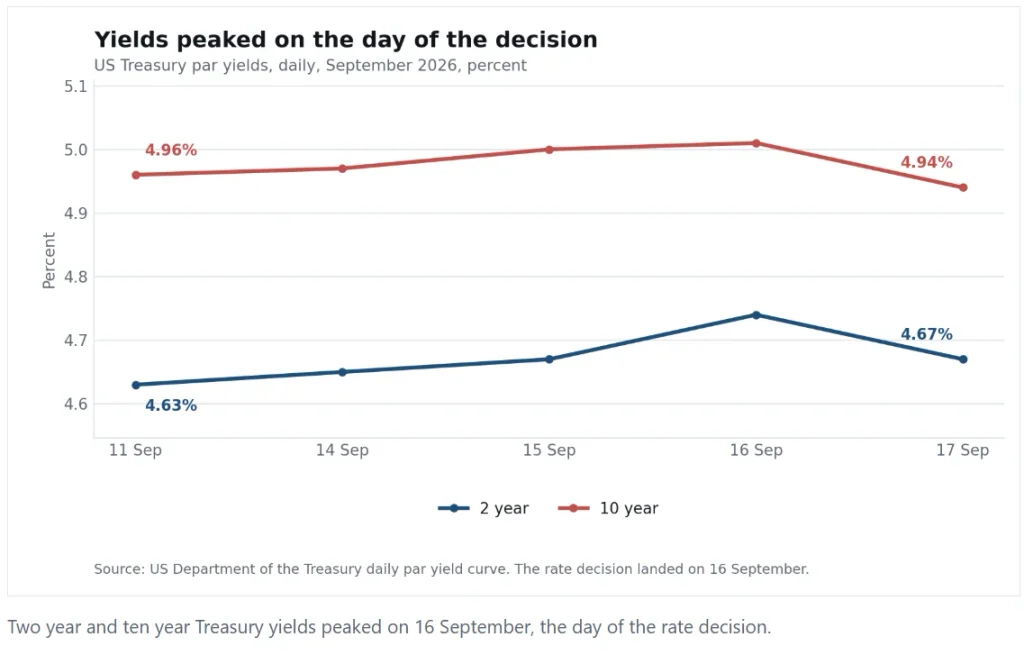
Yields rose into that decision. The two year note climbed from 4.63 percent on 11 September to 4.74 percent on the 16th.
Then the selling stopped. By 17 September the same note yielded 4.67 percent, a fall of seven basis points.
Longer maturities moved further. Thirty year bonds dropped six basis points, and five year notes eight. Three month bills barely budged at two.
That pattern carries a message. Bills track the policy rate, so they stayed put. Everything further out reflects a view on the future, and that view softened.
Why bond markets read it that way
Traders price the whole path, not one meeting. A hike that arrives as expected removes uncertainty rather than adding pressure.
Projections gave them something to work with. The median forecast shows 4.1 percent at the end of 2026, against a current midpoint of 3.875 percent.
That implies one more quarter point move. Two meetings remain, in October and December.
Markets had feared worse. Some desks had priced a faster path after August inflation ran at 3.4 percent. The projections landed below that fear.
Beyond that the picture softens. Officials see 3.9 percent by the end of 2028 and 3.2 percent in the longer run. The cycle therefore looks close to its top.

The Bank of England went the other way
British policymakers met on the same days. They held Bank Rate at 3.75 percent by six votes to three on 17 September.
Three members wanted 4 percent. The majority preferred to wait despite fresh inflation data.
Their reasoning centred on energy. Protracted conflict in the Middle East has pushed crude and refined prices higher since the last meeting. The committee called those prices more volatile than before.
Britain also carries a weaker labour market. Unemployment sits at 4.9 percent and payrolls have fallen over the year. Tightening into that would hurt.
Those prices remain volatile. UK inflation reached 3.1 percent in August and will likely rise further over coming quarters.
So both committees face the same shock. One tightened, the other waited, and each claims the data supports it.
The split is narrower than it looks. Three of nine British members already want 4 percent, which matches the top of the American range. One more vote would close the gap.
Sterling barely reacted to the divergence. That calm suggests investors expect the two paths to converge rather than widen.
What the curve shape tells us
The yield curve still slopes upward. Three month bills yield 4.12 percent and thirty year bonds 5.29 percent.
That gap of 117 basis points matters. An inverted curve usually warns of recession, and this one does not invert.
The two to ten year spread sits near 27 basis points. It measured 33 basis points on 11 September, so the curve flattened slightly through the week.
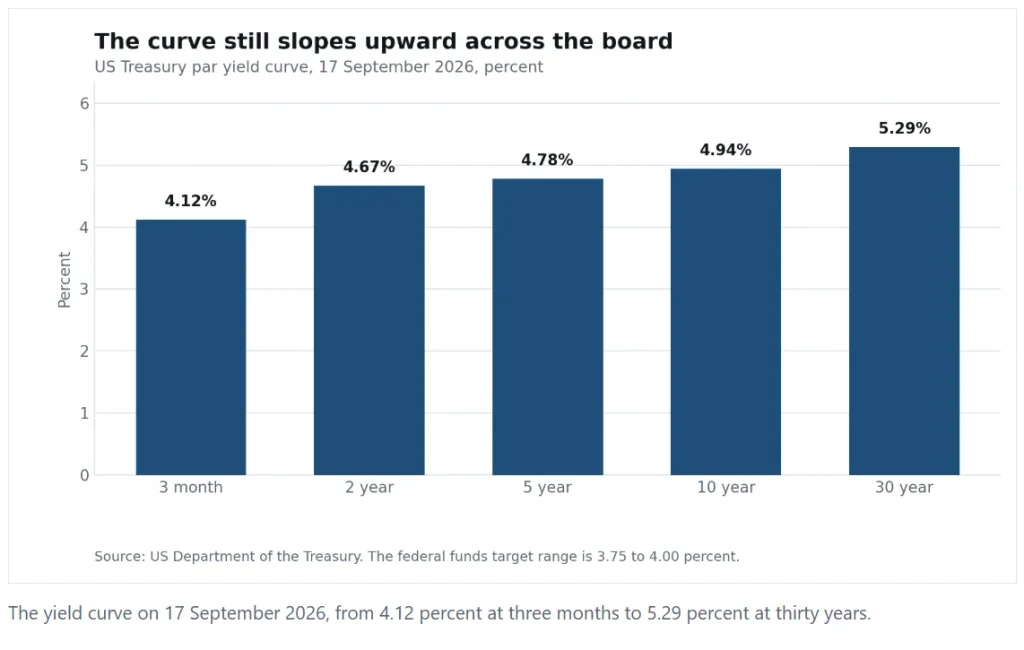
Flattening after a hike fits the textbook. Short rates follow policy, while long rates follow growth and inflation expectations.
The thirty year point deserves attention though. It fell to 5.29 percent from 5.36 percent in two sessions. Long bonds rarely move that much on a well flagged decision.
What this means for borrowers and savers
Mortgage costs track long yields rather than policy rates. A falling ten year yield therefore helps housing, even as the policy rate rises.
Corporate borrowers get a similar break. Investment grade issuance prices off the same curve, so the window stayed open this week. Treasurers had braced for a harder close.
Savers face the opposite trade. Deposit rates follow short maturities, which barely moved after the decision. Money market funds still pay above four percent.
Emerging market borrowers watch the long end closely. Dollar debt costs price off Treasuries, so a softer curve eases refinancing pressure across Asia and Africa.
What to watch next
Three tests arrive soon. October inflation data comes first, and a soft print would kill the case for another hike quickly.
Watch energy prices alongside it. Both central banks named crude as the swing factor, so the oil tape now drives the rates tape. Any ceasefire headline would move bonds within minutes.
Finally, follow the November meetings. The Bank of England next decides on 5 November, and the Fed on 28 October. Two more votes will settle whether markets called this right.