

The Bank of Canada raised its overnight rate by 25 basis points to 2.5% on Oct. 28. It warned that high energy costs could spread into wider prices and left the door open to more hikes.

In Summary
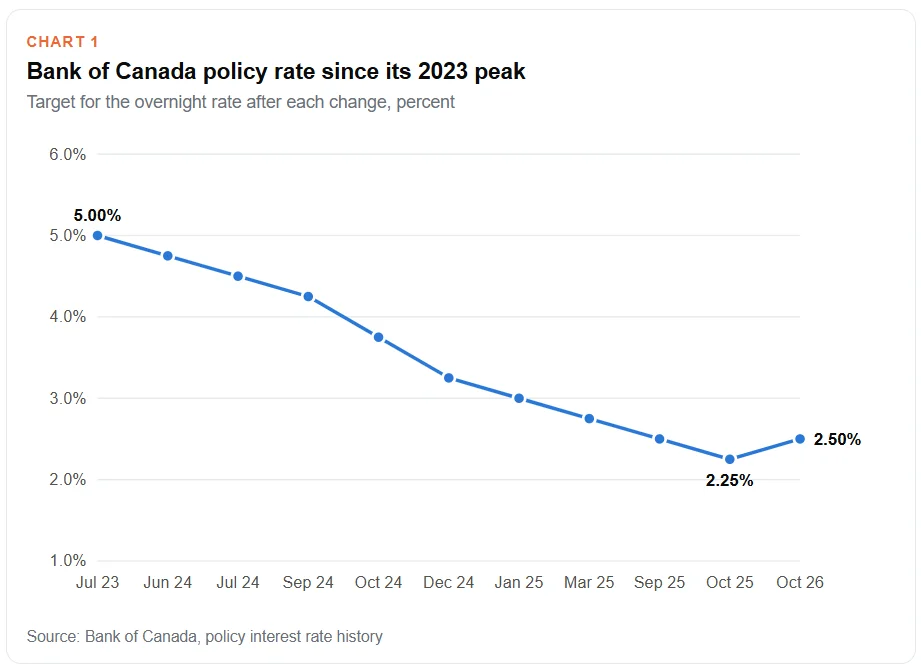
The Bank of Canada lifted its target for the overnight rate to 2.5%, its first increase since July 2023.
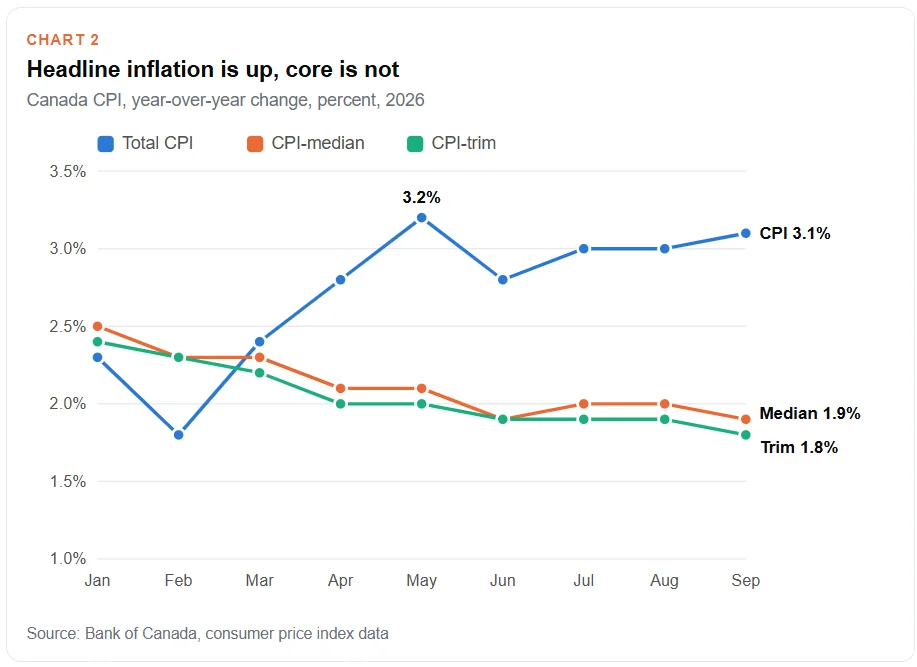
CPI inflation has hovered near 3% since April and should reach about 3.5% by year-end.
Core inflation measures remain close to 2%, so the hike targets second-round effects from fuel costs.
The bank sees inflation averaging 3% in 2027, one percentage point above its July call.
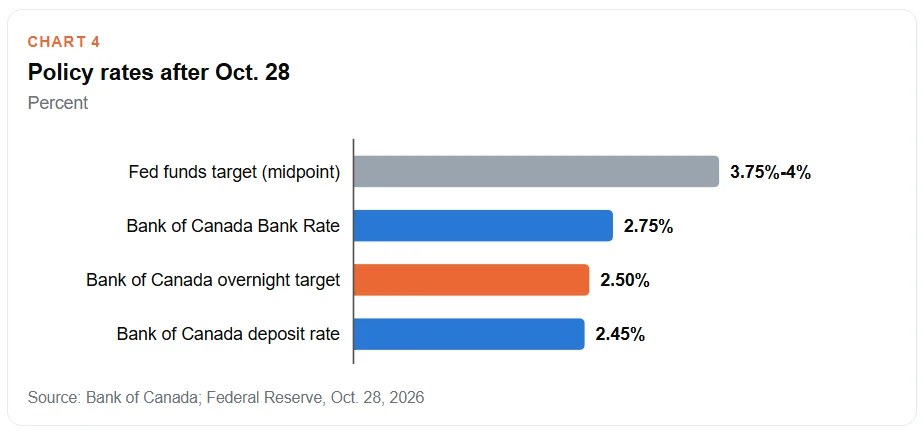
The Bank of Canada raised its policy rate on Wednesday, ending a year-long pause. According to its rate announcement, the overnight target rose 25 basis points to 2.5%. The Bank Rate is now 2.75%, and the deposit rate is 2.45%.
This marks the bank’s first hike since July 2023. Before Wednesday, the rate had held at 2.25% since October 2025, according to the bank’s policy rate history.
Why the Bank of Canada changed course
Energy prices drove the decision. CPI inflation has run near 3% since April, the bank said. Moreover, it expects headline inflation to reach about 3.5% by the end of 2026.
The underlying picture looks calmer, though. Excluding gasoline, inflation was 2.2% in September. Similarly, the bank’s preferred core gauges stayed low. Its CPI data show CPI-trim at 1.8% and CPI-median at 1.9% for September.
So why hike? The bank fears spillover. High fuel prices raise production and transport costs. In addition, bank surveys suggest businesses will pass more of those costs to customers over the next year. Near-term inflation expectations among households and firms have risen too, although longer-term expectations remain anchored.
The conflict in the Middle East is now in its eighth month, the bank noted. It sees “no clear path to resolution.” As a result, the bank now expects CPI inflation to average 3% in 2027. That is one percentage point above its July projection. It sees inflation returning to 2% only by mid-2028.
Growth holds up, despite tariffs
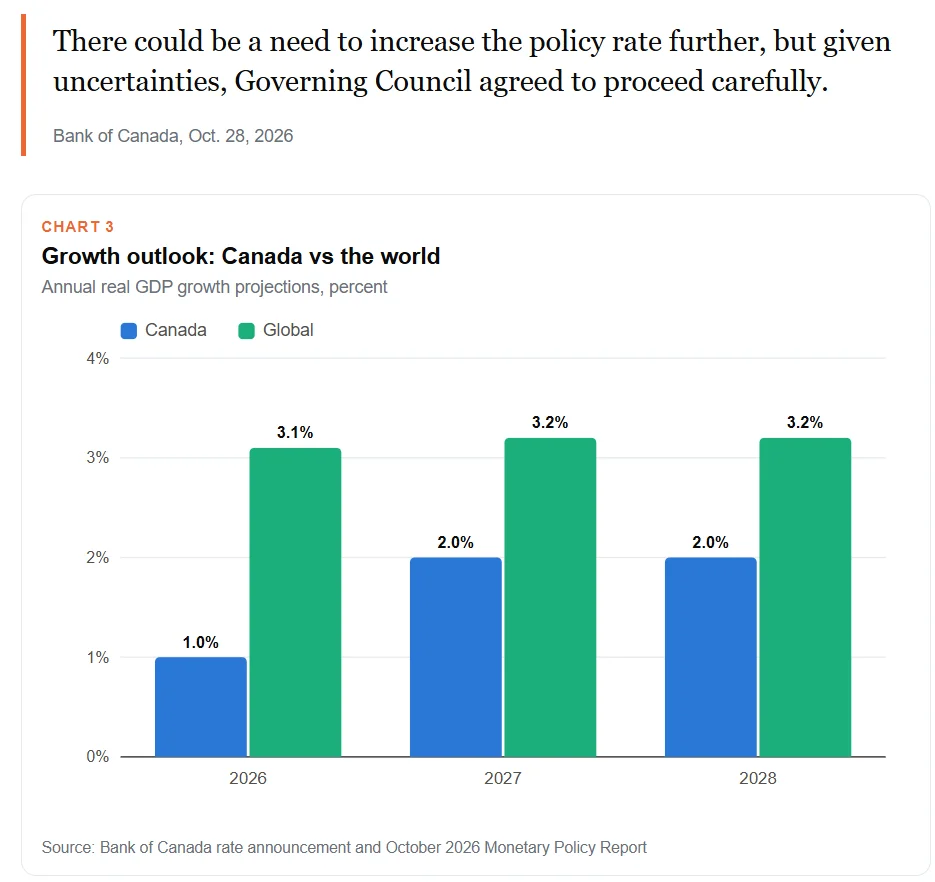
Stronger growth also gave the bank room to act. Globally, it nudged its 2026 world growth forecast up to 3.1%, citing resilient U.S. and euro area demand. GDP grew 3.3% in the second quarter, and recent indicators point to about 2% in the third. Both beat the July forecast.
However, new U.S. tariffs should slow growth in the final quarter. The October Monetary Policy Report links them to a breakdown in trade talks. Policymakers expect the economy to grow 1% in 2026 and 2% in both 2027 and 2028.
Business investment also rebounded, helped by oil and gas activity and equipment spending. Still, the job market remains soft. Unemployment has hovered around 6.5% for several months. Indeed, the bank still sees “some excess supply” in the economy.
A narrower gap with the Fed
The hike narrows Canada’s rate gap with the United States. South of the border, the Federal Reserve held its range at 3.75%-4% on the same day. That leaves the U.S. midpoint about 1.4 percentage points above Canada’s rate.
Meanwhile, the Canadian dollar has recovered to around 71 U.S. cents, the bank said. That matches the level it assumed in July.
What comes next
Governing Council signaled caution. Its statement said there “could be a need to increase the policy rate further.” Even so, policymakers “agreed to proceed carefully” given the uncertainty.
The next decision is due on Dec. 9. For borrowers, the Bank of Canada has made its priority clear: stop energy inflation from becoming broad inflation. Follow more central bank coverage on Catenaa’s global markets desk.