

October 18, 2026 – Anthropic’s debut rating sits at BB+, one notch below the lowest investment-grade band. Counterparty filings show why the lab needs debt and how tightly its lenders have tied the money to delivery.

In Summary
Anthropic’s first credit rating is BB+ with a stable outlook, assigned in June and covering about $4.4bn of subordinated debt.
KBRA’s public ratings database shows no entry for Anthropic, so the rating is private and carries no published rationale.
Amazon disclosed a facility capped at $20.0bn that unlocks only as compute delivery milestones are reached, and expires 30 months after a liquidity event.
Broadcom’s filing states that Anthropic’s access to roughly 3.5 gigawatts of compute from 2027 depends on its continued commercial success.
Amazon booked a $50.5bn upward revaluation in the second quarter, lifting its private company equity holdings to $122.3bn from $16.2bn.
Anthropic now has a credit rating for the first time. Rating documents described in press reports on 16 October put the firm at BB+ with a stable outlook. The grade dates from June. It covers about $4.4bn of junior debt.
One caveat matters. KBRA’s public ratings list shows no entry for Anthropic, as of 17 October. So the rating is private, and the agency has shared no reasons. Anthropic has said nothing either.
What this credit rating says
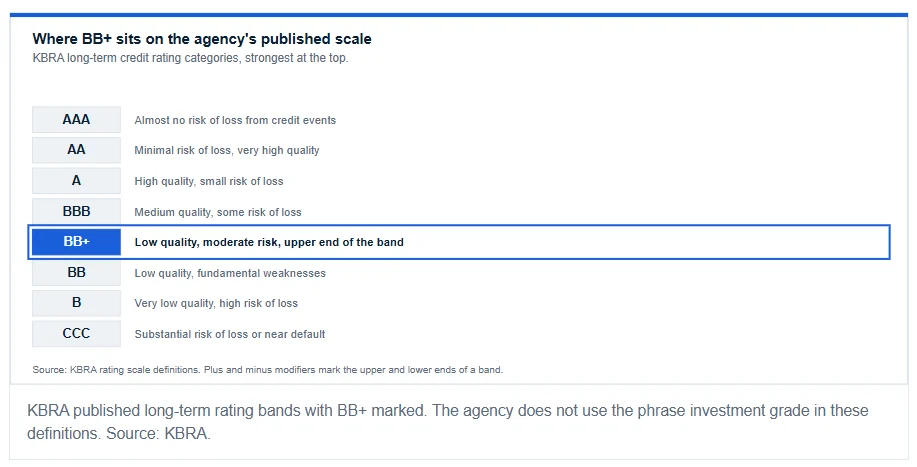
The scale is public even when a rating is not. KBRA calls the BB band low quality with moderate risk of loss. Such issuers, it adds, have basic weak spots. A plus marks the top of that band.
One step up sits BBB, which the agency calls medium quality. Markets treat that band as the lowest safe tier. BB+ thus falls one notch short. However, the agency avoids that label.
Why a loss-making lab needs debt
Chips are the reason. Anthropic has committed to compute on a scale its partners now help finance. Those partners spell out the terms in their own filings.
Amazon says it made a facility of up to $20.0bn available to the lab. It lapses 30 months after a cash-out event. Yet Anthropic can draw nothing at the start. Slices open only as compute arrives.
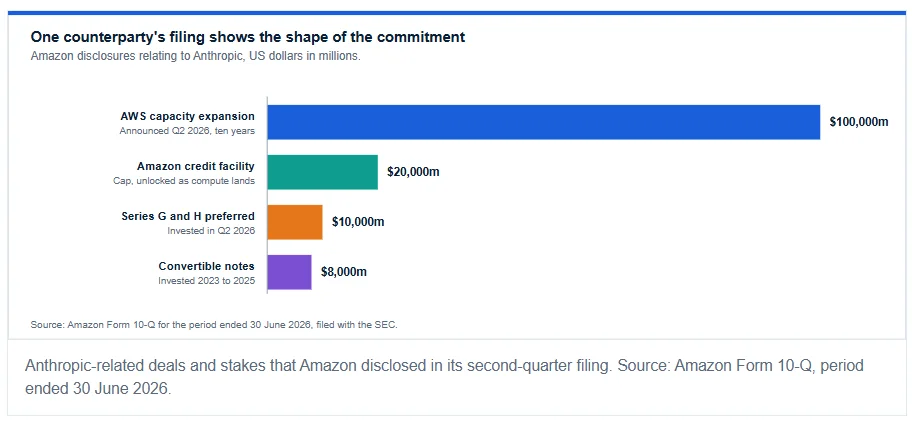
Amazon also grew its multi-year supply deal by more than $100bn over ten years. Moreover, it put $10bn into Anthropic stock in the quarter. That followed $8bn of convertible notes since 2023.
In short, the cash comes with strings. Each tranche waits on hardware. Neither side fronts the money early.
Broadcom spells out the catch
Broadcom told the market that Anthropic will get about 3.5 gigawatts of TPU compute from 2027. Then the filing adds a blunt line. Use of that capacity rests on the lab’s trading success.
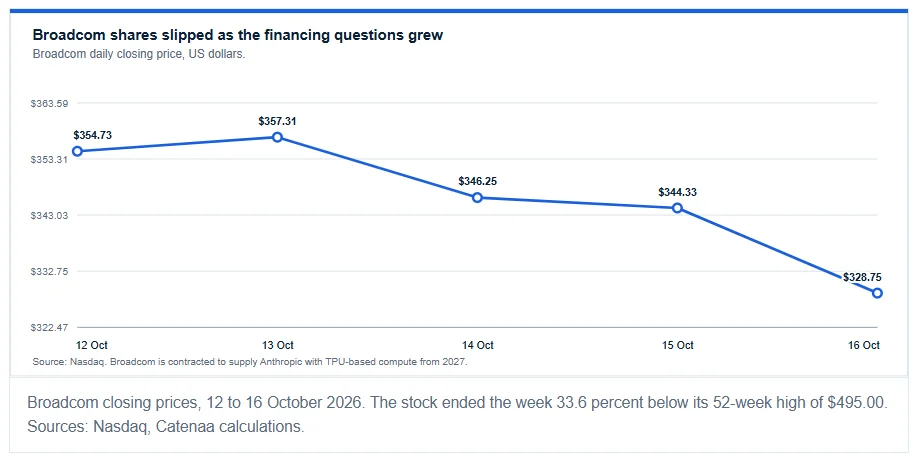
That one line frames the rating. Lenders fund chips whose payback rests on sales not yet made. Broadcom stock fell 8.0 percent in the three days to 16 October, on Catenaa sums, and closed at $328.75.
The equity marks keep climbing
Backers still mark the lab up hard. Amazon booked a $50.5bn gain in the second quarter, mostly on Anthropic stock. Its private holdings, which also cover OpenAI, leapt to $122.3bn from $16.2bn in six months.
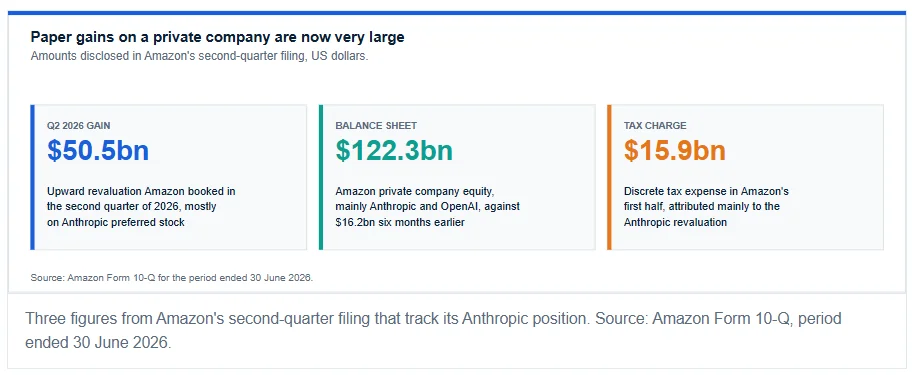
The gain carried a cost. Amazon booked $15.9bn of one-off tax expense in the half, chiefly on the same mark-up. Hence, a paper win on a private stake now moves real cash taxes at a listed firm.
Those gains sit on paper. Meanwhile, the exit keeps slipping. Venture analysts note that both leading AI labs are delaying their listings. Therefore, the 30-month clock on the facility has not started.
What to watch next
Three markers matter from here. First, whether KBRA ever makes the grade public. Second, how fast Amazon unlocks the $20bn in tranches. Third, how the 2027 Broadcom ramp lands against real demand.
For now, the structure holds. Private credit funds the chips. Cloud giants fund the stock. And a junk rating prices the risk plainly.




