

October 26, 2026 – Artificial intelligence companies took more than four of every five dollars across the week’s biggest US venture deals, with chip designer Tenstorrent on top.

In Summary
Tenstorrent raised $1.5 billion in Series E funding at a $6.2 billion post-money valuation.
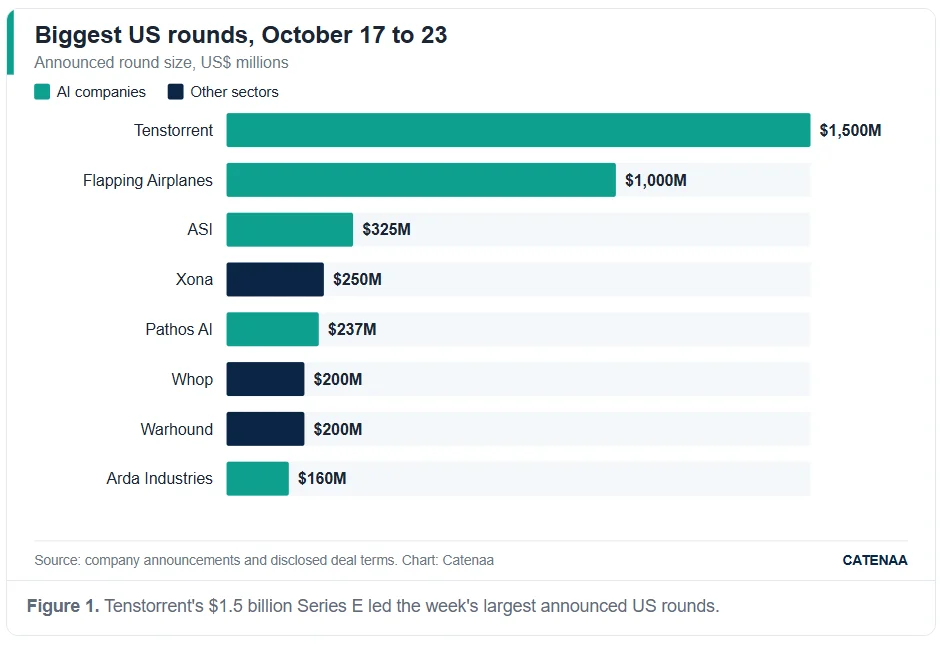
Eight of the week’s largest US rounds raised about $3.9 billion, according to Catenaa calculations.
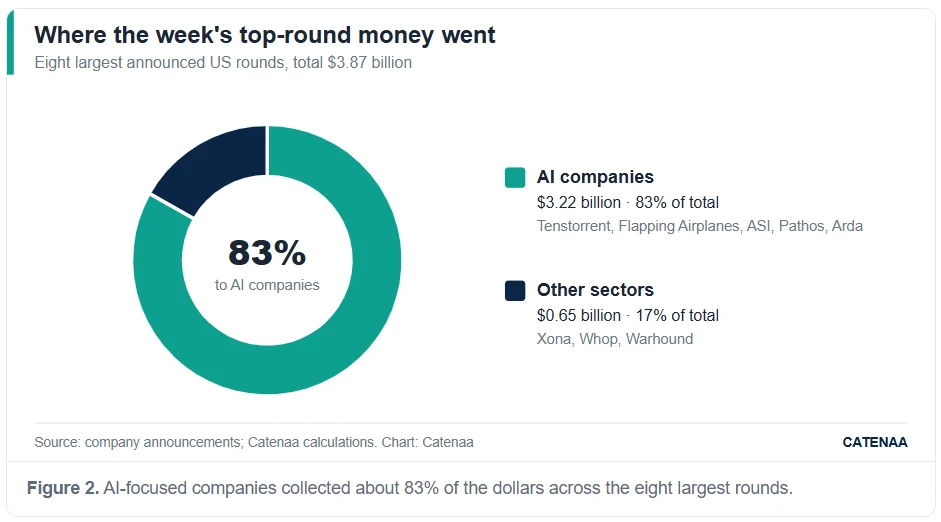
AI companies collected roughly $3.2 billion, or about 83% of that total.
Large rounds also reached satellite navigation, online commerce and military working dogs.
AI funding dominates the week’s biggest deals
AI funding set the pace in US venture markets last week. Eight of the largest rounds announced from October 17 to October 23 raised about $3.9 billion. That total comes from Catenaa calculations based on company announcements. Five of those deals went to companies that build or apply artificial intelligence. Together, they collected roughly $3.2 billion, or about 83% of the money.
Still, the spread of sectors stands out. Alongside chips and models, investors backed satellite navigation, cancer drugs, online commerce and even military dogs. However, the largest sums clearly followed computing power.
Tenstorrent tops the list
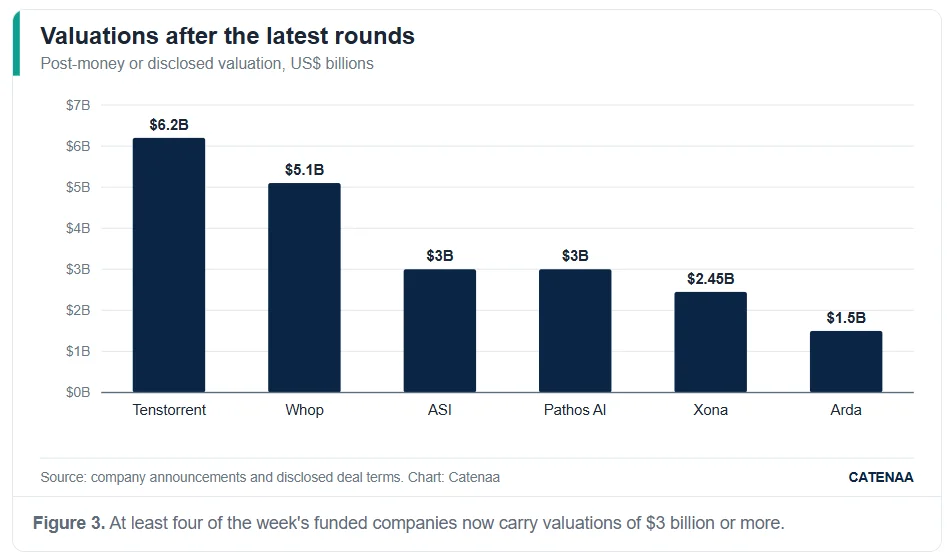
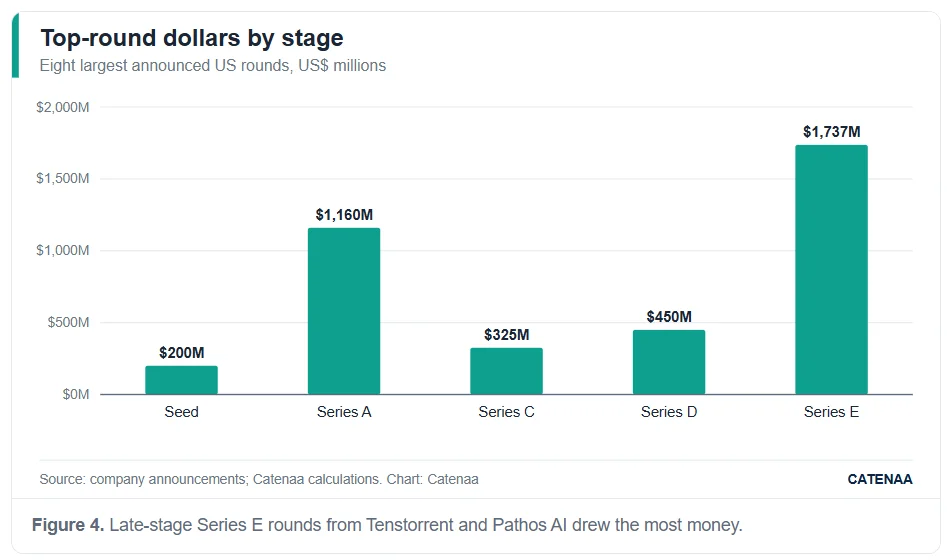
Chip designer Tenstorrent led the week. The Santa Clara company announced a $1.5 billion Series E at a $6.2 billion post-money valuation. Trace Capital and Innovation X led the round. In addition, Fidelity, ARK Invest, Morgan Stanley, T. Rowe Price and Tether Investments joined.
Under chief executive Jim Keller, Tenstorrent sells AI hardware at every size, from single cards to full racks. It also licenses its RISC-V CPU and Tensix AI cores to other chip designers. The new cash will help the company roll out its Galaxy servers at scale. It will also support open models for language and video generation.
Meanwhile, AI lab Flapping Airplanes raised $1 billion in a Series A led by Lux Capital and Index Ventures. The year-old startup builds models that cost less to train and run. Notably, it raised a $180 million seed round in January.
Applied AI draws fresh capital
AI funding also reached firms that put AI to work in physical industries. Boston-based Air Space Intelligence, known as ASI, closed a $325 million Series C at a $3 billion valuation. Spark Capital led the deal, and Andreessen Horowitz also took part.
Similarly, Pathos AI secured $237 million in Series E financing led by Bristol Myers Squibb. The drug developer now has a post-money valuation of about $3 billion. It plans to scale its Foundry AI platform and advance its cancer pipeline.
On the factory floor, Arda Industries raised a $160 million Series A at a $1.5 billion valuation. Former OpenAI research chief Bob McGrew founded the company. According to co-lead investor Accel, Arda has now raised $230 million in total. Anduril already uses its technology in its manufacturing software.
Space, commerce and canines
Outside AI, Xona raised $250 million at a $2.45 billion valuation. The Burlingame firm builds Pulsar, a satellite network that aims to upgrade GPS. It put six satellites into orbit just days before the raise.
Online marketplace Whop raised $200 million in a Series D led by Sequoia Capital and Shopify Ventures. The round valued the New York company at $5.1 billion.
Finally, Warhound emerged from stealth with a $200 million seed round. Sequoia Capital and 8VC were among its backers. The startup plans to breed military working dogs and fit them with Anduril gear.

What the numbers signal
Taken together, the week shows how capital keeps pooling at the top. The two biggest deals alone took about 65% of the eight-round total. Moreover, at least four of these companies now carry valuations of $3 billion or more.
For founders, the pattern sends a clear signal. Investors still treat computing power as the main bottleneck in AI, so chip firms draw the largest sums. Yet applied AI in aviation, drugs and manufacturing is now pulling in big money too.
Crypto money is part of the story as well. Tether Investments, the investment arm of the USDT issuer, joined the Tenstorrent round. That shows how digital asset firms now chase AI funding deals alongside Wall Street.
Looking ahead, the next test is revenue. Several of these firms have yet to sell products at scale. So their high valuations rest on growth that investors still need to see.