


September 30, 2026 – The 14th flight put 26 Starlink V3 satellites in orbit despite two engine shutdowns. Shares fell with the wider market.
In Summary
Starship reached orbit on its 14th flight on 28 September and deployed 26 Starlink V3 satellites.
The ship lost one engine during ascent but compensated, then made its first deorbit burn and splashed down on target.
Each V3 satellite is designed for one terabit per second of downlink capacity.
SpaceX shares fell 2.2% to $145.47, about 8% above the $135 IPO price.

SpaceX Starship reached orbit for the first time on Monday and deployed 26 next-generation Starlink satellites. The milestone came on the rocket’s 14th test flight from Starbase, Texas.
According to the SpaceX mission page, Starship lifted off at 7:48 a.m. Central Time. It later fired a single engine to enter orbit and released its payload. Hours after that, it splashed down on target in the Pacific Ocean.
Yet investors took the news calmly. SpaceX shares slipped 2.2% to $145.47, according to Nasdaq data. The wider market fell the same day on higher bond yields and oil prices.
How SpaceX Starship reached orbit
The flight did not go perfectly, which makes the result more notable. During the climb, one engine on the Super Heavy booster shut down. Later, one vacuum engine on the ship also cut out early.
However, Starship burned its other five engines for longer to make up the lost thrust. Flight controllers then checked the three sea-level engines needed for later burns. After that, they cleared the ship to go to orbit.
About 25 minutes after liftoff, the ship fired one engine for an orbit insertion burn. It became the first Starship ever to circle the Earth.
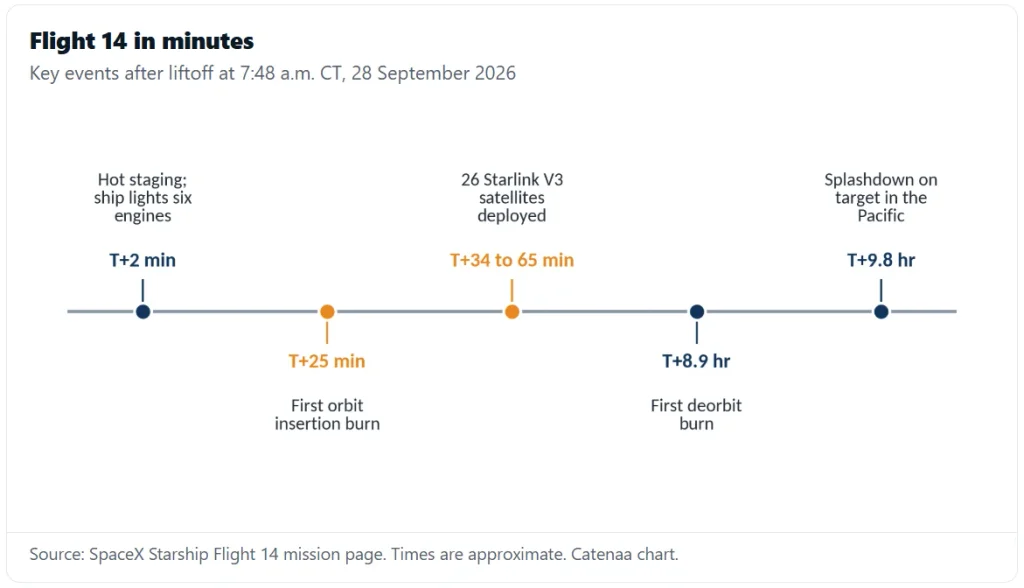
Soon after, it began releasing 26 Starlink V3 satellites. SpaceX said it made contact with every satellite over laser links, ground stations and user terminals. The satellites will now run checks and raise their orbits.
Because of the engine issue on ascent, controllers cut the orbital coast short. The ship then made its first deorbit burn and re-entered the atmosphere. Finally, it landed in a cleared zone in the northern Pacific.
Meanwhile, the booster tested its limits. SpaceX designed its return burn to use up the remaining oxygen. As a result, it splashed down in the Gulf rather than flying back to the launch site.
Why Starlink V3 matters
The satellites are the real prize. SpaceX’s June prospectus says the company designed each V3 satellite to offer one terabit per second of downlink capacity. It also said it expected to start launching them on Starship in the second half of 2026.
Monday’s flight met that goal. Starlink already served about 10.3 million subscribers across 164 markets as of 31 March, using roughly 9,600 satellites. More capacity per launch should help Starlink add users and lift speeds.
In addition, the service reaches phones directly. Its satellite-to-mobile offer served about 7.4 million monthly unique devices in around 30 countries, according to the prospectus.
Starship itself aims for scale. SpaceX says the V3 version can carry 100 metric tons to orbit in a fully reusable form. Future versions aim to double that figure.
What the flight means for SpaceX investors
SpaceX listed on Nasdaq in June, selling 555.6 million shares at $135 each. That raised about $75 billion. Founder Elon Musk kept about 82% of the voting power.
The stock has been volatile since the listing, falling about 46% from peak to trough at one point. It closed its first day at $160.95 and peaked at $201.80 on 16 June. It then fell to $108.27 in early August before recovering.
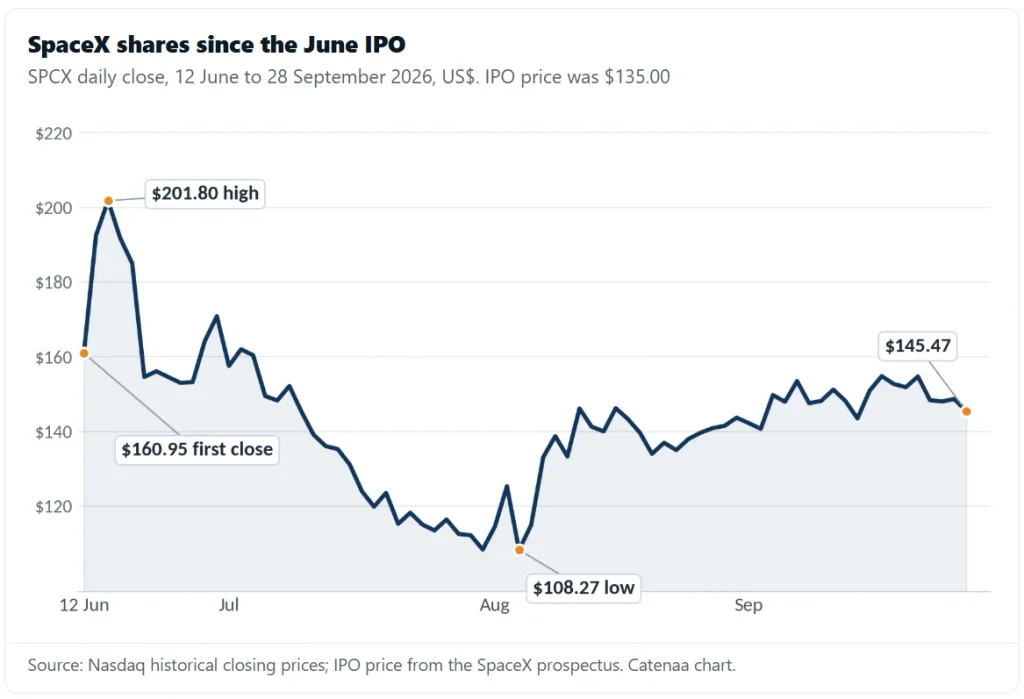
At Monday’s close, the shares traded about 8% above the IPO price. Starship progress sits at the centre of the growth story that supports that value.
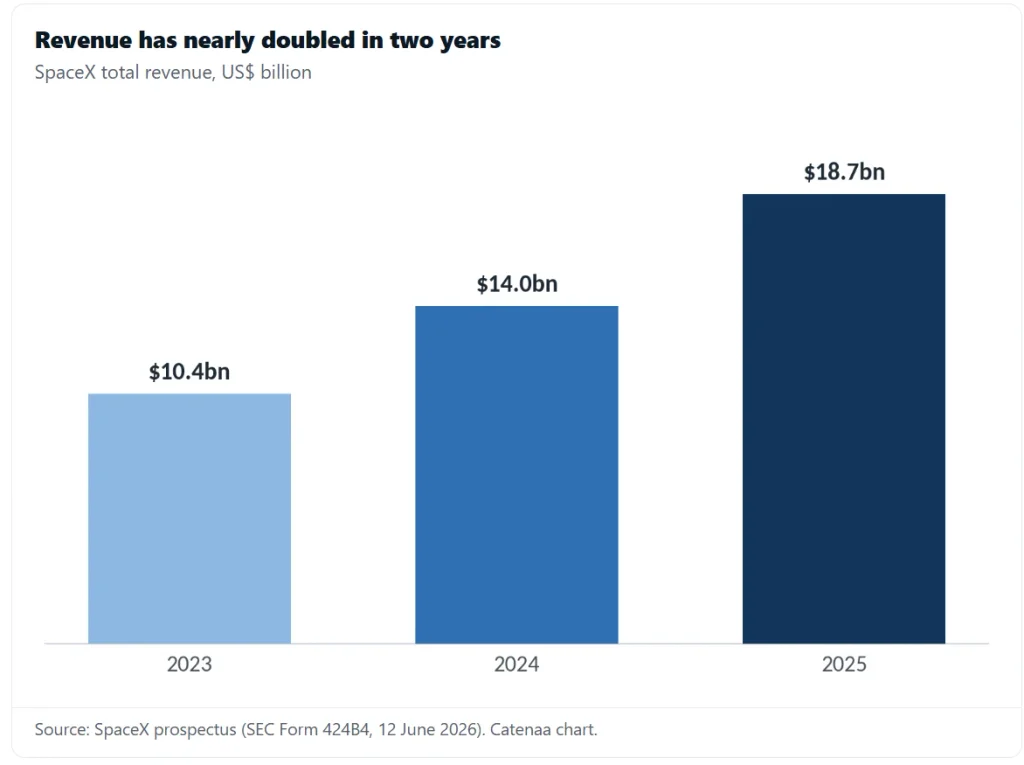
The business already generates large sums. Revenue rose from $10.4 billion in 2023 to $18.7 billion in 2025, according to the prospectus. That is growth of about 80% in two years.
Its launch business remains strong as well. In 2025, it flew 11 of the 12 US national security medium and heavy launches, according to the prospectus. Its Dragon capsule has carried 78 crew members since 2020.
The cost of building SpaceX Starship
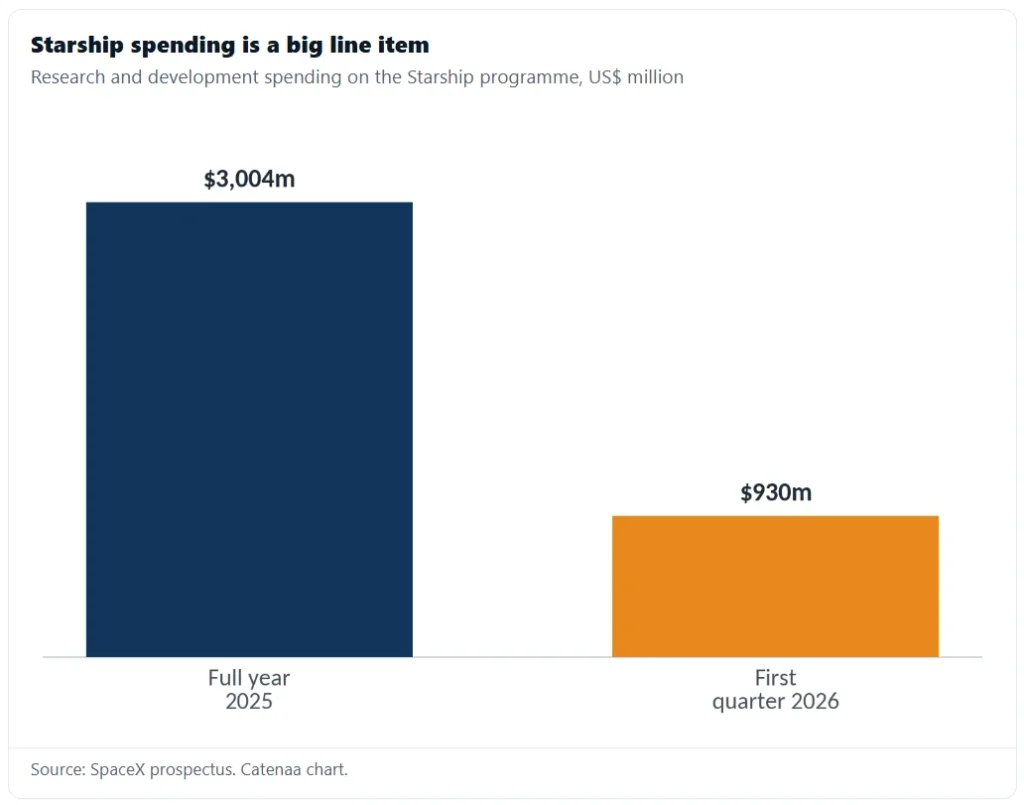
Starship is also expensive. SpaceX spent $3.0 billion on Starship research and development in 2025. It then spent $930 million in the first quarter of 2026 alone.
Reuse is the key to recovering that money. If SpaceX can land and refly both stages, the cost per launch should fall sharply. For now, both stages still end their flights in the sea.
Next, investors will watch for a booster catch, a ship catch and in-orbit refuelling. Each would cut costs and open new missions. Updates will also appear in the company’s SEC filings. For space and IPO investors, SpaceX Starship has now cleared its biggest test so far.