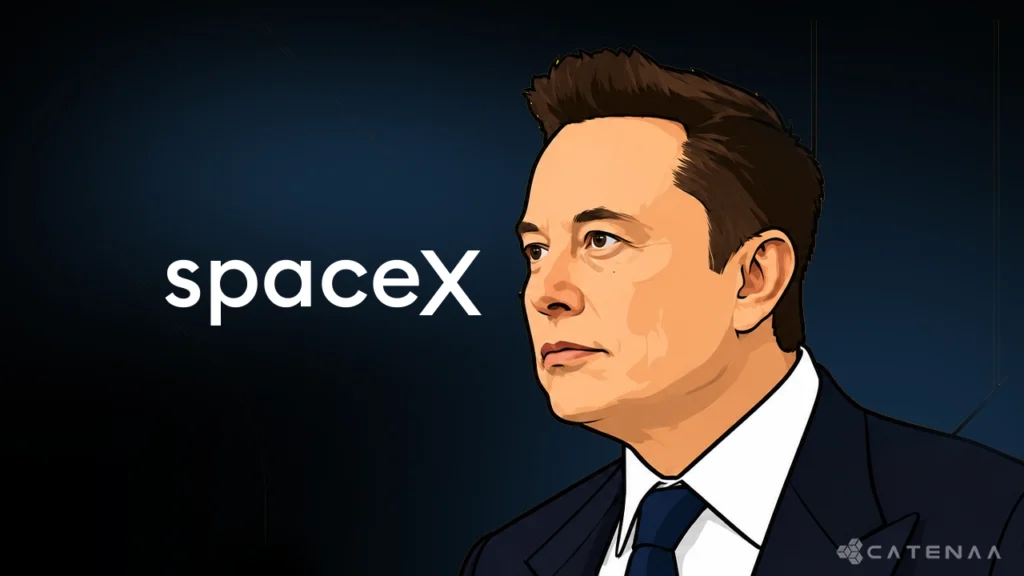


Catenaa, Saturday, September 26, 2026- SpaceX employees will sell the majority of SpaceX contractual lockup shares, worth $970 billion, that will be released in June 2027 to pay down mortgages or interest on collateralized debt.
Accordingly, on June 12, 2027, the last batch of roughly $2 trillion of SpaceX shares will be released from its contractual “lockup,” allowing individuals and institutions that bought or received SpaceX stock when the company was private, from endowments and foundations to company employees, to sell their shares to willing buyers in public markets.
“Our best guess is that most non-Elon shareholders will sell. Employees need cash to pay down mortgages or interest on SpaceX collateralized debt,” John Pease and Ben Inker of Asset Allocation at GMO said.
“Foundations have been cash-strapped in a distribution-lite world and have little desire to hold massive stock-specific risk. Endowments are even more in need of liquidity. And happily, SpaceX seems to have lots of willing buyers,” they said.
GMO said that to buy SpaceX stock, investors will need to offer formerly private SpaceX shareholders the going market price.
Since most investors don’t have a whole lot of idle cash, they will likely need to raise the funds by selling assets, and the assets most likely to be sold are liquid equities.
According to GMO, if the formerly private SpaceX shareholders reinvest all that cash in other liquid equities, the transaction should cause very little market stress; it would effectively be a swap of SpaceX shares for shares of everything else.
But if formerly private SpaceX shareholders don’t simply buy other equities and instead use some of the cash to pay capital gains taxes, reduce obligations, invest in a new AI-focused venture capital vehicle, or purchase caviar, then this is not merely a stock-for-stock swap.
It said that formerly private SpaceX shareholders will not be the ready buyers of all the stock that needs to be sold to fund SpaceX purchases.
“This means public equity supply will rise more than demand, and, as we have seen time and again in the wake of large IPO waves, the result will be lower share prices,” GMO said in a note.
This will control for valuations: a 1% increase in the market share of IPOs has historically led to an approximate 4% decrease in prices.
Moreover, GMO said that SpaceX’s non-Elon sales alone exceed 1% of the US stock market’s value.
“We are likely to see IPOs from both Anthropic and OpenAI, together valued at about 5% of the U.S. stock market’s total investable market cap20, over the next 12 months,” the note said.
For the first time in twenty years, with the brief exception of the GFC, the U.S. stock market is seeing net dilution (i.e., share issuance exceeding share buybacks) as the hyperscalers continue their capital expenditure spree.
In aggregate, the market is shifting from a world where equity supply was shrinking by roughly 1% per annum (with buybacks exceeding primary or secondary issuance) to one in which equity supply will increase by close to 5%, if not more.