


September 27, 2026 – Investors have added roughly $457bn to Meta’s market value this month. The test now is whether a free AI agent can pay for the biggest spending plan in the company’s history.

In Summary
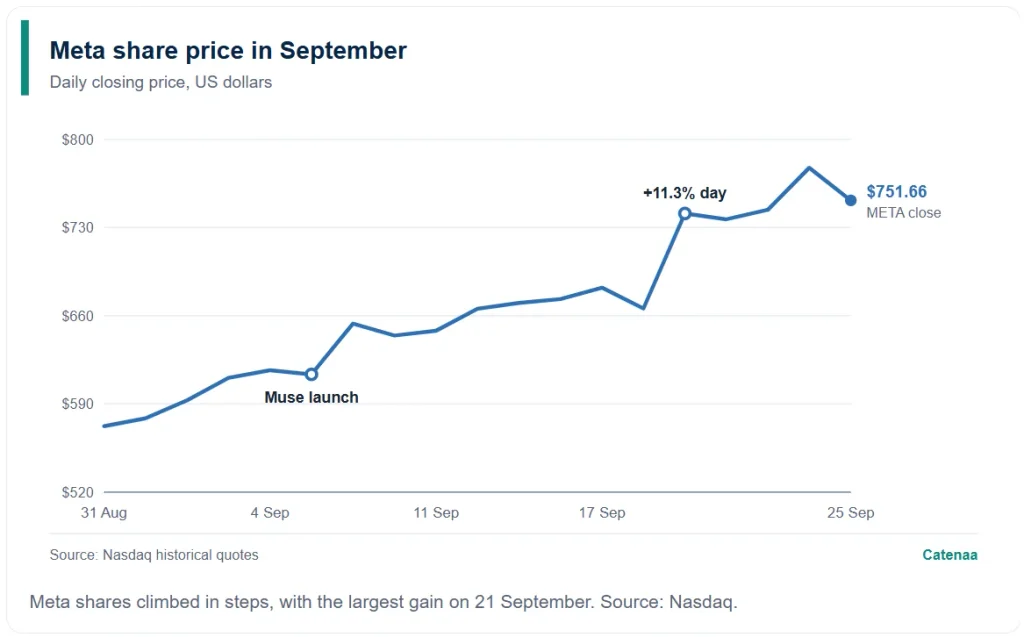
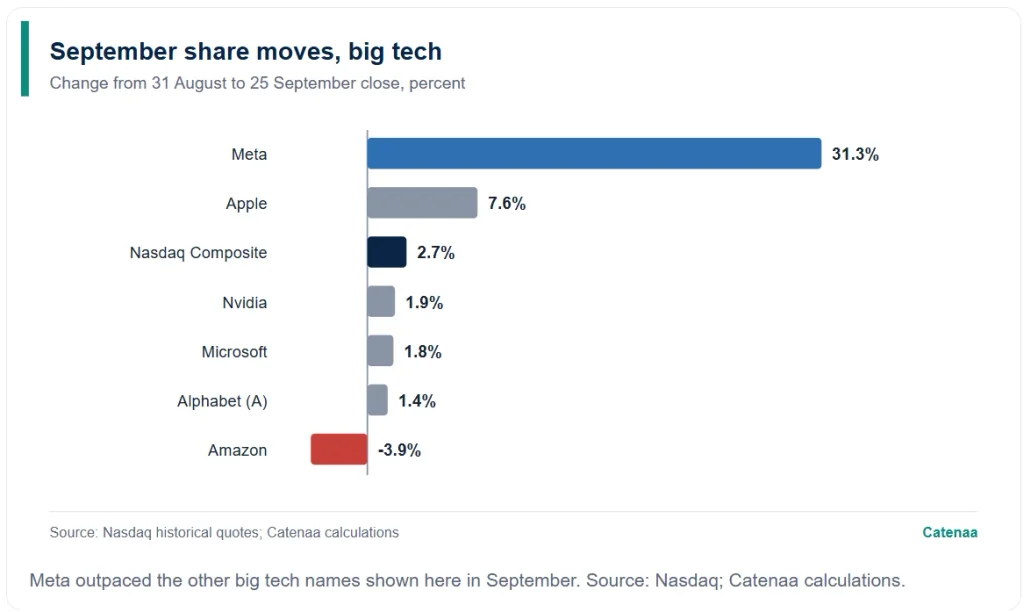
Meta stock closed at $751.66 on 25 September, up 31.3% for the month against 2.7% for the Nasdaq Composite.
The biggest one-day move came on 21 September, when shares jumped 11.3%.
Muse launched in the US on 8 September, and Meta will bring it to AI glasses in the coming months.
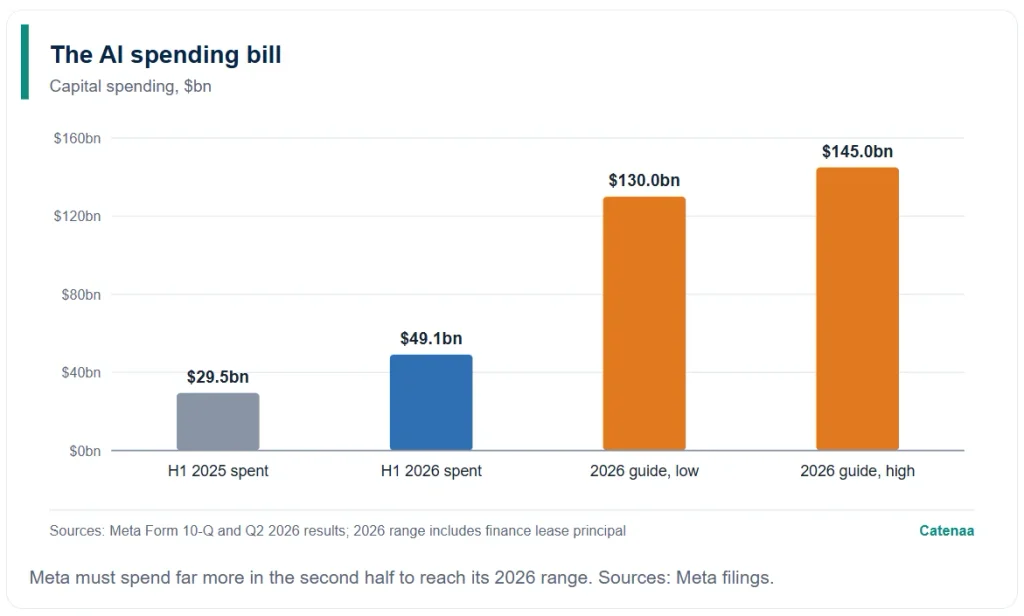
Meta expects 2026 capital spending of $130bn to $145bn, while second-quarter free cash flow fell to $784m.
Meta stock has staged one of the sharpest rallies among the largest US companies this month. Shares closed at $751.66 on 25 September, Nasdaq data show. That leaves them up 31.3% since the end of August.
This rally has also turned Meta’s year around. Shares now sit 13.9% above their 2025 closing price, after closing as low as $525.72 in late March.
The main catalyst is Muse, a personal AI agent that Meta launched on 8 September. As a result, many investors now appear to value Meta as an AI platform, not just an advertising business.
How the Meta stock rally unfolded
The climb came in bursts rather than a straight line. Shares slipped 0.5% on launch day, then rose 6.6% the next session. The biggest move came on 21 September, when the stock jumped 11.3% in a single day.
Momentum carried into Meta’s Connect event on 23 September. Shares closed at $777.59 the following day, 35.9% above the August close. They then fell 3.3% on Friday.
Based on 2.55 billion shares outstanding in the latest quarterly filing, the stock now implies a market value near $1.91trn. That is roughly $457bn more than at the end of August, according to Catenaa’s calculations.
Other big tech names lagged far behind. Apple gained 7.6% over the same period, while Nvidia, Microsoft and Alphabet each rose less than 2%. By contrast, Amazon fell 3.9%.
What Muse actually does
Meta’s launch post describes Muse as an agent that does the work rather than simply answering questions. It can send emails, book travel, fill in forms and even negotiate on a user’s behalf.
A Meta model called Muse Spark powers the agent. It is rolling out in the US on iOS, Android and the web.
Each agent runs on its own cloud computer, which Meta calls Muse Secure VM. A separate Sentinel agent must approve anything Muse sends to the internet. Muse also asks users before it sends an email or makes a purchase. Later this year, Meta plans a version encrypted with a key that only the user holds.
Payments give the product a fintech angle. Muse can check out with Link built by Stripe, which creates a one-time card so real card details stay hidden. Meta says the agent is free for most tasks, with paid plans for heavier use.
Connect widened the reach. Meta’s event recap says Muse will arrive on its AI glasses in the coming months. It also added shopping connectors such as Walmart and Best Buy, plus Shop Pay and PayPal for payments.
The hardware push matters too. Meta showed VR glasses weighing about 100 grams and a pocket device called Muse Charm. It also expects to offer more than 100 styles of AI glasses by the end of the year.
The cost behind the story
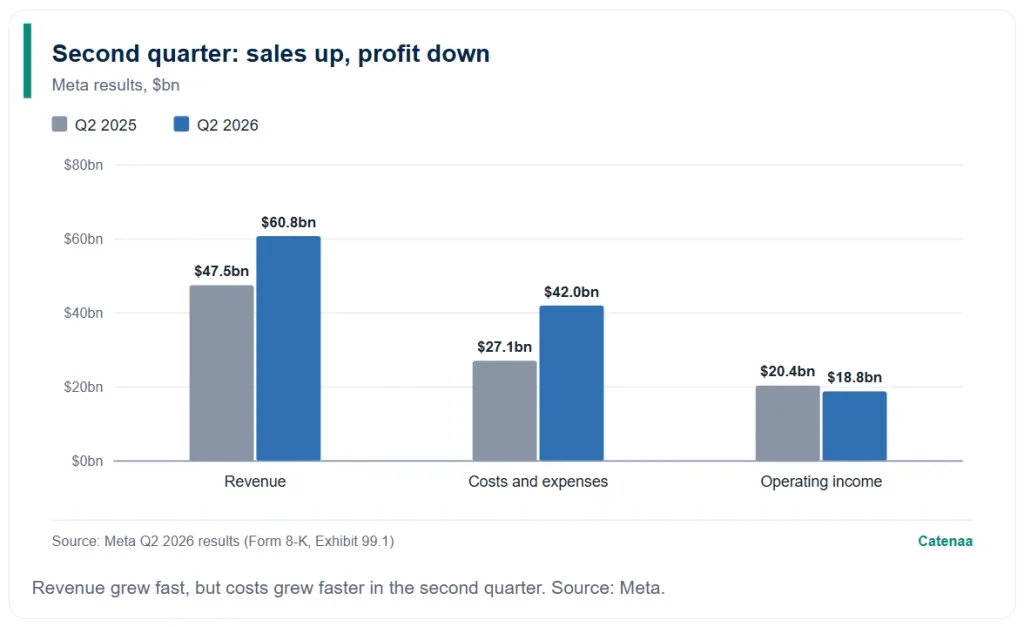
The rally rests on a business that is spending heavily. Meta’s second-quarter results show revenue up 28% to $60.8bn. However, costs rose 55%, so operating income fell 8% to $18.8bn.
Operating margin dropped to 31% from 43% a year earlier. The quarter included $2.4bn of legal charges and $1.18bn of severance costs.
Even so, the core ad engine still hums. Ad impressions rose 14% and the average price per ad climbed 12%. Daily active people across Meta’s apps averaged 3.60 billion in June, up 3%.
Capital spending is the bigger issue. Meta’s quarterly filing shows $49.1bn spent on property and equipment in the first half, up from $29.5bn a year earlier. Meanwhile, the company guides to $130bn to $145bn for 2026.
That outlay squeezed cash. Operating cash flow reached $31.86bn in the second quarter, yet free cash flow was just $784m. Long-term debt stood at $83.66bn at the end of June.
What Meta stock investors should watch
Muse is free for most users today, so it earns little direct revenue yet. Therefore, the bull case depends on usage, subscriptions and new commerce fees over time.
Meta’s own guidance offers the next checkpoint. It expects third-quarter revenue of $61bn to $64bn. Investors will look for any early Muse usage numbers when Meta next reports.
Legal risk also lingers. Meta says it faces several youth-related trials in the US this year, which could lead to a material loss.
For now, Meta stock trades on hope as much as on earnings. Still, the September move shows how quickly investors will reward a credible AI product.