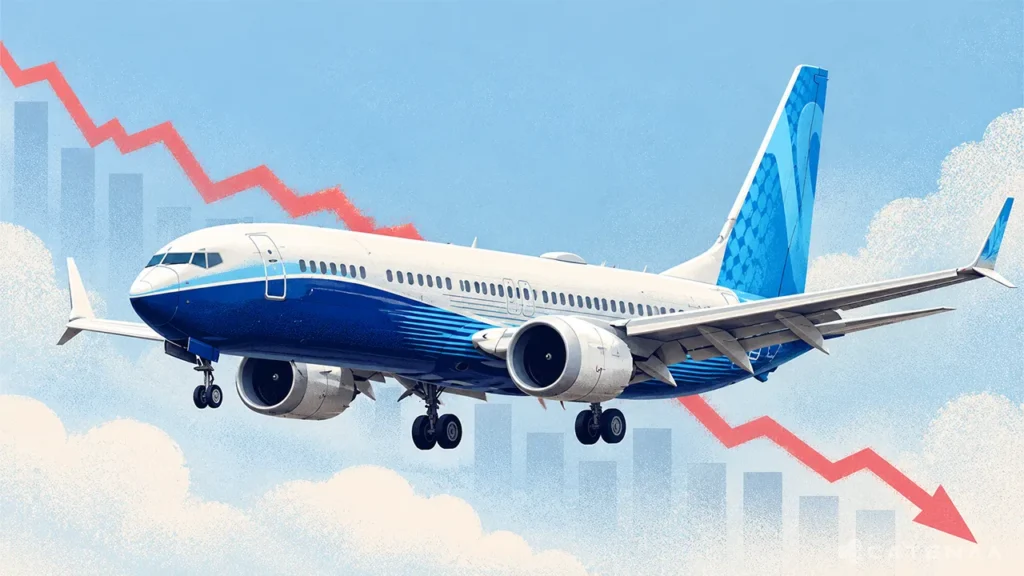


September 30, 2026 – US regulators delayed approval of the largest 737 over a software issue. The shares fell 6.9% to their lowest close of the year.
In Summary
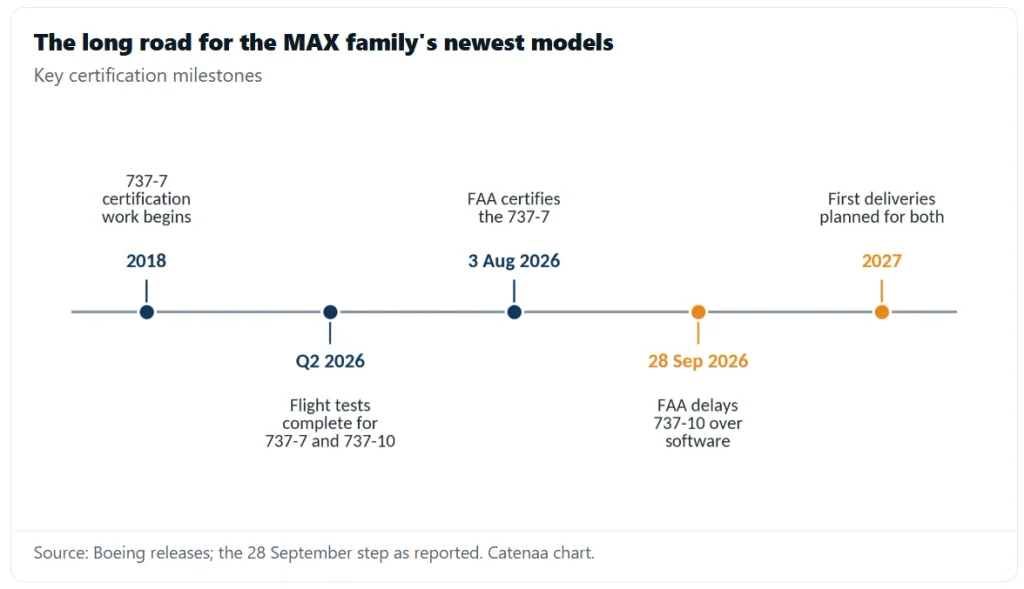
The FAA delayed certification of the Boeing 737 MAX 10 on 28 September over a navigation software issue it is still assessing.
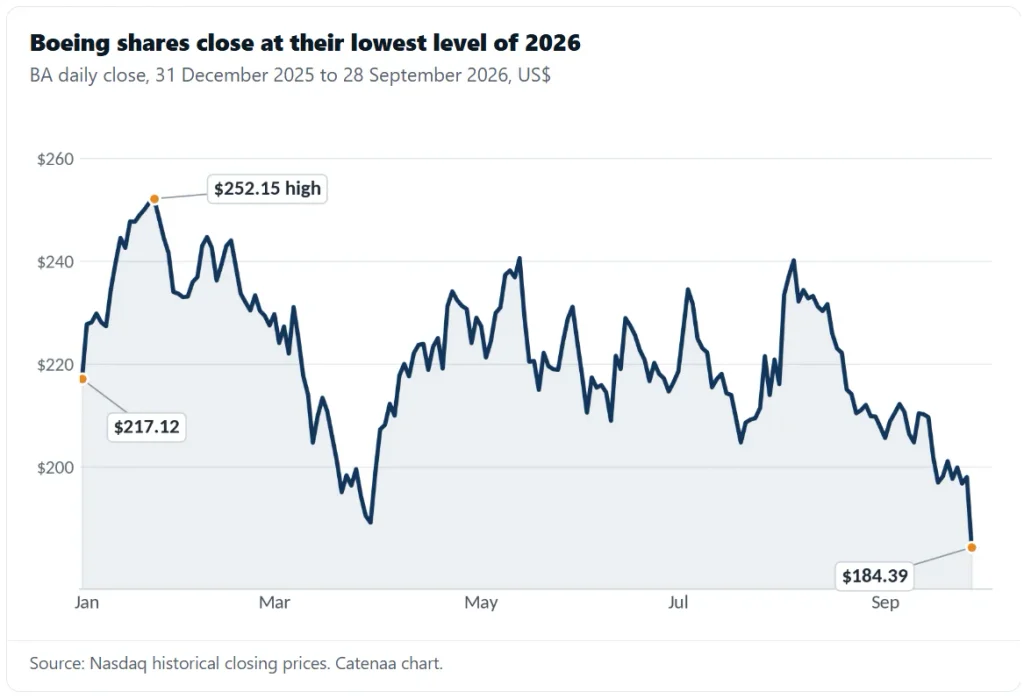
Boeing shares fell 6.9% to $184.39, their lowest close of 2026, erasing about $10.8 billion of market value.
The smaller 737-7 won FAA certification on 3 August; Boeing still targets first deliveries of both models in 2027.
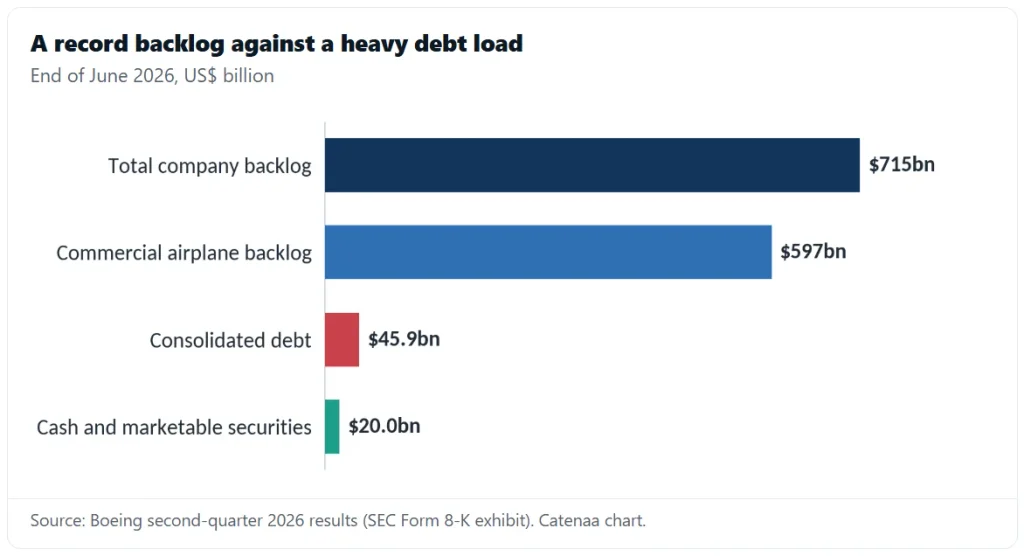
Boeing holds a record $715 billion backlog but also $45.9 billion of debt against $20.0 billion of cash.

Boeing shares fell 6.9% on Monday to their lowest close of 2026. US regulators had delayed approval of the 737 MAX 10. The Federal Aviation Administration cited a software issue that it is still assessing.
The stock closed at $184.39, according to Nasdaq data. That erased about $10.8 billion of market value in a single session, based on roughly 790 million shares outstanding.
What went wrong with the 737 MAX 10
According to reports of the FAA’s comments, the problem involves cockpit navigation software rather than the airframe. The glitch can leave pilots without certain autopilot functions after a missed approach.
FAA Administrator Bryan Bedford said the agency has yet to decide whether the issue poses a safety risk. Boeing said it continues to follow the FAA’s lead through the certification process.
Unfortunately for Boeing, the timing hurts. It had completed certification flight testing for both the 737-7 and the 737-10 by the second quarter. It told investors in July that it expected both approvals in 2026.
The smaller jet cleared that hurdle. On 3 August, the FAA certified the 737-7, with Southwest Airlines as launch customer. In that release, Boeing said it was working to certify the 737-10 this year.
That goal now looks harder. With just over three months left in 2026, engineers must fix the software and regulators must review the change. Only then can the final paperwork move ahead.
The 737-7 seats 135 to 160 passengers in two classes and flies up to 3,800 nautical miles. Its approval followed a certification effort that began in 2018.
Why the MAX 10 matters to Boeing
The MAX 10 is the largest member of the 737 family. It gives airlines more seats per flight. That makes it central to Boeing’s fight for share in the busiest part of the market.
Airlines have built fleet plans around it. As a result, each delay forces them to keep older, thirstier jets flying for longer or to lease capacity elsewhere.
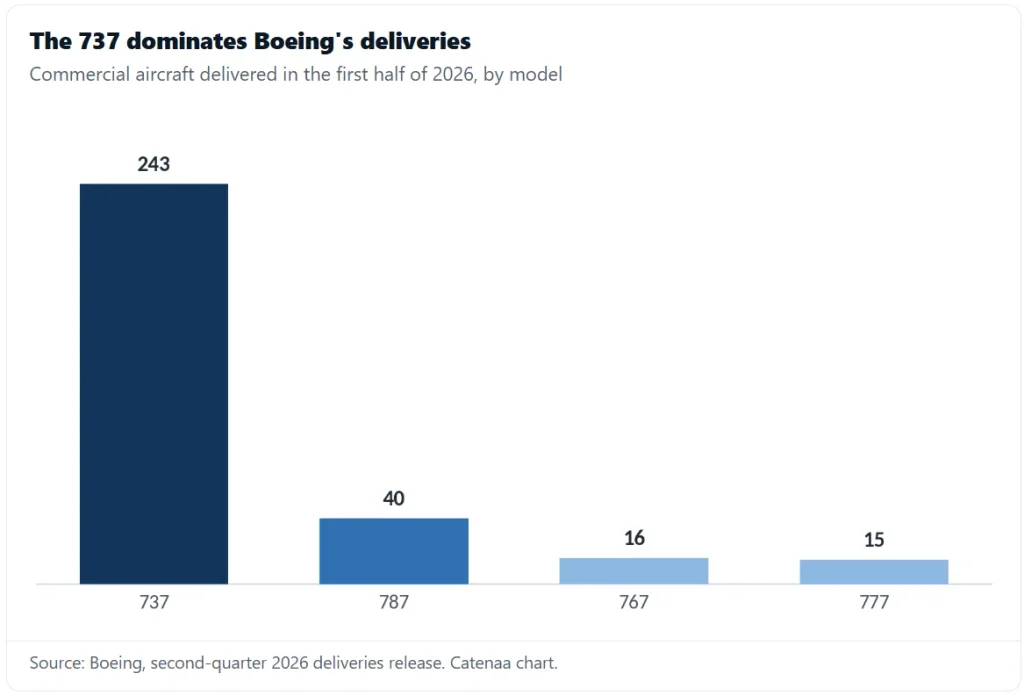
The 737 already drives Boeing’s volumes. The company delivered 243 737s in the first half of 2026, out of 314 commercial jets. That means the 737 made up about 77% of deliveries.
Production is rising, too. Boeing moved to a rate of 47 737s a month in the second quarter. In July, it also started low-rate production on a new 737 North Line in Everett, Washington.
However, Boeing cannot hand over jets that lack certification. Each month of delay pushes cash receipts further out, since airlines pay most of the price on delivery. Customers can track progress on Boeing’s orders and deliveries records.
A balance sheet that needs deliveries
Boeing’s second-quarter results showed revenue of $24.6 billion and a core loss of 76 cents a share. Free cash flow was positive at $0.6 billion.
The company holds a record backlog of $715 billion. Commercial airplanes account for $597 billion, covering more than 6,200 jets. Against that, Boeing carried $45.9 billion of debt and $20.0 billion of cash.
Chief executive Kelly Ortberg said in July that operations were more stable and key certification programmes remained on plan. Monday’s news tests that message.
Other numbers in the report showed progress. Operating cash flow came to $1.4 billion, and the company delivered 171 commercial jets in the quarter. Still, Boeing reported a GAAP loss of 67 cents a share.
What investors will watch
The shares had already slipped this year. They closed 2025 at $217.12 and peaked at $252.15 in January. Monday’s close left them 15% lower for the year and about 27% below that high.
Investors will now look for a fix and a new date. Boeing still plans first deliveries of both models in 2027, so a short delay may not change that goal. A longer one could push revenue into 2028.
The broader market offered little support. The S&P 500 fell 0.8% on Monday as oil and bond yields climbed. Meanwhile, higher oil prices weigh on Boeing’s airline customers, who must pay more for fuel.
In addition, the software problem may reach beyond the MAX 10. Reports on the review said 737-7 deliveries could also slip. The FAA has already certified that model.
Third-quarter deliveries, due in mid-October, will show whether 737 output keeps rising. For aerospace and industrial stocks, the 737 MAX 10 decision remains one of the biggest open items of the year.