

October 09, 2026 – Layoffs remain rare, but September payrolls rose just 29,000 and Fed officials see unusually low churn in the US labor market.

In Summary
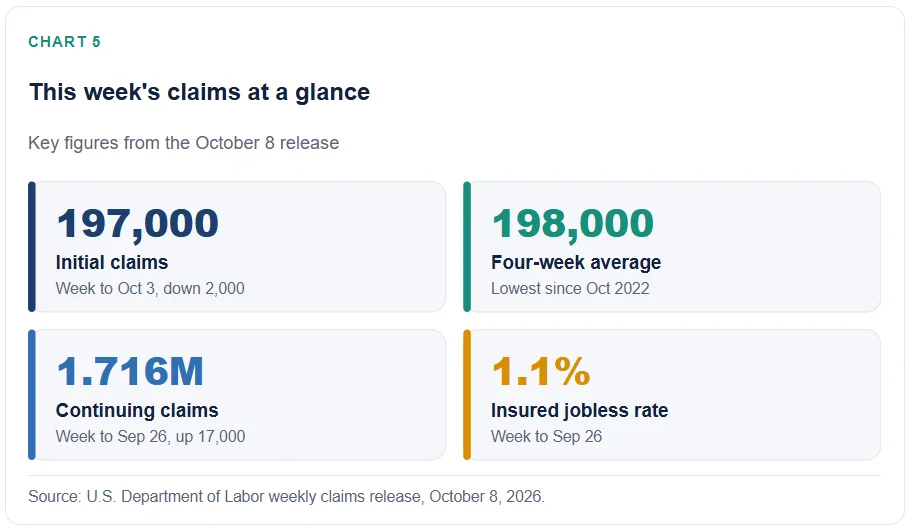
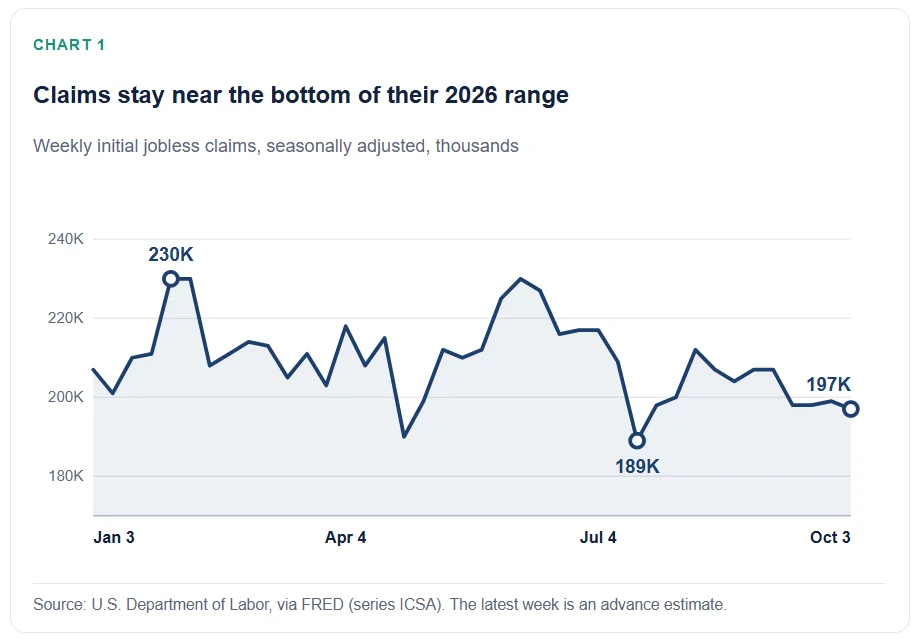
Initial jobless claims fell 2,000 to 197,000 in the week ending October 3, after an upward revision to the prior week.
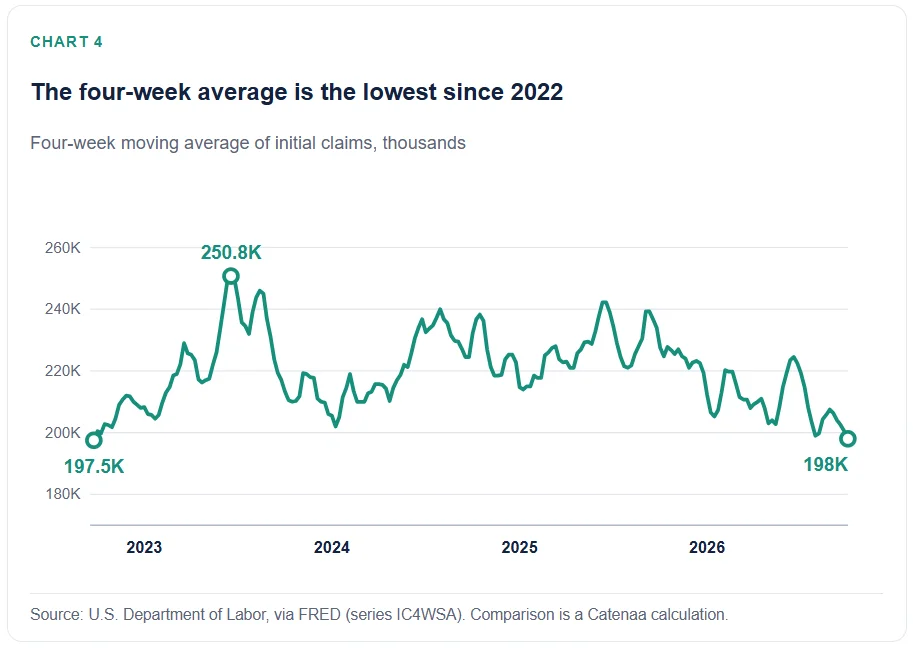
The four-week average dropped to 198,000, its lowest since the week ending October 1, 2022.
Continuing claims rose 17,000 to 1.716 million but remain well below year-ago levels.
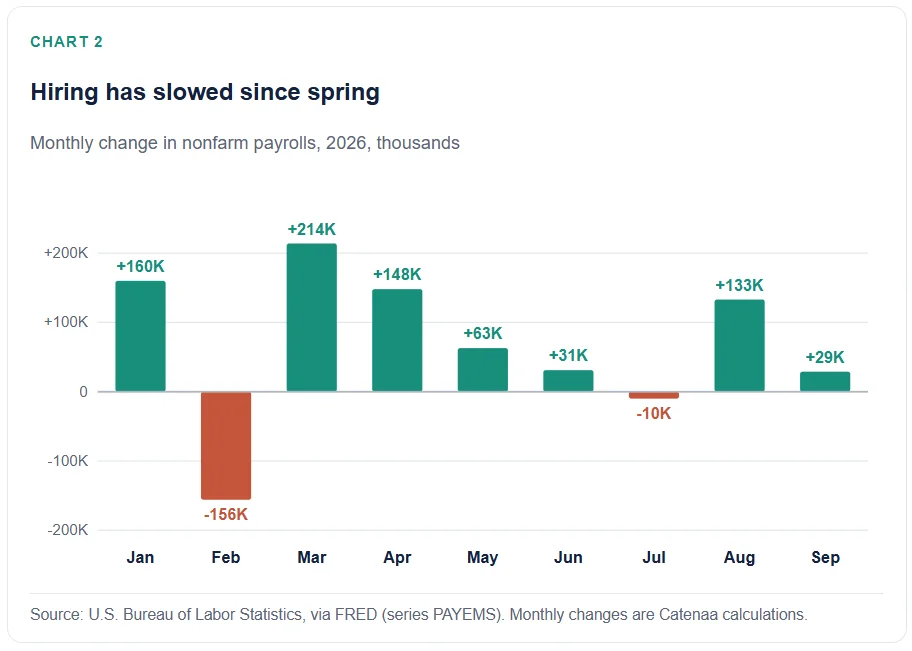
Payrolls rose just 29,000 in September, and revisions cut July and August by a combined 60,000.
Fed minutes flagged unusually low labor market dynamism, even as most officials expect one more rate hike this year.
Jobless claims fell to 197,000 last week, a sign that US employers are still holding on to their workers. The four-week average dropped to its lowest level since 2022. Hiring, however, remains sluggish.
What the Jobless Claims Report Showed
Initial jobless claims fell by 2,000 in the week ending October 3, the Labor Department said on Thursday. It also revised the prior week up by 2,000, to 199,000. As a result, the four-week moving average, which smooths out weekly noise, slipped 2,500 to 198,000.
That is the lowest reading since the week ending October 1, 2022, according to FRED data. This year, weekly claims have stayed between 189,000 and 230,000. Before seasonal adjustment, claims totaled 170,333. A year earlier, the same week saw 207,124 claims.
Continuing claims, which track people still receiving benefits, rose 17,000 to 1.716 million in the week ending September 26. Even so, that is well below the roughly 1.93 million recorded a year earlier. Meanwhile, the insured unemployment rate stood at 1.1%.
State data, which lag by a week, showed few hot spots. Michigan reported the largest rise in the week ending September 26, up 739 claims. Hawaii and New York posted the biggest declines.
Layoffs Stay Low, but Hiring Has Cooled
Low claims show that layoffs remain rare. Yet the hiring side of the market looks weaker. In September, employers added just 29,000 jobs, the Bureau of Labor Statistics reported on October 2. The unemployment rate edged up to 4.2% from 4.1%.
Revisions also trimmed earlier gains. July now shows a loss of 10,000 jobs, while the August gain shrank to 133,000. Together, those two months came in 60,000 weaker than first reported. Over the past three months, payrolls grew by about 51,000 a month. So far this year, gains have averaged roughly 68,000, according to Catenaa calculations.
Health care added 17,000 jobs, extending its upward trend. In contrast, financial activities shed 7,000. Average hourly earnings rose 0.1% to $37.81, up 3.0% from a year earlier. Labor force participation rose to 61.8% from 61.6%. Also, the number of long-term unemployed stayed near 1.9 million.
A Labor Market With Little Churn
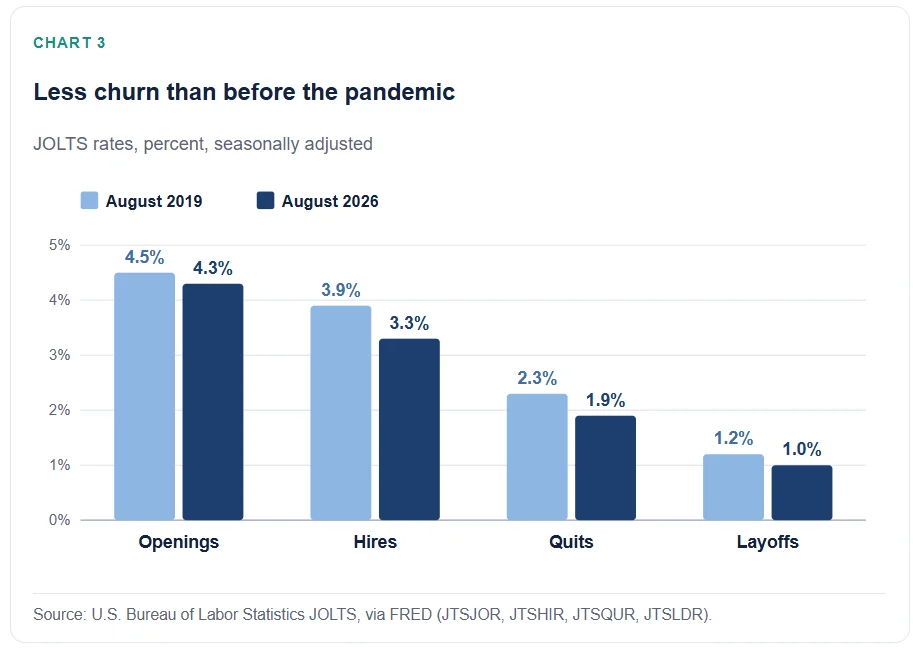
Job turnover data tell a similar story. In August, job openings were little changed at 7.1 million, according to the JOLTS survey. Hires changed little at 5.2 million, a rate of 3.3%. Quits held at 3.1 million, and layoffs stood at 1.6 million.
Those rates sit below their pre-pandemic levels. In August 2019, the hires rate was 3.9% and the quits rate was 2.3%. Today, workers quit less often, and companies add fewer staff. At the same time, the layoff rate of 1.0% is lower than it was then.
Openings and jobseekers are now roughly in balance. In August, there was about one opening per unemployed person, down from 1.2 in August 2019. That ratio is a Catenaa calculation from BLS data.
What the Fed Makes of It
Federal Reserve officials have spotted the same pattern. Minutes of the September 15 to 16 meeting, released October 7, show participants judged labor conditions as stable. They generally saw the market as close to maximum employment.
Those officials pointed to low rates of hiring and layoffs and a low job-finding rate. Some also cited strong demand for skilled workers in sectors tied to the AI buildout. In addition, some said the labor market was not currently a source of inflation pressure.
Still, the Fed raised its policy rate by a quarter point in September, to a range of 3.75% to 4.00%. Most participants said another increase would likely be appropriate by year end. Steady jobless claims do little to weaken that case.
Bond investors are paying attention, too. The 10-year Treasury yield closed at 5.28% on October 7, near its highest level since 2002. Firm labor data could keep that pressure on borrowing costs, from mortgages to business loans.
What to Watch Next
Next week brings fresh tests. September consumer price data arrive on October 14, and the next claims report follows on October 15. After that, the Fed meets again on October 27 to 28.
Continuing claims also deserve a close look. A sustained rise would suggest that jobseekers are taking longer to find work.
For now, the data send a mixed message. Companies are not cutting staff, but they are not adding many either. If layoffs do start to rise, weekly jobless claims would likely be among the first signals.