

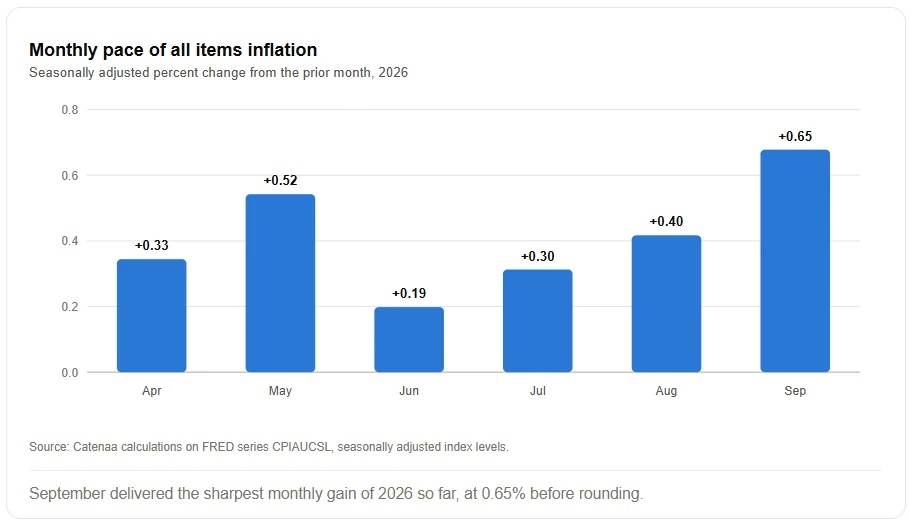
October 15, 2026 – September consumer prices rose 0.6% on the month. Energy costs jumped 5.2%, and fuel prices led the annual table.

In Summary
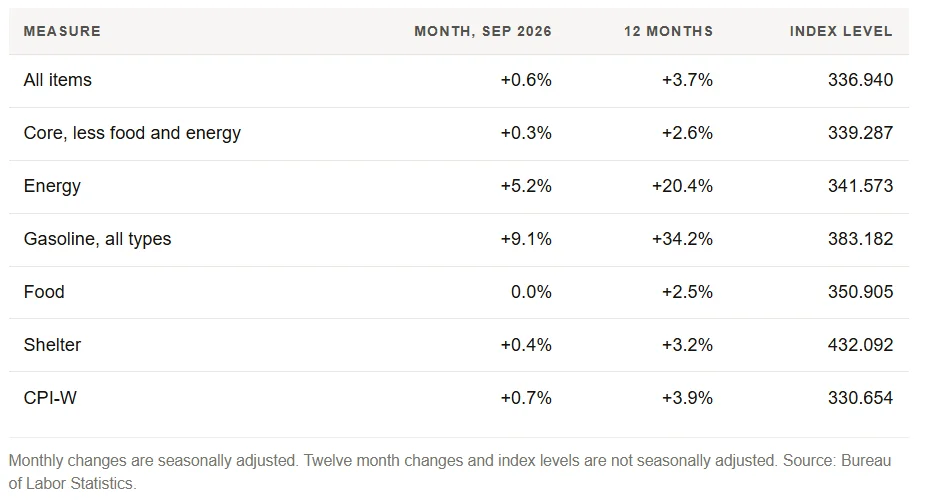
The all items CPI rose 0.6% in September and 3.7% over twelve months.
Energy jumped 5.2% on the month, with gasoline up 9.1% and fuel oil up 74.2% on the year.
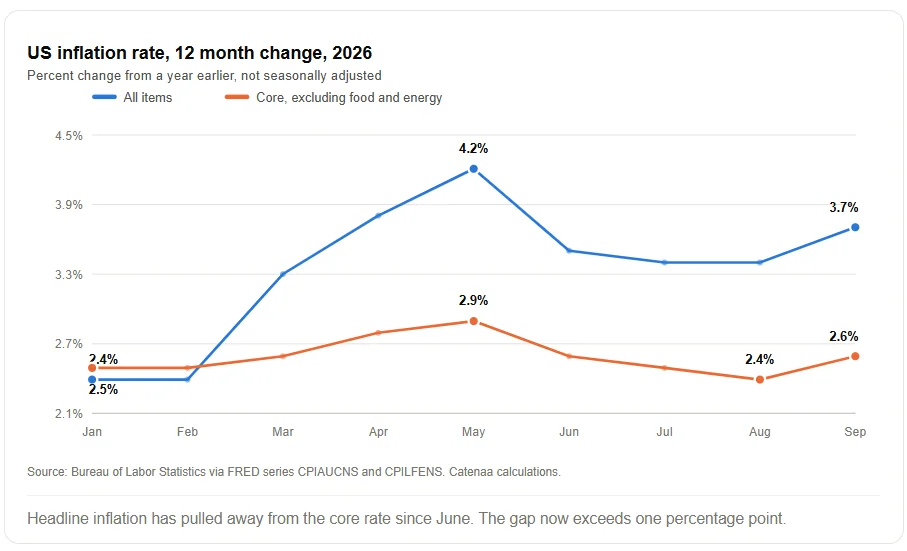
Core inflation stayed contained at 2.6%, leaving a gap of 1.1 points to the headline rate.
Shelter added 0.4% on the month, and owners’ equivalent rent rose 3.3% over the year.
The Fed raised rates to 3.75% to 4.00% in September and meets again on 27 and 28 October.
American consumer prices climbed faster in September. The Bureau of Labor Statistics put its all items index up 0.6% on the month. Over twelve months, the same index rose 3.7%. The agency released the figures on 14 October. Consequently, US inflation now sits at its fastest annual pace since May.
Energy supplied most of the push. The energy index jumped 5.2% in a single month. Gasoline alone rose 9.1% on a seasonally adjusted basis. Over twelve months, gasoline costs have surged 34.2%. Fuel oil climbed even harder, gaining 74.2%.
Core US inflation tells a calmer story
Strip out food and energy, and the picture softens. That core index rose only 0.3% in September. Therefore the annual core rate reads 2.6%, barely above its August level of 2.4%. By comparison, the headline rate runs 1.1 points hotter.
Shelter still carries the core. The shelter index advanced 0.4% on the month and 3.2% over the year. Owners’ equivalent rent, which alone holds roughly a quarter of the basket, gained 3.3% annually. Meanwhile rent of primary residence rose 2.8%.
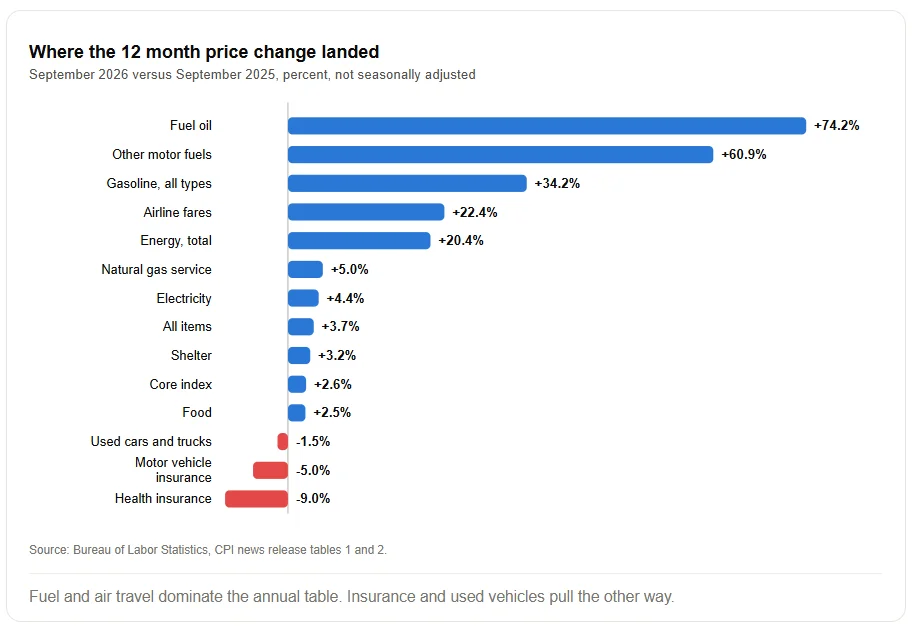
Several services got cheaper. Motor vehicle insurance fell 5.0% across the year. Likewise, health insurance dropped 9.0% and smartphone prices slid 9.9%. Used vehicle prices also eased, down 1.5%. Airline fares bucked that trend, however, climbing 22.4%.
Grocery bills barely moved
Food costs stayed flat on the month. Grocery prices, which the agency calls food at home, slipped 0.1%. Across the year, that basket rose just 1.8%. Restaurant menus moved faster, however, with food away from home up 3.5%.
Utility bills add a quieter squeeze. Electricity rose 4.4% over twelve months, while piped gas service gained 5.0%. Both outpaced the core rate. Together with pump prices, they explain why household energy spending feels heavier than core figures suggest.
Why the Fed now looks boxed in
Timing makes this report awkward. In September the Federal Open Market Committee raised its target range by a quarter point. The range now runs from 3.75% to 4.00%. Officials voted 12 to 0 and called inflation elevated. Rate setters meet again on 27 and 28 October, according to the published calendar.
Energy driven inflation usually fades on its own. Yet core services have stopped falling, which weakens the case for patience. Furthermore, the CPI-W index used for benefit adjustments rose 3.9% over the year. That gauge runs faster than the headline measure.
Bond markets already leaned hawkish
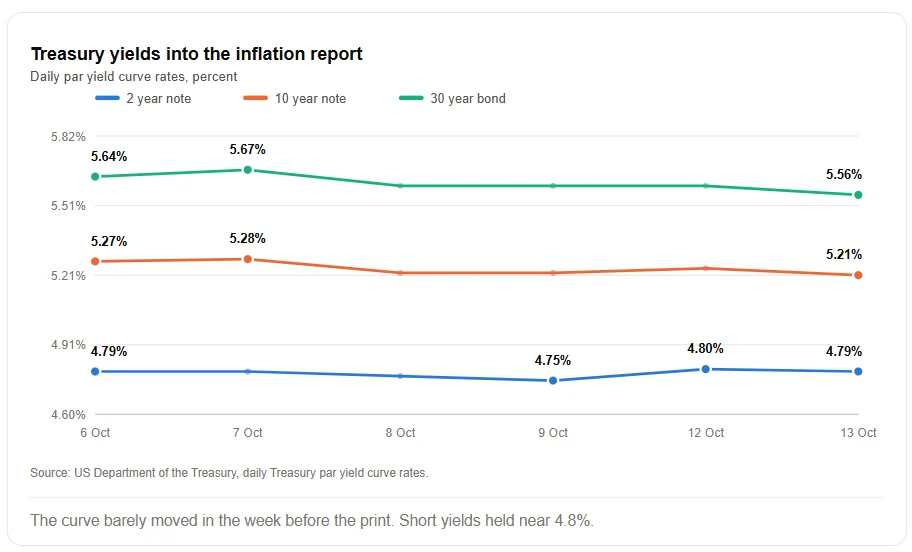
Treasury yields sat high before the release. On 13 October the two year note yielded 4.79% and the ten year note 5.21%, per Treasury par curve data. The 20 year point sat higher still, at 5.60%. Notably, the two year yield tops the policy rate, so traders expect no near term cuts.
Three questions follow this print
First, do fuel costs keep climbing through winter? Second, does shelter inflation resume its slow retreat? Third, can wage growth outpace a 3.7% price rate? Answers begin arriving on 10 November, when the next CPI report lands. Historical index levels sit in the FRED CPIAUCNS series for anyone tracking the trend.
Alternative gauges agree on direction. The chained CPI rose 3.5% over the year. Apparel prices gained 3.4%, and transportation services added 2.7%. New vehicle prices stayed almost flat, up 0.6%. Medical care rose a mild 1.5%.
Until then, policymakers face a split screen. Headline inflation looks alarming, while core inflation looks tolerable. For now the Fed must decide which number to trust.




