

September 26, 2026 – The 30-year fixed average climbed above 7% for the first time this cycle. Builders are discounting, and a Fed governor says affordability is the worst in decades.

In Summary
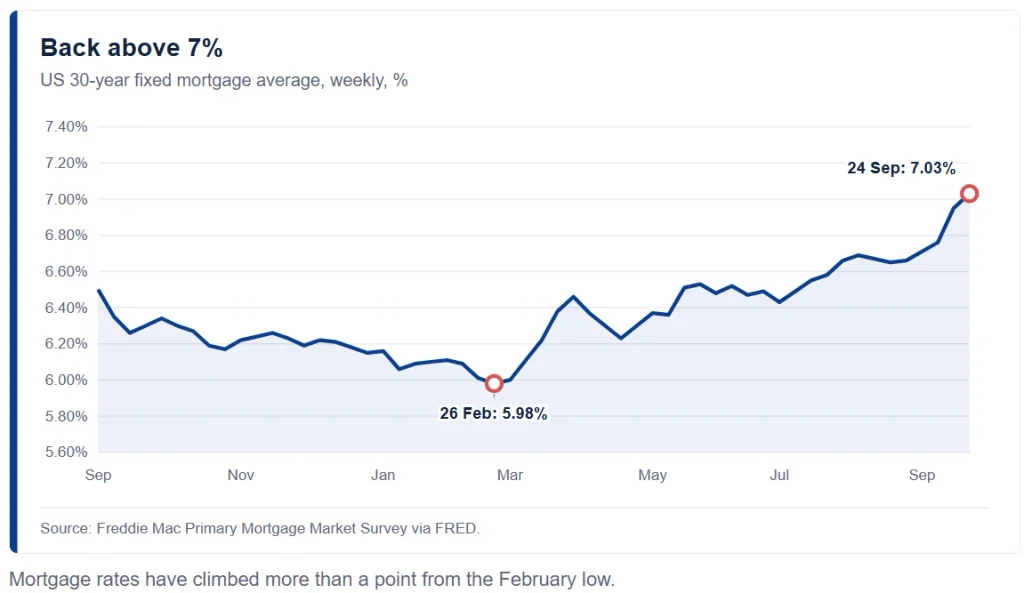
The 30-year fixed mortgage average rose to 7.03% in the week to 24 September, from 6.71% three weeks earlier.
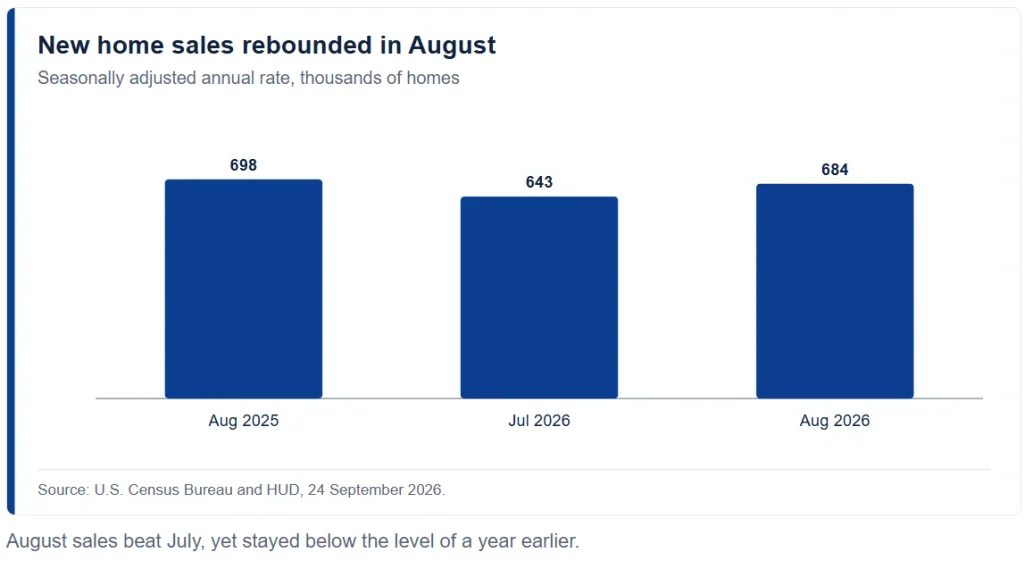
New single-family home sales ran at 684,000 a year in August, up 6.4% on the month but 2.0% below a year earlier.
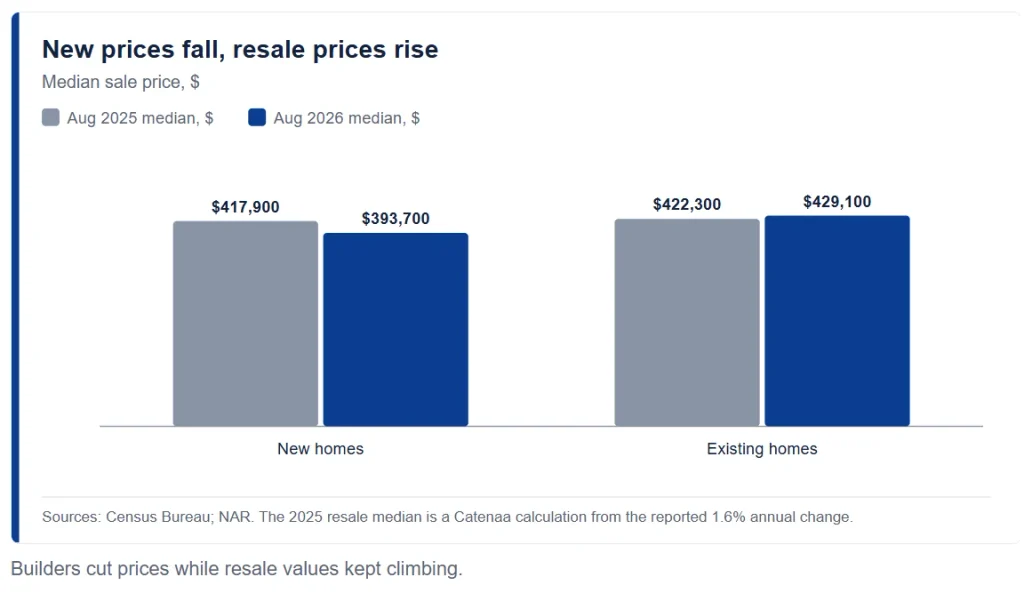
The median new home price fell 5.8% from a year earlier to $393,700, with 8.5 months of supply.
Existing-home sales slipped 2.0% to 3.98 million, while the median resale price rose 1.6% to $429,100.
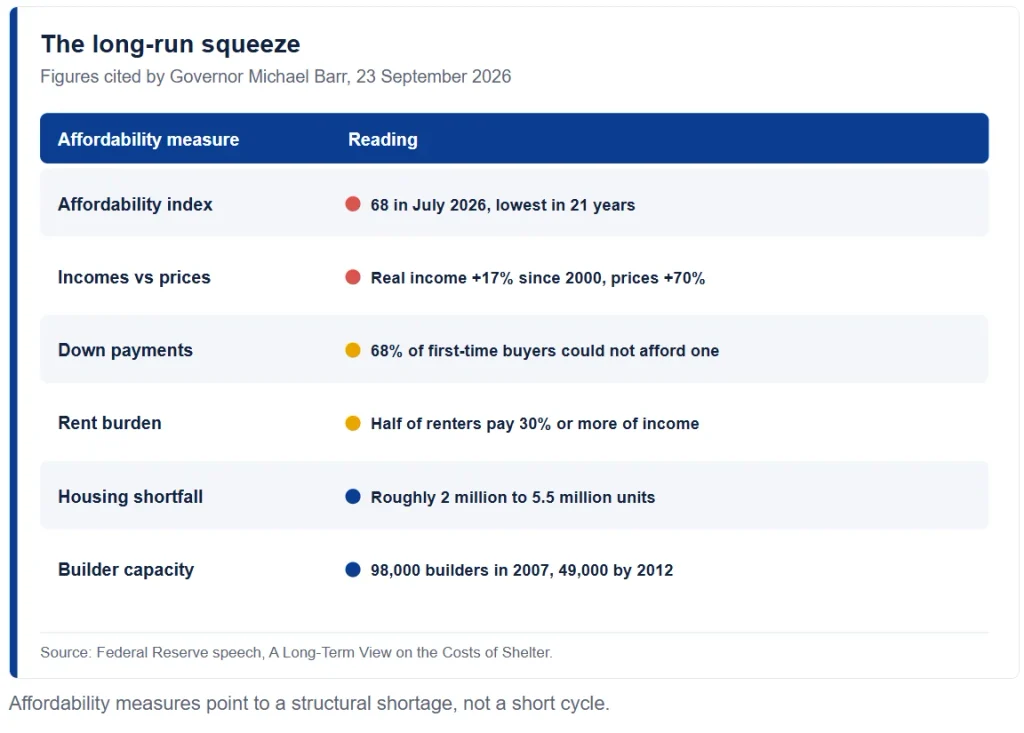
Governor Michael Barr said one affordability index hit its lowest level in 21 years in July 2026.
American mortgage rates have moved back above 7%. The 30-year fixed average reached 7.03% in the week to 24 September, Freddie Mac data via FRED show. Three weeks earlier, the rate stood at 6.71%.
Buyers still turned up for new homes. Sales of new single-family houses ran at an annual pace of 684,000 in August, the Census Bureau reported. That was 6.4% above July.
The two facts fit together better than they look. Builders can cut prices and buy down rates, while existing owners cannot. As a result, new and resale markets have moved apart this year.
Mortgage Rates Climb With Bond Yields
The move tracks the bond market. The 10-year Treasury yield rose to 5.18% on 24 September, FRED data show. Strong business surveys pushed yields higher this week.
Mortgage pricing follows that benchmark closely. Lenders add a spread to cover credit, servicing and prepayment risk. Therefore, when the 10-year climbs, borrowers feel it within days.
The survey also lags the market. Freddie Mac polls lenders weekly, so a mid-week jump shows up later. Consequently, quoted rates may already sit higher than the published average.
The cost difference is stark. At 7.03%, a $400,000 loan costs about $2,672 a month. At 5.98%, the 2026 low, the same loan costs about $2,393.
New Home Sales Beat the Trend
Builders are managing the squeeze. The median price of a new home fell to $393,700 in August, down 5.8% from a year earlier. The average price dropped 8.8%.
Inventory explains that discipline. Some 483,000 new homes sat for sale at the end of August. That equals 8.5 months of supply at the current pace.
Even so, sales remain below last year. The August rate sat 2.0% under August 2025. Buyers are price sensitive, not absent.
Incentives do much of the work. Builders often fund rate buydowns, closing costs or upgrades. Those concessions shrink margins without showing up in the median price.
Resale Market Stays Stuck
The existing-home market tells a different story. Sales ran at 3.98 million a year in August, 2.0% below July, the Realtors association reported. That was also 1.2% lower than a year earlier.
Prices there keep rising. The median existing-home price reached $429,100, up 1.6% from a year earlier. Inventory stood at 1.62 million homes, or 4.9 months of supply.
Lawrence Yun, the association’s chief economist, put it simply. “Mortgage rates and home sales move in opposite directions,” he said. High rates keep both buyers and sellers waiting.
A Fed Governor Spells Out the Squeeze
Policymakers see a structural problem behind the cyclical one. Governor Michael Barr addressed shelter costs in Chicago on 23 September. He described affordability as the worst in decades.
His numbers are striking. One affordability index fell to 68 in July 2026, the lowest in 21 years. Between 2000 and 2024, real median household income rose roughly 17%, while real house prices rose about 70%.
Renters face a parallel problem. About half of all renters now pay 30% or more of income on rent. A quarter pay at least half.
Supply Is the Root Cause
Barr pointed to a shortage rather than a bubble. Estimates put the housing shortfall at roughly 2 million to 5.5 million units. The total housing stock is about 150 million.
He listed four causes. Land use and zoning rules limit density. Construction productivity has barely grown since 1987. The 2008 bust destroyed builder capacity, and pandemic inflation raised input costs.
The builder numbers illustrate the damage. From 2007 through 2012, the number of homebuilders fell by half, from 98,000 to 49,000. Moreover, more than 30% of construction workers left the industry.
Rebuilding that capacity takes years. Trades need apprentices, and firms need stable demand to hire them. Meanwhile, each year of underbuilding adds to the shortfall.
What Happens if Mortgage Rates Stay High
Three effects follow. First, transaction volumes stay low, which hurts brokers, movers and lenders. Second, builders keep discounting, so new home prices lag resale prices.
Third, the rental market stays tight. Households that cannot buy keep renting, which supports rent growth. That in turn feeds shelter inflation, a large part of the consumer price index.
Barr made the policy link clear. Mortgage rates are generally lower when inflation is lower, he noted. So the path back to affordability runs through the inflation data, not through housing policy alone. This week’s business surveys, which showed the steepest cost increases in four years, point the other way.