

September 30, 2026 – The governor expects productivity gains to ease prices in time, but not before year end. She also flagged risks to entry-level jobs.
In Summary
Lisa Cook said AI-driven investment is adding to inflation and that pressure may be broadening.
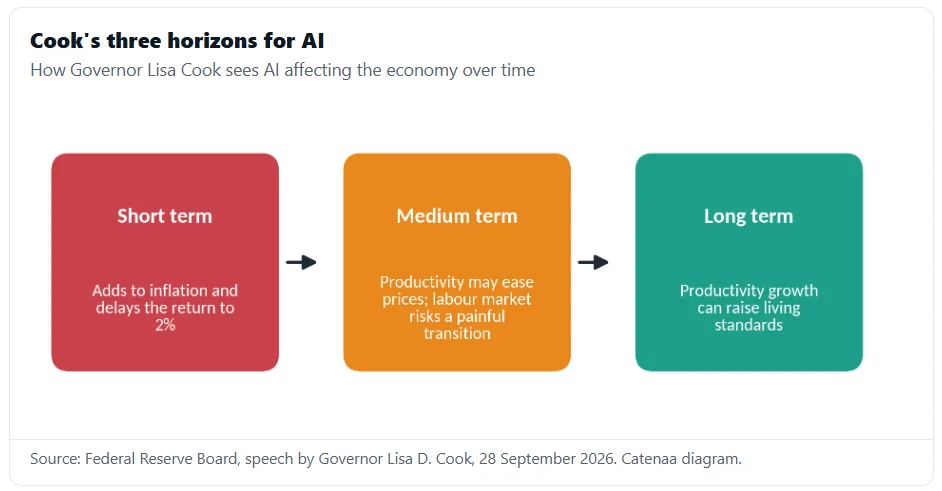
She expects productivity gains to bring modest disinflation within a few years, but not this year.
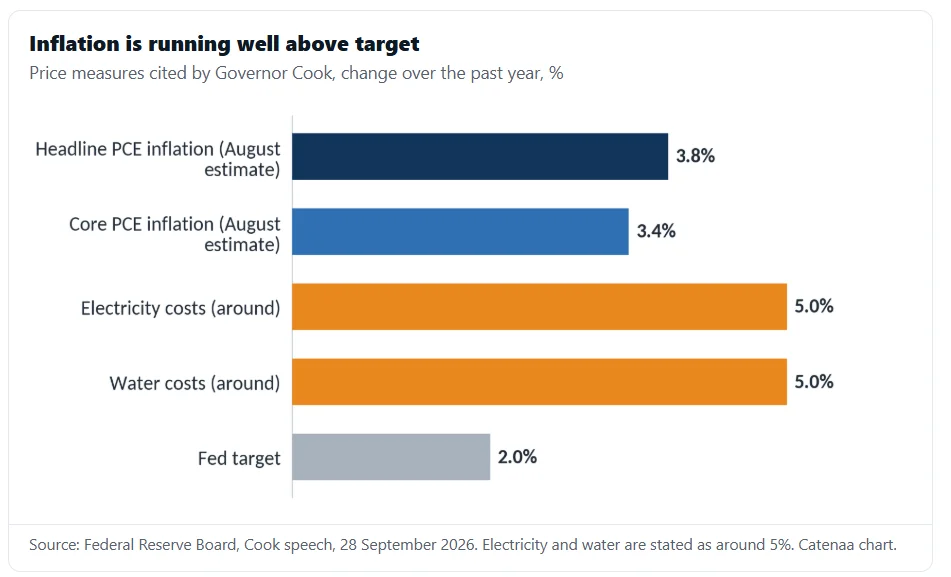
Cook put headline inflation at an estimated 3.8% and core at 3.4% in the year to August.
She backed the 16 September rate rise and will weigh what further tightening may be needed.

Federal Reserve Governor Lisa Cook said on Monday that artificial intelligence is adding to US inflation. She also warned that any relief from higher productivity will likely arrive too late for this year.
Cook set out her views in a keynote speech at Oakland Tech Week in California. She called AI a general-purpose technology on a par with the steam engine, electricity and the internet.

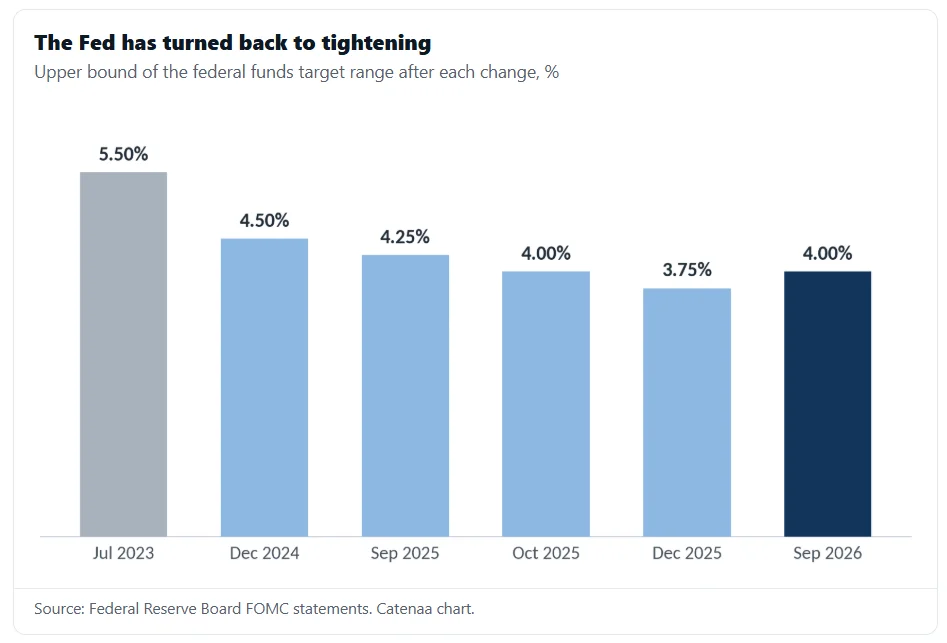
The timing matters. Cook spoke less than two weeks after the Fed raised rates for the first time since 2023. On the same day, the 10-year Treasury yield closed at a 19-year high.
How Lisa Cook sees AI and inflation
Cook began with prices for AI-related goods. Chips, computers and software have surged in cost over the past year, she said.
At first, much of that reflected a shift in demand toward one sector. In her view, such pressure should fade as supply chains adjust. She added that fighting it with interest rates could be a mistake.
However, she now sees the pressure spreading. Data centres need construction workers and energy, which many other industries also use.
Moreover, the wave of spending is far from over. Cook said companies have spent only a small fraction of the $2 trillion in announced data centre plans.
That estimate draws on Fed research that tracks data centre projects one by one. It suggests the building boom could run for years.
She also pointed to a wealth effect. Enthusiasm about AI has driven much of the rise in share prices. That extra wealth appears to be feeding through to household spending.
The signs are already visible in the data, she said. Electricity and water costs are each up around 5% over the past year. Meanwhile, core goods prices are rising at more than a 3% annual pace.
Productivity relief will come later
A productivity boom could eventually cool prices. If AI lets firms produce more at the same cost, supply can grow faster than demand.
Still, Cook does not expect that help to arrive soon enough. She said the gains should bring modest disinflation within the next few years.

The size of any relief is also uncertain. Productivity raises supply, but it can lift demand too, through higher expected wages and returns.
On the other hand, relief could be larger if the gains flow mainly to richer households who save more. It could also be larger if a painful job shake-up makes families more cautious.
What the speech means for jobs
So far, the labour market has held up well. Cook noted that unemployment and layoffs remain low and have been fairly flat for two years.
Even so, some workers are already feeling the effects. She cited evidence of weaker demand in software coding and simultaneous translation.
Recent graduates are also finding it harder to land a first job. That may partly reflect AI’s ability to handle entry-level tasks, she said.
This scenario worries her as a policymaker. If AI causes a skills mismatch, rate cuts would do little to help. Instead, they could simply fuel inflation.
There was upbeat news for smaller firms. Cook cited a Fed survey showing nearly half of small employer firms use AI. Of those, 71% report higher productivity.
She has made similar points before. In a May speech at Stanford, she discussed AI’s risks and opportunities for the financial system.
The policy outlook
Cook voted with the rest of the committee to raise rates by a quarter point on 16 September. The target range now stands at 3.75% to 4.00%.
She said headline inflation reached an estimated 3.8% in the year to August, almost double the Fed’s goal. Core inflation, which excludes food and energy, was about 3.4%.
In addition, she expects further pressure from the AI buildout and higher oil prices. The conflict in the Middle East has disrupted supply chains as well.
Her outlook fits the Fed’s latest economic projections. Officials expect PCE inflation of 3.7% this year and a median funds rate of 4.1% by December.
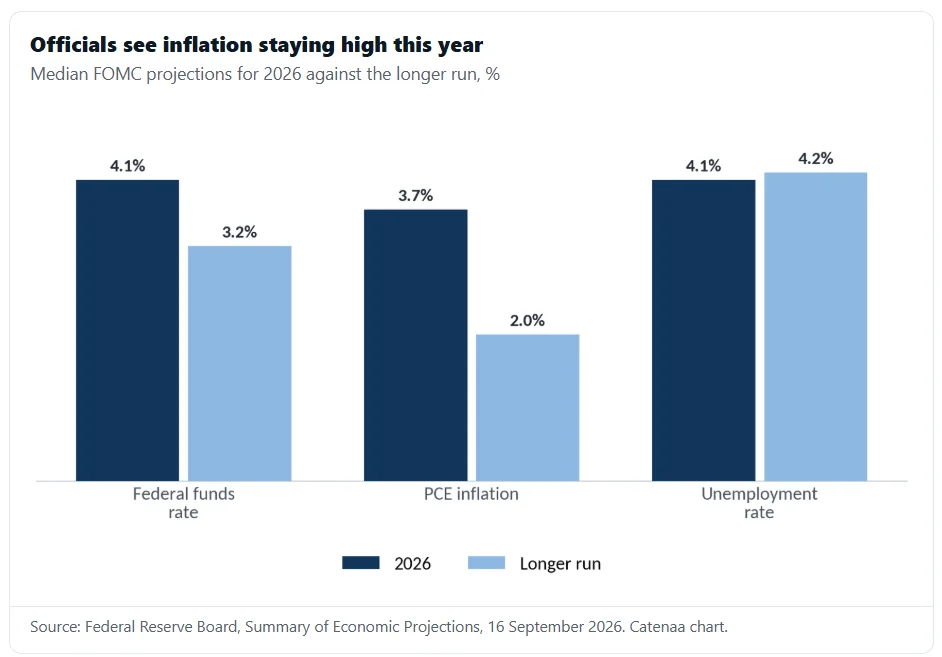
That median points to one more increase this year. Cook said she will consider what policy rate the economy needs, and she will watch the data closely.
The next Fed meeting runs from 27 to 28 October. For more, read our coverage of rising Treasury yields and the Federal Reserve. Lisa Cook has made clear that AI now sits at the centre of that debate.