

October 15, 2026 – AI capital spending props up the world economy, yet the Fund warns that circular tech financing, Gulf conflict and record public debt could all undo the gain.

In Summary
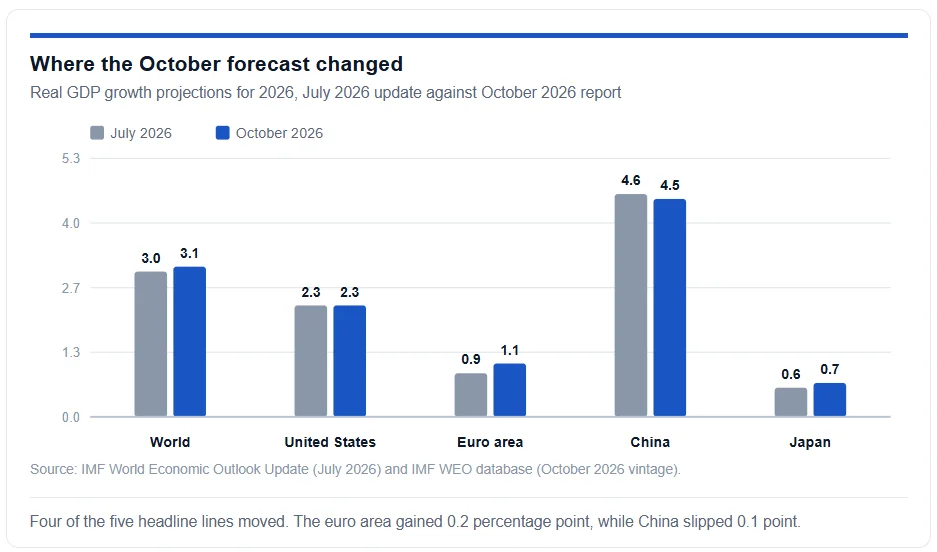
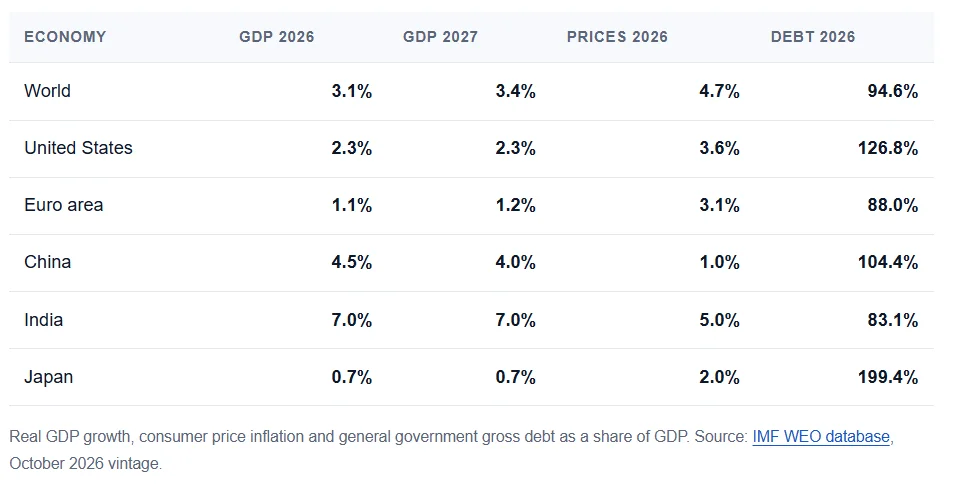
The IMF raised its 2026 world growth projection to 3.1%, up from 3.0% in July, and kept 2027 at 3.4%.
AI related investment added about 0.5 percentage point to US growth in 2025, and private AI spending could pass $2 trillion globally this year.
The euro area won the only sizeable upgrade, rising to 1.1% from 0.9%, while China slipped to 4.5%.
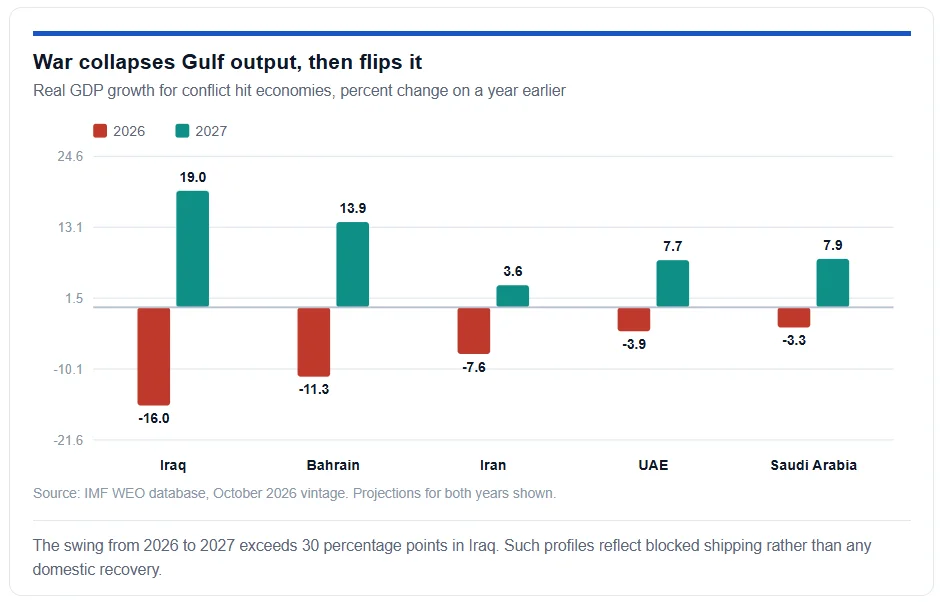
Gulf economies take the deepest hit, with Iraq contracting 16.0% and Bahrain 11.3% in 2026.
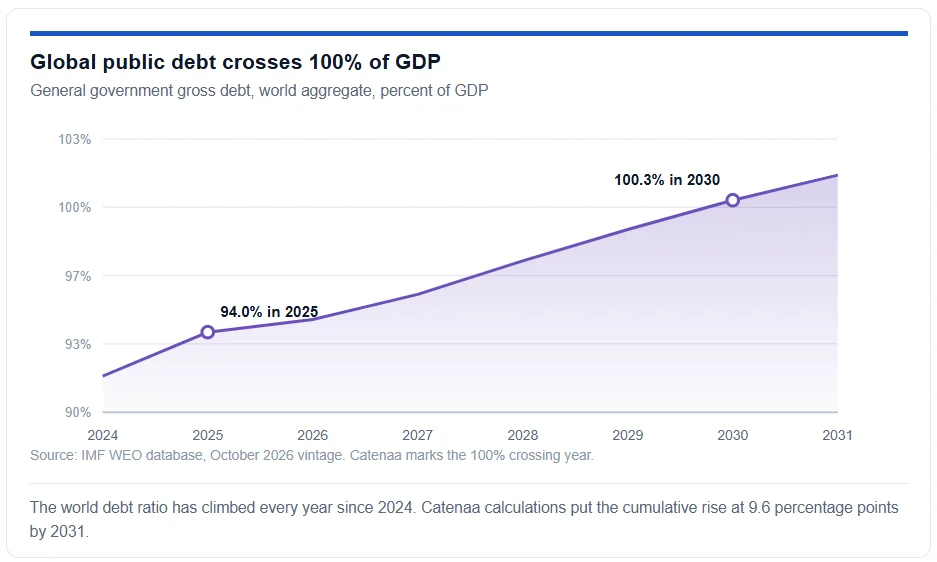
World public debt reaches 94.6% of GDP in 2026 and passes 100% by 2030, led by the United States at 145.0% in 2031.
The latest IMF global growth forecast puts world output up 3.1% in 2026. That reading beats the 3.0% the Fund published in July. Moreover, the Fund held its 2027 projection steady at 3.4%. Growth thus cools from 3.5% in 2025, yet the downgrade cycle has stalled.
What the IMF global growth forecast shows
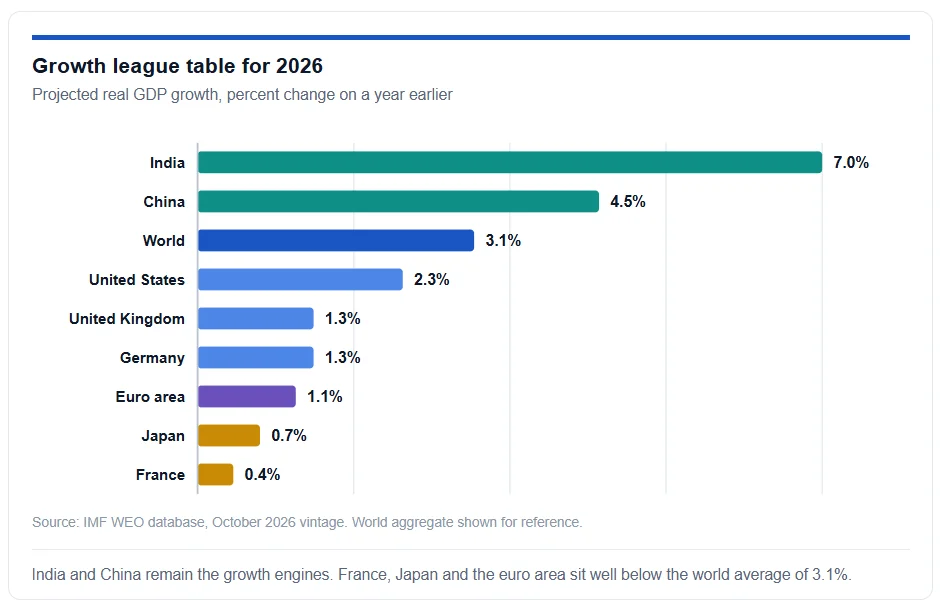
Rich economies drive much of the upgrade. The United States grows 2.3% this year and again in 2027. Meanwhile the euro area manages just 1.1%. France grows only 0.4%, while Germany rebounds to 1.3%. Among big emerging markets, India leads at 7.0% for two straight years. China, by contrast, cools to 4.5% in 2026 and 4.0% in 2027. Brazil grows 2.2%, while Mexico manages just 1.5%.
Japan barely moves, with growth of 0.7% in both years. Korea jumps to 3.3%, and Vietnam tops the regional table at 8.4%. Still, the Fund sees world growth drifting back toward 3.1% by 2030. In other words, the upgrade buys time rather than a new trend.
Asian hosts bring a mixed picture to the Bangkok meetings. Thailand grows only 2.1% this year and next. Indonesia holds steady at 5.1%, while Malaysia reaches 5.2%. Singapore grows 5.0% in 2026, then slows to 3.0%. Sri Lanka, meanwhile, grows 4.0% before easing to 3.7%.
AI spending does the heavy lifting
Tech capital spending explains much of this strength. AI related spending added about 0.5 percentage point to US growth in 2025, according to the Fund’s own review. Also, private AI spending could top $2 trillion worldwide in 2026, by some estimates. The Fund warns that a small group of firms funds much of that build. Those firms act as each other’s clients, backers and lenders. So trouble at one of them could travel fast.
Investors should note how narrow that spending base has become. A reckoning could follow fast if returns fall short in 2027. Yet higher real rates would worsen debt maths for weak states long before any gains show up.
War still scars the Gulf
War in the Middle East cuts deep into regional output. Iraq contracts 16.0% in 2026 before a 19.0% rebound in 2027. Bahrain shrinks 11.3%, then recovers 13.9% the next year. Iran drops 7.6% while inflation there hits 78.6%. Saudi Arabia and the United Arab Emirates also shrink this year. However, both rebound hard in 2027.
Debt climbs toward a grim marker
Public debt now poses the clearest risk to this outlook. Global general government debt reaches 94.6% of output in 2026. By 2030 the Fund expects that ratio to break 100%. United States debt climbs faster still, from 126.8% to 145.0% by 2031. Japan stays far higher at 199.4%, although its ratio keeps falling. India’s ratio also drops, reaching 75.1% by 2031. Interest costs thus squeeze other spending as ratios rise.
What markets should watch next
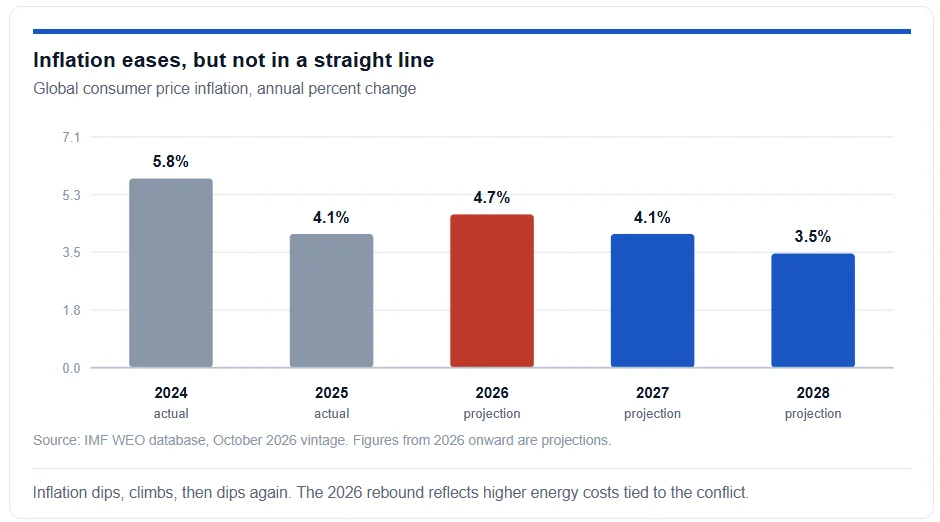
Inflation makes life harder for central banks. Global consumer prices rise 4.7% in 2026 before easing to 4.1%. So rate cuts may come later than traders assume. The Fund also flags hedge fund leverage in its October stability report. Hedge funds now run about $13 trillion, more than triple their 2013 level. In short, this upturn looks real, but its base looks very narrow.
Price pressure also varies a lot by region. United States inflation runs at 3.6% in 2026, above the euro area at 3.1%. Britain sits at 3.3%, whereas China records just 1.0%. Turkey remains the clear outlier, with prices rising 31.2%. Such gaps therefore keep policy paths far apart.
Market plumbing draws fresh notice too. The stability report gives a full chapter to tokenised assets and their new risks. It also frames its first chapter around dangers that sit beneath calm markets. Crypto markets thus enter this cycle with watchdogs eyeing leverage.