

Catenaa, Wednesday, September 23, 2026- Visa is moving to stop payment processors from classifying memecoin purchases as digital media, closing a payment route that allowed credit card users to earn ordinary rewards on cryptocurrency purchases.
The change was reported by Crypto in America, citing a source familiar with the matter and correspondence reviewed by the publication.
Visa has not publicly announced the change.
The reported action centers on transactions powered by crypto infrastructure company Crossmint through apps including Fomo and Robinhood Wallet.
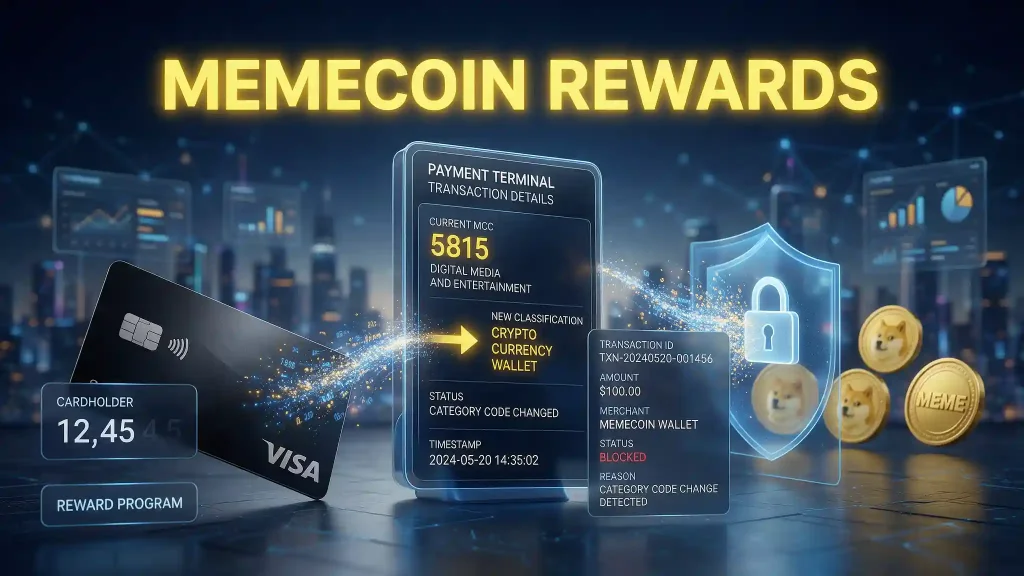
Those purchases were processed under merchant category code 5815, or MCC 5815, which is intended for digital media such as electronic books, movies, artwork and music.
That classification allowed some memecoin purchases to pass through credit card systems without the indicators normally attached to cryptocurrency transactions.
As a result, cardholders could receive ordinary credit card rewards, including points or cash back, depending on their issuer.
The issue came to wider attention after a September 1 investigation by The Block tested Crossmint-powered purchases on Fomo and Robinhood Wallet.
The publication bought memecoins using Visa and Mastercard credit cards through Apple Pay and found the transactions were categorized as digital media.
The transactions also earned normal credit card rewards.
Crossmint provides the checkout infrastructure used for the transactions, while Checkout.com handled payment processing for the Visa transaction examined by The Block.
Crypto in America reported that Visa has since told processors, including Checkout.com, that the digital media classification is inappropriate for memecoin purchases.
Processors were reportedly given a grace period to discontinue the practice.
That period is expected to expire this week, after which affected purchases would have to be processed under Visa’s rules for cryptocurrency transactions.
The change could remove the ability of customers to earn ordinary rewards on those purchases.
Crossmint’s memecoin checkout remained available through Fomo and Robinhood Wallet when The Block checked the services on September 19.
Crossmint said it remained in good standing with Visa, Mastercard and its other payment partners.
The company said its procedures for processing digital goods had not changed, but indicated it would adjust them if network guidance changed.
The dispute illustrates how merchant category codes can affect more than the description consumers see on a card statement.
Banks and card networks use the codes to identify the type of business involved in a transaction and apply relevant rules, controls and rewards policies.
The Block’s original investigation found that the tested transactions also lacked special indicators showing that cryptocurrency assets were involved.
JPMorgan Chase reviewed one of the Visa transactions and said it believed the digital media classification was inappropriate.
The bank also determined that the transaction should not have earned card rewards and referred the matter to Visa.
Crossmint defended its approach by drawing a distinction between certain memecoins and other cryptocurrencies.
The company referred to US Securities and Exchange Commission staff guidance that compared some memecoins with collectibles rather than securities.
That securities interpretation does not automatically determine how a card network must classify a payment.
Payments specialists interviewed by The Block said merchant classification is governed by card-network rules rather than the SEC’s treatment of an asset under securities law.
Questions also emerged over which tokens qualified for Crossmint’s memecoin checkout.
Crossmint describes eligible memecoins as tokens linked to internet memes, characters, events, trends or other humorous themes.
However, The Block found that the service included GENIUS, the native token of non-custodial trading platform Genius Terminal.
The token did not appear to originate from an internet meme or cultural trend.
GENIUS and another token, DEGEN, later became unavailable through Crossmint’s Apple Pay checkout after the publication questioned their classification.
The case has also attracted attention beyond the card networks.
The New York attorney general’s office told The Block earlier this month that it was aware of Crossmint’s product and was reviewing the matter.
Crossmint separately said on September 4 that it had received no subpoena, inquiry letter or other formal or informal notice from the attorney general’s office indicating an investigation.
Those statements are not necessarily contradictory because a regulator can examine an issue without formally contacting the company involved.
Mastercard has not publicly said whether it will impose a similar classification requirement on processors handling Crossmint-powered memecoin purchases.
Checkout.com also had not publicly detailed any changes to its handling of the transactions when the report was published.
The dispute comes as card networks, banks and crypto companies increasingly intersect through wallets that allow users to purchase digital assets using familiar payment methods.
Apple Pay and Google Pay integrations can make the transaction appear similar to an ordinary online purchase from the customer’s perspective.
Behind that checkout, however, payment networks still depend on transaction codes and indicators to determine what is being purchased.
Those classifications can affect fees, fraud controls, regulatory procedures and whether a cardholder qualifies for rewards.
The Crossmint case shows how those technical distinctions can become important as crypto purchases move into conventional payment interfaces.
For users, the reported Visa change does not mean memecoin purchases through Crossmint must stop.
It changes how those transactions would be identified and processed within Visa’s payment network.
If the reported instructions take effect as described, affected memecoin purchases would be treated as cryptocurrency transactions rather than ordinary digital-media purchases.
That would remove the classification that allowed some buyers to receive standard credit card rewards while purchasing crypto assets.