

November 29, 2026 – An 8-K shows HODL will rely on Coinbase alone from February. Catenaa’s review of 12 spot Bitcoin ETF filings finds 11 already name Coinbase as a custodian.

In Summary
VanEck gave Gemini notice on 16 November to end HODL’s custody and clearing deals, both dated 26 October 2023.
The exit takes effect on or about 16 February 2027, leaving Coinbase Custody as the fund’s only bitcoin custodian.
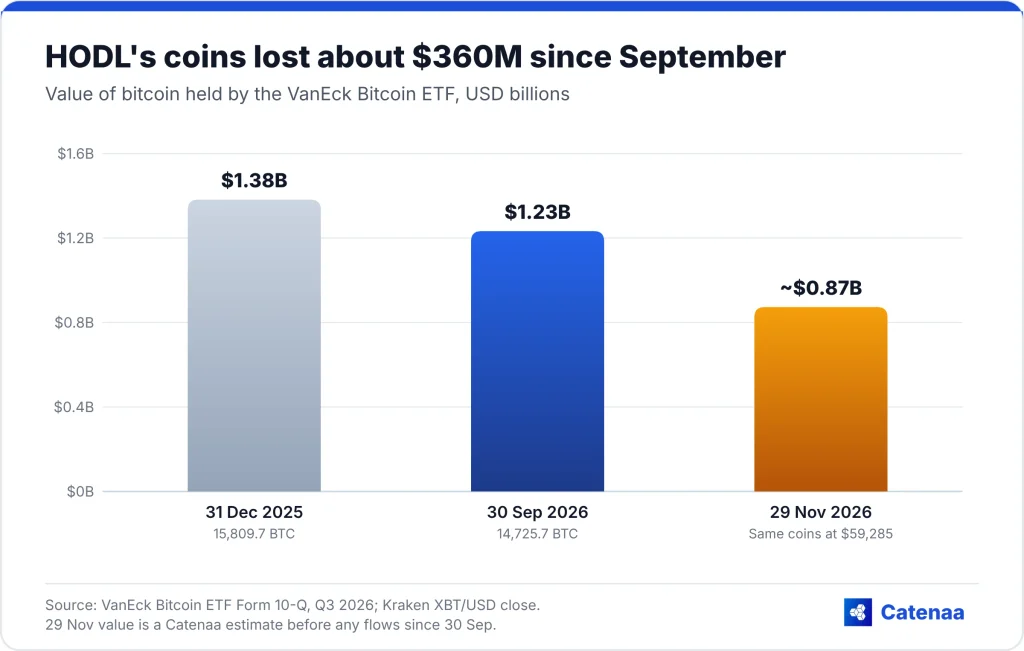
HODL held 14,725.70 BTC worth $1.23 billion on 30 September, down from 15,809.70 BTC at the end of 2025.
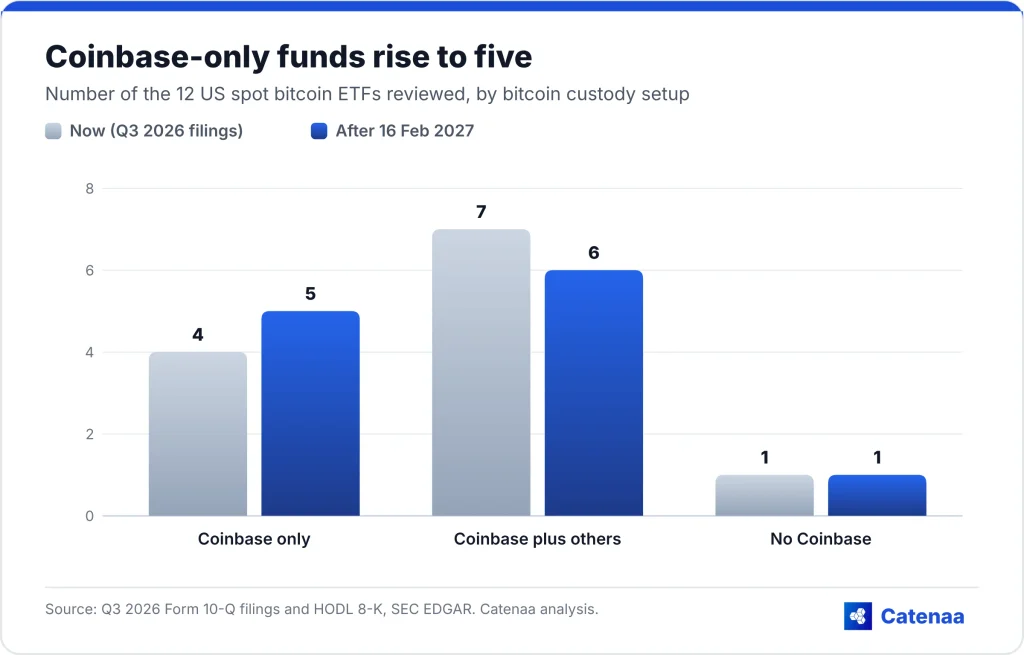
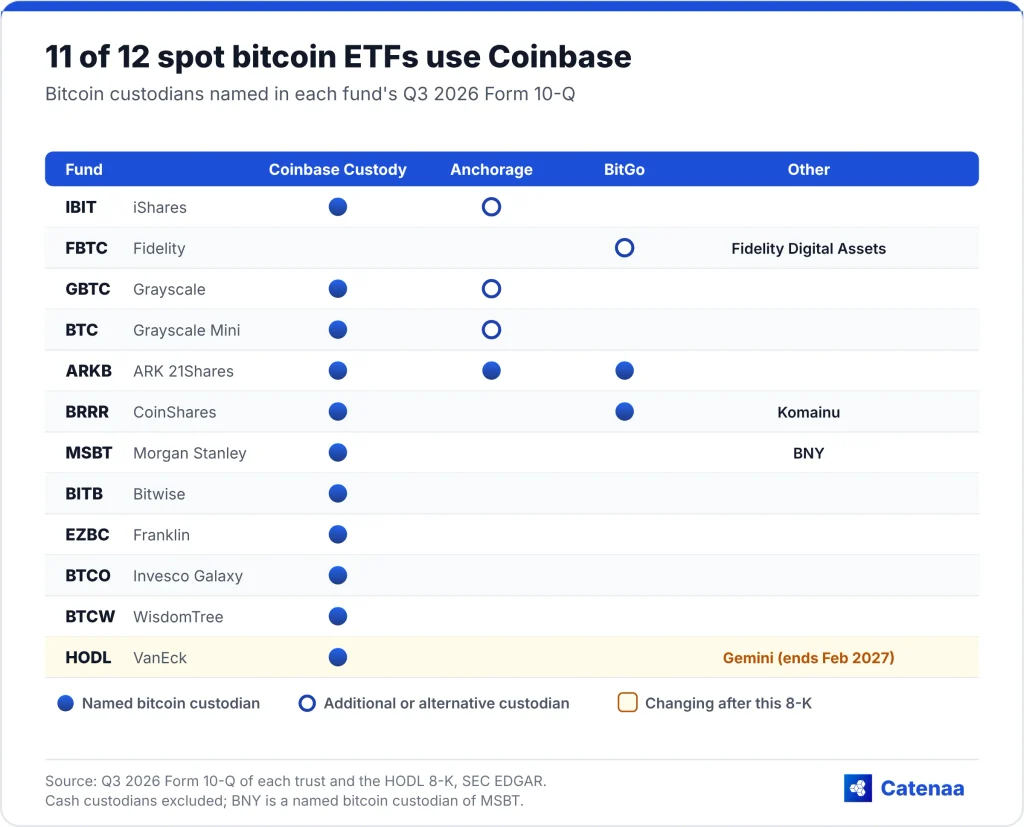
Catenaa’s review of third-quarter filings finds 11 of 12 US spot bitcoin ETFs name Coinbase Custody, and five will use it alone.
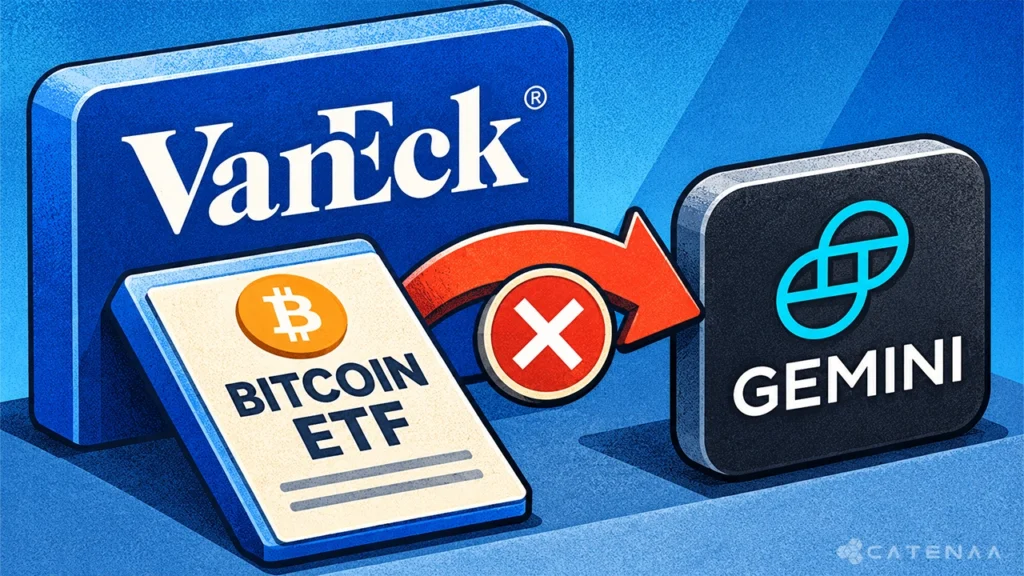
The VanEck Bitcoin ETF (HODL) is dropping Gemini as a bitcoin ETF custodian. On 16 November, sponsor VanEck Digital Assets sent Gemini written notice ending two contracts. An 8-K filed on 19 November shows both deals date from 26 October 2023.
Under the custody deal, Gemini holds the trust’s bitcoin and a cash account. Under the clearing deal, it lets the trust settle trades with other Gemini customers. The exit takes effect on or about 16 February 2027. Until then, Gemini keeps serving the trust.
After that date, Coinbase Custody Trust Company stays on as the fund’s only bitcoin custodian. The filing gives no reason for the change. Neither filing shows how the coins are split between the two custodians today.
What is at stake in the bitcoin ETF custodian switch
HODL held 14,725.70 BTC worth $1.23 billion on 30 September, its latest 10-Q shows. That was down from 15,809.70 BTC at the end of 2025. Shares outstanding also fell, from 57.4 million to 52.1 million during the third quarter. In that quarter, authorised participants redeemed 8.3 million shares and created only 2.95 million.
Prices have swung hard as well. The 10-Q puts bitcoin at $59,037 on 30 June and $83,717 on 30 September. Since then, it has slid back to $59,285 on Kraken as of 29 November. At that price, the same coins would be worth about $873 million, before any flows since September.
The 10-Q also notes a small tie between the firms. VanEck holds less than 1% of the equity in Gemini’s parent company. Separately, VanEck owned about 7% of HODL’s net assets on 30 September. The trust charges a sponsor fee of 0.20%, and the 8-K mentions no change to fees.
A wider custody concentration
The move raises a bigger question. How many spot bitcoin ETFs now lean on one custodian? Catenaa reviewed the third-quarter 10-Q filings of 12 US spot bitcoin ETFs. In total, 11 of the 12 name Coinbase Custody as a bitcoin custodian.
Only the Fidelity fund stands apart. It keeps its bitcoin with affiliate Fidelity Digital Assets and has signed BitGo as a backup, its 10-Q says. Meanwhile, the iShares fund pairs Coinbase with Anchorage Digital Bank as an additional custodian. The two Grayscale trusts list Anchorage as an available alternative.
Some sponsors spread the load further. The ARK 21Shares fund names Coinbase, BitGo and Anchorage. The CoinShares fund uses Coinbase, BitGo and Komainu, while the Morgan Stanley trust pairs Coinbase with BNY. By contrast, four funds name Coinbase as their only bitcoin custodian: Bitwise, Franklin, Invesco Galaxy and WisdomTree. HODL will become the fifth in February.
Why custody choice matters
Custody sits at the heart of a spot ETF. The custodian controls the keys to every coin behind the shares. So an outage or legal problem at one firm could reach many funds at once.
Even so, the filings show sponsors still pick Coinbase most often. Backup custodians such as Anchorage and BitGo offer one way to spread that risk. For HODL holders, little changes before February. After that, the fund will join the group with a single custodian. Investors who care about that risk can check the custody section of each fund’s filings. The exit also ends the clearing link to Gemini’s customer base. After February, HODL will rely on its Coinbase prime broker setup. The filing does not say whether VanEck plans to add a new backup custodian.