


October 05, 2026 – Bitcoin is up about 2% in October so far. History favours the month, but this week’s fund flows and a crowded data calendar argue for patience.

In Summary
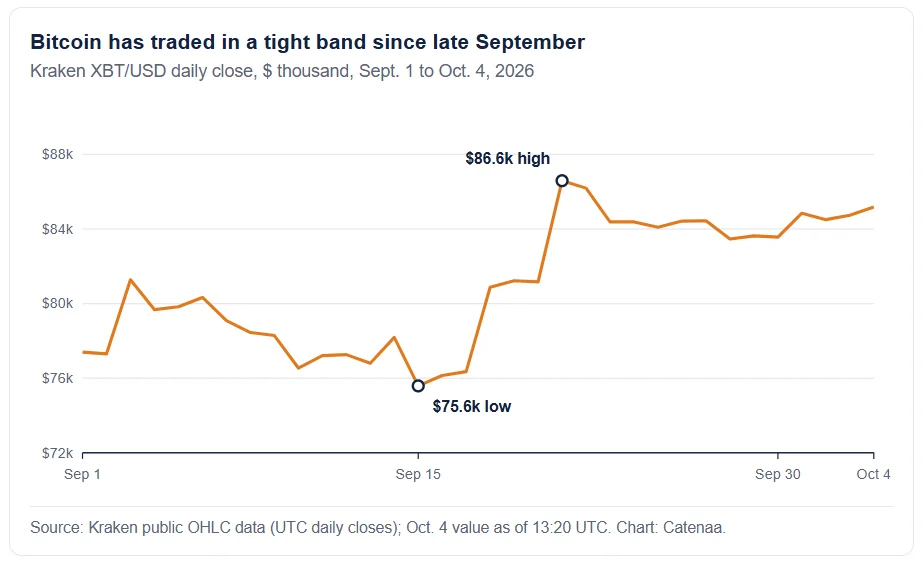
Bitcoin traded near $85,200 on Sunday, up about 2% from its September 30 close.
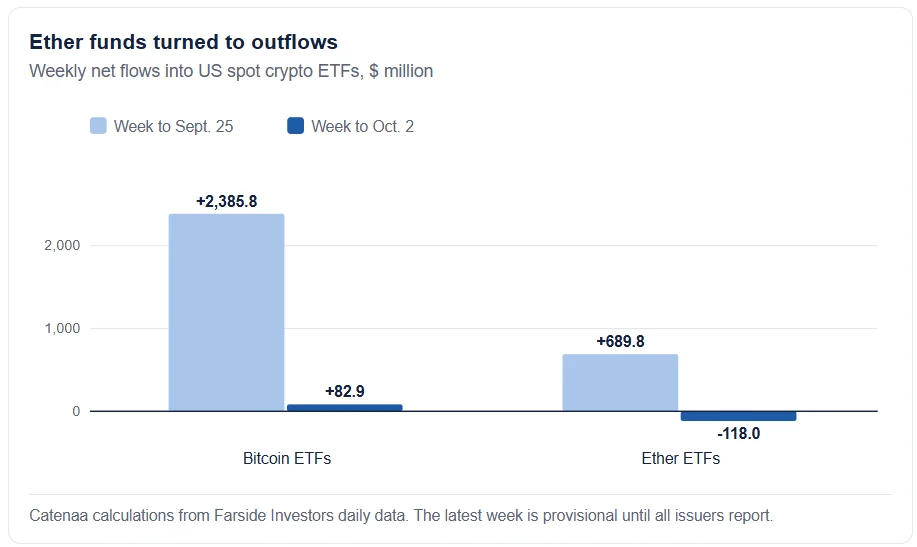
US spot bitcoin ETFs took in about $82.9 million last week, down from $2.39 billion a week earlier.
Spot ether ETFs lost about $118 million over the same week.
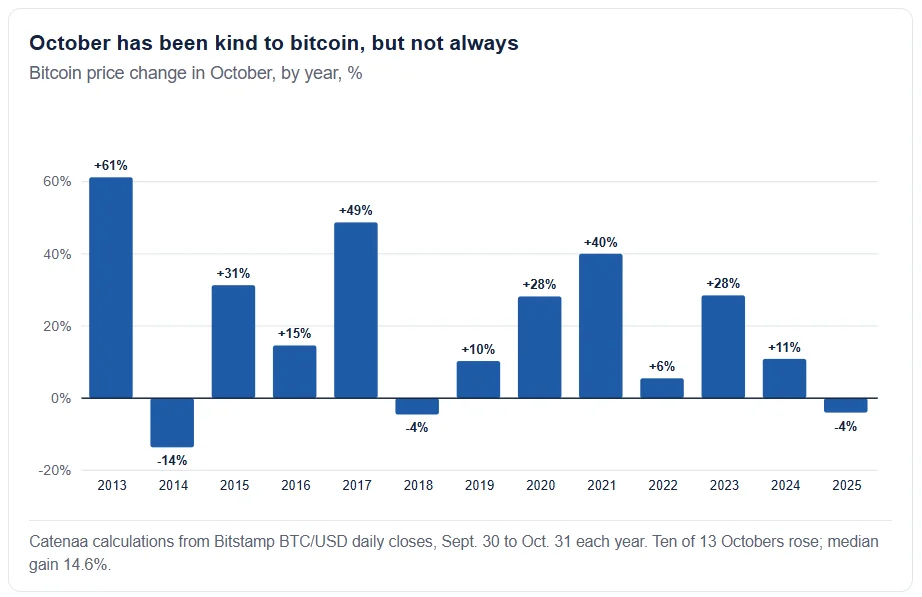
Bitcoin has risen in 10 of the past 13 Octobers, but it fell last October.
Uptober has started without fireworks. Bitcoin traded near $85,200 on Kraken at 13:20 UTC on Sunday, according to the exchange’s public market data. That leaves it up about 2% from its September 30 close of $83,565. The quiet start follows a solid September, when bitcoin gained 6.4% on Kraken prices.
Its weekly range has also narrowed. Since September 28, bitcoin has traded between an intraday low of $82,566 and a high of $87,229. Its 30-day realised volatility has eased to about 37% on an annualised basis, Catenaa calculations show.
What History Says About Uptober
October carries a strong reputation among crypto traders, and the record mostly supports it. Daily closes from Bitstamp show bitcoin rose in 10 of the 13 Octobers from 2013 to 2025. The median October gain was 14.6%. That record helped earn the month its Uptober nickname among traders.
Some Octobers were dramatic. Bitcoin jumped 61.2% in October 2013 and 48.7% in October 2017. More recently, it gained 28.5% in 2023 and 10.9% in 2024.
However, the pattern is not a promise. Last October, bitcoin fell 4.0%, and it also slipped in 2014 and 2018. In other words, Uptober works as a tailwind, not a guarantee.
The fourth quarter as a whole shows a similar pattern. Bitcoin rose in eight of the past 13 fourth quarters, with a median gain of 47.5%. Yet the final quarter of 2025 brought a 23.3% loss.
This year’s path also matters. Bitcoin ended 2025 near $87,496 and sank to about $58,526 by the end of June. Since then, it has recovered most of that ground, helped by a 42.8% third-quarter rally. Even so, bitcoin still trades about 2.6% below where it began the year.
ETF Flows Cool as Ether Funds Bleed
Fund flows tell a more cautious story. From September 28 to October 2, US spot bitcoin ETFs drew about $82.9 million in net inflows. That is based on Farside Investors data. The week before, they took in roughly $2.39 billion.
Day to day, the pattern was choppy. September 30 brought $148.7 million of net outflows, led by Fidelity’s fund. Then, on October 1, BlackRock’s fund pulled in $195.6 million and lifted the total back above zero.
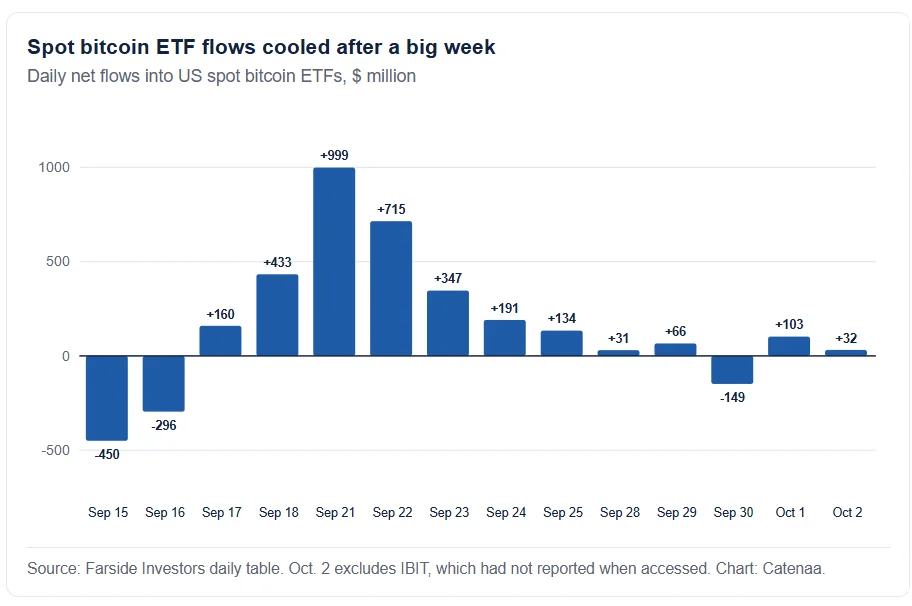
That weekly figure may still change, because BlackRock had not posted its October 2 flow when Catenaa checked. Even so, the slowdown from the prior week is clear.
The longer view remains supportive. Since their January 2024 debut, US spot bitcoin ETFs have absorbed about $57.7 billion in net inflows. BlackRock’s fund alone accounts for roughly $65.6 billion, while Grayscale’s converted trust has lost about $27.9 billion.
Ether funds fared worse. US spot ether ETFs lost about $118 million last week, according to Farside’s ether table. By contrast, they had gathered close to $690 million in the week to September 25. Outflows hit four of the last five sessions, with Fidelity’s ether fund among the hardest hit.
Altcoins Follow Bitcoin’s Lead
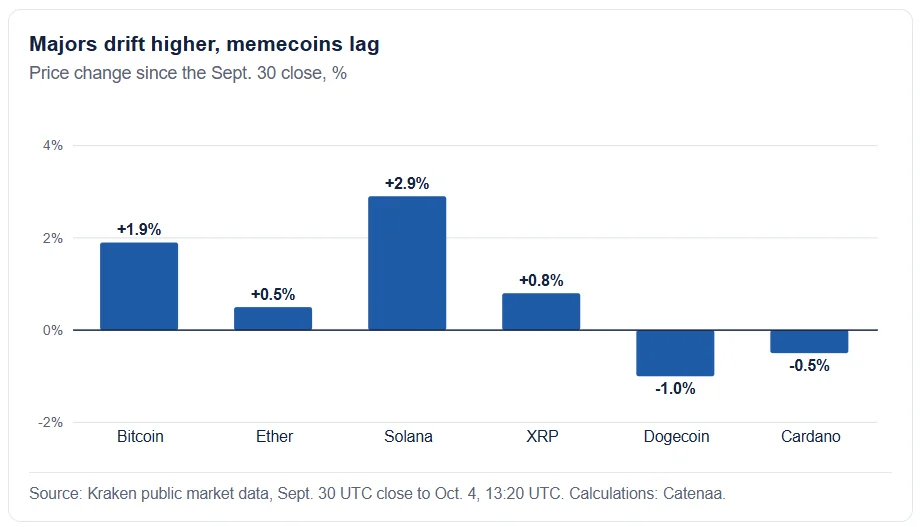
Major tokens have tracked bitcoin closely this month. Since the September 30 close, solana has gained about 2.9% to near $121. Ether, meanwhile, has added 0.5% to about $2,698. XRP has risen 0.8% to near $1.50.
Ether’s weak fund flows match its longer slide. On Kraken data, ether is down about 9% this year, more than three times bitcoin’s decline over the same stretch.
Meanwhile, some higher-risk names have lagged. Dogecoin has slipped about 1.0%, and cardano has edged down 0.5%. That split suggests traders still prefer liquid majors over memecoins.
Macro Data Will Test Uptober
The next two weeks bring heavy macro risk. Minutes from the Federal Reserve’s September meeting arrive on Wednesday. After that, the Bureau of Labor Statistics publishes September consumer prices on October 14.
Both releases could move bond yields, which have weighed on risk assets this autumn. The 10-year Treasury yield closed at 5.28% on Friday, near its highest level since 2002. Policymakers then meet again on October 27 and 28.
For now, bitcoin sits about 2% below its October 2 high. A clean break above $87,000 would revive the Uptober narrative and could draw fresh ETF demand. Conversely, renewed ETF outflows could keep prices pinned in their current range. Either way, this year’s Uptober will likely hinge on data from Washington, not on the calendar alone.