

November 24, 2026 – Strategy sold $176.7 million of stock last week, yet only $29.6 million went into bitcoin. Most of the cash retired its 12% STRC preferred.

In Summary
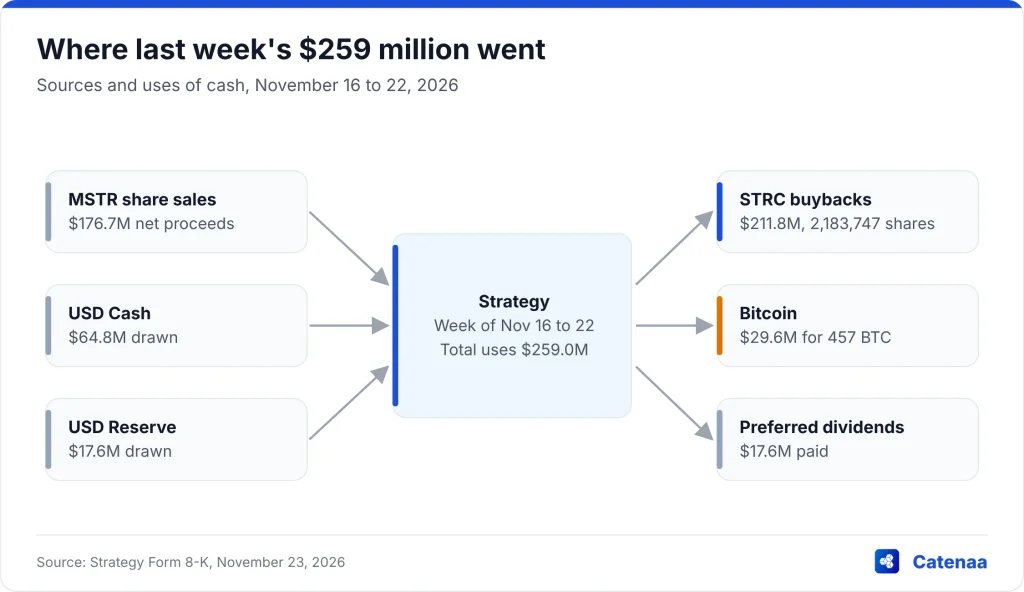
Strategy spent $211.8 million on STRC buybacks and $29.6 million on 457 BTC in the week to November 22.
The board lifted the buyback limit to $4.0 billion and shifted $1.0 billion of reserve cash to USD Cash.
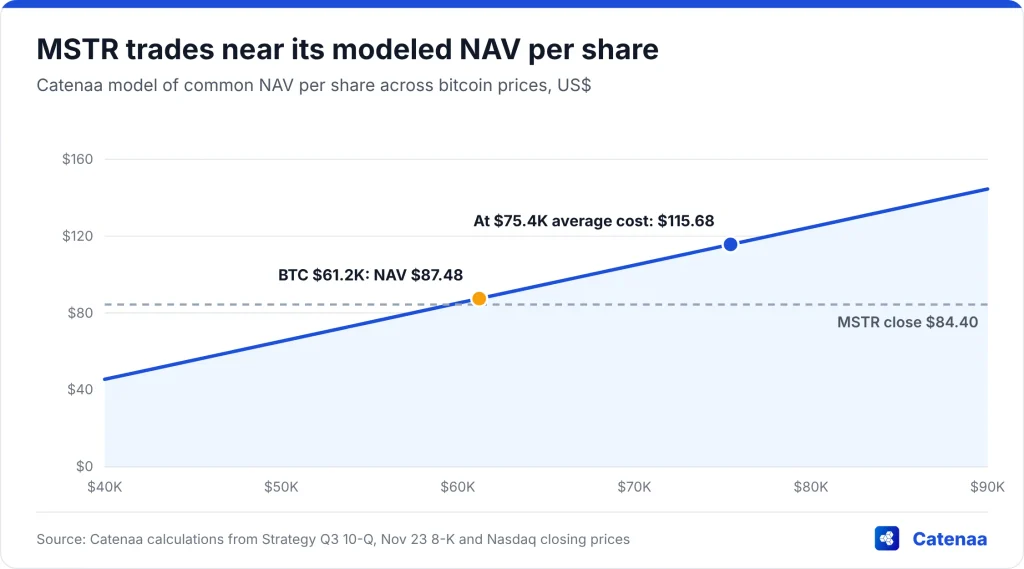
A Catenaa model puts common NAV near $87 per share at $61,214 bitcoin, close to the $84.40 price.
Retiring 12% STRC below par trims fixed costs. However, bitcoin per share slipped and reserve cover fell to about 30 months.
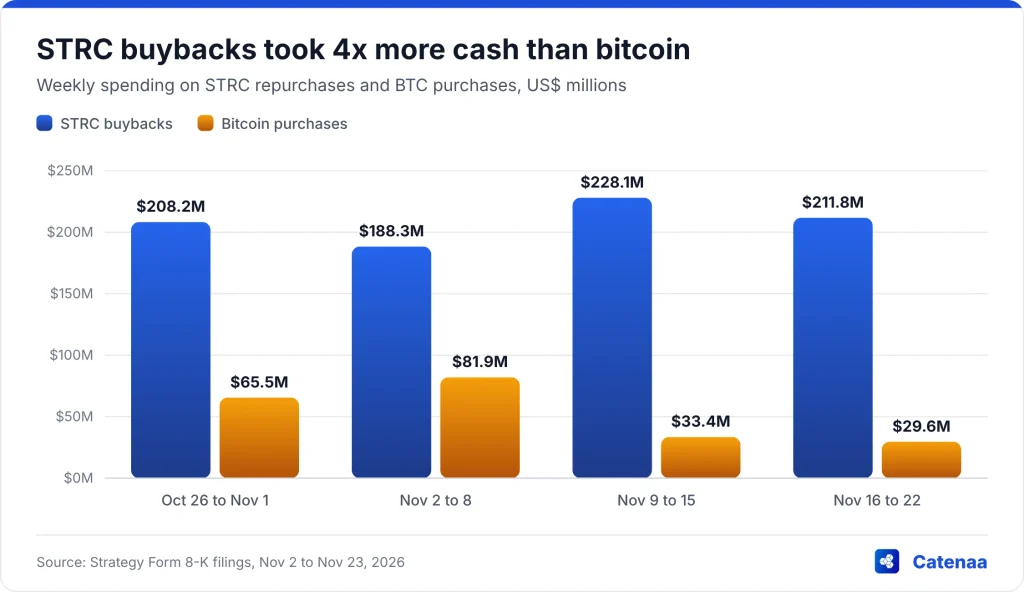
Strategy STRC buybacks took the lead in the company’s capital plan last week. A November 23 SEC filing shows Strategy bought 457 BTC for $29.6 million between November 16 and 22. Over the same week, it repurchased 2,183,747 shares of its STRC preferred stock for $211.8 million. That is about seven dollars of buybacks for every dollar spent on bitcoin.
Where the Money Went
Strategy sold 1,925,676 class A shares through its at-the-market program for $176.7 million in net proceeds. Of that sum, $29.6 million bought bitcoin and the rest funded STRC buybacks. In addition, the company drew $64.8 million of USD Cash for repurchases. It also used $17.6 million of its USD Reserve to pay preferred dividends.
The board also raised its digital credit repurchase authorization from $3.0 billion to $4.0 billion. After the increase, $1.12 billion remains available. Meanwhile, the board approved shifting up to $1.0 billion from the USD Reserve to USD Cash. As a result, the reserve fell to $3.73 billion, while USD Cash rose to $1.09 billion.
Total holdings now stand at 851,305 BTC, bought for $64.23 billion, or $75,446 per coin. However, bitcoin closed at about $61,214 on November 23, based on Kraken daily prices. At that price, the stack is worth roughly $52.1 billion, or 19% below cost.
Why Strategy STRC Buybacks Took Priority
The answer sits in the cost of the preferred stock. STRC pays a 12.00% annual dividend, and the November 16 filing kept that rate for December. Last week, Strategy paid about $96.99 per share, below the $100 stated amount. Therefore, each dollar spent retired slightly more than a dollar of claims. The week’s buyback alone cuts annual dividends by roughly $26.2 million.
Over four weeks, the pattern holds. Strategy spent $836.4 million on STRC buybacks but only $210.4 million on 2,789 BTC. Consequently, bitcoin per 1,000 common shares slipped from 2.009 on October 25 to about 1.982, by Catenaa’s estimate.
What It Means for NAV per Share
Catenaa built a simple model from the third-quarter 10-Q. It counts $6.71 billion of convertible note principal and about $12.6 billion of preferred stock. Next, it adds $4.82 billion of USD assets. The result is a common NAV of about $87 per share at current bitcoin prices. Notably, the model excludes the software business and any note conversions.
MSTR closed at $84.40 on November 23, according to Nasdaq data. So the stock trades close to that modelled value. In that setting, new shares sold to buy bitcoin add little to bitcoin per share. By contrast, retiring a 12% security below par lifts the residual claim of common holders.
The Liquidity Trade-off
Still, the shift carries a cost. The 10-Q put expected yearly preferred dividends and note interest at about $1.51 billion as of October 25. On that basis, the $3.73 billion reserve covers roughly 30 months, down from about 38 months before the transfer. Company policy requires at least 12 months of cover. Even after the transfer, the reserve sits well above that floor.
Moreover, a lower bitcoin price can shrink the cushion fast. Each $10,000 move in bitcoin shifts modelled NAV by about $19.80 per share. Senior claims, net of USD assets, equal roughly $17,070 per bitcoin held.
For now, Strategy STRC buybacks are shrinking fixed charges rather than growing the coin count. Investors will watch two signals next. First, whether STRC trades near $100. Second, whether weekly Bitcoin buying picks up again.
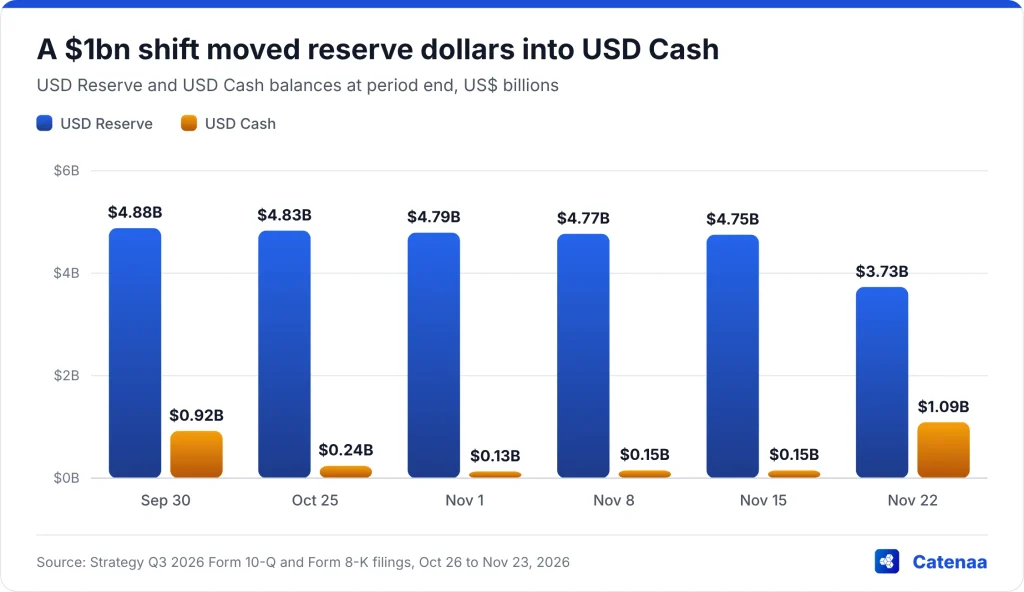
Figure 4. The USD Reserve fell to $3.73 billion after the board approved a reallocation of up to $1.0 billion.