

October 09, 2026 – The NYSE-listed firm’s 12 tokens settle in USDC and carry real shareholder rights, as Wall Street races to bring equities on-chain.

In Summary
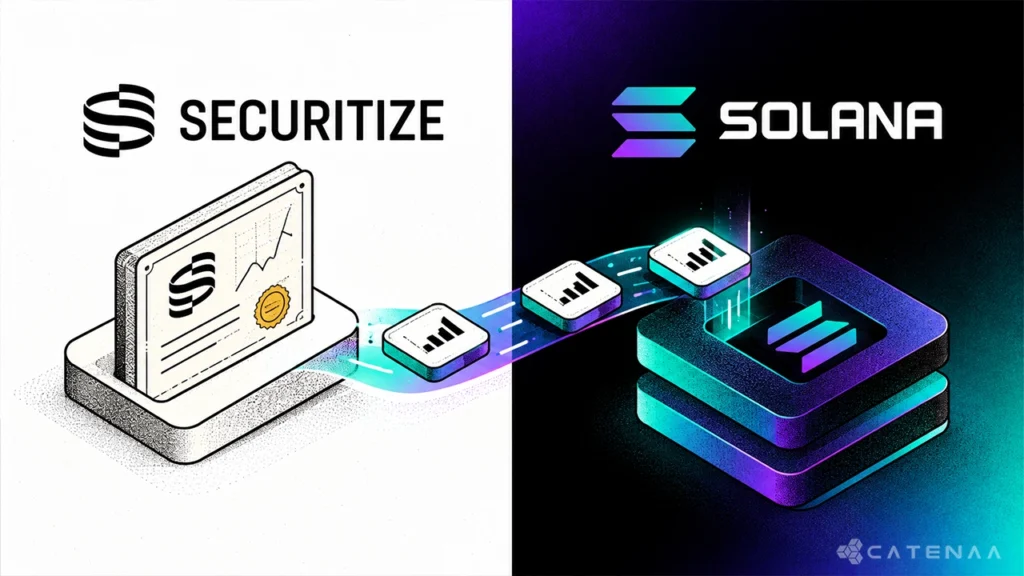
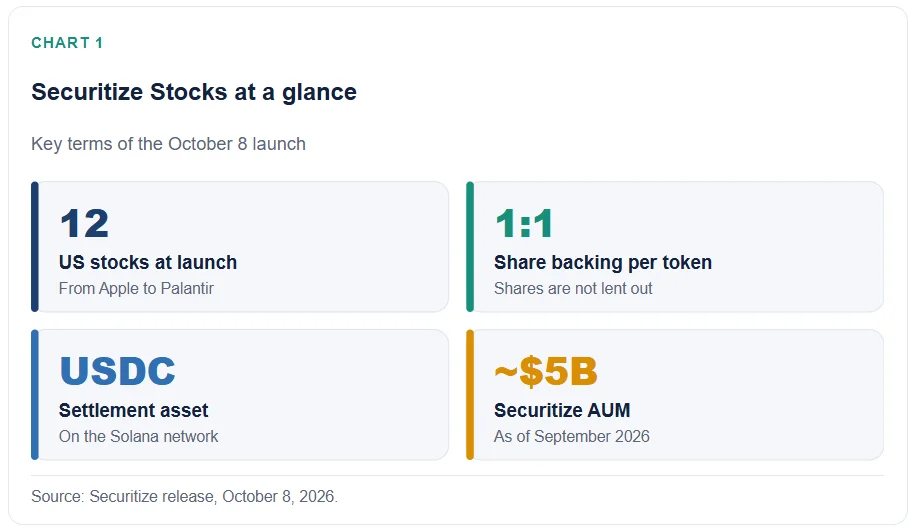
Securitize launched 12 tokenized US stocks on Solana on October 8, with trades settling in USDC.
Each token is a security entitlement backed 1:1 by a share, with dividend and, where applicable, voting rights.
Holders can convert tokens into registered shares, but the 12 issuers have not endorsed the product.
Trading starts in extended hours through a Jump-supported on-chain market, with NYSE and OKXICE venues still pending.
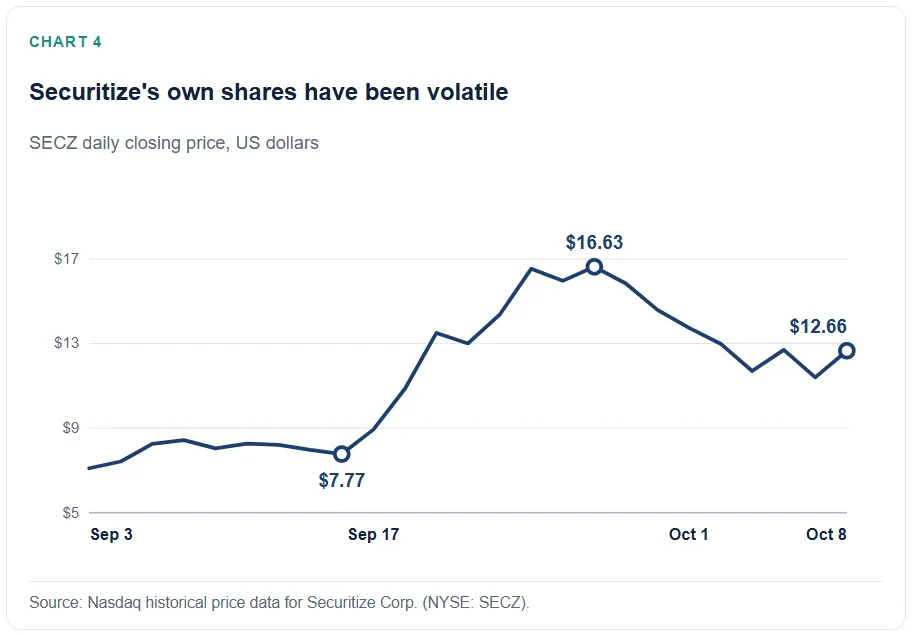
Securitize shares rose 11% to $12.66 on launch day after doubling in the two weeks after the SEC’s exemption.
Securitize has started selling tokenized stocks on Solana, and it says each token carries real shareholder rights. The firm launched 12 US stocks on October 8, with trades settling in USDC. Its pitch is simple: a token should be a stock, not a bet on one.
What Securitize Launched
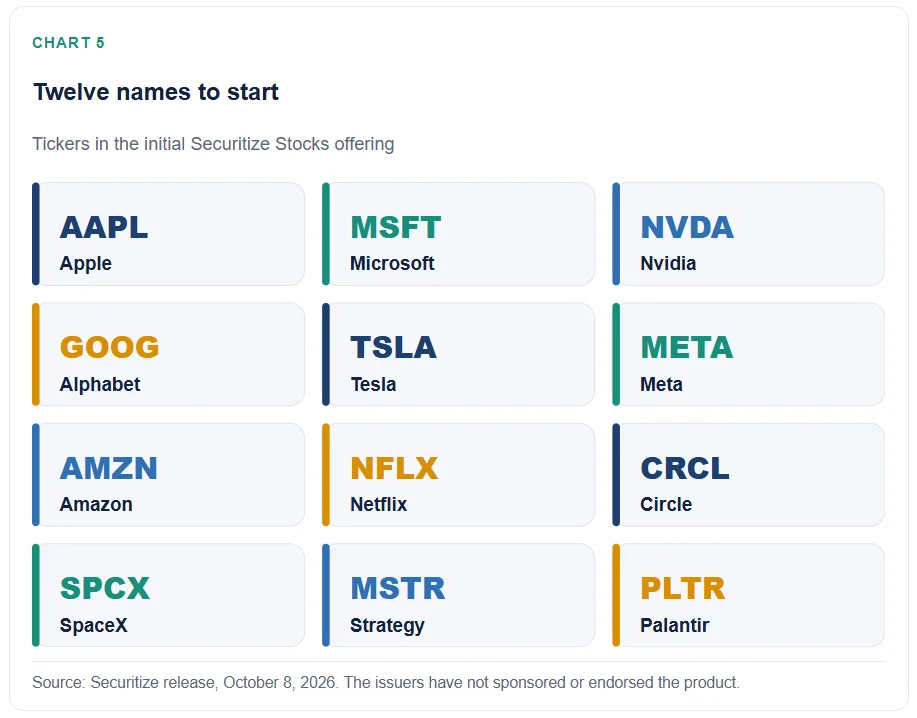
The new product, Securitize Stocks, covers 12 widely held names, according to the company’s announcement. Its list includes Apple, Microsoft, Nvidia, Alphabet, Tesla, Meta and Amazon. Netflix, Circle, SpaceX, Strategy and Palantir complete the set. The mix spans big tech, crypto-linked names such as Circle and Strategy, and newly listed SpaceX.
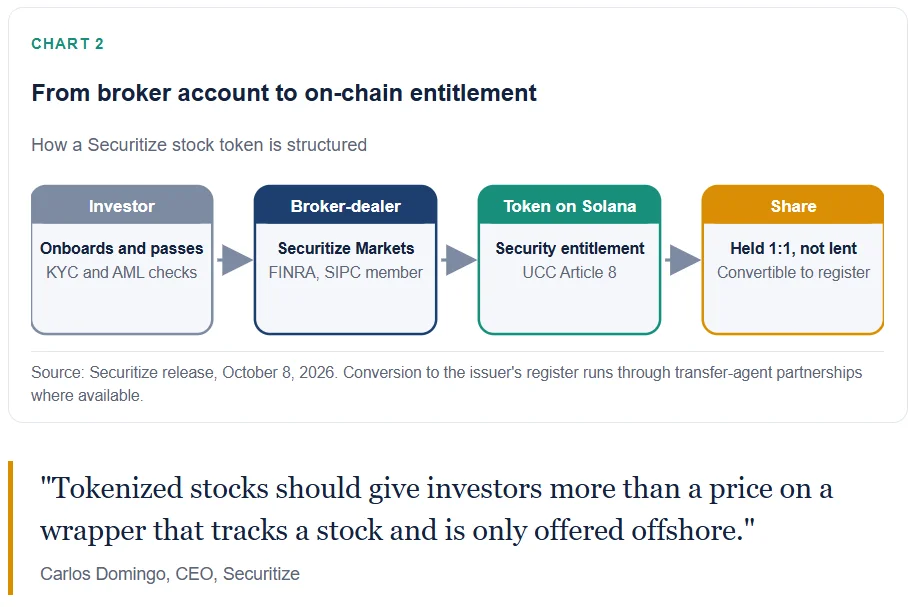
Investors in the US, the European Union and other approved markets can buy the tokens if they qualify. First, they must pass identity checks. In the US, Securitize Markets sells the product. It is a member of FINRA and SIPC. Meanwhile, a separate Securitize unit serves EU clients.
How These Tokenized Stocks Work
A real share backs each token one for one. Legally, it is a security entitlement under Article 8 of the Uniform Commercial Code. That is the same framework that governs shares held in a normal brokerage account.
As a result, holders keep the economic rights of the share, including dividends. Where the share class carries votes, holders keep voting rights too. Securitize says it will not lend out the underlying shares.
Holders can also convert a token into a share on the company’s own register, through transfer-agent partnerships. Securitize calls this a convertible entitlement token. Until holders convert, however, they are not registered shareholders. Notably, the 12 issuers have not sponsored or endorsed the product.
Trading Hours and Venues
Trading runs through Securitize’s own automated market on Solana, with Jump Trading as market maker. It starts in extended hours, and the firm plans to move toward round-the-clock trading.
Settlement is fast as well. Trades settle in USDC on the chain itself. By contrast, a normal US stock trade settles on the next business day. Over time, round-the-clock trading would also let holders react to news outside New York hours.
Other partners hint at wider uses. Ripple Prime plans to support the launch, the release says. Similarly, lending protocol Aave discussed using the tokens as collateral, though no integration is live yet.
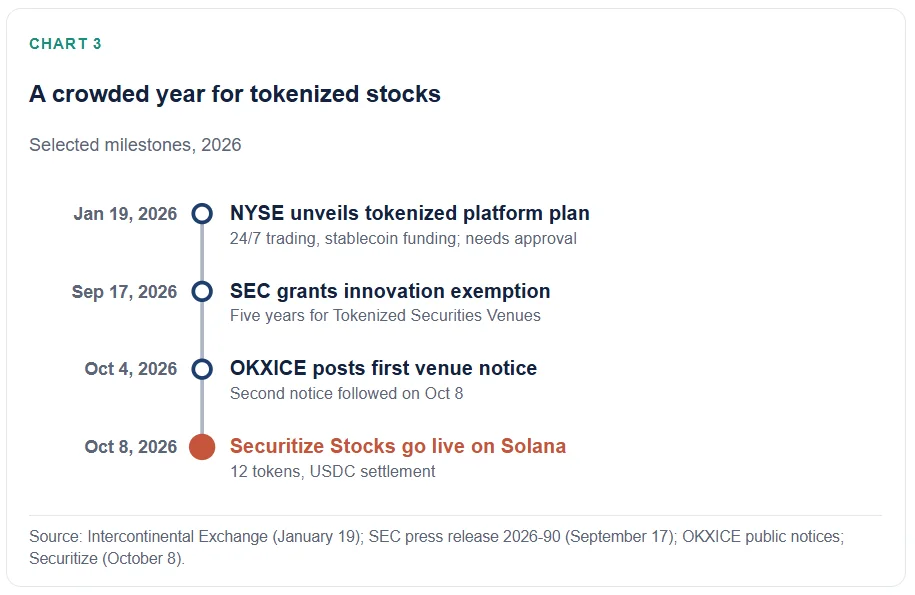
Securitize also expects the tokens to trade on two venues that have not launched yet. The first is a tokenized platform the New York Stock Exchange unveiled in January. That plan promises 24/7 trading of US stocks and ETFs, stablecoin funding and instant settlement, subject to approval. It also lets investors size orders in dollars rather than whole shares.
The second is OKXICE, a joint venture of OKX and NYSE owner Intercontinental Exchange. It has posted public venue notices dated October 4 and October 8. Both venues still depend on regulatory approval, Securitize cautions.
Why the Timing Matters
The launch follows a key regulatory shift. On September 17, the SEC granted an innovation exemption for Tokenized Securities Venues, set to run for five years. Such venues must ensure tokens give holders the same rights as ordinary shares.
The order also caps how many symbols and how much volume these venues can handle. In addition, a venue listing a third-party token must notify the underlying issuer and give it a chance to object.
Investors have noticed the shift. Securitize’s own stock more than doubled from $7.77 on September 16 to $16.63 on September 28. It then gave back ground, before jumping 11% to $12.66 on launch day, Nasdaq data show. About 8 million shares changed hands, well above the 20-day average of 5.2 million. Even so, the stock remains below its 52-week high of $17.01.
What to Watch
Liquidity is the first test. Thin trading would make it hard for big buyers to get in or out. Jump’s quotes will show whether on-chain spreads can match those on regular exchanges. Conversions to registered shares will be another signal, since they show whether the entitlement model works in practice. Regulators, meanwhile, will watch how venues apply the symbol and volume caps.
Securitize reports about $5 billion in assets under management and works with firms such as BlackRock, Apollo and KKR. If tokenized stocks gain traction, that base gives it a head start. For now, the real contest will be over trust, rights and round-the-clock access.