

October 15, 2026 – The Bank of Russia logged Sberbank on 12 October, taking the digital currency exchange register to ten firms in only seven days.
In Summary
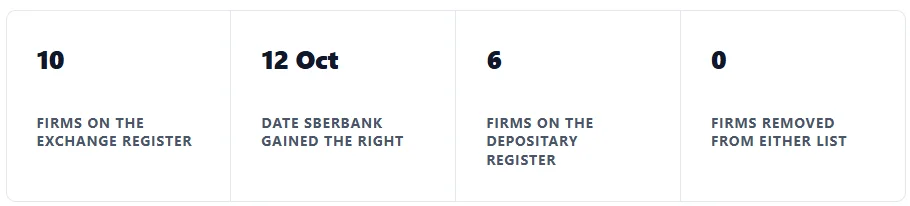
The Bank of Russia added Sberbank to its digital currency exchange register on 12 October 2026.
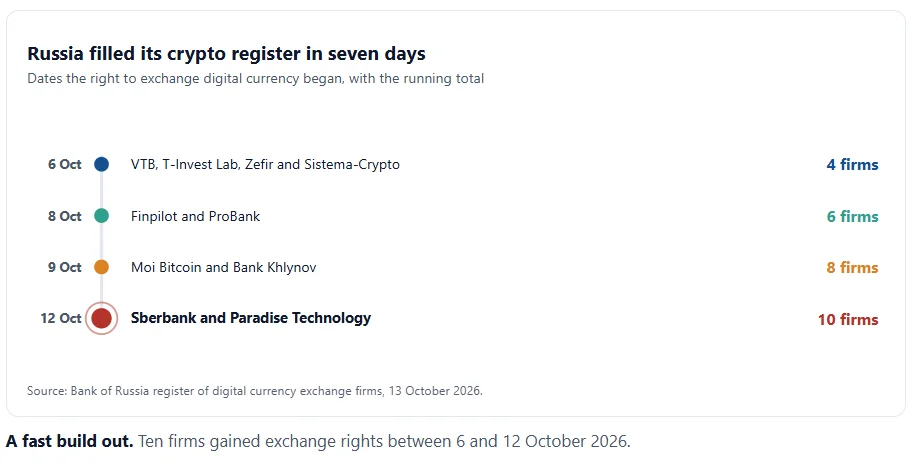
Entries arrived fast, so the list reached ten active firms between 6 and 12 October.
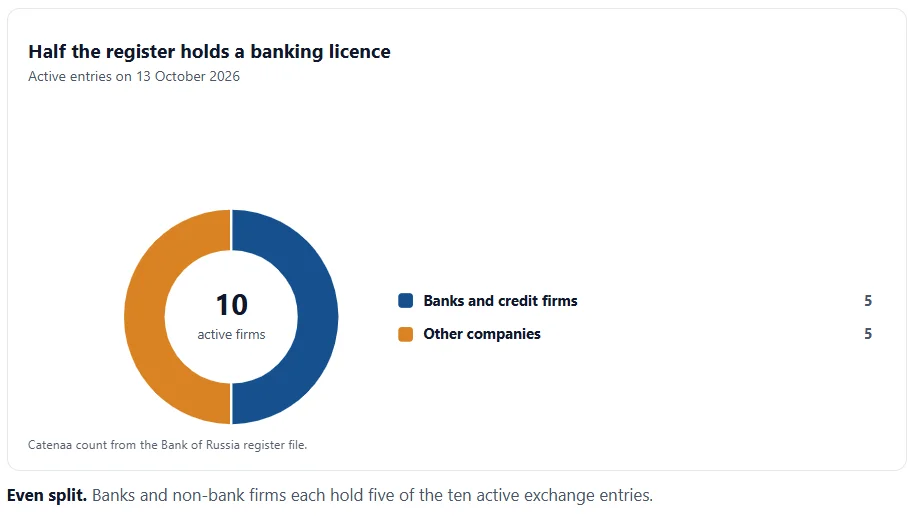
Five entries belong to banks or credit firms, and five belong to other companies.
Sberbank also sits on the digital depositary register, which it joined on 6 October.
A proposed trial regime would limit direct coin trading to investors with RUB 100m in assets.
Russia’s largest lender now sits on the Sberbank crypto exchange register entry list kept by the central bank. The Bank of Russia logged Sberbank on 12 October 2026. That entry grants the right to swap digital currency for clients. Nine other firms already held the same right. So the register reached ten names in just seven days.
Who else made the Sberbank crypto exchange register list
The first four names arrived on 6 October. VTB led that group, alongside T-Invest Lab, Zefir and Sistema-Crypto. Two more followed on 8 October, namely Finpilot and ProBank. Then Moi Bitcoin and Bank Khlynov joined on 9 October. Sberbank and Paradise Technology closed the week on 12 October.
The mix matters. Five entries belong to banks or credit firms, while five do not. Therefore the regulator has opened the door to both camps at once. Small exchange shops now compete beside the country’s biggest lender. Notably, the addresses span Moscow, St Petersburg, Kirov and Ryazan. In short, the register looks national rather than purely state led.
Two registers, one bank
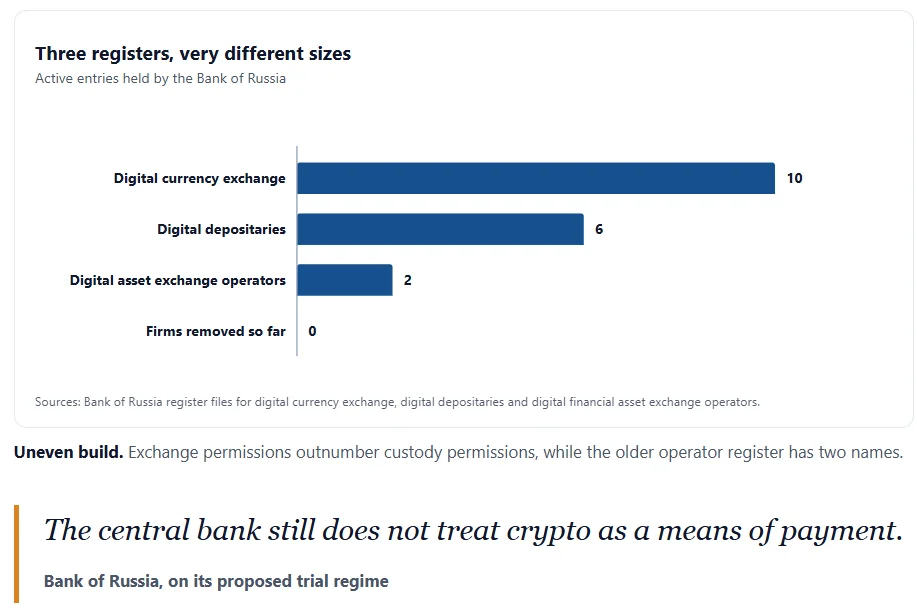
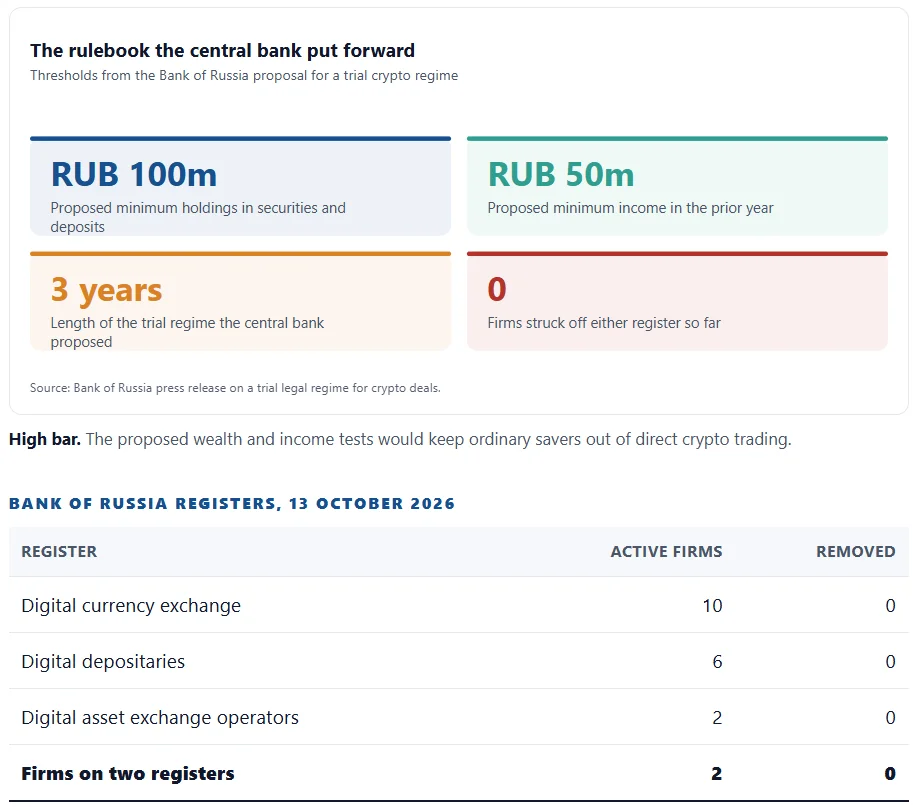
Sberbank actually holds two separate rights. It joined the digital depositary register back on 6 October. That list runs to six names, including VTB, Vaultary, Atomyze, Cloud Infrastructure and TT. Custody and exchange therefore sit under one roof at Sberbank.
A third register looks far thinner. Only two firms hold digital asset exchange operator status. Moscow Exchange gained it in August 2023, and SPB Exchange followed in March 2024. Neither register shows a single removal to date.
What the register actually allows
Entry on the list is a licence to work, not a free market. The Bank of Russia has pushed a trial regime for crypto deals. Under that plan, only the wealthiest investors could trade coins directly. The bar sits at 100 million roubles in securities and deposits. An investor would also need 50 million roubles of income in the prior year.
Firms face rules too. The central bank said it would set requirements based on risk. Moreover, it proposed a ban on crypto settlements between residents outside the regime. Breaches would carry a penalty. In short, the plan ties a new market to a tight leash.
Why the speed looks deliberate
Seven days is quick for any licensing drive. The pattern suggests a prepared queue rather than a rolling review. Russia’s two biggest banks bracket the week, with VTB first and Sberbank last. Smaller firms arrived in between, which keeps the market from looking closed. Furthermore, no firm has lost its place yet, so the early cohort remains intact.
Risks remain for savers. The central bank repeats that coins swing hard in price. It also warns that investors can lose their money. Because the trial regime limits direct access, most retail savers stay outside for now. Qualified investors may instead reach crypto returns through derivatives and digital asset products. Those routes avoid delivery of the coins themselves.
Each file carries a date stamp. So readers can check every count. The register hub publishes the source files, with the depositary list and the operator list beside the exchange file. Policy detail sits in the central bank statement on its trial regime for crypto deals.




