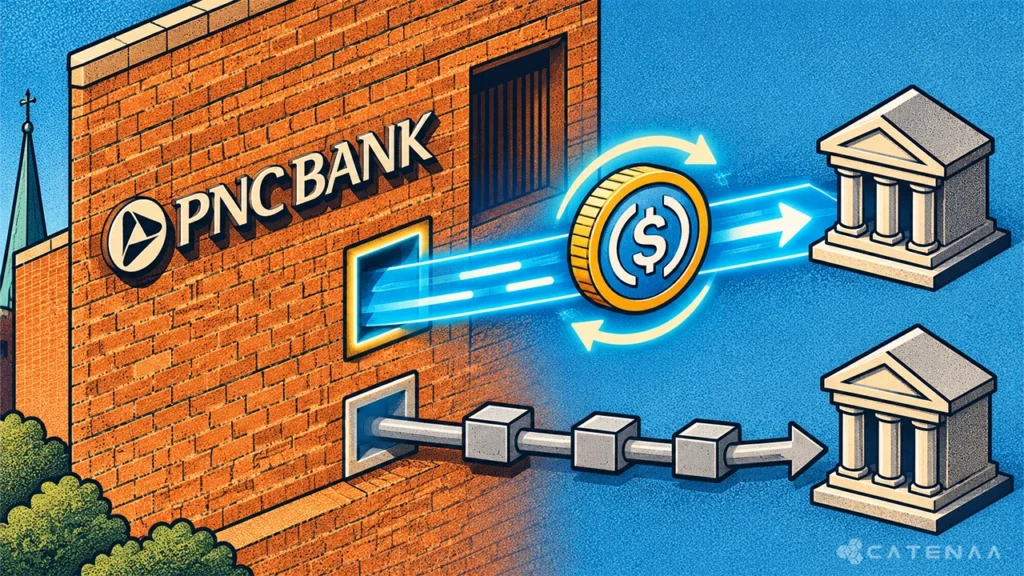


November 15, 2026 – PNC and Coinbase have opened a narrow door for corporate clients to receive USDC as dollars. The release leaves out the fees and timing that treasurers need most.

In Summary
PNC lets eligible corporate clients receive USDC on Ethereum, converted one-to-one into dollars in a PNC account.
Coinbase payment products power the pilot, which builds on an existing PNC and Coinbase relationship.
PNC did not disclose fees, conversion spreads, limits, eligibility rules or the time to dollar credit.
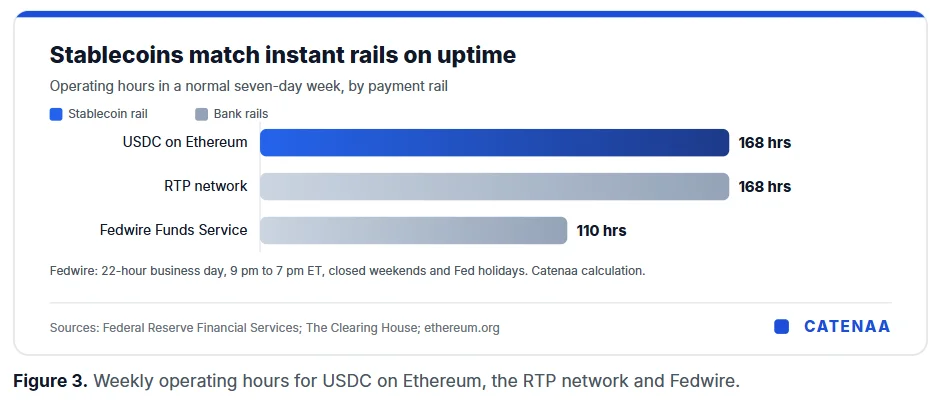
Fedwire runs about 110 hours a week; stablecoins and the RTP network both run all 168.
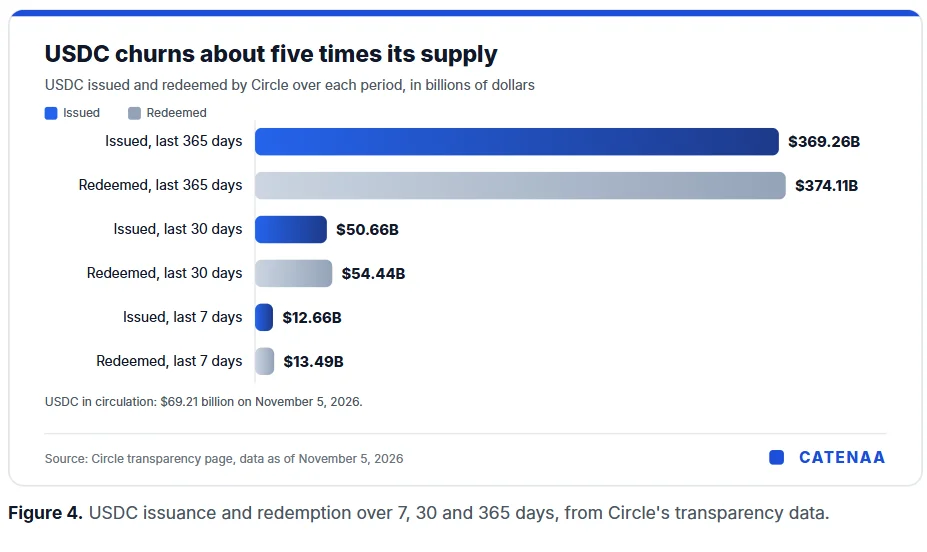
Circle issued $369.26 billion of USDC and redeemed $374.11 billion over the past year.
PNC stablecoin payments are now live for a small group of corporate clients. On November 9, PNC Bank said its Corporate & Institutional Banking clients can receive USDC through a limited pilot.
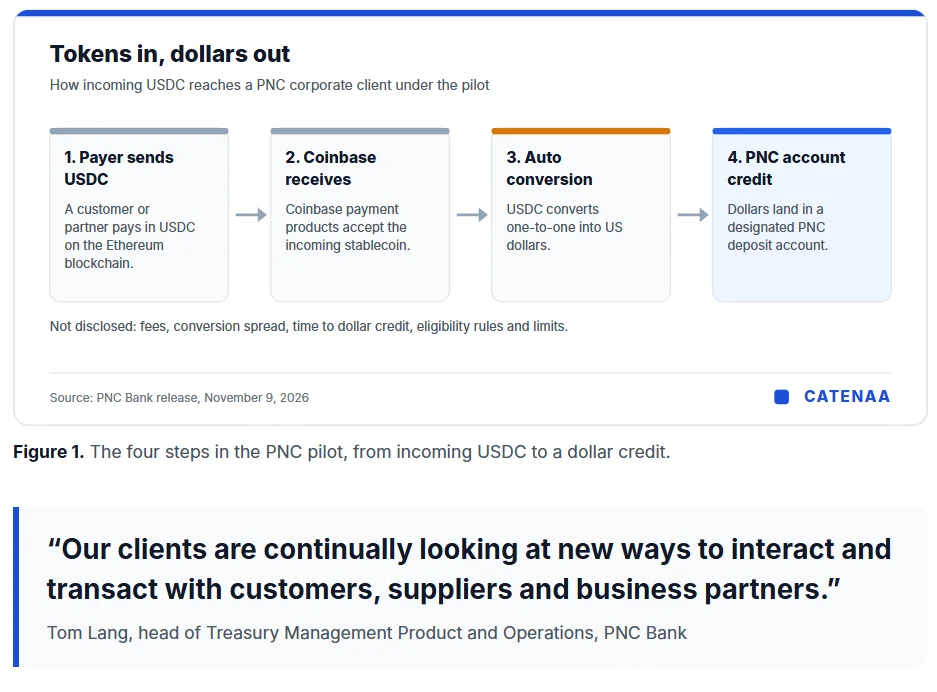
In practice, the service runs on the Ethereum blockchain and uses Coinbase payment products. Incoming USDC converts one-to-one into US dollars. The funds then land in a designated PNC deposit account.
The launch itself is not a scoop. However, the details it leaves out matter more to treasurers than the headline does.
How PNC stablecoin payments flow
The model is narrow by design. A payer sends USDC on Ethereum, and Coinbase infrastructure receives it. Because conversion is automatic, the client receives dollars in its account.
PNC says the setup offers faster access to funds and more efficient cross-border payments. It also keeps clients inside PNC banking services. The bank described the pilot as a way to help clients test stablecoins within their treasury strategies.
What the release leaves out
Notably, several numbers that drive a treasury decision are missing. PNC did not publish fees, conversion spreads or limits. It also did not define which clients qualify or how long the pilot will run.
Moreover, the release names only USDC on Ethereum. It does not say whether other chains or stablecoins will follow.
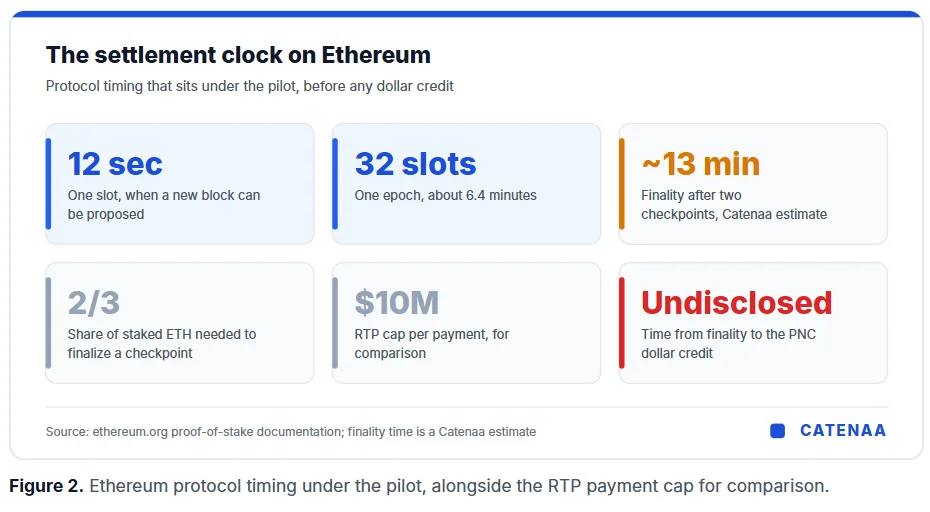
Timing is the biggest gap. On Ethereum, the network produces a slot every 12 seconds, and 32 slots form an epoch. Finality needs two-thirds of staked ETH to back two checkpoints. On that basis, Catenaa estimates finality at about 13 minutes.
Yet the release never says when the dollar credit posts after that point. For a treasurer, that lag decides whether the rail beats a wire.
How it compares with bank rails
The main pitch is time coverage. The Fedwire Funds Service opens at 9 pm ET the prior evening and closes at 7 pm ET. It shuts on weekends and Federal Reserve holidays, leaving about 110 hours in a normal week. By Catenaa’s math, that covers roughly 65% of the clock.
Stablecoin networks run all 168 hours. Still, banks already reach that mark through instant rails. The Clearing House says its RTP network runs 24/7/365 and carries payments up to $10 million.
Scale also favours the incumbents. RTP handled 150 million payments worth $621 billion in the third quarter of 2026. By contrast, the PNC stablecoin payments pilot covers one token on one chain for eligible clients.
Why USDC conversion depth matters
Conversion is not a side issue. Circle reports $69.21 billion of USDC in circulation as of November 5. Over the prior 365 days, it issued $369.26 billion and redeemed $374.11 billion.
In other words, dollars move in and out of USDC at about five times its supply each year. That churn is the plumbing PNC clients rely on when tokens become dollars. Over the past 30 days, redemptions also ran ahead of new issuance, at $54.44 billion against $50.66 billion.
What treasurers should watch
For now, the PNC stablecoin payments pilot appears best suited to firms whose overseas payers already hold USDC. Those payers can send funds on a weekend, when Fedwire does not run. Whether PNC posts dollars the same day remains open. Equally, clients will want to know who bears the cost of conversion.
Coinbase framed the deal as banks and crypto firms working together. Alec Lovett, its head of infrastructure products, said stablecoins make business payments “faster, more efficient and more global.” Pilot data on cost and timing will show whether that holds against instant rails.