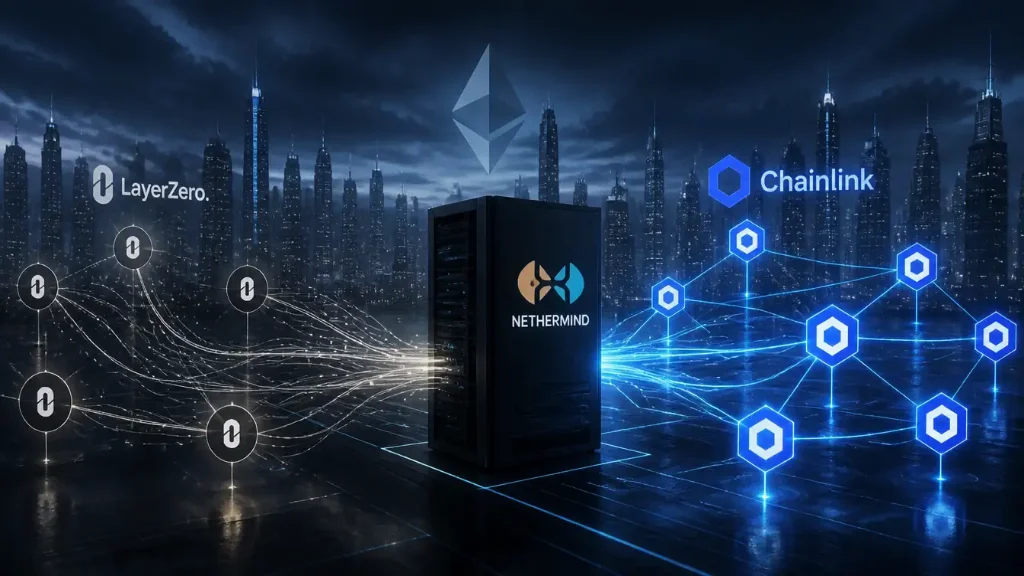


Catenaa, Thursday, August 27, 2026-Ethereum engineering company Nethermind has ended its LayerZero verifier operations and moved to Chainlink after an extensive infrastructure review, adding momentum to a broader shift in cross-chain security providers.
Nethermind has joined the Chainlink network as a node operator and strategic technology provider. It will help secure Chainlink’s Cross-Chain Interoperability Protocol, known as CCIP, and its Data Feeds.
The move carries added weight because Nethermind was part of LayerZero’s security infrastructure rather than simply a protocol using its bridging technology.
LayerZero’s Decentralized Verifier Networks independently authenticate messages moving between blockchains. Nethermind had operated one of those verifier networks before ending the role.
Under its Chainlink arrangement, Nethermind will also contribute engineering tools, infrastructure services and integration support for blockchain developers.
CEO Daniel Celeda said Nethermind plans to apply experience gained from building one of Ethereum’s main execution clients to its Chainlink operations.
Nethermind develops an Ethereum execution client that the company says powers more than one-third of the network. Its infrastructure also supports thousands of validators and billions of dollars in delegated assets.
The migration follows several departures from LayerZero since the April attack on Kelp DAO’s rsETH bridge.
Attackers stole 116,500 rsETH, valued at about $292 million at the time, after compromising infrastructure used in the bridge’s verification process.
Kelp DAO later moved cross-chain operations to Chainlink. Other projects have also shifted infrastructure toward Chainlink during recent months.
However, Nethermind has not linked its decision directly to the Kelp attack. The company disclosed no specific LayerZero technical failure discovered during its review and provided no financial terms for the migration.
That distinction matters. Nethermind’s move does not establish a new vulnerability in LayerZero, but it represents a prominent Ethereum infrastructure operator choosing a competing cross-chain security architecture.