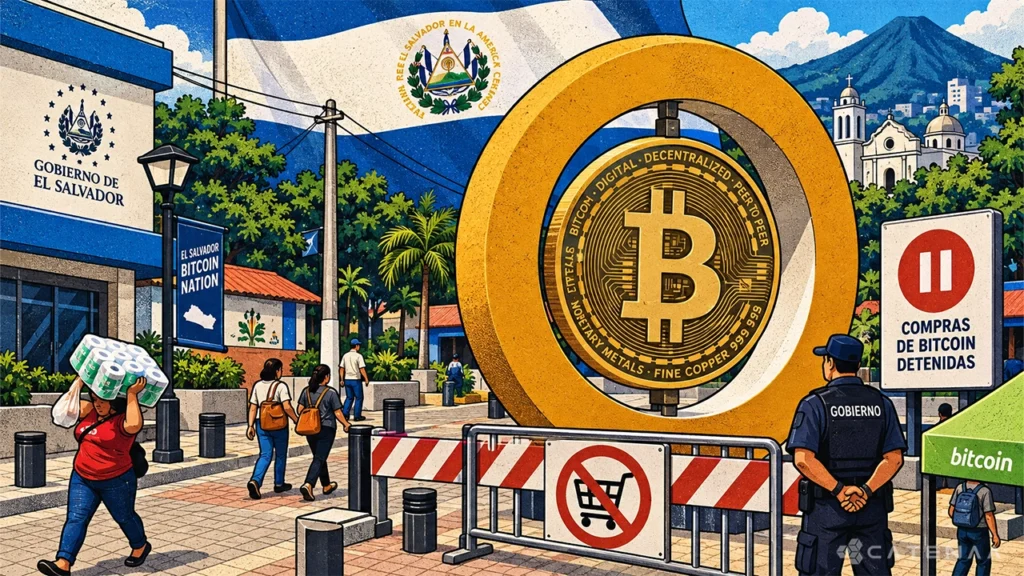


Catenaa, Wednesday, September 09, 2026- El Salvador has not used public funds to accumulate Bitcoin since June 2025, the International Monetary Fund said after reviewing documentation supplied by Salvadoran authorities.
The disclosure came as IMF staff reached an agreement with El Salvador on the second and third reviews of its 40-month Extended Fund Facility program.
The agreement could release about $140 million to El Salvador if approved by the IMF Executive Board and after agreed conditions are completed.
The IMF said documentation supplied by the government showed Bitcoin accumulated since the first program review came from private donations rather than state resources.
The fund did not disclose how much Bitcoin El Salvador had received through those donations.
It also said authorities agreed that no further Bitcoin accumulation is expected beyond the documented donations.
The clarification addresses questions surrounding El Salvador’s Bitcoin holdings after the IMF sought limits on government cryptocurrency purchases under the lending program.
President Nayib Bukele’s government had continued reporting additions to its Bitcoin reserves after agreeing to IMF restrictions.
El Salvador’s Bitcoin Office reported an 8 BTC increase shortly after an IMF statement in May 2025, bringing holdings at that time to 6,190.18 BTC.
The country later disclosed an addition of 1,090 BTC in November 2025, then worth about $100 million. It was El Salvador’s largest reported single-day addition at the time.
The IMF’s latest findings indicate those later increases did not involve public funding, based on documentation reviewed by its staff.
The fund said El Salvador is also working to improve transparency around Bitcoin held across multiple wallets.
Authorities are strengthening governance and risk controls covering crypto assets held by the public sector, according to the IMF.
El Salvador has also reduced the government’s involvement in the Chivo cryptocurrency wallet.
Majority ownership and operational control of Chivo have been transferred to a private operator. The government retains a minority stake and custodial duties for customer assets.
El Salvador made Bitcoin legal tender in September 2021 under Bukele, becoming the first country to take that step. The policy drew opposition from the IMF over financial, fiscal and consumer risks.
Under reforms connected to the IMF program, El Salvador later made private-sector acceptance of Bitcoin voluntary and reduced the government’s role in the cryptocurrency system.
The IMF Executive Board approved the 40-month Extended Fund Facility in February 2025, giving El Salvador access to about $1.4 billion. The first review was completed in June 2025.
The latest staff agreement indicates the lending program remains on track while placing tighter boundaries around government involvement in Bitcoin accumulation.