

November 19, 2026 – Staked ether pays about 2.3% a year, while three-month Treasury bills pay 4.34%. Fund fees, lock-ups and price swings widen the gap for institutions.

In Summary
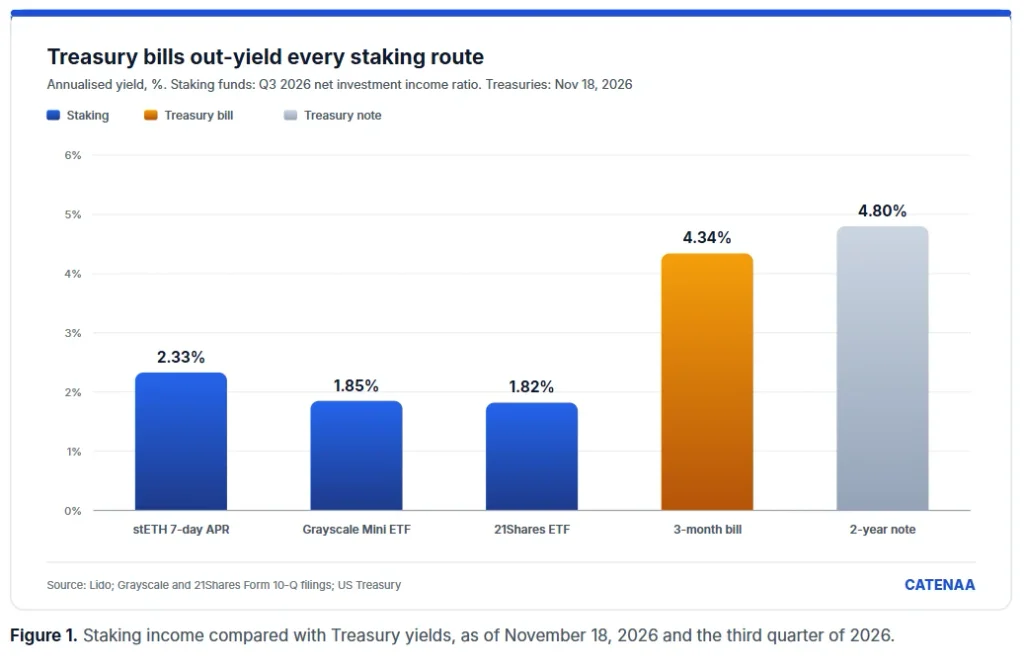
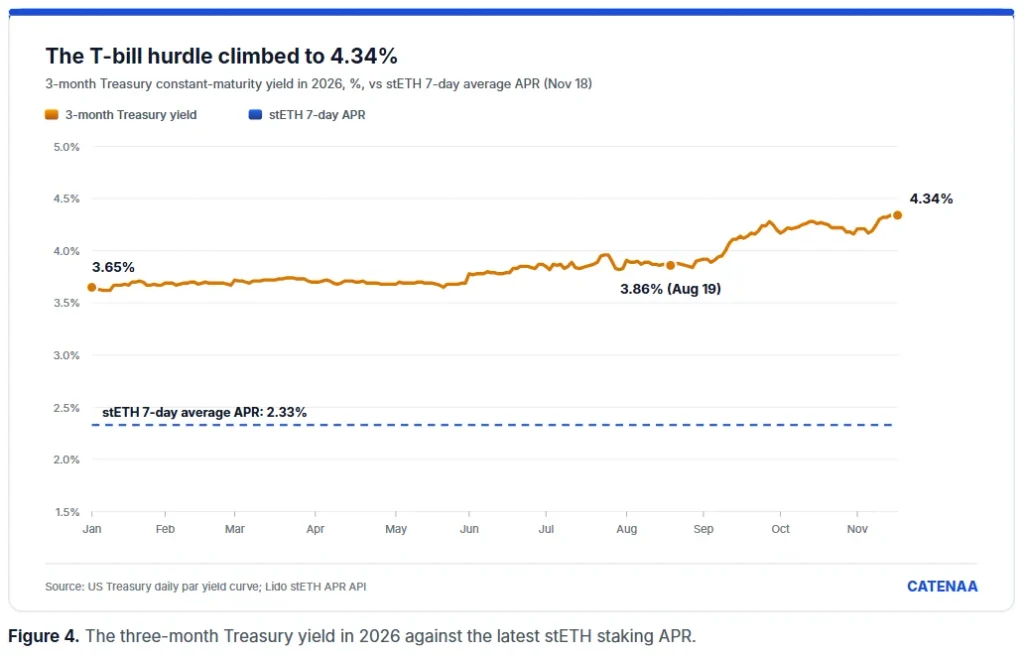
stETH showed a seven-day average APR of 2.33% on November 18, against a 4.34% three-month Treasury yield.
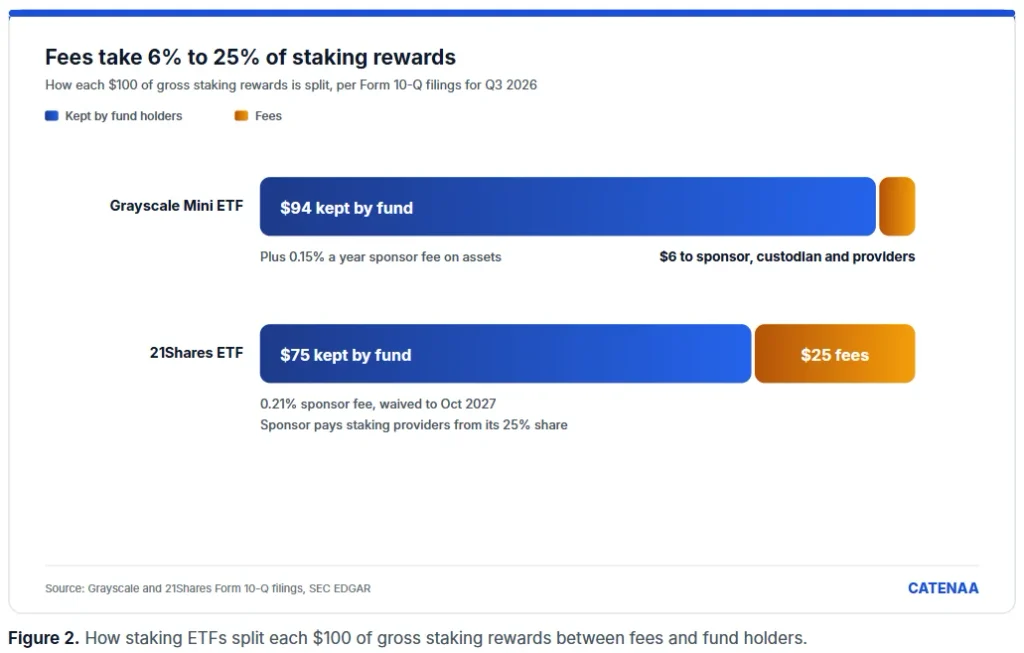
Staking ETFs keep 6% to 25% of gross rewards before holders see any income.
Two staking ETFs reported net investment income of 1.82% to 1.85% for the third quarter.
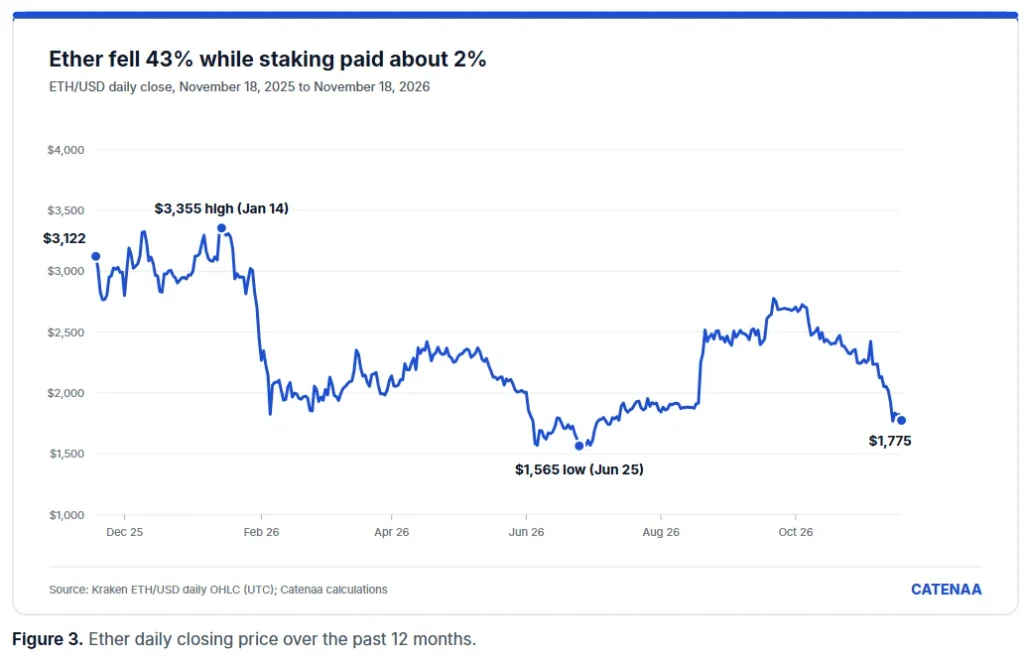
Ether fell 43.2% in a year, and its 30-day realised volatility is near 60%.
The three-month Treasury yield rose almost half a point in 90 days.
The ETH staking yield now trails short-term US Treasuries by about two percentage points. Lido’s staked ether token, stETH, showed a seven-day average APR of 2.33% as of November 18. Meanwhile, the three-month Treasury yield closed at 4.34% that day.
That gap matters for institutions weighing crypto income against cash. For example, a corporate treasurer can earn 4.34% on bills without taking on price risk. By contrast, staked ether pays less, and the principal can swing sharply. Moreover, longer Treasuries pay even more, since the two-year note yielded 4.80% on the same day.
Fund fees shave the ETH staking yield further
Institutions that stake through regulated funds pay twice. First, the funds keep a share of the rewards before holders see any income. Grayscale’s Ethereum Staking Mini ETF says its sponsor, custodian and staking providers take 6% of gross rewards. Second, it charges a 0.15% annual sponsor fee on assets.
The 21Shares Ethereum Staking ETF takes more. Its sponsor keeps 25% of gross staking rewards and pays its providers from that share. However, 21Shares has waived its 0.21% sponsor fee through October 8, 2027.
As a result, the cost shows up in the funds’ own accounts. Grayscale’s fund reported net investment income of 1.85% of average net assets, annualised, for the third quarter. The 21Shares fund reported 1.82%. In other words, holders kept less than 2% a year in staking income. So the ETH staking yield that investors actually receive sits well below the headline rate.
Lock-ups and slashing add hidden costs
Staked ether cannot move instantly. According to the 21Shares filing, the trust cannot move or trade staked ether during the unbonding period. Also, that wait depends on network conditions. Therefore, funds keep part of their ether unstaked to meet redemptions.
For instance, Grayscale’s fund held $1.99 billion of staked ether at September 30, about 80% of its net assets. The remaining unstaked ether earns no rewards, which dilutes income further. In addition, slashing, a protocol penalty for validator faults, adds another risk that a Treasury bill does not carry.
Price risk dwarfs the yield gap
However, volatility is the bigger issue. Ether closed at $1,774.77 on Kraken on November 18, down 43.2% from a year earlier. Its 30-day realised volatility stood near 60% on an annual basis, by Catenaa calculations.
That figure implies a typical daily move of about 3.1%. Thus one ordinary trading day can erase more than a full year of the yield gap. For income alone, then, the maths now favours government paper. Still, investors who expect ether to recover may accept the lower ETH staking yield as a small extra.
The Treasury hurdle keeps rising
Meanwhile, the bill side has moved too. Over the past 90 days, the three-month yield rose from 3.86% to 4.34%. The Fed raised its target range in September, which lifted short-term rates. By October 19, the yield had already reached 4.27%. As a result, the hurdle for staking rose by almost half a point in 90 days.
What would change the maths
Three shifts could narrow the gap. First, Fed rate cuts would lower bill yields. Second, busier network activity could lift fee income for validators. Finally, cheaper fund structures would pass more income to holders. Until then, staking works as a bonus on a price bet, not as a cash substitute. Investors should therefore track both sides of the trade, week by week.