


October 29, 2026 – US prosecutors say victims’ money moved through a single Bahamian bank account, became USDT and reached scam bosses in Cambodia.

In Summary
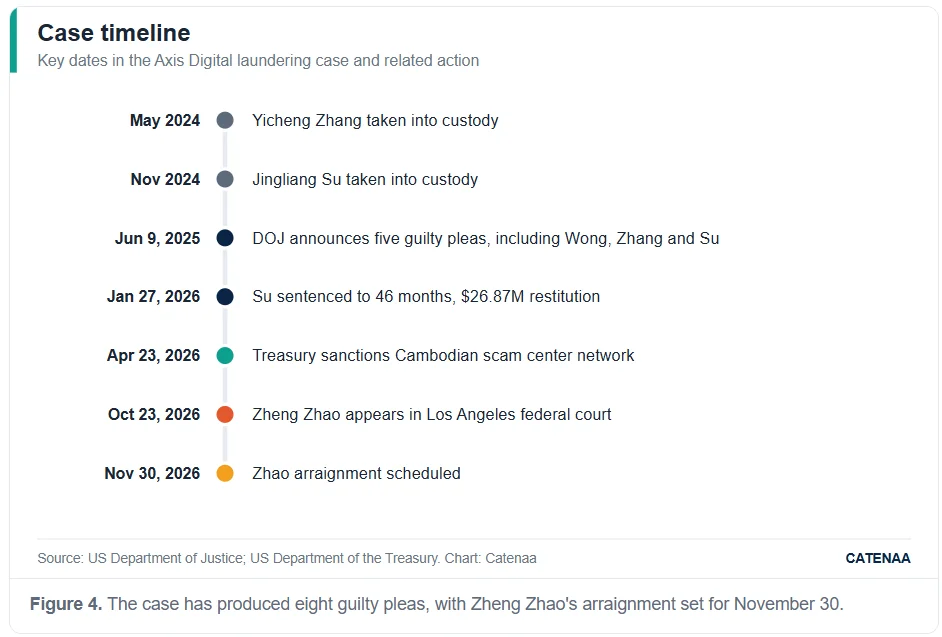
Chinese national Zheng Zhao, 44, appeared in Los Angeles federal court on October 23 after extradition from the Netherlands.
Prosecutors say more than $36.9 million from 174 US victims moved through one Deltec Bank account.
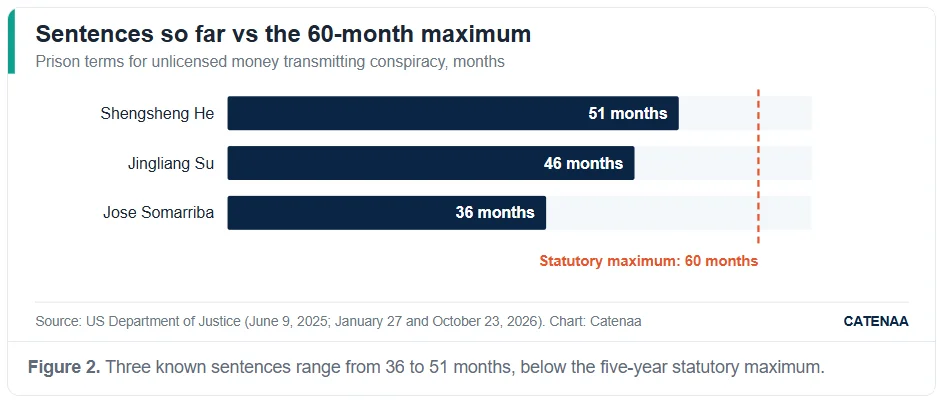
Eight co-conspirators have pleaded guilty, and three known sentences range from 36 to 51 months.
Crypto investment fraud cost Americans $7.2 billion in 2025, the largest loss source the FBI tracked.
Crypto scam suspect lands in Los Angeles
A crypto scam case that spans four countries reached a Los Angeles court last week. Zheng Zhao, a 44-year-old Chinese national, came before a judge on October 23. He arrived after the Netherlands extradited him, the Justice Department said. The judge ordered him held. He returns to court for arraignment on November 30.
Prosecutors allege Zhao was part of a global network run from scam centers in Cambodia. They say he and others had a Bahamas bank turn victim cash into USDT. If convicted, he faces up to 20 years in federal prison. Still, the law presumes him innocent until proven guilty.
How the crypto scam money moved
First, scammers reached out to Americans through social media, calls, texts and dating sites. That detail comes from a June 2025 Justice Department release. The scammers then pitched fake digital asset deals and told victims their money was growing. In reality, the funds never reached any market.
Instead, the group moved more than $36.9 million from US bank accounts into one Deltec Bank account in the Bahamas. Jose Somarriba and Shengsheng He set up Axis Digital Limited and opened that account in its name. Together with Jingliang Su, they told the bank to convert the funds into Tether’s USDT stablecoin.
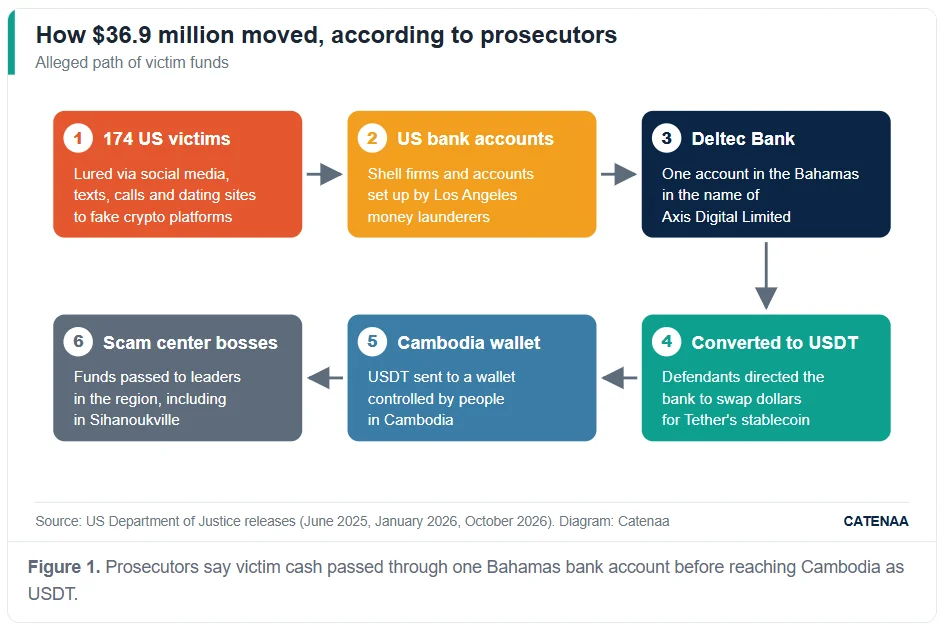
Next, the USDT went to a wallet that people in Cambodia controlled. From there, it reached scam center bosses in the region, including some in Sihanoukville. Notably, the Justice Department releases do not accuse Deltec Bank or Tether of wrongdoing.
Eight guilty pleas so far
The crypto scam relied on many hands. Joseph Wong ran a group of Los Angeles money launderers who set up shell firms and bank accounts. Yicheng Zhang opened two US accounts that handled victim money. Su later joined Axis Digital as a director and took part in the swaps.
So far, eight people in the plot have pleaded guilty. In January, a judge sentenced Su to 46 months and ordered him to pay $26,867,242.44 in restitution. Shengsheng He got 51 months, while Somarriba got 36 months.
By Catenaa’s calculations, the restitution order equals about 73% of the $36.9 million total. The scheme also took roughly $212,000 from each of its 174 known victims, on average.
Agents from the US Secret Service led the probe, with help from Homeland Security Investigations and the State Department. The case also forms part of the Justice Department’s Cyber-Enabled Scam Initiative.

A $7.2 billion problem
This case is one slice of a much larger threat. Americans lost $7.228 billion to crypto investment fraud in 2025, says the FBI’s Internet Crime Complaint Center. That made it the top source of reported losses. Losses rose 25% from 2024, while complaints jumped 48%.
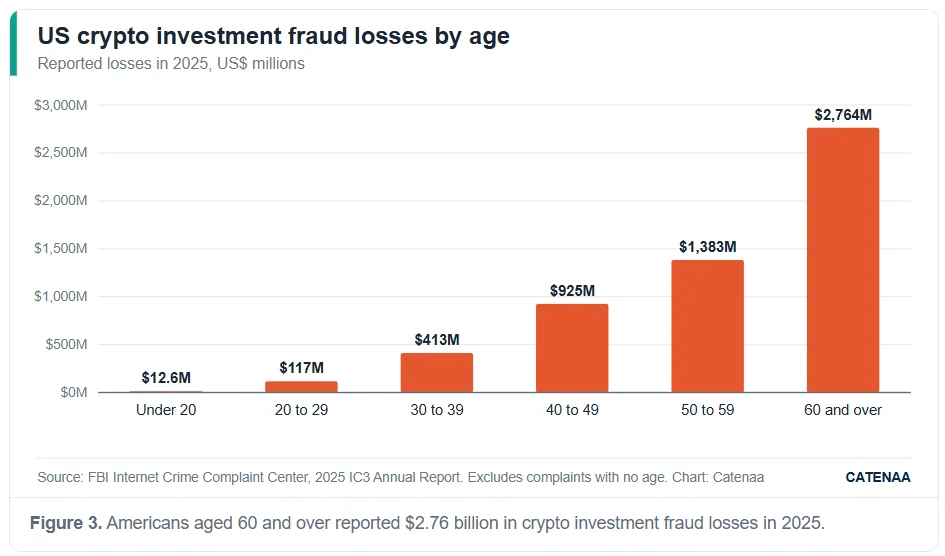
Older Americans carry the heaviest burden. People aged 60 and over lost $2.76 billion to crypto investment scams last year. In fact, the average crypto investment complaint cost about $117,000, Catenaa calculations show. Overall, the FBI tallied $20.877 billion in internet crime losses in 2025.
Early warnings help. The FBI’s Operation Level Up alerted 3,780 crypto investment fraud victims in 2025. Strikingly, 78% of them did not know scammers had fooled them.
Meanwhile, Washington is also going after the scam economy itself. In April, the Treasury sanctioned a Cambodian senator and 28 other targets tied to scam compounds. It says Americans lost at least $10 billion to scam groups based in Southeast Asia in 2024. It also says nearly all major Cambodian scam compounds link to casinos that launder scam cash.
For crypto markets, each crypto scam case like this one carries a clear lesson. Stablecoins move money fast across borders. Yet bank records and blockchain trails can still lead agents to the people behind a scheme.