


October 18, 2026 – Coinbase has pushed more than $3bn of dollar loans through the Morpho credit network, with $1.3bn still live. Meanwhile JPMorgan is taking bank deposits onto the very same public chain.

In Summary
Morpho reports more than $3bn of USDC loans processed for Coinbase users since the full April 2025 rollout, with more than $1.3bn still active.
Live loans sit against more than $3bn of collateral, a buffer of better than two to one on Catenaa calculations.
Nine isolated collateral markets now back the product, covering wrapped bitcoin, ether, XRP, solana, cardano, dogecoin and litecoin.
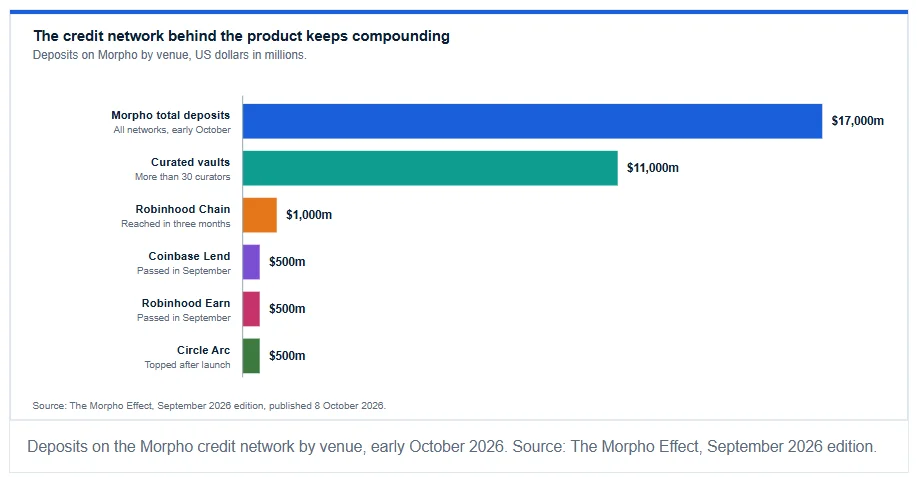
Morpho network deposits passed $15bn in mid-September and topped $17bn by early October.
JPMorgan’s JPMD deposit token has run on Base since November 2025, and its blockchain unit reports more than $3trn processed since 2015.
Crypto loans have become a real business for Coinbase. The exchange has pushed more than $3bn of dollar loans through one onchain market since 2025. Roughly $1.3bn of that book is still live.
Banks are moving on a parallel track. They are not lending against coins. Instead they are putting deposits themselves onto public chains.
How big the crypto loans book has grown
The credit network Morpho runs the plumbing. Its own figures show $3bn of USDC loans processed since April 2025. Of that, $1.3bn stays active against more than $3bn of collateral.
Nine collateral markets now sit behind the product. It began with wrapped bitcoin. Since then ether, XRP, solana, cardano, dogecoin and litecoin have joined.
Reach helps explain the pace. Coinbase counts more than 100 million users. More than 90,000 of them now hold a live position on the network.
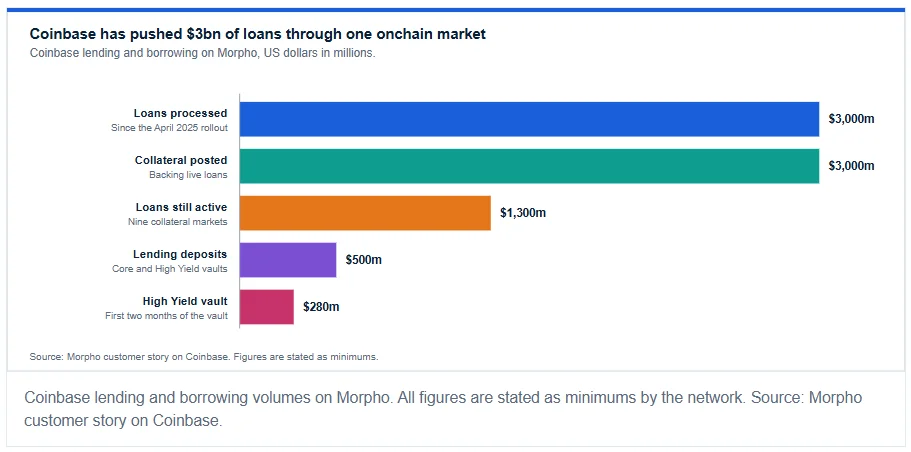
Scale cuts both ways. Collateral of $3bn against $1.3bn of loans implies a buffer of more than two to one, on Catenaa sums. That cushion matters when coin prices swing.
Why the design matters
The design walls off each market. So a shock in one token does not spill into the next. Users can also watch their own collateral on Base, rather than trust a monthly statement.
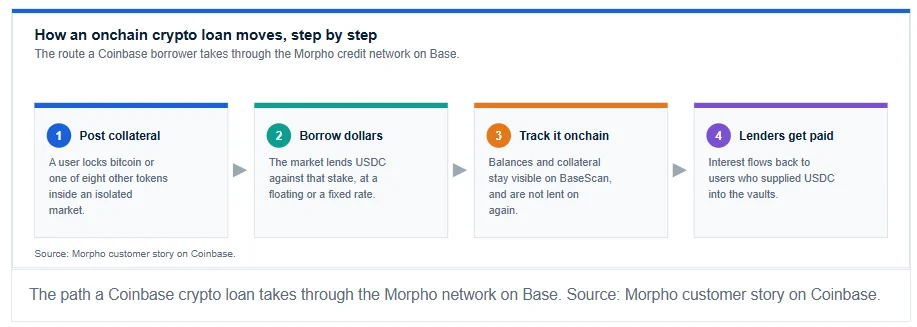
The two sides feed each other. Deposits of more than $500m supply the dollars. Borrowers then pay the interest that those lenders earn.
Growth has been quick across the wider network too. Morpho says total deposits passed $15bn in mid-September and topped $17bn weeks later.
Rate choice arrived next. Morpho says Coinbase became the first large distributor to use its fixed-rate markets. Borrowers can now lock a rate and a repayment date upfront.
Banks pick a different route
A tokenised deposit is simply bank money on a chain. It stays a claim on the bank. Therefore it sits inside the rules that already govern deposits.
JPMorgan went first among the big names. Its JPMD token went live on Base in November 2025 for institutional clients, with round-the-clock settlement between compatible wallets.

The bank’s blockchain arm reports more than $3trn processed since 2015. Yet the token itself reaches only vetted clients. Hence the two models serve different crowds.
What the market makes of it
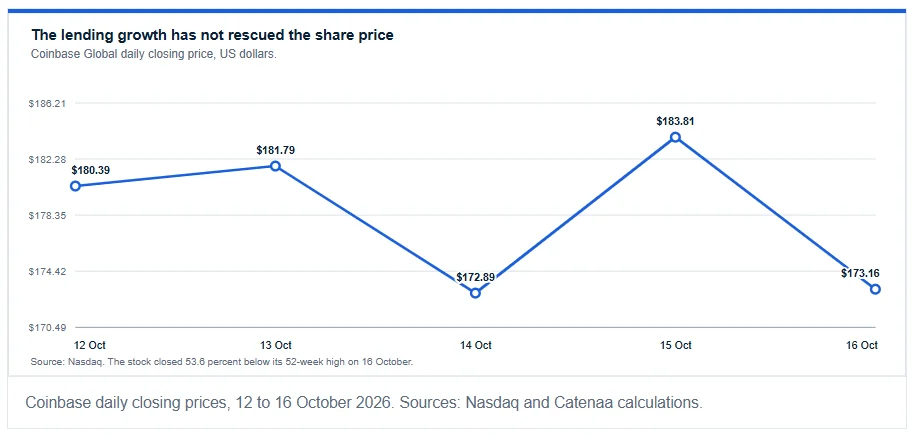
Equity investors remain cool. Coinbase shares closed at $173.16 on 16 October, down 5.79 percent on the day. That leaves them 53.6 percent below the 52-week high, on Catenaa sums.
Context helps. The full rollout dates to April 2025, so the product has barely 18 months of history. Therefore it is still small against a group of this size.
Still, the lending line looks sticky. It earns fees whether coins rise or fall. And banks joining the same rails widens the pipe for everyone.
Watch three things from here. First, whether active loans hold above $1.3bn through a sharp selloff. Second, how fast new collateral types arrive. Third, whether bank tokens start settling against these pools.




