


October 15, 2026 – A hotter than expected American inflation report pushed bitcoin to an intraday low of $81,427. Ether and XRP fell harder.

In Summary
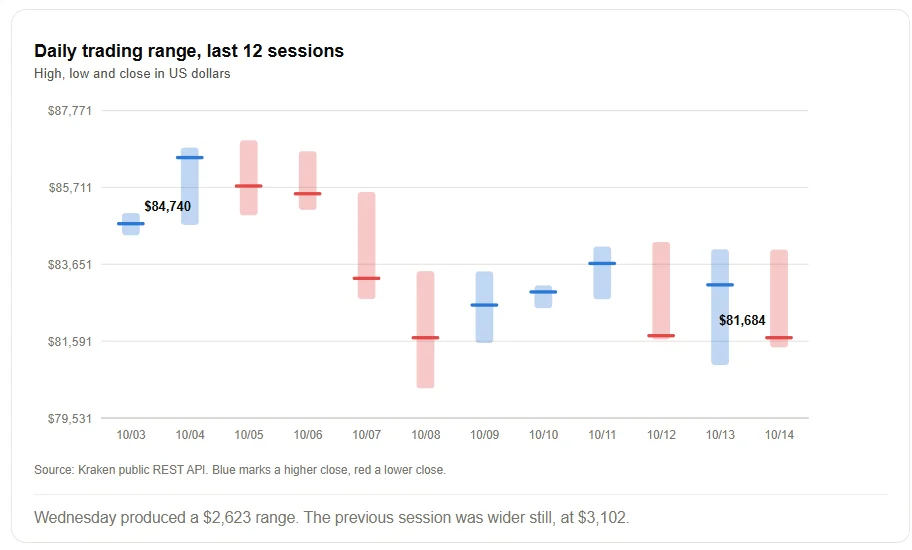
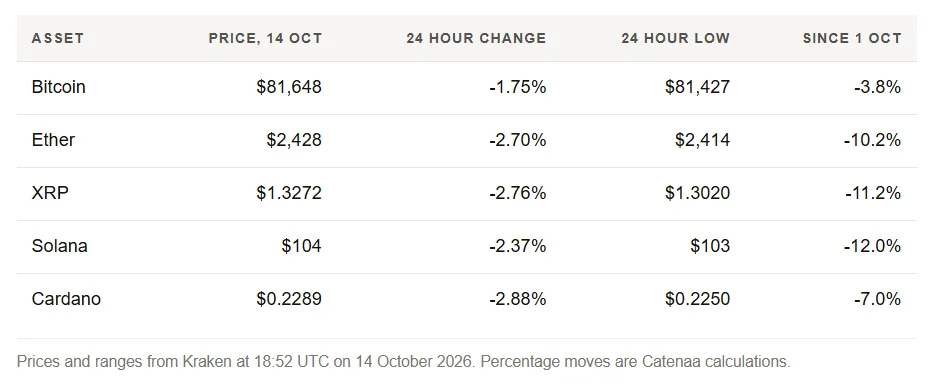
Bitcoin traded at $81,648 late on 14 October, with an intraday low of $81,427.
September US consumer prices rose 0.6% on the month and 3.7% over the year.
Core inflation held at 2.6%, yet energy costs jumped 5.2% in a single month.
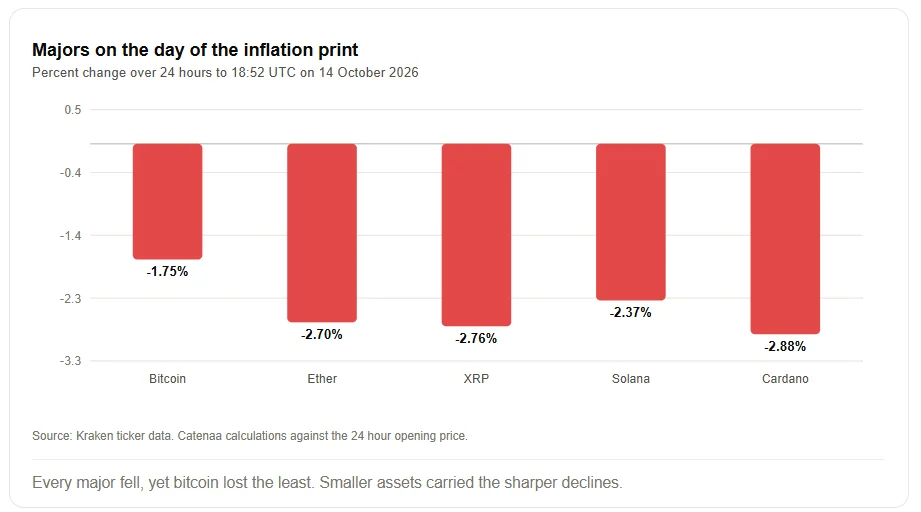
Ether fell 2.7%, XRP 2.8% and Solana 2.4%, so bitcoin lost the least of the majors.
The Fed raised rates to 3.75% to 4.00% in September and meets again on 27 and 28 October.
Bitcoin broke below a closely watched level on Wednesday. The coin traded at $81,648 by 18:52 UTC, after opening the session near $83,101. Kraken exchange data put the intraday low at $81,427. Consequently the bitcoin price fell roughly 1.8% on the day.
The trigger arrived at 8:30 in New York. American consumer prices rose 0.6% in September, and 3.7% over twelve months, according to the official release. Core prices rose 2.6% on the year. Energy did the damage, climbing 5.2% in one month.
Why a hot print hurts the bitcoin price
Rate expectations drive this market. In September the Federal Open Market Committee lifted its target range by a quarter point. The range now runs from 3.75% to 4.00%. Officials voted 12 to 0 and described inflation as elevated.
Higher policy rates raise the cost of holding assets that pay nothing. Bitcoin pays no coupon and no dividend. Therefore a stronger inflation print shortens the odds of relief. Rate setters gather again on 27 and 28 October, per the Fed calendar.
Detail inside the report hardened the message. Gasoline costs have climbed 34.2% over twelve months. Fuel oil has jumped 74.2%, while airline fares rose 22.4%. Energy shocks usually fade, yet shelter inflation of 3.2% leaves little slack for the Fed.
Altcoins took the harder hit
Selling spread across the majors. Ether slid 2.7% to $2,428, while XRP dropped 2.8% to $1.3272. Solana lost 2.4% and Cardano fell 2.9%. In short, bitcoin outperformed on a relative basis.
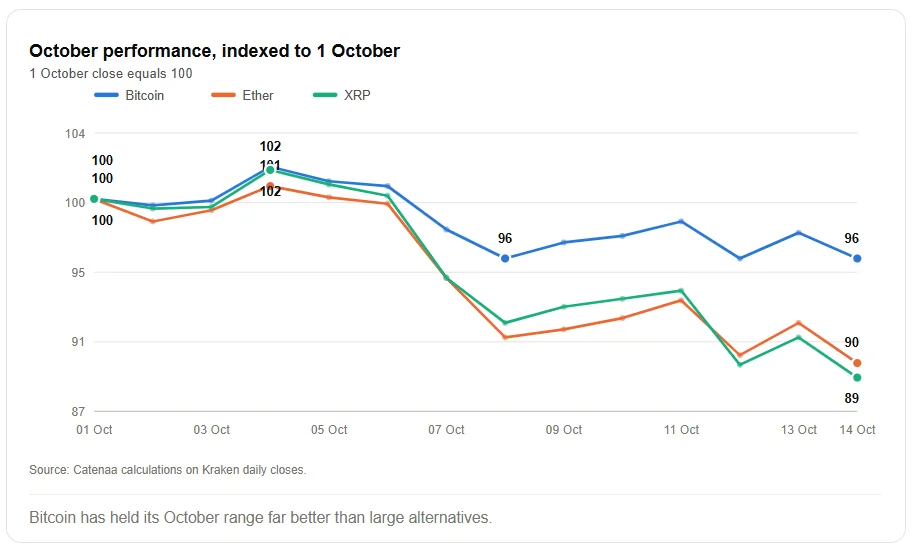
October has been unkind to the rest of the field. Since the first of the month, ether has shed about 10%. XRP has lost roughly 11%, and Solana around 12%. Bitcoin, by contrast, is down under 4%.
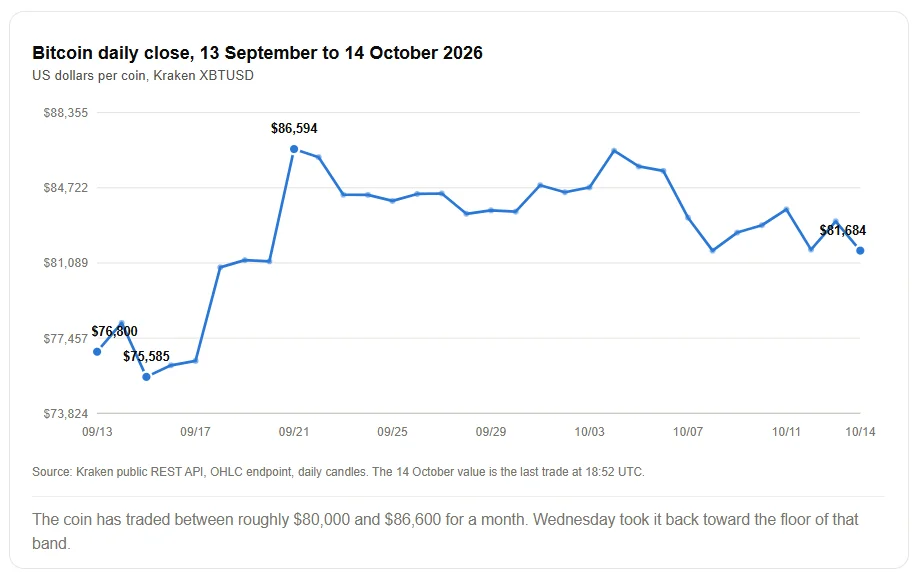
Zoom out, though, and the month looks less dramatic. Bitcoin closed at $78,193 on 13 September. Even after Wednesday, the coin sits about 4% above that level. September delivered a sharp rally, and October has simply given part of it back.
Bonds set the backdrop
Treasury yields were already high. On 13 October the two year note yielded 4.79%. The ten year note paid 5.21% the same day, according to Treasury curve data. Notably, that two year yield tops the policy rate. Risk assets rarely rally against such a backdrop.
What traders watch from here
Three markers matter next. First, the $80,329 low from 8 October now acts as nearby support. Second, the 27 and 28 October meeting sets the policy tone. Third, October inflation data arrive on 10 November.
Volumes offer a clue about conviction. Kraken recorded roughly 3,083 bitcoin traded in the 24 hours to 18:52 UTC. That compares with 2,895 coins through the whole of 13 October. Activity therefore picked up, although not dramatically.
Chart levels also matter. Bitcoin has not closed above $84,000 since 6 October. Furthermore, every rally since 8 October has stalled below $84,300. Meanwhile the $80,000 handle has survived each test this month.
For now the market treats inflation as the only story. Until the Fed blinks, cheap money looks unlikely to return.




